
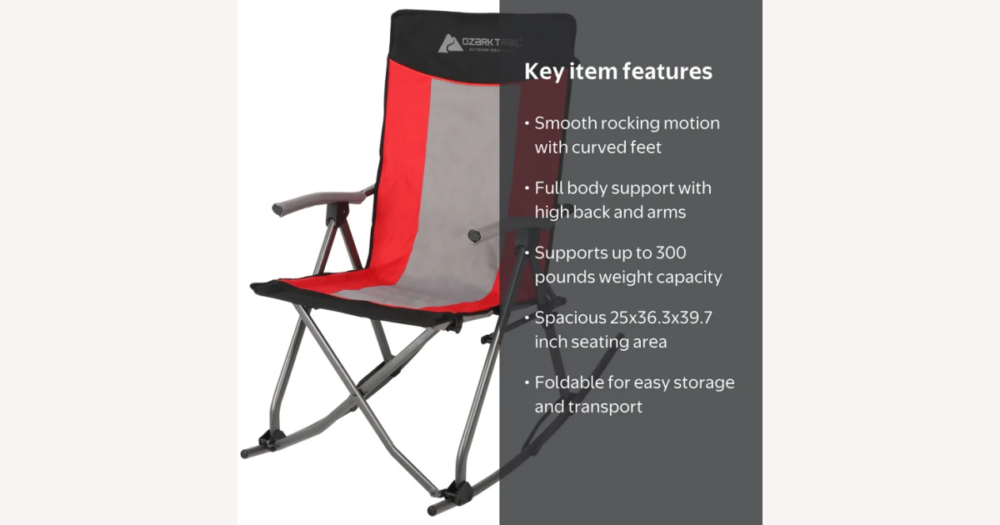
If you’re searching DHgate for an Ozark-style rocking chair, the safest approach is to ignore the brand name at first and zero in on how the chair is built: its frame, rocking mechanism, size, weight capacity, and portability. This guide shows you how to translate that familiar Ozark camping-rocker look into concrete specs and DHgate-specific seller checks, so you can judge any future listing on its comfort, stability, and realistic durability rather than on a logo alone.
What does it really mean to buy an Ozark-style rocking chair on DHgate?
On DHgate, “Ozark-style” rocking chairs are best understood as a type of outdoor rocker rather than a guarantee of official Ozark Trail branding. The chairs people associate with Ozark Trail are usually camp-focused: a folding metal frame, a fabric seat, and a rocking or tension mechanism that lets the chair move smoothly while still feeling stable on uneven ground, plus a design that packs down reasonably small for transport.
DHgate can still be useful if you want that style of chair, but you should treat brand names and logos in listings cautiously. Marketplace sellers may use familiar brand language loosely, and this guide does not verify any official Ozark Trail inventory or endorse specific products. I care more about whether a chair is stable, sized appropriately for you, and realistically durable for the price than about chasing a perfect brand match or the absolute lowest cost, so the advice here focuses on generic attributes—folding camp rocker vs. patio rocker, frame type, rocking mechanism, and portability—rather than on a particular SKU.
Live product retrieval is out of scope for this page, which means any Ozark-style or Ozark-labeled listing you later find on DHgate has to be evaluated case by case. The most reliable way to do that is to shop by features instead of branding, starting with a clear set of specifications that define the chair experience you actually want.
Key specs that define an Ozark-style outdoor rocking chair
- Focus on a small set of core specs. For most Ozark-style outdoor rocking chairs, overall dimensions, seat height, weight capacity, frame type, rocking mechanism, and portability details do most of the work in shaping how the chair feels, how stable it is, and how well it fits your space.
- Overall dimensions: Check length, width, and height to understand the chair’s footprint and how much body room it offers. A larger frame can feel more spacious but may crowd a small deck or campsite; a more compact chair fits tighter spaces but may feel cramped for taller or broader users.
- Seat height: Look for the distance from the ground to the seat. Higher seats make it easier to stand up, especially for taller people or anyone with limited mobility, while very low camp rockers can feel relaxed but harder to exit. Match the listed seat height to your body size and how you plan to use the chair.
- Weight capacity: Use the stated maximum load as a safety and durability signal. A higher capacity usually indicates a stronger frame and fabric that can better handle heavier users or frequent use, but you should still leave a margin between your weight and the rated limit rather than pushing it to the edge.
- Frame type: Note whether the chair uses a folding camp frame, a more rigid patio-style frame, or a cross-braced rocker design. Folding frames are easier to pack and carry but can have more moving parts; rigid frames feel solid but are bulkier; cross-braced designs aim to balance stability with some portability.
- Rocking mechanism: Pay attention to how the chair actually rocks—rocking bars, tension or lever systems, or springs. Bar-style rockers tend to feel familiar and stable but can be sensitive to uneven ground; tension mechanisms can feel smoother and more controlled; springs may add bounce but can wear differently over time.
- Portability features: Check whether the chair folds, how heavy it is, and whether it includes carry handles or a bag. For car camping and RV use, folding joints and manageable weight matter more; for a backyard patio, ease of moving the chair for storage or cleaning might be important even if you rarely travel with it.
- Treat vague specs as a warning sign. A trustworthy listing should give clear values or descriptions for these points, not just generic phrases like “comfortable size” or “strong frame.” If dimensions, seat height, weight capacity, or mechanism details are missing, inconsistent, or look copy-pasted across multiple products, approach that chair cautiously or skip it altogether.
Materials and what they tell you about durability and outdoor use
The way an Ozark-style rocking chair feels and holds up outdoors is driven as much by materials as by specs. Most outdoor rockers use some combination of powder-coated steel or aluminum for the frame, synthetic fabric for the seat, and plastic or rubber at the contact points with the ground.
Steel frames generally feel solid and can support higher weight, which suits heavier users or frequent use, but they add heft and can rust if the coating chips or is thin. Aluminum frames are lighter and naturally more corrosion-resistant, making them easier to carry for camping or RV trips, yet very thin aluminum tubing can flex or feel less reassuring under load. A well-made chair will usually pair a sturdy tube size with a decent protective finish, whatever the metal.
Seat and back panels are typically polyester or nylon, sometimes with mesh inserts for breathability. Thicker fabric, a tight weave, and reinforced stitching at stress points (where the seat meets the frame, corners, and rocker joints) usually signal better long-term durability than very thin fabric with minimal reinforcement. Mesh sections can make hot-weather use more comfortable, but they still need strong edging and stitching so they don’t tear where they join solid panels.
Plastic components—armrests, joints, end caps—and rubber or plastic rocker bars or feet matter for everyday use too. Firm, non-slip feet or rocker bars help the chair stay put on decks, patios, and packed soil instead of skating around or digging into the surface. Cheap, hard plastic feet may mark softer decking or chip quickly; slightly softer, grippy materials tend to be kinder to surfaces and feel more stable.
On DHgate, I would treat vague material language as a real concern. Phrases like “premium”, “extra durable”, or “high-grade metal” don’t prove anything by themselves. Look for specific mentions such as steel vs. aluminum, type of fabric, coating, and visible reinforcement, backed by close-up photos and buyer feedback. If a listing skimps on material detail or only shows distant, generic images, I’d personally move on to a better-documented option rather than assume the materials are fine just because the chair style looks trendy.
Match chair specs and materials to camping and patio use
- Car camping or RV sites: Here portability and packability matter alongside comfort. Look for a frame that folds down cleanly, a weight you can realistically lift in and out of the vehicle, and a packed size that doesn’t swallow your trunk or storage bay. Rocker bars or mechanisms should stay stable on packed soil, gravel, or grass without feeling tippy. Metal that resists rust and fabric that can handle dust and occasional moisture are more valuable than perfect styling in this context.
- Backyard patios and decks: At home, you’re less concerned with carrying the chair far and more focused on how it looks and behaves on hard surfaces. Prioritize style and color that match your space, fabrics and coatings described as UV- and moisture-resistant, and non-marking rubber or plastic feet or rocker bars that won’t scratch or stain decking. A slightly heavier steel frame can be an advantage here if it feels planted and stable when you rock, even in a breeze.
- Multi-use spaces like tailgates or parks: If you move the same chair between social events, you need a mix of portability and toughness. A foldable frame, moderate weight, and fabric that’s easy to wipe clean after spills or mud are practical priorities. I’d list my top two or three likely contexts—camp site, patio, game-day parking lot—and use them as a filter for any listing’s specs and materials. When an Ozark-style chair looks fashionable but gives only vague details about frame metal, fabric, and feet, I’d rather skip it in favor of a design that clearly matches my actual environments.
DHgate buyer checklist for Ozark-style rocking chairs
- Check seller reputation first. On DHgate, I’d favor stores with solid overall ratings, a meaningful number of completed transactions, and consistent buyer feedback that mentions real details (packaging, delivery time, how the chair felt) rather than one-line praise or silence.
- Read the product description carefully. Look for concrete specs such as overall dimensions, seat height, stated weight capacity, frame material (for example, steel or aluminum), and fabric type, plus any notes about outdoor use. Multiple clear photos from different angles that appear to show the actual chair—not just generic catalog images—are a good sign.
- Confirm that you’re paying through DHgate’s official checkout and that you understand the basic buyer protection framework (for example, that disputes and refunds are opened through the platform, not by sending money directly to the seller). I would avoid any offer that suggests off-platform payment or feels unclear about how protection applies.
- Examine shipping information, especially for a bulky item like a rocking chair. Check the estimated delivery window for your location, the stated shipping method, and any extra charges for oversized or heavy packages that could make a low price less attractive once shipping is added.
- Read the return and refund terms line by line. Note under what conditions the seller accepts returns, how long you have to request one, and—crucially—who pays for return shipping on a large chair. If the chair arrives misdescribed or damaged, clear wording here will make it much easier to resolve the issue.
- Treat gaps and vagueness as caution signals. Sparse or generic reviews, copy‑paste product descriptions that barely mention specs, or stock‑looking photos with no real detail about the rocker design all increase the chance of disappointment. When information is missing or unclear, I’d slow down, ask the seller specific questions, or skip the listing rather than assume everything is fine because the price or branding looks appealing.
Understand DHgate shipping, disputes, and refunds for bulky chairs
For a bulky purchase like an Ozark‑style rocking chair, DHgate’s policies matter as much as the chair’s specs. Marketplace platforms typically combine an overall buyer protection and dispute framework with store‑specific rules on shipping, returns, and refunds, and you need to understand how both layers work together before you commit.
Start with the delivery side. Check the estimated shipping window and notice how it may vary by country or region, then look at the stated shipping method—economy post, courier, or freight—and any surcharges for oversized or heavy parcels. Long, vague delivery estimates or unclear methods can be a sign that your chair may take longer to arrive or be harder to track.
Look closely at how damage and misdescription are supposed to be handled. A good listing or store page will explain what happens if the chair arrives broken, missing parts, or clearly different from the description, and how you can open a dispute through DHgate’s framework to request repair, replacement, or refund. I’d be wary of sellers who say little or nothing about problem orders, because that usually means more effort on your side if something goes wrong.
Focus on who pays for return shipping and under which circumstances. Returning a large rocking chair can be expensive, so any clause that pushes freight costs onto you—especially when the item is not as described—can dramatically change the real cost of the purchase. When shipping, dispute, and refund terms are brief, inconsistent, or hard to find, I would personally walk away, even if the advertised price looks great, because the hassle of fixing a bad order can easily outweigh the savings. Understanding these patterns also makes it easier to compare DHgate with other places you might shop, since you can weigh price against how clearly each route handles delivery and problem orders.
How DHgate compares to big online retailers for Ozark-style chairs
| Aspect | DHgate marketplace | Big online outdoor retailers |
|---|---|---|
| Style and price range | Wide mix of designs, off-brand versions of Ozark-style chairs, and broad price bands; deals are possible but quality and documentation vary by seller. | More curated selection focused on established outdoor brands; prices often higher but with fewer extreme lows or highs. |
| Branding clarity | Listings may use familiar brand names loosely, with limited information about the actual manufacturer or licensing; buyers must read branding claims critically. | Brand names are usually tied to recognized manufacturers, with clearer labeling and a lower chance that the chair differs from the brand image. |
| Specification detail | Spec tables, dimensions, and weight limits can be detailed on some listings but thin or inconsistent on others; you often need to compare multiple chairs and ask sellers questions. | Specs are more standardized: dimensions, weight capacity, materials, and care instructions are typically laid out clearly so you can judge fit and safety quickly. |
| After-sales support | Buyer protection is framed by DHgate plus each store’s own policies, so support, communication, and return handling can vary widely between sellers. | Returns and warranty claims usually follow a single, well-documented retailer process, making it easier to predict how problems will be handled. |
| Who each option suits best | Appeals if you’re comfortable trading some brand certainty for more styles and potential savings, as long as you apply the earlier DHgate checks on specs, materials, and seller reputation. | Better if you prioritize verified branding, straightforward returns, and predictable support over chasing the lowest price or an off-brand lookalike of an Ozark-style chair. |
Branding and listing red flags to watch for on DHgate
- Titles or descriptions that drop names like “Ozark” or similar brands without explaining who actually manufactures the chair or whether it’s licensed—treat casual brand use as a sign to dig deeper before trusting the label.
- Specs that are very short, vague, or inconsistent between the title, bullet points, and description; missing dimensions or weight capacity make it harder to know how the chair will fit your body or space.
- Low-resolution, heavily cropped, or obviously generic photos that could belong to a different chair model; if you can’t clearly see the frame, rocking mechanism, and fabric details, the real product may not match your expectations.
- Reviews that barely mention the chair itself, repeat the same phrases across multiple listings, or feel copy-pasted; thin or generic feedback adds uncertainty about how the chair actually feels and holds up.
- When you see any of these signs together, treat the listing as higher risk: ask the seller specific questions, look for alternatives with better specs and photos, or choose a clearly described unbranded chair that meets your comfort and durability needs instead of chasing the name or lowest price.
Cross-check DHgate listings against external information
- Start by browsing independent guides or reviews of well-known Ozark-style camping and patio rocking chairs. Pay attention to the typical seat height and width, overall height, packed size, weight capacity, frame shape (straight legs plus rocker bars, X-frame with tension rods, etc.), and what kind of rocking mechanism they use.
- Keep a few of those reference examples in mind and then study the DHgate listing side by side. Compare the stated dimensions, weight capacity, and materials to the ranges you saw elsewhere, and check that the frame layout and rocker structure in the photos look broadly similar to real-world Ozark-style rockers, not like a generic non-rocking camp chair.
- Scrutinize the DHgate listing for claims that don’t feel in line with your reference points—for example, an extremely high weight capacity on a very light-looking frame, promises of “ultra-light” and “super heavy-duty” at the same time, or fabric and frame descriptions that don’t match what you can see in the photos. Treat vague specs, missing dimensions, or unclear mechanism shots as additional risk.
- Remember that even careful cross-checking can’t guarantee authenticity or long-term quality. Its value is in helping you spot obvious mismatches, unrealistic marketing, and poorly described chairs—strong reasons to be skeptical, ask the seller precise questions, or move on to a clearer alternative.
- If you still have questions about whether a chair is officially branded or what happens if it arrives different from its description, those broader issues are best handled through DHgate’s branding, dispute, and refund framework, which the following FAQ addresses in more detail.
FAQ: Official Ozark chairs, unclear branding, and problem orders
Does DHgate actually sell official Ozark Trail rocking chairs?
This guide can’t confirm current DHgate inventory or authenticate any specific Ozark Trail product. DHgate is a multi‑seller marketplace where some stores may use familiar brand names loosely. If you see a listing claiming to be Ozark Trail, treat it cautiously unless the seller provides strong, consistent evidence of provenance, such as clear close‑up photos of branding and labels and a description that matches what you see on independent, non‑DHgate information sources. When in doubt, assume “Ozark-style” describes the chair’s look and function rather than its official brand status.
How should I interpret listings that use “Ozark” or similar wording without clear branding details?
If a DHgate title or description drops “Ozark” or similar terms but doesn’t clearly state who makes the chair, show close‑up branding photos, or explain any licensing, it’s safer to treat that wording as a style description, not proof of brand authenticity. Focus on the concrete information instead: dimensions, weight capacity, frame type, rocking mechanism, materials, and real‑world photos. If branding claims are vague or feel inconsistent with the rest of the listing, I’d prioritize a clearly described unbranded or differently branded chair that meets your needs over chasing the name.
What can I do if the rocking chair I receive is different from the DHgate listing?
Start by documenting the problem thoroughly: take clear photos or short videos showing how the chair differs from the listing (wrong model, missing rocking mechanism, lower weight capacity, damage, or other misdescription). Contact the seller through DHgate’s messaging system, describe the issue calmly, and share your evidence while requesting a solution such as a replacement, partial refund, or return. If you can’t agree or the seller is unresponsive, open a dispute or refund request through DHgate’s buyer‑protection framework within the allowed time, referencing the listing description and your documentation. The shipping and dispute checks outlined earlier still apply here—especially who pays for return shipping on a bulky chair—so review those terms before you buy and refer back to them when you negotiate a resolution.