
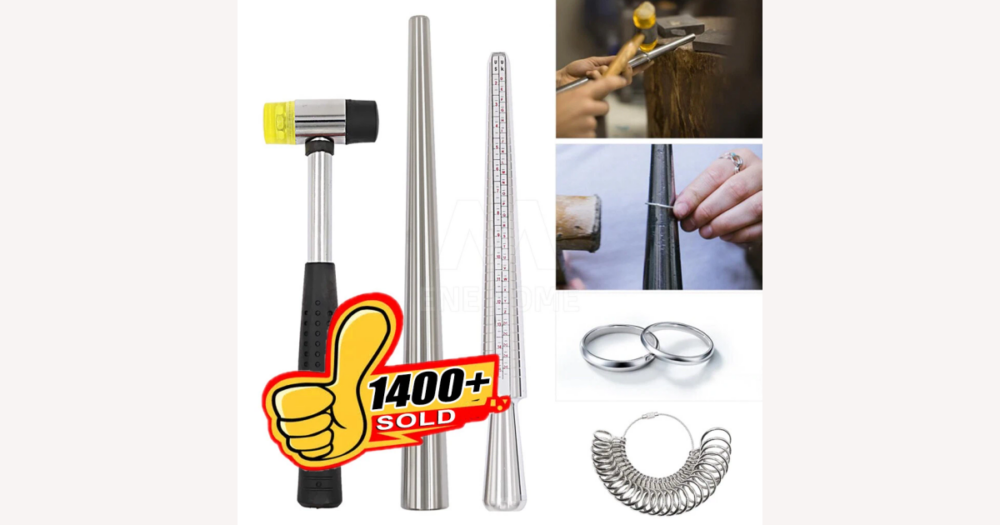
On DHgate you’ll find ring resizing tools that measure your finger size, temporarily tighten loose rings, or apply force to permanently change a band. They can be useful for DIY and hobby jewelry work, but I would always start with accurate measuring and reversible adjusters before considering heavy-duty stretchers or reducers, and treat sentimental or complex rings as candidates for a professional jeweler instead. Before you order anything, check the listing’s specs, the seller’s reliability, and DHgate’s order, shipping, dispute, and refund rules so you understand both the risks to your rings and the protections on your purchase.
Ring resizing tools on DHgate: what they are and when they make sense
On DHgate, ring resizing tools are non-jewelry accessories and workshop devices designed to help your existing rings fit better, not finished rings themselves. You’ll mainly see three kinds of tools: measuring gauges and mandrels that tell you your true ring and finger size, temporary adjusters that sit under or behind a ring to make it tighter, and mechanical stretchers or reducers that apply force to the metal to change its size.
Using tools is different from simply buying a new ring or taking a ring to a local jeweler. DHgate tools are aimed at DIY adjustments and hobby jewelry work, so you take on the learning curve and risk yourself, while a jeweler offers professional skills, specialist equipment, and usually takes responsibility for the outcome. Measuring tools are the lowest-risk option because they don’t alter the ring at all; they just help you order future rings in the right size or confirm whether a current ring actually needs adjustment.
Temporary adjusters—such as silicone coils, plastic guards, clip-on inserts, and sizing beads or bands—change how a slightly loose ring sits on your finger by filling the extra space under the band. They are non-destructive and reversible, so you can remove them if they feel uncomfortable or if you later resize the ring professionally. Permanent tools, including stretchers and reducers, are different: they physically deform or compress the ring, and they are usually intended for plain, solid metal bands rather than delicate or complex designs.
I personally would start with measuring tools and reversible adjusters, and only consider permanent resizing tools for inexpensive practice rings or if you have genuine jewelry training and accept a higher risk of damage. No DHgate tool can guarantee professional-level results, especially on stone-set, hollow, intricately engraved, inlaid, plated, or highly sentimental rings. In those cases, a local jeweler or even replacing the ring is often the safer path.
Because you’re using DHgate rather than a local workshop, it’s also important to treat the transaction carefully: check that the listing clearly describes what type of tool it is, which sizes and ring types it supports, and what materials it uses; confirm the seller’s reliability and how they handle questions; and read DHgate’s order, shipping, dispute, and refund information so you know what to do if the tool arrives different from the description or isn’t suitable for your rings.
Main ring resizing tool categories and what they’re used for
Once you know what ring resizing tools are, it helps to group DHgate listings into three functional categories. Ring measuring tools include finger gauges, mandrels, and printed or metal size charts. Their job is to tell you the actual size of your finger and existing rings without altering the ring at all, which suits situations where you’re unsure of your size, comparing different sizing systems, or checking whether a ring really is too big or too small.
Temporary ring size adjusters cover silicone coils, plastic guards, clip-on inserts, and small sizing beads or bands attached to the inside of the ring. These tools occupy space under or behind the band to tighten the fit of a slightly loose ring while leaving the metal unchanged. They work best for modest looseness on reasonably sturdy rings; the trade-offs are that they mainly help with loose (not tight) rings, can feel bulky, and may be visible if the adjuster’s thickness or color doesn’t match the band width and shape.
Permanent resizing tools—such as mechanical stretchers and reducers—are designed to physically expand or compress a ring so its size changes. They are generally intended for plain, solid metal bands without stones, hollow sections, or complex decorative work, and they demand careful use to avoid cracking, warping, or distorting the ring. Because they apply significant force, vague or incomplete specs and a lack of experience are real risks.
For most non-professional readers, especially anyone working with sentimental or expensive rings, it’s wiser to stay in the first two categories: measure accurately, and if needed, use a well-matched temporary adjuster. Permanent tools are better reserved for confident DIY jewelers, training situations, or low-value practice rings where you deliberately accept the possibility of damage in exchange for learning how metal responds to stronger adjustments.
Key specs to check in ring measuring tools
- Check the stated size range on finger gauge sets and mandrels and confirm it covers both the smallest and largest ring sizes you realistically need in your region and for the people you’re measuring.
- Confirm which sizing system is used—US numbers, UK letters, EU sizes, or inner diameter in millimetres—and make sure it matches how you normally reference ring size or any charts you already use.
- Prefer tools with clear, durable markings such as engraved or deeply stamped scales; faint printing or stickers can wear off and make it hard to read sizes accurately over time.
- Review the tool material and lean toward sturdy metals like steel or solid aluminium for mandrels and gauges, as these are less likely to warp or change shape with normal use than very soft plastics.
- Check that the set is complete enough for your needs, covering the common sizes for your own rings and any friends or family you expect to measure, rather than only a narrow band of sizes.
- Treat missing accuracy details and vague size descriptions as risks: do not assume precision, and consider messaging the DHgate seller to clarify the size range, units, and markings before you rely on a tool for important rings.
Key specs to check in temporary ring size adjusters
Temporary ring adjusters on DHgate come in several forms: wrap-around silicone coils that spiral along the inside of the band, under-ring guards that sit like a strip between ring and finger, clip-on inserts that attach to the back of the ring, and small metal sizing beads or short bands fixed to the inner surface. All of them work by filling space under or behind the ring so a slightly loose band grips the finger more firmly without changing the metal itself.
Thickness and width are the specs that most directly control how much tightening you get and how the adjuster feels. Thicker or wider coils and guards occupy more space, so they can reduce the fit by roughly one size or more, but they may feel bulky or start to show along the edges, especially on narrow rings. Slim adjusters tend to be more comfortable and discreet, yet they only correct modest looseness, so matching the adjuster’s dimensions to your band width and gap is important.
Most adjusters offer a limited fit range: they are designed for modest size reductions, not for taking a ring several sizes down. Listings rarely state an exact number of sizes, so treat claims as approximate and assume that larger changes may require a different ring size rather than relying on inserts alone. Transparency and colour also matter: clear silicone or plastic usually blends better with metal and skin, while opaque or coloured guards and beads are more visible and can alter the look of the ring from different angles.
Because adjusters occupy space between the ring and your finger, they can change how the ring sits and moves. A well-matched insert can feel secure and comfortable; a bulky, poorly sized guard may dig into the skin, catch on knuckles, or peek out from under the band. DHgate listings often under-describe these details, so it’s wise to study photos and any dimension diagrams closely, look for notes on compatible ring width or shape, and ask the seller specific questions when size or material information is missing. If you’re unsure, try inexpensive adjusters first and test them on less sentimental rings to see how they feel and look before trusting them with important pieces.
Key specs to check in ring stretchers, reducers, and other permanent tools
Permanent ring stretchers and reducers on DHgate are mechanical tools that change the metal itself, usually by pushing a ring over a tapered post or compressing it in shaped dies. Simple stretchers use a central, often steel, cone or mandrel and a lever to expand the band; combination stretcher/reducer machines add reversible baseplates and reduction molds or rollers so you can either open the ring slightly or press it down in shaped slots.
For these tools, supported ring size and band width are the first specs to read carefully. Each stretcher or reducer is built around a particular size span and band thickness; very thin, delicate bands may not grip the tool securely, and unusually wide rings may not fit into the molds or between the rollers. If your ring sits outside the stated ranges, the tool may apply force unevenly or slip, which increases the chance of distortion.
Maximum opening or compression range is the other key limit. Listings sometimes state how far the tool can realistically expand or reduce a band; in practice, larger jumps in size put more stress on the metal and make warping or cracking more likely. Even when the machine claims a wide adjustment range, a conservative approach—aiming for small changes and accepting that big size differences may need a new ring or professional work—is much safer for important pieces.
Reduction molds and rollers usually have multiple slots or dies shaped for different band widths and profiles, from narrow, flat bands to slightly domed ones. Matching your ring to the closest-fitting slot helps distribute pressure evenly around the circumference instead of concentrating it at a few high points. If the profiles in the photos look much sharper or narrower than your ring, the tool may bite into edges rather than supporting the band smoothly.
Tool material and construction quality matter because these devices apply significant force. A solid metal body, stable base, secure bolts, and smooth, well-machined surfaces are signs that the tool may behave more predictably than lightweight or loosely assembled versions with rough edges. However, even a sturdy stretcher cannot make every ring safe to resize; it only reduces the chance that the tool itself will flex or slip while you work.
In general, these permanent tools are meant for plain, solid metal bands without stones, hollow sections, inlays, or intricate details. Rings with channels, cut-outs, plating, engraving, or stone settings are much more vulnerable when force is applied: shanks can twist, coatings can crack, and prongs or bezels can loosen. If a ring has sentimental value or a complex design, I would avoid using a stretcher or reducer on it altogether and instead speak to a jeweler.
Many DHgate listings only partially describe which ring constructions they support or how much safe size change is realistic. Vague specs, missing band-width information, or generic “fits most rings” claims are warning signs, not reassurance. Treat that uncertainty seriously: ask the seller specific questions about the ring metals, widths, and profiles the tool is designed for, request clearer photos of the molds or rollers, and consider testing any new tool on cheap practice rings before risking pieces you care about.
Without training, it’s wise to keep permanent size changes small and approach these tools cautiously. I would reserve stretchers and reducers for robust, simple bands and modest adjustments, use them gently, and stop at any sign of uneven resistance or marking. For sentimental or complex rings, or whenever the listing leaves important details unresolved, choosing measuring tools and reversible adjusters or consulting a professional jeweler is usually the safer path.
How tool and ring materials interact (and when to be cautious)
How a ring resizing tool’s material interacts with your ring comes down to hardness and surface texture. Harder tool metals such as steel mandrels and dies can scratch or mark softer ring metals if their surfaces are rough, dirty, or if pressure is applied unevenly at contact points. Even when both materials are metal, small burrs, seams, or dents on the tool can translate into visible scuffs on polished bands.
Textured or poorly finished tool surfaces—including the grooves in reduction molds or the faces of rollers—are especially likely to leave marks on plated or mirror-polished rings when force is applied. A plated or coated finish only has a thin outer layer; dragging it against a rough mandrel or clamping it hard in a sharp-edged slot can flatten patterns, break the coating, or create shiny flat spots that stand out against the original surface.
Silicone and plastic adjusters are generally softer-contact options, but they still press against the ring and skin. Clear, smooth inserts are less likely to scratch metal, yet they can trap dirt and skin oils in crevices, making finishes look dull over time if they are not cleaned. Tinted or opaque adjusters may slightly change the perceived colour of the ring from some angles, and in rare cases low-quality plastics or coatings could leave residue on porous or textured surfaces.
Certain ring designs are much more vulnerable to these interactions. Thin plated bands, engraved or patterned surfaces, inlay rings that mix materials, and stone-set pieces with prongs or bezels all have features that can be stressed or crowded by tools and adjusters. Repeated stretching, compressing, or tight adjuster contact can deform softer shanks, pull patterns out of alignment, or gradually loosen stones and decorative elements.
Because many DHgate listings do not fully detail the exact metals, coatings, or finishes involved, interactions between specific combinations are often uncertain without expert advice. Two metals that look similar in photos may differ significantly in hardness or coating thickness, and sellers may use broad terms like “alloy” or “plated” that hide important nuances. That uncertainty is itself a risk factor, especially for jewellery you care about.
Given those limits, I prefer to err on the side of less force and softer-contact methods for valuable or delicate rings: measure size carefully, use gentle inserts if needed, and keep any adjustment reversible. Hard-contact tools such as steel mandrels, stretchers, and reducers are better reserved for robust, plain bands or inexpensive practice items where minor marking or distortion is acceptable.
Whenever you are unsure how a particular tool material will treat your ring’s metal or finish, treat the situation cautiously. Ask the DHgate seller detailed questions about both the tool and ring materials they expect the device to work with, and for important pieces, consider checking your plan with a jeweler before applying significant pressure or friction. Avoid assuming that a tool described as “universal” is safe for every ring; your ring’s construction and finish still control how much risk you are taking.
Risks and limits of at-home ring resizing tools
At-home permanent tools such as stretchers and reducers work by forcing the ring’s metal over a tapered post or into shaped dies. That mechanical pressure can crack or warp thin or brittle bands, open solder joints, or twist heavily worked shanks, and the risk rises as you try to jump more than a modest size difference. Rings that hold stones are especially vulnerable: stressing the band can pull prongs out of alignment, loosen bezels or channels, and leave stones sitting unevenly or at risk of falling out.
Temporary adjusters avoid changing the metal but bring their own limits. If an insert is too thick or the wrong width for your band, it can feel bulky, pinch skin, cause irritation where it rubs, or snag on clothing and hair. Visible edges or uneven coils can also make a ring look awkward instead of discreet, especially on slim or highly styled bands. On top of tool choice, there is a quieter risk: measuring inaccurately or mixing up size systems can leave you with tools or new rings that simply do not fit, wasting time and money even when nothing is physically damaged.
You can reduce many of these risks by taking a safety-first approach. Start with accurate measuring tools, then use reversible adjusters before considering anything that changes the metal. Keep any size change small rather than trying to jump several sizes at once, and test new tools on low-value practice rings before touching sentimental pieces. If a tool immediately leaves marks, feels rough, or seems to deform the band, stop and reassess rather than forcing it further.
Some situations are better left to a professional jeweler from the outset. Complex stone-set rings, heirlooms, very thin shanks, and heavily engraved or decorated bands carry high emotional and structural value, and basic tools from DHgate are not a substitute for skilled workshop methods. In these cases, treat DIY resizing as a last resort and assume that protecting the ring matters more than achieving a dramatic size change at home.
Simple sequence for choosing a ring resizing tool type
- Measure accurately first. Use ring measuring tools that clearly state their size range and unit system, and confirm both your finger size and the current ring size before you consider any adjustment.
- Classify your ring. Decide whether it is sentimental or expensive versus casual, and whether it is a simple plain band or a more complex stone-set, hollow, or heavily decorated design.
- For sentimental, expensive, or complex rings, combine accurate measurement with either professional jeweler services or gentle temporary adjusters, checking fit carefully and avoiding permanent tools that apply strong force to the metal.
- For simple, robust bands that are only slightly too large, treat temporary adjusters as your first DIY option. Look for adjuster dimensions that match your ring’s width and profile so the fit change stays modest, comfortable, and as discreet as possible.
- For low-value practice rings or plain bands where modest size changes are acceptable and the materials appear suitable, consider permanent stretcher or reducer tools only after reading the specs closely and accepting that some marking or damage is possible.
- Throughout this sequence, keep a safety-first mindset. I would almost always start with careful measuring and reversible solutions, and leave stronger tools to trained jewelers or highly confident DIY users who understand the trade-off between more force and a higher risk of ring damage.
Spotting better-built ring resizing tools in DHgate listings
On DHgate, the quickest way to judge ring resizing tool quality is to slow down and study the listing photos and descriptions as if you were inspecting the tool in person. Clear, well‑lit photos from multiple angles let you see how carefully a finger gauge, mandrel, or stretcher has been machined: smooth contact surfaces where rings will touch, clean transitions between parts, and a base or handle that looks stable rather than flimsy.
Better-built measuring tools and permanent devices usually show consistent details: evenly spaced markings on gauges and mandrels, engraved or printed scales that are sharp and easy to read, edges that look finished rather than jagged, and hardware (bolts, levers, screws) that appears firmly seated. If you can see the same quality in close-ups and wider shots—without obvious dents, rough seams, or mismatched components—that’s a positive sign.
For temporary adjusters such as silicone coils, plastic guards, or clip-on inserts, focus on moulding quality and shape. Photos that show the adjuster up close against a ring should reveal consistent thickness along the length, smooth surfaces without bubbles or flash, and a design that sits flat against the band instead of twisting awkwardly. If the listing includes examples on different ring widths, you can better imagine how the adjuster will sit on yours.
Text matters as much as images. Listings that clearly state the tool’s material (for example, what metal the mandrel or stretcher is made from, or whether an adjuster is silicone or another plastic), the supported size range and unit system, and any included accessories such as extra inserts, keys, or dies give you more to work with than generic “high quality” claims. Favour descriptions that spell out these details and match what you see in the photos.
Treat these cues as helpful hints, not proof. Photos and descriptions can be flattering or incomplete, and DHgate policy means you should not rely on ratings alone as a quality shortcut. If the material, size range, or accessories are missing, vaguely described, or contradicted by different images, consider that a warning sign. In those situations, I would either message the seller with specific questions about sizes and materials or step back and choose a simpler, clearly described tool rather than risking an unclear, harder-to-judge device.
DHgate seller checks specific to ring resizing tools
Because ring resizing tools depend on precise sizes and materials, the seller’s clarity and responsiveness on DHgate matter as much as the tool design itself. Start by reading the full item description rather than just the title: confirm exactly what type of tool it is, which ring or finger size ranges it supports, what materials it’s made from, and which accessories are included so you’re not surprised by a bare tool that needs extra parts.
Compare the description with the photos to make sure they tell a consistent story. The images should show the same tool design described in the text, with matching scale markings, dies, coils, or guards. If one photo shows a different style of mandrel, a different colour adjuster, or extra components that aren’t mentioned, treat that mismatch as a signal to ask questions before trusting the listing for size‑critical work.
Pay close attention to size options and variants. Many ring tools are offered in multiple ranges, colours, or bundles, and the dropdown or variant selection needs to match your intended use. Check that each variant is clearly labeled (for example, different size ranges for gauges, different band widths for adjusters) and that your chosen option still aligns with the dimensions mentioned in the description.
Seller profile details and the rest of their catalogue can hint at experience with tools or jewelry supplies—for instance, a shop that mostly sells hardware and measuring devices versus one with random mixed goods—but these hints are not proof of quality. Use them cautiously, as a small extra piece of context rather than a decisive reason to trust a vague listing.
When anything about size, material, or ring compatibility is unclear, message the seller with specific, practical questions: ask about exact dimensions, the unit system, which ring metals or widths the tool is intended for, or whether delicate, stone‑set rings are suitable. Notice how promptly they reply and whether their answers directly address your questions or stay generic.
If, after this, the listing remains vague about key specs or the seller responds with non‑specific or conflicting information, I would avoid that tool—especially for sentimental, higher‑value, or complex rings. In those cases, clearer sellers and simpler, well‑described tools offer a safer path than trusting a listing that never really confirms what you need to know.
DHgate buyer checklist for ring resizing tools
- Confirm the tool category—measuring tool, temporary adjuster, or permanent device—and make sure it matches the ring situation you identified earlier.
- Verify the supported size range and unit system in the listing and your order details so they align with your ring or finger sizes and local sizing conventions.
- Check the stated materials and any ring compatibility notes, looking for mentions of suitable metals, band widths, and exclusions such as stone-set or hollow rings.
- Review which accessories are included—such as extra inserts, mandrels, dies, or keys—and confirm the quantity and types match what is pictured and described.
- Double-check your selected size or variant in the order summary to avoid accidentally choosing the wrong range, colour, or bundle.
- Review total costs, including shipping charges, and note the estimated delivery time for small hardware so you can manage expectations without assuming guaranteed dates.
- Before ordering, skim DHgate’s current dispute and refund information so you understand in general terms when claims are possible if an item arrives damaged or not as described.
- Keep clear records—screenshots of the listing and order confirmation, plus photos or videos of any mismatch—to support a potential dispute if the tool differs from the description.
- Remember that specific refund outcomes depend on current DHgate policies and individual seller terms, so do not assume automatic approvals; check the rules on the platform at the time of purchase.
FAQ: tool universality, realistic size changes, and DHgate returns
Can one ring resizing tool safely work for all ring materials and designs?
No. There is no truly universal ring resizing tool. Different ring metals, band thicknesses, and constructions (plating, engraving, inlays, hollow sections, and stone settings) respond very differently to pressure, friction, and inserts. A stretcher or reducer that behaves predictably on a plain, solid metal band can easily crack a thin plated ring or disturb prongs and bezels on stone‑set pieces. Even soft silicone or plastic adjusters may sit awkwardly or mark delicate finishes. Treat any “fits all rings” claim as marketing, not a guarantee, and always match the tool type to your ring’s actual material and construction.
How much size change is realistic and relatively safe with basic ring resizing tools?
Temporary adjusters—such as coils, guards, and inserts—are best for modest tightening of a slightly loose ring, typically around a small size difference rather than several sizes. They fill space under or behind the band but do not change the metal, so once the gap is large, they become bulky or uncomfortable instead of truly fixing the fit. Permanent tools like stretchers and reducers can change the metal itself, but they are safest when used for small adjustments on plain, solid bands with no stones or complex details. There is no single evidence‑backed limit that applies to every ring; the practical safe range depends heavily on the ring’s metal, thickness, and design. As adjustments get larger or rings become more complex, the risk of warping, cracking, or loosening stones rises sharply, so keeping changes modest and erring on the side of caution is wise.
What happens if a DHgate ring resizing tool cannot handle my rings, and are returns or refunds possible?
On DHgate, returns and refunds are governed by the platform’s current policies and each seller’s own terms. If a tool arrives significantly different from its description—for example, the size range or materials are not as stated—that may qualify as “not as described,” which can support a dispute or refund request. If the tool matches the listing but simply cannot handle your particular ring design, outcomes are more case‑dependent and may not automatically qualify for a refund. Because DHgate rules and seller policies can change, do not rely on generic assumptions. Before ordering, read the listing’s terms and DHgate’s up‑to‑date dispute and refund information, keep clear records of what was advertised and what you received, and contact the seller or DHgate support promptly if there is a mismatch. For valuable or delicate rings, it is also sensible to speak with a jeweler before using any tool, so you avoid damage that no refund can fully repair.