
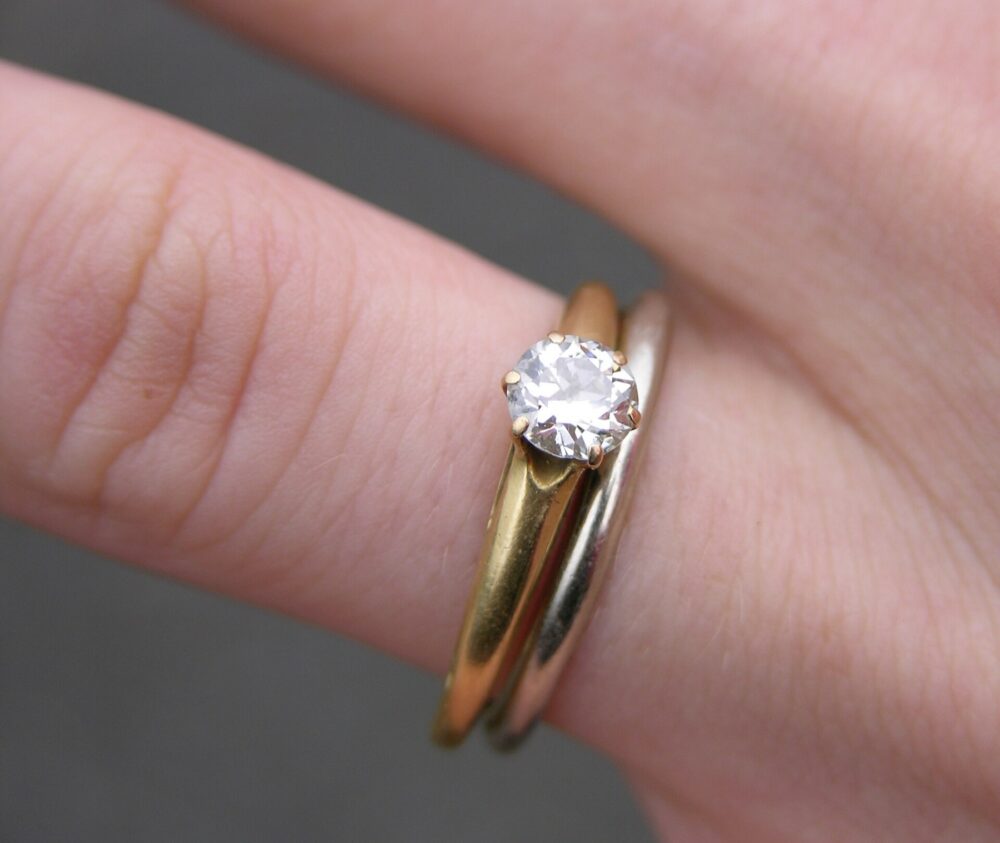
Wholesale wedding rings and bands are bulk ring purchases from manufacturers or distributors, usually at discounted prices for resale. If you’re a U.S. jeweler or ecommerce seller, your job is to pick the right channel, vet suppliers hard, and calculate your real landed cost per ring before you decide whether DHgate or a domestic wholesaler is the better fit.
This guide focuses on how the wholesale wedding ring supply chain actually works, how to choose and communicate with suppliers, and how DHgate compares with U.S. wholesalers like Ross Metals or Casting House when you’re building inventory.
How Wholesale Wedding Rings and Bands Supply Chains Work
Wholesale wedding rings and bands are produced in bulk and sold at trade pricing to retailers, jewelers, and other businesses that resell to brides and grooms. The supply chain is fairly concentrated: metal casting, stone setting, and finishing often happen in specialized workshops, then stock is distributed via wholesalers or online marketplaces.
Common materials you’ll encounter include:
- Gold alloys (yellow, white, rose) and platinum for traditional bridal bands
- Sterling silver and alternative metals (tungsten, titanium, stainless) for budget lines
- Gem-set bands using diamonds or lab-grown stones for higher-ticket SKUs
In the U.S., firms like Ross Metals and Casting House specialize in bridal and men’s bands for trade buyers. Their catalogs show what the mainstream wholesale market looks like: comfort-fit profiles, classic half-round bands, channel-set styles, and sizing spreads for men and women. They typically serve jewelers who buy in bulk, sometimes with customization options.
Cross-border, many of the same styles are produced in China and other manufacturing hubs, then listed on marketplaces. That’s where platforms like DHgate come in: they connect overseas manufacturers and suppliers with global buyers, including jewelry categories such as wedding and engagement rings.
For a small U.S. seller, you’re choosing between:
- Domestic wholesalers (usually faster, higher cost, clearer branding)
- Cross-border manufacturers/marketplace sellers (lower cost potential, more logistics and vetting work)
Your mix depends on whether you want a curated, branded line or a wide range of price points.
Choosing and Communicating with Wedding Ring Suppliers
What to look for in a wholesale ring supplier
For wedding rings, small quality differences matter a lot. You’re not just buying generic fashion jewelry; you’re supplying sentimental pieces that buyers expect to last.
Concrete checks:
- Material description: Look for clear metal specs (e.g., 14K vs 10K, 925 silver) and whether stones are natural, lab-grown, or simulants.
- Finish and sizing options: Check if the listing or catalog specifies profiles, widths, and size ranges so you can cover typical U.S. ring sizes.
- Intended use: Ensure the seller is positioning the item as a wedding band, not just a fashion ring, so durability expectations align.
DHgate’s own editorial guidance for jewelry buying recommends reading product descriptions closely, checking customer reviews, and engaging directly with the seller to clarify details and expectations before purchasing. That’s a useful baseline for any marketplace, not just DHgate.
Practical vetting on cross-border marketplaces
On DHgate or similar platforms, treat every seller as its own business:
- Listing-level evidence: Compare multiple listings of similar bands. Are photos consistent? Does the text repeat vague phrases, or does it specify weight, plating thickness, and stone type?
- Buyer feedback patterns: Look at reviews for ring comfort, plating longevity, and whether sizing runs true.
- Direct messaging: Before you buy, send a concise spec sheet: material, width, ring profile, size run, and packaging requirements. Ask if they can meet it and what their typical production time is.
For wedding rings, always start with samples. Order a small batch (even single units if the seller allows) to inspect:
- Metal color compared to your expectations
- Polish and finishing consistency
- Comfort on the finger, especially for wider bands
If the samples don’t meet your standard, don’t talk yourself into a bulk order just because the price is low.
Costs, Channels, and DHgate as a Wedding Band Sourcing Option
Modeling your landed cost per ring
To compare channels, you need a simple landed-cost model. For each ring style, combine:
- Unit purchase cost (from the supplier or marketplace listing)
- Shipping and import charges spread across the batch
- Overhead (ecommerce fees, packaging, photography, marketing) allocated per ring
For example, if a batch of 50 bands costs you $500 from the supplier, $150 in freight and import fees, and you estimate $100 in overhead tied to that batch, your total is $750. That’s $15 per ring landed. You then compare that against domestic wholesale quotes and your target retail price.
Mini channel comparison: domestic vs Chinese marketplaces
Here’s a high-level comparison to help frame your options:
| Channel type | Typical strengths (editorial judgment) | Likely trade-offs for small U.S. sellers |
|---|---|---|
| U.S. bridal wholesalers | Clear gold/metal specs; familiar sizing; faster domestic shipping | Higher unit costs; larger MOQs; less ultra-low-price range |
| Chinese B2B marketplaces | Wide style variety; access to manufacturers; potential lower unit cost | Longer lead times; more vetting; cross-border logistics |
| Direct overseas manufacturer | Deeper customization; branding options | Relationship-building required; minimums can be higher |
Domestic wholesalers like Ross Metals or Silver Palace are often the most straightforward if you want classic styles and predictable specs, and you’re comfortable with trade-level pricing.
Marketplaces connecting you to Chinese suppliers add more style variety and price flexibility but also more moving parts.
Where DHgate fits specifically
DHgate describes itself as a leading B2B marketplace from China, connecting manufacturers and suppliers with buyers worldwide across many categories, including wedding and engagement rings.
From DHgate’s own editorial content you can infer several features that matter to a ring business:
- Marketplace role, not manufacturer: DHgate hosts millions of products from many suppliers. For jewelry, their blog mentions a large number of pieces, including wedding and engagement rings, plus men’s jewelry like bands and cufflinks.
- Bulk and single-unit orders: DHgate highlights that you can buy “one or more” units, with wholesale discounts often available for larger quantities. That’s useful when you want to test new ring styles with samples before committing to a bulk buy.
- Ecommerce entrepreneur focus: DHgate positions itself as suitable for ecommerce entrepreneurs who resell goods on platforms like eBay, Amazon, or Shopify. That aligns with a small U.S. seller who wants to source rings and drop them into a multi-channel retail stack.
A practical DHgate sourcing workflow for wedding rings and bands might look like this:
- Search and shortlist 3-5 suppliers whose catalogs focus on rings and bands, not just mixed fashion accessories.
- Deep-read listings for your target styles, applying DHgate’s own advice: read product descriptions thoroughly, scan customer reviews, and message the seller with your spec sheet.
- Order samples using single-unit or very small-quantity orders to physically inspect: metal color, finish, comfort, and whether the ring matches the photos.
- Negotiate bulk pricing only after samples pass; ask clearly about price breaks at your realistic quantities.
Risk callout: cross-border wedding ring sourcing
Wedding rings are emotionally and financially sensitive purchases. Cross-border sourcing can work, but the risk profile is higher than ordering generic accessories:
- If plating wears quickly or sizing is inconsistent, returns and reputational damage add up fast.
- Miscommunication on metal quality (e.g., “gold color” vs gold alloy) can lead to customer complaints.
That’s why DHgate or any other marketplace should start as a testing channel for budget lines or alternative metals, while classic gold or platinum bands may still make more sense from established domestic wholesalers until you’ve built confidence in specific overseas suppliers.
Before choosing a DHgate supplier, use Find wholesale suppliers on DHgate, Find DHgate suppliers, and Choose a DHgate wholesale supplier.
If you treat DHgate as one option among several, do disciplined sampling, and model landed costs honestly, you’ll be able to see very quickly whether cross-border wholesale wedding rings and bands strengthen your assortment or introduce more risk than they’re worth.