
You don’t have to choose between imported wholesale craft supplies and donation-based creative reuse centers. Most US craft businesses do better with a mix: use cross-border marketplaces like DHgate for consistent, repeatable items (beads, blanks, tools, packaging), and lean on creative reuse centers for ultra-low-cost, unique or bulky materials (fabric offcuts, paper, odd findings) that add character and margin. The right blend depends on what you sell, how standardized it needs to be, and how much weight you put on sustainability and story.
On the wholesale side, DHgate is a large China-based B2B marketplace that connects global buyers with Chinese manufacturers and suppliers across many categories, including craft-related goods. Editorial material from DHgate’s blog describes tens of millions of products and over a million suppliers on the platform, with generally lower minimum order requirements than many traditional wholesale sites.https://www.dhgate.com/blog/?p=12440 That gives small US craft sellers access to repeatable inventory; creative reuse centers give you local, variable, often one-off stock that supports teaching, experimentation, and eco branding.
How Wholesale Craft Supplies and Creative Reuse Fit Together for US Small Businesses
“Craft supplies and creative reuse” is really two ecosystems that can feed the same business.
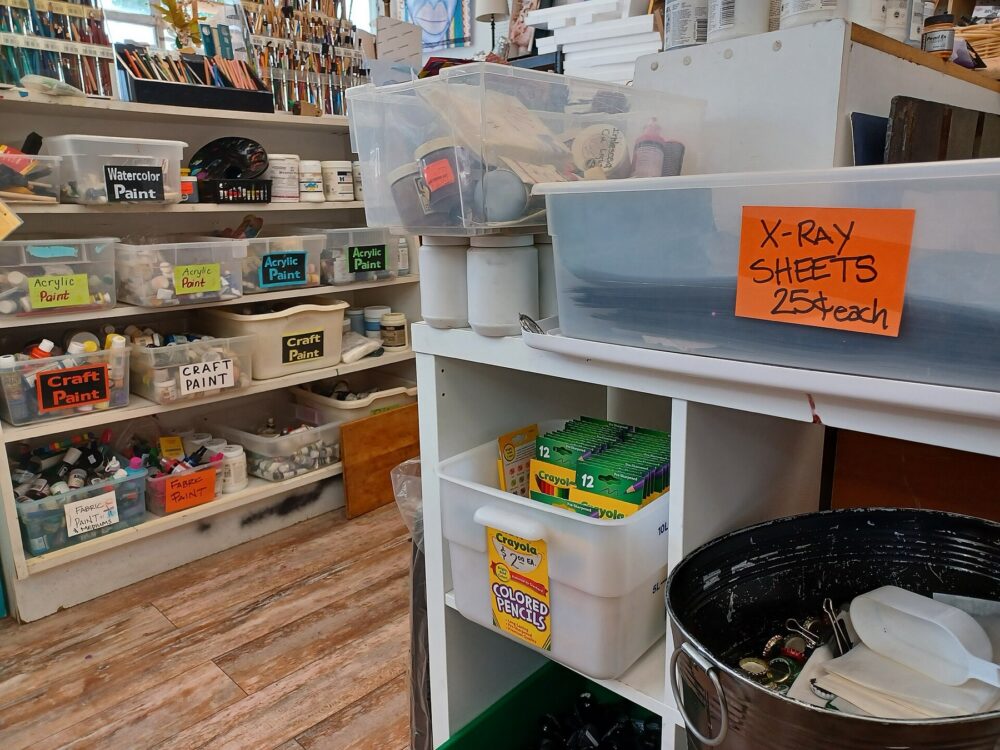
Creative reuse centers in the US are typically nonprofit, thrift-style craft shops that collect donated surplus materials and resell them as affordable art and craft supplies while promoting sustainability and community engagement. Organizations like the Pittsburgh Center for Creative Reuse and Scraplanta Creative Reuse describe their mission as diverting usable materials from landfills and making them accessible to local makers, educators, and kids. Inventory often includes fabric remnants, yarn, paper, office supplies, frames, and odd specialty items that would otherwise be wasted.
Wholesale craft supply sourcing looks very different. You’re buying new product, usually in bulk, with some expectation of consistency. On DHgate and similar marketplaces, that often means:
- Standardized items: beads by color and size, blank wooden shapes, stickers, ribbons, tools.
- Ongoing availability: you can reorder the same SKU for months or years, depending on the seller.
- More control over specs: you can ask about composition, dimensions, and packaging.
For a US microbusiness running workshops, an Etsy shop, or a small brick-and-mortar, these channels complement each other:
- Workshops and classes: Creative reuse centers keep per-student material costs extremely low for kids’ art, collage, scrap crafts, or “junk to art” sessions. Cross-border wholesale gives you standardized items like foam shapes or child-safe glue in reliable quantities.
- Curated kits: You might build an upcycled collage kit using reuse-center paper and fabric, then add imported components like branded stickers, metal charms, or custom-printed bags.
- Production lines: If you need 500 identical macramé kits or resin-jewelry sets, you’ll lean heavily on wholesale for cord, molds, and findings, and sprinkle in reuse materials only where variability won’t hurt.
Done well, creative reuse is your low-cost, high-story layer; wholesale is your predictable backbone.
Choosing and Vetting Craft Supply Suppliers: Cross-Border vs Local Reuse
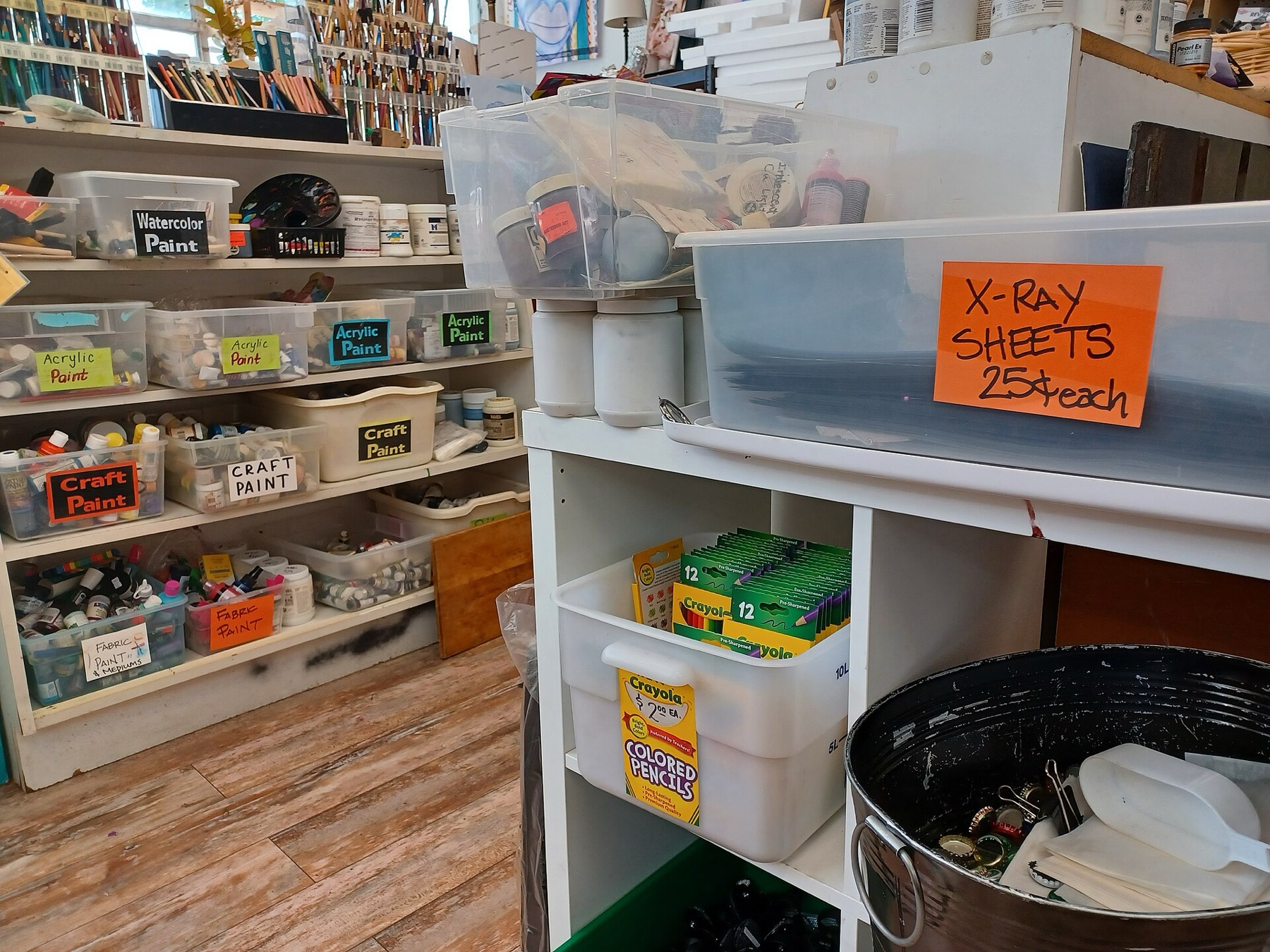
Evaluating a reuse center is mostly about fit and reliability of access, not individual suppliers. Centers like Scraplanta describe themselves as “craft supply thrift stores,” fed by donations from individuals and businesses. You can walk the aisles, see quality in person, and ask staff what categories stay well-stocked and which are hit-or-miss. The constraints:
- Inventory is highly variable and often cannot be reserved far in advance.
- Exact repeats are rare; you may get similar fabric, but not the same SKU.
- They’re ideal for volume by weight (paper, fabric, miscellaneous bits) but not for tight specs.
So for commercial use, reuse centers are strongest in roles like:
- Filling a “creative buffet” for open studio time.
- Supplying bulk background materials (paper, cardboard, scrap fabric) where consistency isn’t critical.
- Adding surprise or uniqueness to kits and finished goods.
What to check on DHgate and other marketplaces
DHgate requires more structured vetting because each listing is its own business relationship. Based on DHgate’s editorial blog, it’s a large B2B marketplace with millions of products and hundreds of thousands of suppliers, and it uses several signals to help you pick sellers.https://www.dhgate.com/blog/?p=12297https://www.dhgate.com/blog/?p=13293
Concrete checks that matter specifically for craft supplies:
- Seller ratings and volume: Higher ratings and substantial order counts suggest the seller has shipped many orders successfully. For consumable craft items (glues, paints, kids’ materials), prioritize sellers with meaningful feedback to reduce the risk of poor quality.
- Photo and description depth: Craft supplies often hinge on small details—fiber content, weight, finish, color accuracy. Look for listings with multiple clear photos and specific descriptions (e.g., “cotton macramé cord, 3mm, 100m roll”) rather than vague titles.
- Communication quality: Message sellers with targeted questions: ask for exact dimensions, material certifications if relevant, packaging details, and whether colors or patterns vary by batch. Their responsiveness tells you a lot.
- Sampling before scale: For items that will define your product (e.g., embroidery thread, jewelry findings), ask to buy the minimum quantity first as a quality test before placing a larger order.
Here’s how the vetting feels in practice, compared with your local reuse center:
| Source type | Main quality signal | Consistency potential | Best use cases |
|---|---|---|---|
| Creative reuse center | In-person inspection; staff guidance | Low; inventory changes often | Bulk low-cost materials; experimentation |
| DHgate craft supplier | Ratings, badges, detailed listing, messaging | Medium–high per SKU, if reorders are supported | Kits, repeatable products, packaged supplies |
| US domestic wholesaler | Brand reputation; trade references | High, but often higher MOQs | Larger operations, retail chains |
If you want more detail on finding and shortlisting DHgate sellers, you can go deeper in guides like Find DHgate suppliers and Choose a DHgate wholesale supplier.
Designing Orders, Costs, and Channels: When DHgate Beats Creative Reuse (and When It Doesn’t)
Editorial guidance from DHgate’s blog emphasizes that many suppliers on the platform are willing to sell in small quantities, sometimes as few as one or two units, and that tiered pricing is typical: larger quantities often get lower per-unit prices.https://www.dhgate.com/blog/?p=13293 This isn’t universal for every listing, but it makes DHgate unusually friendly for testing new craft SKUs or scaling up once you’re confident.
Think about your ordering and cost choices through a few concrete scenarios:
Scenario 1: Kids’ craft classes with 20-50 students
- Reuse center advantage: You can buy mixed paper, cardboard, and fabric by the bag or pound at very low cost. Variability is fine; it’s part of the fun.
- DHgate role: Use cross-border wholesale for items where safety and consistency matter: child-safe scissors, foam shapes, glue sticks, or simple beads. Small MOQs help you avoid stocking thousands of units you don’t need.
- Result: Lowest total per-student cost with a hybrid approach—reuse for bulk backgrounds, DHgate for standardized, semi-durable supplies.
Scenario 2: Etsy-style DIY kits
Suppose you sell 100 macramé wall-hanging kits per month.
- If you rely only on creative reuse: You’ll probably struggle to keep cord type, thickness, and color consistent, which can trigger returns or bad reviews.
- If you rely only on DHgate or another wholesale marketplace: You get consistent cord, rings, and packaging, but your per-kit material cost may be higher than if you blend in some reuse items.
- Hybrid approach: Buy core components (cord, rings, printed instruction cards, branded poly bags) via DHgate in quantities just over the price-break tiers. Add unique embellishments—scrap fabric tassels, reclaimed beads—from the reuse center to differentiate your kits and boost margin.
Scenario 3: Creative reuse-focused storefront or studio
If your brand is built around zero waste and local materials, the math changes:
- You might treat DHgate and other wholesalers as secondary, reserved for items with safety or performance requirements you can’t reliably meet through donations (non-toxic glue, certain tools).
- Your main constraint is inventory unpredictability; you’ll design classes and products that flex with what’s available—collage, assemblage, mixed-media rather than precise “paint-by-number” style kits.
In each case, ask:
- Do I need the same SKU for months? If yes, favor wholesale (DHgate, domestic wholesalers). If no, reuse can be your primary source.
- Is the item safety-critical or a core part of quality? If yes, test and standardize via a vetted supplier, even if reuse provides some of the supporting materials.
- How sensitive is my audience to eco claims and uniqueness? If high, reuse materials can justify higher prices and marketing angles.
DHgate’s scale—tens of millions of products and over a million suppliers, per its own editorial numbershttps://www.dhgate.com/blog/?p=12440—means you’re likely to find multiple craft-related options for any given category. The tradeoff is more upfront work: searching, comparing listings, and messaging sellers. For small US craft businesses, that work pays off for repeatable kits and supply lines, while creative reuse centers remain unmatched for cheap, characterful, and deeply sustainable inputs.
Before choosing a DHgate supplier, use Find wholesale suppliers on DHgate.
If you decide DHgate is part of your mix, start small, confirm quality, then design your kits and workshops so reused and imported materials play to their strengths.