
If you run a craft business or community studio in the US, you can absolutely combine creative‑reuse materials with imported supplies—but you should import only what you can’t reliably get from local reuse centers or domestic wholesalers, and only after you’ve priced out landed cost and supplier risk. Creative‑reuse nonprofits like the Pittsburgh Center for Creative Reuse and Scraplanta frame themselves as sustainable craft supply sources; for many items they’ll beat cross‑border marketplaces such as DHgate or Alibaba on both cost and environmental impact. DHgate is still relevant for standard, repeatable components (beads, findings, blank bases) if you vet sellers carefully and treat bulk orders as a calculated experiment, not an automatic win.
How Craft Supplies and Creative Reuse Fit into the Wholesale Supply Chain
For sourcing, it helps to separate two buckets:
- Conventional craft supplies – new, standardized items like blank tote bags, embroidery hoops, safety eyes for amigurumi, stickers, washi tape, and generic beads.
- Creative‑reuse materials – surplus, donated, or salvaged items re‑sold for art and craft use: offcut fabric, outdated sample books, misprinted packaging, used office supplies, and unusual “junk” that becomes raw material.
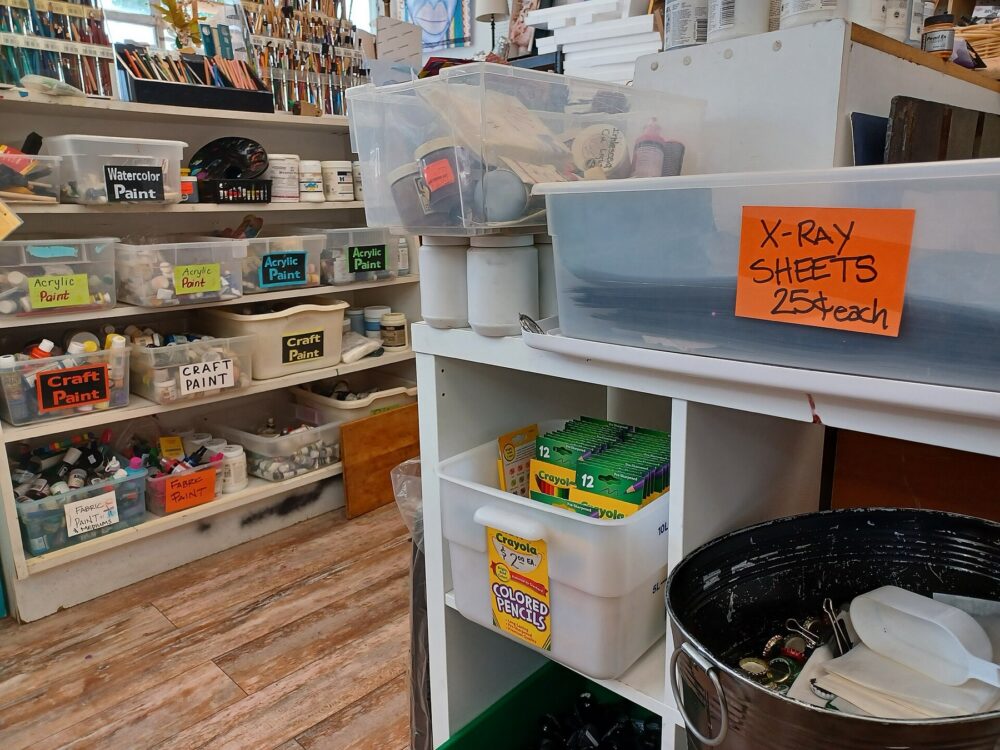
US creative‑reuse centers collect and redistribute surplus art and craft materials to reduce waste and increase community access. That’s the core mission stated by organizations such as Pittsburgh Center for Creative Reuse and reuse shops that describe themselves as “craft supply thrift stores” diverting usable items from landfill, like Scraplanta Creative Reuse. These centers operate more like thrift/wholesale hybrids than typical distributors: inventory is donation‑driven, varied, and often one‑off.
For a small craft brand, the practical split often looks like this:
- Locally sourced / reuse‑heavy: fabric offcuts for scrappy quilts, mixed ephemera packs, buttons, thread, paper and envelopes, vintage magazines, unusual textures. These are best sourced via creative‑reuse centers, local surplus stores, or community swaps because the variety and low cost are hard to replicate cross‑border.
- Wholesale / cross‑border friendly: standardized parts you need to reorder, like jewelry findings, blank keychains, sticker sheets, plain canvas items, or silicon molds. These lend themselves to B2B marketplaces since you can specify exact dimensions, finish, and packaging.
The smart play is usually designing your product line around reuse first, then backfilling gaps—like a specific clasp size or blank journal—through wholesale channels.
Selecting Cross‑Border Suppliers for Craft and Reuse‑Friendly Materials
Cross‑border sourcing adds distance and complexity, so your supplier vetting has to do more than a quick star‑rating skim.
On DHgate, brand editorial guidance suggests using search filters, checking seller ratings and transaction history, and ordering samples before committing to larger orders. That’s good baseline practice, but for craft and reuse‑aligned materials you can tighten it:
1. Make your search terms precise and reusable.
If you sell upcycled earrings using donated beads, you might still import the hooks and jump rings. Search terms could be:
- “304 stainless steel earring hooks” instead of just “earring hooks”
- “lead free brass jump ring 6mm” for findings that touch skin
You’re looking for listings with clear material specs that you can paste directly into your own product descriptions.
2. Read listing photos like a quality audit.
For craft parts:
- Zoom into close‑ups: do plating colors match across a batch? Are edges smooth enough for kid‑safe use?
- Check packaging photos: bulk bag vs individual bags; this affects your own handling and potential plastic use.
- Look for photos of the item in use—finished jewelry, printed tote, resin pieces. They’re not proof of quality, but they reveal scale and finish better than white‑background shots.
If you prioritize sustainability, avoid listings that clearly ship everything in layers of individual plastic unless you’re prepared to rework your packaging story.
3. Use DHgate’s own advice on samples—then go one step further.
DHgate’s blog encourages buyers to request samples and test products before large orders. For a craft brand, build a mini process around that:
- Order a small paid sample batch (for example, 50 sets of charms or 20 blank totes) instead of a single piece.
- Run three checks on arrival: basic safety (no sharp edges, obvious odors), consistency across pieces, and how the material behaves with your actual process (paint adhesion on totes, how findings hold up in tumbling or polishing).
- Use part of that sample batch in a limited drop to test customer feedback before you reorder.
If the seller refuses any form of sampling or keeps changing details in chat (material, finish, or pack size), treat it as a red flag and move on.
4. Ask for documentation that supports your brand story.
Creative‑reuse brands often talk publicly about waste reduction, non‑toxic materials, and kids’ safety. For imported components, you can’t just assume compliance:
- Ask the seller to confirm material details in writing (e.g., “nickel‑free,” “lead‑free” for findings marketed toward kids).
- If they mention compliance with any standard, request a document or lab report reference—even if you don’t rely on it as definitive proof, you’ll quickly see which suppliers treat specs seriously.
For reusable blanks like journal covers, canvas, or bags, also ask about fiber content. It matters for how well they accept dye, paint, and embroidering in your studio.
Pricing, MOQs, Logistics and Where DHgate Fits for Craft Sourcing
DHgate is a China‑based B2B marketplace connecting manufacturers and suppliers with global buyers at wholesale‑style prices. Its editorial content describes it as a large catalog of categories with bulk discounts available and the ability for buyers to order in small or larger quantities depending on vendor terms. That structure matters for how you plan craft sourcing.
Think in terms of landed cost, not just unit price:
- Product cost – what you pay per piece to the seller.
- Customs and duties – what you may owe when goods enter the US.
DHgate’s own wholesale tips emphasize analyzing demand before bulk purchases and comparing multiple listings rather than grabbing the first cheap option. That’s especially relevant for craft businesses, where trends can shift quickly and storage space is limited.
Here’s how DHgate compares conceptually against other channels for a craft brand:
| Sourcing channel | Best for | Reuse/sustainability fit | Typical challenges |
|---|---|---|---|
| Local creative‑reuse centers (e.g., PCCR, Scraplanta) | One‑of‑a‑kind materials, mixed packs, low‑cost exploration | Strong: diverts materials from landfill, supports community missions | Inventory is unpredictable; not ideal for standardized SKUs |
| Domestic craft wholesalers / distributors | Branded paints, glues, kid‑safe kits | Moderate: depends on their own sourcing; easier compliance | Higher unit cost than imports; MOQs may still be significant |
| Cross-border multi-seller and similar B2B marketplaces | Standardized parts, blanks, packaging | Weak to moderate: new goods, but can support durability (e.g., stainless steel) | Quality variation, long lead times, customs complexity |
| Alibaba / Made‑in‑China | Larger volumes, OEM/custom projects | Similar to DHgate; often more factory‑direct on high volumes | Higher typical MOQs; more time‑intensive supplier negotiation |
For a small craft brand focused on creative reuse, DHgate usually fits in two situations:
- You need a repeatable base for an upcycled product. Example: importing plain stainless steel bangles, then decorating them with reuse‑sourced materials. The bangle needs consistent sizing and hypoallergenic material; DHgate suppliers can often provide that sort of standardized part in bulk.
- You’re testing a new, scalable line that still honors your reuse values. Example: you sell mystery kits built with local reuse materials, but want to add a consistent set of tools (scissors, needles, basic findings) that donors rarely provide. Cross‑border sourcing can fill that standard component gap.
However, if your brand story leans heavily on landfill diversion and local community impact, you’ll likely want most of your inventory budget to stay with creative‑reuse centers and local sources, using cross‑border marketplaces only for truly missing parts or high‑durability items that extend the life of reused materials.
A simple sampling scenario for DHgate craft sourcing
Imagine you run a small jewelry studio that buys mixed vintage beads from a reuse center but wants consistent ear wires and clasps:
- You identify three DHgate listings for “nickel‑free stainless steel ear hooks” using filters and search.
- You order sample‑size quantities from each seller—enough to make 10-20 pairs per listing.
- You create three mini drops in your online shop, labeling hardware sources transparently, and collect customer feedback over a month.
- Only after seeing stable quality and good response do you calculate landed cost for a larger order and commit to one supplier, keeping your bead budget with local creative‑reuse centers.
For more DHgate‑specific mechanics such as search strategy and interpreting seller history, you can dive into guides like Find wholesale suppliers on DHgate, Find DHgate suppliers, and Choose a DHgate wholesale supplier, then plug those tactics into the reuse‑first sourcing plan outlined here.