
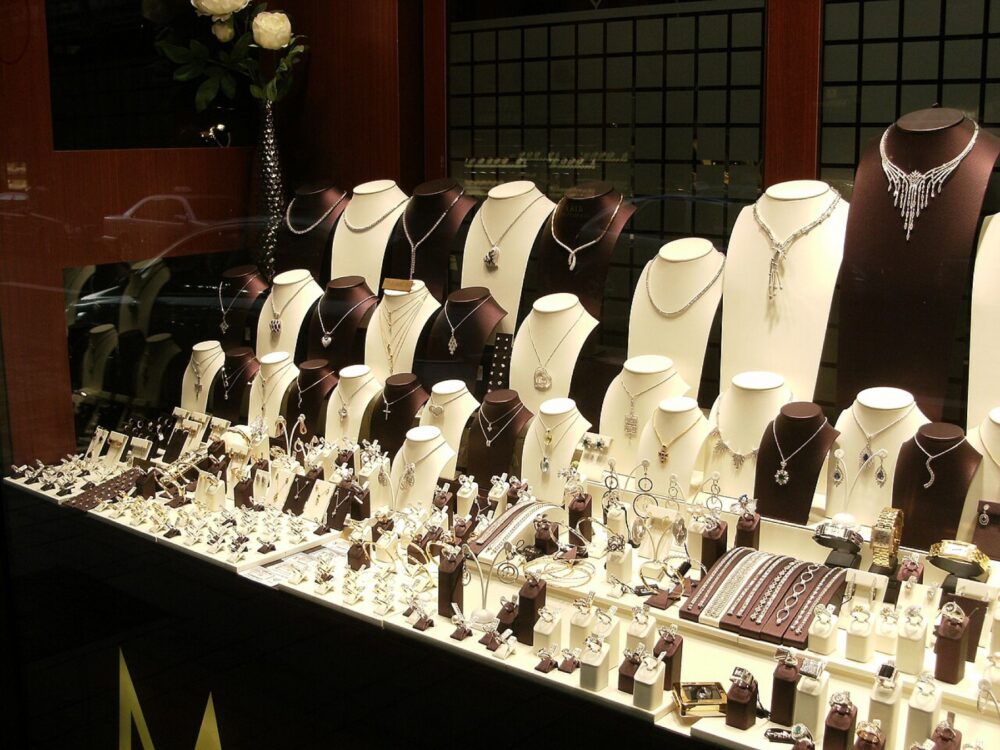
If you’re sourcing jewelry for a US boutique or online shop, you should pick your route based on three things: how many units you buy at once, how custom your designs are, and how much supplier work you’re willing to handle. Large, repeatable orders with custom specs usually fit best with OEM factories or trade-focused wholesalers. Smaller or mixed assortments, with light customization at most, often work on marketplaces like DHgate, which editorial sources describe as friendlier to small-business buyers that want bulk without high minimums.
DHgate is just one route, though. For some jewelry businesses it’s the right place to test ideas or top up inventory; for others, it’s too fragmented and hands-on compared with dealing directly with a factory or a specialty wholesaler. The sections below map the main jewelry sourcing channels and show where DHgate tends to fit — and where it doesn’t.
How the Jewelry Wholesale Supply Chain Works for Small Buyers
Global fashion jewelry is heavily supplied by Chinese manufacturers, which show up prominently in supplier rankings compiled for industrial buyers and retailers.Source These manufacturers feed several layers you can tap into:
- Finished fashion jewelry wholesalers – factories or trading companies selling ready-made earrings, bracelets, rings, and sets. Good for trend-driven stock.
- Component and findings suppliers – beads, chains, clasps, pendants for brands that assemble or customize pieces locally.
- OEM/ODM manufacturers – factories that build your design under your brand (OEM) or help you design from their template library (ODM).
- Online B2B platforms – marketplaces like Alibaba or DHgate that host many factories and traders.
China’s advantage for fashion accessories is an integrated ecosystem: large capacity, broad material choices (stainless steel, brass, plated alloys, etc.), and pricing that supports accessible retail.Source For a small US buyer, this ecosystem is reachable either directly (factory relationships, trade shows) or indirectly (platforms and intermediaries).
If you sell:
- Under 200 units per style per reorder, platforms and trade-focused wholesalers are usually more practical.
- Hundreds to thousands of units per style, direct OEM factories or structured B2B platforms with higher MOQs often make more sense.
Those aren’t hard rules, but they’re a useful starting lens for deciding which route deserves your time.
Picking Suppliers and Managing Your Own Workload
Jewelry buying isn’t just about unit cost. Each sourcing route decides who does the hard work: vetting, communication, and quality control.
Retail-focused guides from Paradise Jewelry break the wholesale flow into MOQs, OEM/ODM customization, payment, shipping, and QC steps.Source SilverStar Jewellery’s advice to retailers highlights how some wholesalers trade flexible orders and custom design support for tighter operations and documented standards.Source Translate that into workload like this:
Platform marketplaces (Alibaba-style, DHgate) You handle most of the legwork:
- Identify potential suppliers from search results and rankings.
- Compare MOQs, price tiers and basic material descriptions across multiple listings.
- Negotiate customization (if any) and confirm whether you’re working with a factory or a trader.
- Arrange sampling, approve production, and organize inspection through your own or third-party QC.
Buyer workload is higher, but assortment breadth and bargaining room are strong.
Direct OEM factories You invest more upfront to lower chaos later:
- Share tech packs or clear design references.
- Align on MOQ, material specs, plating thickness, and compliance needs.
- Set structured QC plans (pre-production samples, mass-production checks).
The factory relationship can dramatically reduce day-to-day sourcing stress once it’s working, but you need enough volume and clarity to be worth their time.
Trade-focused wholesalers (often outside platforms) These are built for retailers, not product engineers:
- They curate assortments and usually publish clear order windows and documentation.
- Many offer modest customization (logo tags, carding, minor design tweaks) while keeping processes tight.Source
You trade some margin and deep customization options for lower workload: fewer suppliers to manage, clearer standards, and simpler reorders.
Your decision is less “which site is cheapest” and more “who is actually doing the coordination and QC — me or my supplier?”.
DHgate Listing Snapshot: What Jewelry Inventory Looks Like
To ground DHgate’s role, here’s a snapshot of jewelry-related listings observed on 2026-10-09. Prices and availability can change; these are examples, not endorsements.
- Custom-capable bracelet factory – A listing titled “The source factory undertakes custom processing of titanium steel jewelry according to drawings samples for Jewelry bracelets” in the Bangle category shows pricing in the roughly $45–$52 range per lot.Source The description explicitly mentions custom processing based on drawings or samples, hinting at OEM-style work offered through the platform.
- Stainless steel fashion bracelet – “Series luxury jewelry Nail Stainless Steel Bracelet Simple Versatile Style Full jewelry” (also in Bangle) is priced around $19–$20 per lot and has a few reviews.Source This is closer to off-the-shelf trend product suited for boutiques testing small batches.
- DIY jewelry accessories – “Wholesale DIY Jewelry Accessories for Foreign Trade: Bracelets, Necklaces, Keychains, Slippers, Skates, Pendants – Silver-plated Copper Bestsellers” in Keychains & Lanyards carries prices around $8–$9 per lot.Source This type of listing fits component-based brands or sellers who assemble sets in the US.
- Jewelry storage and packaging – Multiple listings for portable jewelry organizers and metal ring boxes fall in the tens to low hundreds of dollars per lot, in categories like Jewelry Storage and Jewelry Boxes.SourceSource These are relevant if your wholesale sourcing includes display and packaging.
These examples reflect what DHgate itself markets in blog content: a large Chinese B2B marketplace with millions of jewelry pieces and expectations that minimum orders are lower than some traditional B2B sites.Source For a small retailer, that often translates into being able to experiment with more SKUs without committing to factory-level MOQs, though you still need to negotiate specifics with each seller.
If you intend to explore DHgate more deeply as a sourcing channel, you can also look at existing DHgateWiki guidance such as Find wholesale suppliers on DHgate or Choose a DHgate wholesale supplier.
Channel Comparison by Order Size, Customization and DHgate’s Role
Editorial comparisons from Nihao Jewelry’s blog frame Alibaba as more aligned with larger B2B orders and DHgate as friendlier to smaller bulk buys with lower minimums.Source Combine that perspective with OEM and trade-wholesaler routes, and the picture for a US jewelry buyer looks roughly like this:
| Route / Platform | Best-fit order size (editorial judgment) | Customization pattern | Buyer workload profile | Where DHgate actually fits for jewelry |
|---|---|---|---|---|
| DHgate-style marketplace | Small to mid-size lots; testing styles | Some listings offer custom work; many are off-the-shelf | High: you compare many sellers, manage QC per supplier | Good for boutiques and small online shops trying variety or low-run custom with factory access. |
| Alibaba-style B2B marketplace | Larger B2B orders per style | Strong OEM/ODM focus once you reach MOQs | High upfront, then moderate with stable partners | Better for brands planning consistent, high-volume production runs. |
| Direct OEM factory (China) | Hundreds–thousands of units per style | Deep customization: materials, plating, branding | High at relationship set-up; lower later | Ideal if you’re building a brand with repeat designs and clear specs. |
| Trade-focused jewelry wholesaler | Small to medium orders, assortments for retail | Limited but retailer-friendly tweaks (cards, small design changes)Source | Lower: curated lines, clearer standards | Strong fit for stores that prioritize reliable assortment and documentation over maximum margin. |
Use this comparison with your specific scenario:
- Small boutique or Etsy/Shopify seller testing trends: DHgate or other low-MOQ marketplaces plus a few trade wholesalers are often the most realistic starting points.
- Growing DTC jewelry brand with repeat bestsellers: shift toward Alibaba-style sourcing or direct OEM factories as soon as your reorders justify the communication and QC setup.
- Component-heavy or maker-focused business: combine component suppliers (on or off platforms) with a smaller set of finished jewelry partners; DHgate can be part of that mix, especially for findings and packaging.
Before choosing a DHgate supplier, use Find DHgate suppliers.
If your order sizes or brand goals are drifting toward OEM territory, spend your energy on clearer factory relationships and structured QC instead of chasing dozens of small marketplace listings.