
If you’re looking for 300 GSM t‑shirts, you’re shopping in the heavyweight, premium part of the blank apparel market. You can buy these tees from European premium manufacturers, US blank wholesalers, and China‑based marketplaces; the best route for you depends on how many pieces you need, how specific your fit and fabric requirements are, and how much risk you’re willing to take on cross‑border sourcing.
A small US brand doing a first drop often starts with in‑stock heavyweight blanks from a domestic wholesaler or a European producer that carries 300 GSM oversized tees. Once you’re confident in your pattern, print method, and customer demand, you can consider custom 300 GSM production from manufacturers or China‑based suppliers for larger runs.
What 300 GSM Heavyweight T‑Shirts Are and Where They Sit in the Apparel Supply Chain
GSM stands for grams per square meter and measures fabric weight. For t‑shirts, you can think of GSM roughly like this:
| Tee type | Typical GSM range* | Feel & use case |
|---|---|---|
| Lightweight fashion | ~120-160 | Soft, drapey, summer basics |
| Standard midweight | ~160-200 | Everyday promo and retail tees |
| Heavyweight streetwear | ~200-260 | Structured, durable, premium basics |
| Ultra‑heavy / 300 GSM | ~280-320+ | Thick, boxy, oversized streetwear, luxury |
*Ranges are editorial benchmarks; individual brands vary.
A 300 GSM tee sits at the ultra‑heavy end. It feels substantial in hand, holds a boxy or oversized shape, and is often positioned as a “luxury streetwear” blank. European manufacturers such as those behind 300 GSM wholesale collections and Portugal‑made box t‑shirts market 300 GSM as oversized, thick, print‑ready blanks aimed at brands, not basic promo buyers.
You’ll also see 300 GSM positioned as a durability upgrade in retail listings, including heavyweight cotton tees on Amazon. On the manufacturing side, 300 GSM production shows up across multiple China‑based directories, such as the “heavyweight t‑shirt 300 GSM” suppliers listed on Made‑in‑China, which confirms that mills and cut‑and‑sew factories are offering this weight for export.
For your supply chain, that means:
- Fabric: 300 GSM jerseys are typically thick single‑jersey or interlock cotton; some are tightly knit to support screen printing, others are brushed or washed for a softer feel.
- Fit: Most 300 GSM tees are drafted as oversized or boxy. The fabric weight amplifies that silhouette; a classic slim fit in 300 GSM will feel restrictive.
- Use cases: Streetwear drops, high‑margin branded merch, and capsules where the shirt itself is part of the perceived luxury.
How to Vet 300 GSM T‑Shirt Suppliers for Quality, Fit, and Printability
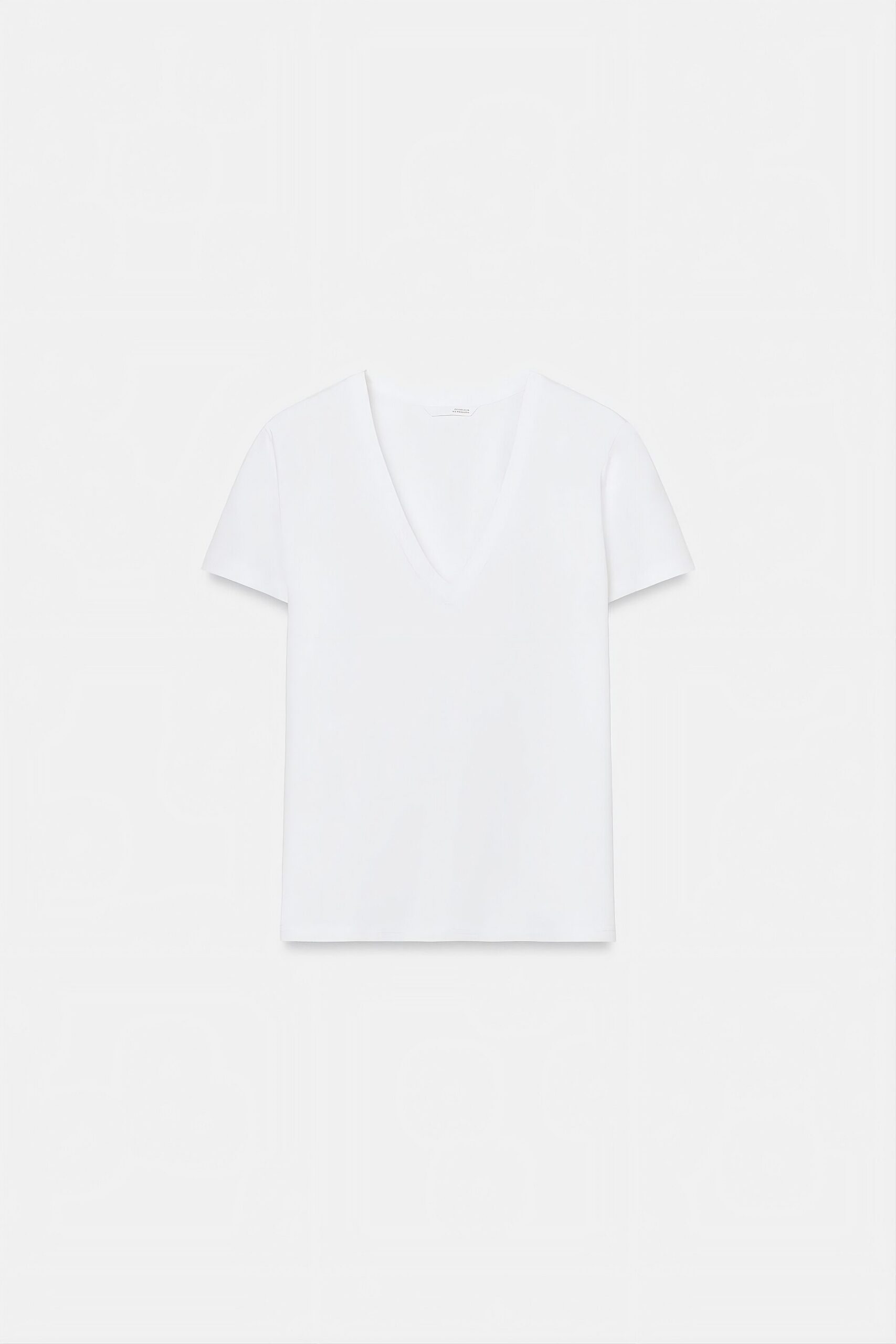
A plain T-shirt provides a neutral reference for comparing fabric weight, construction, and finishing. Photo: Paulinaela, CC0 1.0, via Wikimedia Commons.
Because 300 GSM sits in a premium niche, you need to check more than just “is it thick.” Poorly made heavy jerseys can feel cardboard‑stiff, twist after washing, or fight your print method.
1. Verify real fabric weight and composition
Suppliers may round GSM or use “300 GSM” as marketing shorthand. Ask for:
- Technical sheet: Fabric GSM, fiber content (100% cotton, cotton‑poly blend, etc.), knit type, and finishing (pre‑shrunk, washed, brushed).
- Swatch or cut sample: For cross‑border orders, insist on sending a physical fabric swatch or one finished shirt so you can weigh and inspect it.
If you have a small digital scale, you can weigh a precisely measured fabric piece to approximate GSM. The goal isn’t lab‑level accuracy—it’s to catch tees that feel more like 220 GSM than the ultra‑heavy blank you’re paying for.
2. Check fit and construction details
Heavy fabric exaggerates any pattern issues. When sampling:
- Measure key points: Body length, chest width, shoulder width, and sleeve length against your brand’s spec. Oversized streetwear cuts often have dropped shoulders and wider bodies.
- Look at seam work: Neck tape, double‑needle hems, and side‑seam construction help heavyweight tees sit properly and survive washing.
- Fit on different bodies: 300 GSM with a boxy cut can be flattering or awkward depending on size grading. Have multiple people try the sample.
European 300 GSM brands and premium blanks promoted to decorators often highlight sizing guides and detailed fit notes—use those as a benchmark for the level of information you expect from any supplier.
3. Run printability and wash tests
Heavy jerseys generally support screen printing well, but DTG and discharge behave differently on thick, tightly knit cotton.
For your sample run:
- Print with your actual method: One tee per key method (plastisol, water‑based, DTG) if you use more than one.
- Check hand feel: Does the print sit on top of the fabric in a way that feels too rigid on a thick tee? Does DTG ink sink in unevenly?
- Wash at least 3-5 times: Track shrinkage in width and length, twisting at side seams, neck rib deformation, and print cracking.
If a supplier claims “pre‑shrunk” or “no shrink,” treat that as marketing until your wash test confirms acceptable movement.
4. Supplier signals and red flags specific to 300 GSM
For premium‑weight blanks, the supplier should be able to talk fluently about fabric and intended use. Positive signals include:
- Clear positioning (“heavyweight streetwear blank” rather than generic promo tee).
- Photos that show thickness and structure, not just flat lays.
- Ability to explain GSM tradeoffs: that 300 GSM isn’t ideal for ultra‑tight fits or very hot climates.
On the flip side, be cautious if:
- GSM claims vary between product title and description.
- The supplier sells “300 GSM” but most of their catalog is low‑cost basics with limited technical detail.
- They resist sending a physical sample but are eager for a large initial run.
US wholesalers like ShirtSpace aggregate many tee brands and weights; their assortments can help you benchmark product descriptions and fabric/fit detail, even if you eventually buy elsewhere.
MOQs, Pricing, Customization, and Channel Choice for 300 GSM Wholesale Orders
Once you know which 300 GSM spec works for your brand, the next decision is how to buy it: off‑the‑shelf blanks, semi‑custom, or full custom production.
Typical MOQs and pricing dynamics
Because ultra‑heavy tees cost more to produce, suppliers protect margins with their MOQs and pricing structure:
- Domestic wholesalers and blank platforms: Often allow small orders—from single pieces up to cartons—at tiered per‑piece prices. That’s ideal for testing 300 GSM demand or doing mixed‑color drops.
- European premium manufacturers: May offer no or low MOQs on in‑stock 300 GSM colors but expect larger commitments for custom dye or branding.
- China‑based manufacturers and marketplaces: Commonly list heavyweight tees with negotiable MOQs, especially if you’re ordering custom colors, labels, or patterns.
Rather than chasing the absolute lowest per‑piece price, calculate your landed cost: product + printing + freight + import duties + packaging. Heavy fabric adds weight, which can noticeably change your freight bill.
Customization levels
You can treat 300 GSM tees in three tiers:
- Ready‑made blanks: Buy stock colors and sizes, then apply your print or embroidery. Fastest route with the least risk.
- Semi‑custom: Use a supplier’s 300 GSM base pattern but customize color, labels, and minor spec changes. Ideal once you’ve validated a silhouette and have volumes to justify a more complex supply chain.
- Fully custom: Spec your own 300 GSM fabric, pattern, and branding from a factory. Best suited to brands with predictable demand and experience managing overseas production.
US‑accessible brands mentioned in DHgate editorial, such as Gildan, Next Level Apparel, Bella+Canvas, and American Apparel, typically play in the midweight to heavyweight range with strong decorator support. They’re useful reference points, even if you specifically want 300 GSM and need to go beyond their usual weight offerings.
Channel choice: domestic, premium manufacturers, and China‑based marketplaces (including DHgate)
You have three broad sourcing routes for 300 GSM tees:
| Sourcing route | Best for order size | Control over spec | Typical tradeoffs |
|---|---|---|---|
| Domestic wholesalers (US‑focused) | Very small to medium tests and restocks | Low–medium (choose existing SKUs) | Higher per‑piece cost, simpler logistics, fast delivery |
| European premium manufacturers | Small capsules to mid‑size drops | Medium (colors, labels, some pattern options) | Higher price, stronger brand story and fit/fabric detail |
| China‑based platforms (e.g., Cross-border multi-seller, Alibaba) | Medium to larger runs once demand is proven | Medium–high (fabric, labels, some custom patterns) | More vetting work, longer lead times, cross‑border risk and communication needs |
1. Domestic wholesalers and blank aggregators (US‑focused) Platforms like ShirtSpace aggregate multiple brands and weights. Pros:
- Easy small‑batch ordering for tests and frequent restocks.
- Familiar payment flows and customer service expectations.
The tradeoff is less control over fabric development; you’re choosing from existing SKUs and may top out at ~250-260 GSM unless a brand offers true 300 GSM.
2. European and regional premium manufacturers Suppliers behind 300 GSM wholesale collections or Portugal‑made box tees focus on premium, thick blanks. They often:
- Provide detailed fit and fabric specs tailored to streetwear brands.
- Offer in‑stock 300 GSM colors with relatively flexible order sizes.
- Sit at a higher price point but with strong perceived quality and “made in” stories that matter to some customers.
3. China‑based B2B platforms and marketplaces (e.g., Alibaba, DHgate) China‑based platforms connect global buyers to suppliers that produce a wide range of shirts and tops, including heavyweight GSM tees. DHgate, for example, is described in editorial context as a large wholesale marketplace focused on China‑based sellers offering bulk clothing and fashion accessories.
A snapshot of DHgate listings on 2026-10-05 shows multiple heavyweight GSM options, such as:
- Summer 300 Gsm Oversize T‑shirts For Men – heavyweight 100% cotton oversized tees.
- Summer 300 Gsm Oversize T‑shirts For Men – similar oversized 300 GSM tops listed by another seller.
- Black 300 GSM Cotton Cropped T‑Shirt, Men’s Sport Streetwear Boxy Fit – a 300 GSM cropped, boxy streetwear tee.
Prices and availability in these listings vary and can change quickly; none of these examples are endorsements, just evidence that heavyweight GSM products are present on the platform.
If you explore this route, focus your diligence on individual sellers and listings:
- Read the full product description, especially GSM and fiber content.
- Check seller history and any ratings or reviews that are visible.
- Request physical samples before committing to bulk.
- Start with a manageable order size until you trust that supplier’s consistency.
For broader guidance on evaluating sellers on this type of marketplace, resources like finding wholesale suppliers on DHgate, finding DHgate suppliers, and choosing a DHgate wholesale supplier explain how to approach seller vetting and communication.
A quick scenario comparison
To make this concrete, imagine two paths for a 150‑piece drop of 300 GSM tees for a US streetwear brand:
- Scenario A: European 300 GSM blanks – You buy in‑stock 300 GSM oversized blanks from a Portugal‑based manufacturer, ship them to your US printer, and decorate domestically. You likely pay more per tee and for freight, but you get a known fit, clear specs, and relatively simple logistics.
- Scenario B: China‑based 300 GSM supplier via a marketplace – You identify a 300 GSM oversized tee listing, request samples, then place a custom‑label order. Your per‑piece cost may be lower, and you can integrate branding at the factory level. You take on more work in supplier vetting, longer lead times, and the need to manage cross‑border communication and quality risk.
Neither route is automatically “better.” If you’re early in your brand journey or testing demand, domestic or European blanks are often the safer move. Once your volume and processes are stable, cross‑border sourcing—including platforms like DHgate—can become a viable way to control specs and margins on 300 GSM tees, provided you’re disciplined about sampling and seller checks.