
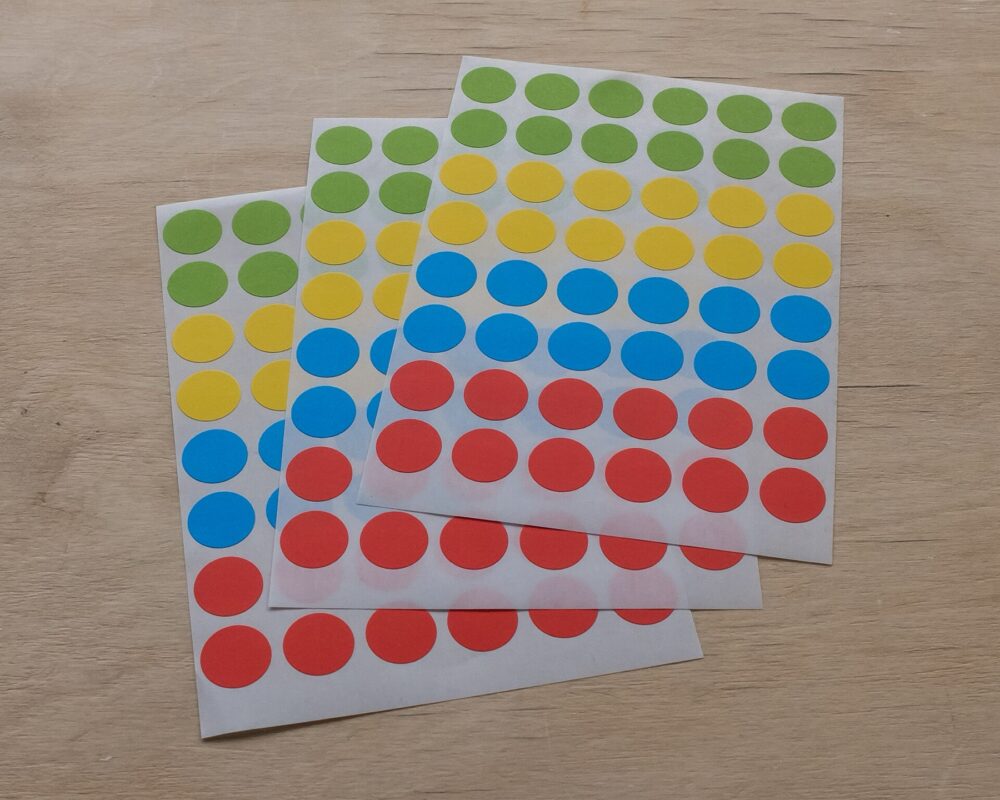
Planner sticker sheets can be a profitable addition to a small stationery or ecommerce business, but only if you test real demand and supplier quality before committing to bulk. The safest path is to start with small orders, compare materials and print quality across suppliers, and then scale up only once your customers prove they actually want the designs. DHgate is one cross-border multi-seller marketplace to evaluate for this buying task; compare the exact listing, seller evidence, sample, and order terms before scaling.
DHgate’s editorial blog describes a bulk-buying flow that fits this niche: search products, use filters, review seller ratings, contact suppliers to verify tiered pricing, and request samples before larger orders (bulk-buying guide). Curated wholesale platforms like Faire and specialist sticker wholesalers focus more on branded, ready-to-resell sheets with clearer terms but generally less aggressive pricing. Your job is choosing the right mix for your brand, volume, and risk tolerance.
What Wholesale Planner Sticker Sheets Are and Why Small Shops Care
Planner sticker sheets are flat printed sheets—often A5, A6, or around 5″×7″—filled with peel-off stickers designed for planners, bullet journals, and calendars. In a wholesale context, you’re buying these sheets in bulk at a discounted per-unit cost:
- To resell directly in your store or shop
- To bundle into subscription boxes, planner kits, or welcome packs
- To offer as add-ons alongside your own custom designs
They matter to small US shops because they let you:
- Expand your catalog quickly. You can offer habit trackers, icons, seasonal themes, and decorative art without designing everything yourself.
- Keep inventory consistent. Working with manufacturers or larger wholesalers allows repeatable runs of the same design for refills and reorders.
- Improve margins vs retail. When the unit cost drops in wholesale, you have room to price competitively even after platform fees and shipping.
Wholesale planner sticker sheets are especially useful for:
- Brick-and-mortar stationery stores building planner sections
- Online planner shops, Etsy sellers, and Shopify brands blending imported sheets with their own prints
- Subscription box businesses and influencers who need themed stickers every month
If your audience is still small or extremely design-sensitive, jumping straight to a large overseas minimum order can be risky. You’re better off starting with smaller test runs—even at a higher per-sheet cost—until you know what sells.
Sticker Types and Buying Factors: Designs, Materials, MOQ, and Quality Signals
Before you send money to any supplier, you need clarity on what you’re buying and how you’ll judge whether it’s good enough for your customers.
Common planner sticker sheet variants
Most wholesale planner sticker sheets differ across a few predictable dimensions:
- Functional vs decorative designs
- Functional: date covers, checklists, habit trackers, task icons, appointment boxes.
- Decorative: illustrations, quotes, seasonal scenes, character art.
- Finish
- Matte: easier to write on, less glare in photos.
- Glossy: more vibrant color and shine but can smear with some pens.
- Material
- Standard sticker paper: mid-weight, opaque enough for most planner paper.
- Vinyl or film: more durable, often used for icons or specialty shapes; sometimes harder to write on.
- Cut style
- Kiss-cut sheets: each sticker is die-cut but attached to a backing.
- Full-sheet designs: printed blocks or patterns the user or shop cuts down.
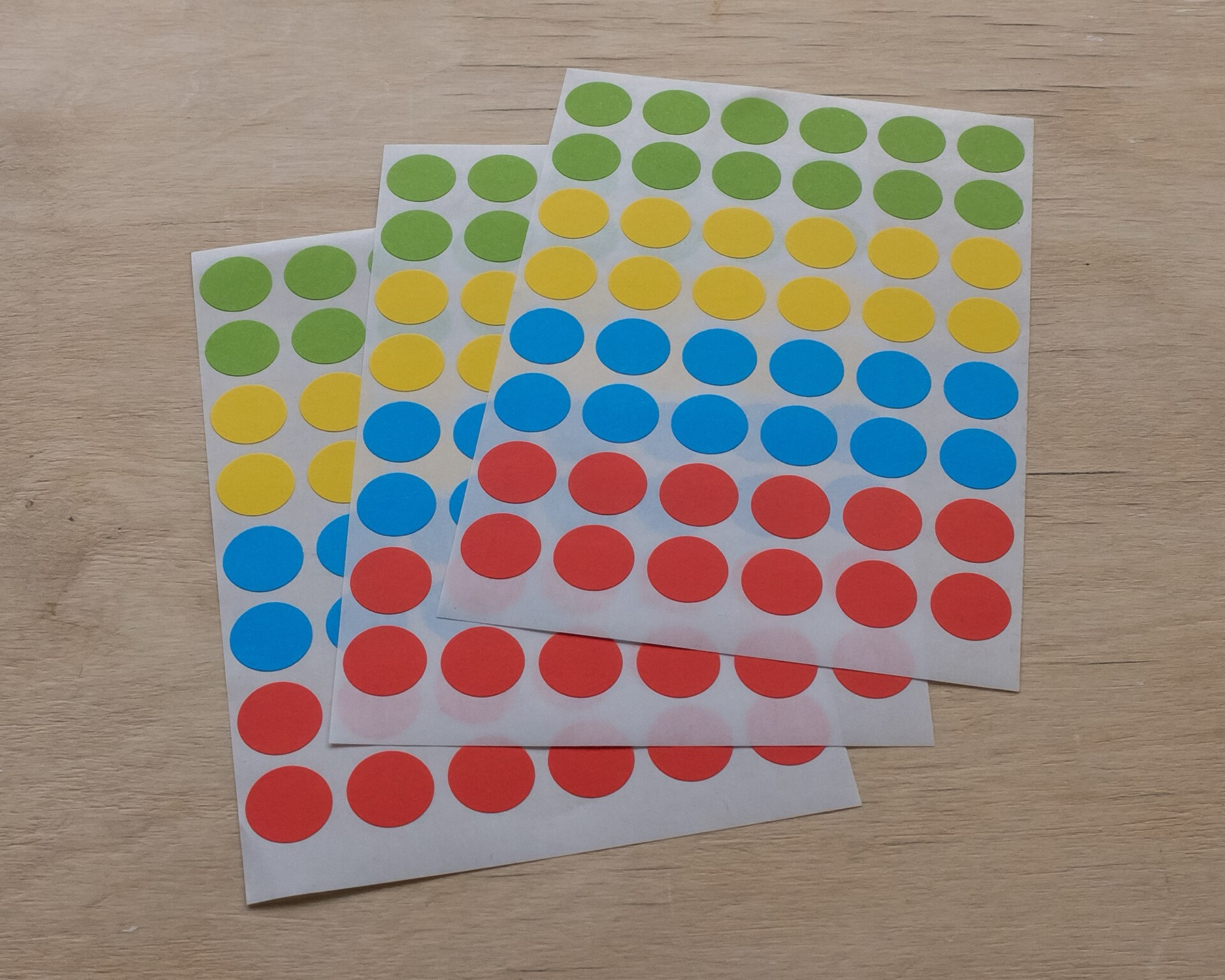
Even simple dot sheets like the image above illustrate variables you’ll see in wholesale listings: dot size, spacing, color palette, and paper finish.
Quality factors that show up in real planner use
For planner stickers, quality issues become obvious quickly—usually the first time someone peels, places, and writes.
- Paper weight and opacity
Very thin paper can let planner ink show through or feel flimsy; overly thick sheets can feel bulky. Ask suppliers for specs or samples and test with the planners your customers use most.
- Adhesive behavior
You’re aiming for an adhesive that sticks reliably but doesn’t shred planner paper when repositioned. Only real-use tests will show whether a supplier’s adhesive meets your audience’s expectations.
- Print clarity and color consistency
Watch for fuzzy lines, visible banding, dull color, or misaligned print around the cuts. Compare a few sheets from the same batch to see if color shifts or registration errors are common.
- Cut accuracy and ease of peeling
If kiss-cuts don’t match the printed art or cuts are too shallow, stickers are frustrating to peel and look cheap.
DHgate’s FAQ on recognizing counterfeit goods highlights one simple but powerful habit: order a small quantity first to test product quality and minimize the risk of a disappointing bulk buy (counterfeit FAQ). That approach is ideal for planner stickers; you should never move into hundreds of sheets without handling a small batch yourself.
MOQ, tiered pricing, and how to combine them with demand testing
Wholesale sticker suppliers often use minimum order quantities (MOQ) or tiered pricing: unit cost drops as you buy more. DHgate’s market research guidance notes that wholesale prices vary with quantity and that understanding pricing structures is key to cost and margin planning (market research guide).
For a small shop, think in stages rather than jumping straight to the biggest discount tier.
Stage 1: Samples
Order samples or the smallest available pack from several suppliers offering similar types of planner stickers. Your goal is to compare:
- Paper feel and opacity
- Adhesive behavior in real planners
- Print clarity, color, and cut accuracy
Stage 2: Small test runs
After you shortlist one or two promising suppliers, place modest test orders across a few designs. Track sell-through, reviews, and repeat purchases over several weeks. You’re validating both demand and how customers respond to quality.
Stage 3: Bulk orders
Only once a design and supplier have proven themselves do you move into larger quantities and negotiate pricing. Treat MOQs and tiers as tools to improve margin on clearly successful products, not as goals by themselves.
Here’s a simple way to think about those stages and what you’re deciding at each point:
| Stage | Example sourcing action | Primary goal | Key decision at this stage |
|---|---|---|---|
| Samples | Order a small pack from multiple suppliers | Compare material, adhesive, and print | Which suppliers are worth testing with customers? |
| Small test run | Place modest orders for a few proven designs | Validate real customer demand and feedback | Which designs and suppliers deserve bulk orders? |
| Bulk reorder | Negotiate pricing on larger repeat quantities | Improve margins on successful products | How much volume can you safely commit to now? |
Your exact quantities will depend on your shop size and cash flow. The important thing is keeping stages separate so an untested design doesn’t turn into dead stock.
Sourcing Channels for Planner Stickers: DHgate vs Other Wholesale Options
Once you know what you want to buy and how you’ll test it, the next question is where to source planner sticker sheets. For a US-based shop, DHgate, curated wholesale platforms, and direct niche wholesalers each have distinct strengths and trade-offs.
Using DHgate smartly for planner sticker sheet testing
DHgate describes itself as a large B2B marketplace connecting manufacturers and suppliers with buyers worldwide and highlights that buyers can purchase single items or access wholesale discounts for bulk orders (DHgate overview). For planner stickers, this open marketplace model can be useful if you want flexibility on quantity and pricing—but you have to actively manage risk.
Across several DHgate blog articles, the platform recommends a flow that maps well to planner sticker sourcing:
- Search and filter listings
Use the search bar and filters to look for terms like “planner stickers” or “sticker sheets” and narrow by category or material. DHgate’s bulk-buying guide emphasizes paying attention to listing details such as material and dimensions when researching products.
- Review seller ratings and history
The wholesale confidence piece suggests prioritizing sellers with high ratings, positive reviews, and solid transaction history (wholesale confidence). For planner stickers, treat those metrics as a starting point for evaluating reliability.
- Verify pricing and quantities directly
DHgate’s bulk-buying guide advises contacting sellers to ask about tiered pricing and discounts at different quantities. That matters when you’re planning stages of sample, test, and bulk orders.
- Request samples or small orders first
Multiple DHgate editorial posts recommend ordering samples before large purchases and starting with smaller quantities to assess quality. For printed goods like stickers, this step is essential.
If you plan to use DHgate more broadly, it can help to read background explainers such as What DHgate is and how the marketplace works and Find trusted sellers on DHgate to refine how you evaluate sticker suppliers there.
Curated wholesale platforms like Faire
Curated marketplaces such as Faire connect retailers with independent brands offering planner sticker sheets and other stationery items. The evidence for Faire in this guide comes from wholesale product pages like this planner sticker sheet listing, which illustrate how the platform presents branded goods.
Typically, that model offers:
- Branded, retail-ready products. You’re buying into a sticker brand with a consistent style, not generic sheets.
- Structured wholesale terms. Case sizes and wholesale pricing are usually spelled out per product.
- Reduced variability. Because the catalog is curated and focused on retail-ready goods, there’s often less variance in quality than on fully open marketplaces.
The trade-off:
- Less flexibility on customization (you’re reselling someone else’s brand).
- Usually higher per-unit pricing than sourcing directly from manufacturing-focused channels.
Faire and similar platforms can be a good fit if you want planner sticker lines that align with a specific aesthetic, feel confident in quality out of the box, and prefer simpler terms even at a higher cost.
Direct niche wholesalers and printers
Beyond marketplaces, there are specialist sticker wholesalers and print shops that offer planner-friendly sheets and, in some cases, private-label or co-branded options.
This route makes sense if:
- You want your own logo or house style on every sheet.
- You value closer communication and more predictable timelines with a specific supplier.
- You’re prepared to commit to higher MOQs or custom print runs in exchange for control.
Many small planner businesses end up using a mix of channels:
- Curated platforms or local wholesalers for branded, retail-ready sticker lines.
- Open marketplaces like DHgate for experimentation, price-sensitive designs, or testing new concepts.
- In-house or local printing once a design has proven itself and justifies tighter control over quality and timing.
For additional DHgate platform context, use Review the DHgate order-readiness checklist.
Across all these routes, the same principles apply: start small, judge quality in the context of real planner use, track demand carefully, and only treat any supplier—on DHgate, Faire, or elsewhere—as a long-term bulk partner once they’ve passed your own tests.