
If you’re hunting for Mooncrest flatware online, you’ll usually have better luck with mainstream US retailers and resale marketplaces than with cross-border sites. DHgate can be useful for Mooncrest-like styles—especially if you care more about the look than the brand name—but it’s not a reliable place to find authentic, labeled Mooncrest replacement pieces.
Think of the decision this way: if you need to complete an existing Mooncrest set, stay with channels that specialize in branded tableware and pattern identification. If you’re flexible and just want that same sleek, slightly vintage aesthetic at low cost or in bulk, then generic flatware sets from cross-border marketplaces (including DHgate) widen your options.
What Mooncrest-Style Flatware Is and Why People Look for It Online
“Mooncrest” is a confusing term in search results. It’s used for real-world neighborhoods and nonprofits like Mooncrest Neighborhood Programs, but buyers typing “Mooncrest flatware” are usually talking about a specific style of tableware: mid-century-inspired, named patterns produced by US or international flatware brands.
Mooncrest-style flatware typically serves two needs:
- Matching an existing set. Maybe you inherited a pattern and need extra dinner forks or teaspoons. Online, you’ll be looking for exact pattern names and maker marks.
- Recreating a look. You might like the clean lines, subtle decoration, or classic silver-tone finish of Mooncrest patterns, but you don’t mind using a different manufacturer as long as the table still feels coordinated.
In both cases, you’re dealing with patterned flatware, not generic cutlery. That makes product photos, material notes, and piece counts critical, especially once you step beyond big US retailers into resale or cross-border marketplaces.
Mooncrest Flatware Types, Materials, and Quality Signals
Because “Mooncrest” spans different makers and eras, it’s safer to think in terms of specs and style rather than a single product line.
1. Piece counts and place settings Most Mooncrest-style sets follow standard Western place settings:
- 4-, 6-, 8-, or 12-place sets, each usually including a dinner knife, dinner fork, and spoon per place.
- Many Mooncrest owners eventually need loose replacements—extra salad forks or teaspoons—rather than full new sets.
When you browse product pages, check the listing’s total piece count and how that breaks down per place setting. If your current set is 12-piece for 4 settings (knife, fork, spoon), a 20-piece “Mooncrest” or Mooncrest-like listing might add dessert forks or soup spoons and change the visual balance on the table.
2. Materials: stainless vs true silverware vs plated/gold-tone Flatware specs usually call out the base material and finish:
- Stainless steel (often 18/0, 18/8, or 18/10) is common for Mooncrest-style everyday sets because it resists staining and doesn’t need polishing.
- Classic silverware in product descriptions often means silver-plated steel or nickel silver. These pieces skew more formal and require occasional polishing but can match vintage Mooncrest patterns better.
- Gold-tone or colored finishes mimic Mooncrest-like shapes with modern, plated colors. Guides on gold flatware highlight the trade-off: strong visual impact, but plating can wear faster if the quality is low.
If you’re trying to match a Mooncrest set you already own, line up these specs carefully: stainless vs silver-plated, mirror vs satin finish, and whether the handles have pattern details or plain, modern profiles.
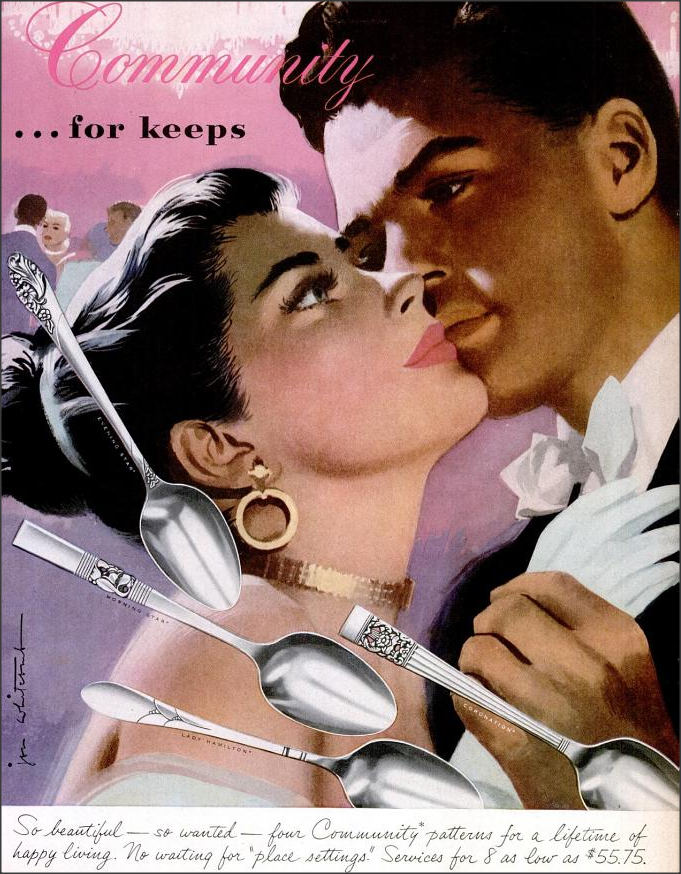
3. Visual style: what “Mooncrest” usually looks like From the imagery and naming used for community-style silverware patterns, Mooncrest-style flatware tends to have:
- Balanced, medium-weight handles (not ultra-skinny like some minimalist sets).
- Either subtle linework or small motifs near the end of the handle, or a very smooth, gently rounded silhouette.
- A consistent metallic tone across knives, forks, and spoons, helping them mix easily with serving pieces and vintage accessories.
When you evaluate product photos, zoom in on handle ends and side profiles. Even if the listing doesn’t carry the Mooncrest name, those visual cues can make a generic set sit comfortably next to your original pattern.
Best Online Channels to Buy Mooncrest or Mooncrest-Like Flatware (Including DHgate)
Because Mooncrest patterns are not a single active retail line, your channel choice matters more than usual. Here’s how the main options stack up for US buyers and small ecommerce sellers.
Snapshot: Channel pros and cons
| Channel type | Best for | Typical strengths | Key trade-offs |
|---|---|---|---|
| Mainstream US retailers | New, current flatware lines with warranties | Clear specs, easy returns, fast delivery | Limited or no stock in older Mooncrest patterns |
| Resale & auction sites | Discontinued Mooncrest pieces, vintage sets | Pattern names, maker marks, single-piece buys | Variable condition, small inventory |
| Cross-border marketplaces | Mooncrest-like styles, bulk quantities | Very wide style range, low per-unit prices in bulk | Mixed quality, longer transit, brand ambiguity |
This isn’t about one channel being “better” overall—it’s about matching the channel to your job.
1. Household buyer: replacing or extending a set
If your priority is exact pattern matching:
- Start with US-based tableware retailers that still carry community-style or classic silverware patterns. They’re more likely to use official pattern names and show consistent product photography.
- If that fails, move to resale and auction platforms that let you search by pattern and maker (e.g., “Mooncrest Community” plus brand). Sellers here often photograph backstamps and engravings so you can confirm you’re getting a true match.
Use cross-border marketplaces only if:
- You’re okay with a similar-but-not-identical look, and
- You’re buying a full new set rather than plugging gaps in an original Mooncrest pattern.
On DHgate specifically, blog coverage describes it as a marketplace connecting many Chinese suppliers with global buyers, with millions of listed products and especially broad categories for things like flatware and home goods. Editorial pieces on DHgate’s own site highlight that it hosts stainless steel, classic silverware, artisanal, and themed flatware collections, and that unit prices often trend lower for bulk or small-wholesale orders.Get a New Set of Flatware for Black Friday! and 6 Ways To Find The Right Manufacturer And Supplier For Your Online Business both emphasize that variety and typical pricing patterns—but they do not guarantee Mooncrest-branded stock.
If you explore DHgate or similar marketplaces:
- Treat listings as style matches, not pattern-authenticated replacements.
- Check material and finish against your existing Mooncrest pieces.
For most households trying to preserve a sentimental or historic Mooncrest set, that risk and the lack of guaranteed branding make US resale platforms a more direct route.
2. Small ecommerce business: selling Mooncrest-inspired flatware
If you’re a small seller, your job is different: you’re not protecting a single pattern; you’re building a coherent catalog.
Two practical paths:
- Branded, pattern-based inventory sourced through US distributors and resale: better fit if you’re marketing to collectors and replacement buyers. You’ll spend more per piece, but you can market specific Mooncrest patterns and show maker marks.
- Mooncrest-like generic sets sourced through cross-border marketplaces as private-label or unbranded stock: better if your brand story is about a certain aesthetic (clean, mid-century, silver-tone) rather than named patterns.
For the second path, marketplaces like DHgate and its peers are attractive precisely because they aggregate many manufacturers and offer bulk-friendly pricing. You can:
- Search by handle style (smooth, sculpted, decorative) and finish (mirror stainless, matte, silver-plated, gold-tone).
- Order test quantities to check real-world weight, plating quality, and finish consistency before committing.
But you should avoid pitching these goods as “Mooncrest” unless you’ve confirmed the pattern and branding rights. Keeping your labels honest—”Mooncrest-style”, “community-inspired”, or simply descriptive—reduces customer disappointment and return risk.
For both household buyers and small ecommerce sellers, the smartest move is to decide early: Do I truly need the Mooncrest name and exact pattern, or just the look? That single decision narrows your channels. Pattern purists will live in US retail and resale; style-focused buyers get the most options from generic flatware catalogs and cross-border marketplaces, with DHgate sitting in that second camp as a broad, low-unit-cost source for Mooncrest-like designs.