
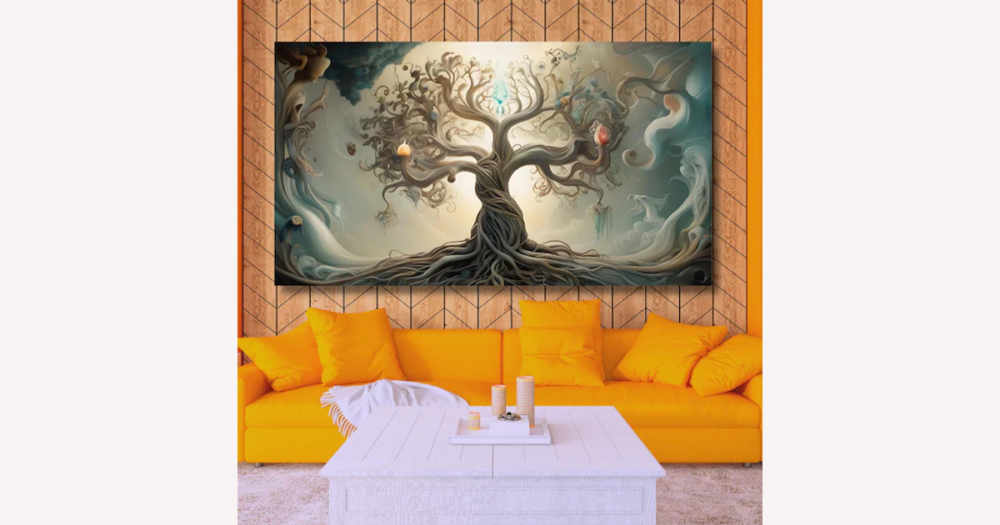
Yggdrasil-themed art on DHgate ranges from canvas wall pieces and posters to metal prints and digital downloads, so the key to finding high-quality work is learning how to read each listing’s specs and seller information instead of chasing a single best shop. This guide explains how format, materials, resolution, and finishing affect how the world tree design will actually look on your wall or screen, and how to combine those details with DHgate’s buyer protections and seller signals so you can choose confidently.
Understand the main formats of Yggdrasil art before you start shopping
On DHgate and other marketplaces, “Yggdrasil art” is a visual theme built around the Norse world tree, not one specific product. You’ll see that same tree-of-life motif across canvas wall art, paper posters, framed prints, metal panels, photographic prints, and downloadable digital designs or wallpapers. The goal on DHgate isn’t to hunt for a single best shop, but to read each listing’s specifications and seller details well enough to tell whether a piece will actually suit your wall or screen.
For canvas wall art, higher quality usually means a thick, tightly stretched canvas over a solid frame, clear information about the print method (for example, an inkjet art print process rather than a basic office print), and sharp edges around the Yggdrasil branches and leaves when you zoom into photos. Posters and framed prints rely more on paper weight and print sharpness: heavier poster or art paper typically feels sturdier and lies flatter, and listings that mention specific paper types or finishes give you a better idea of how rich the colors and blacks will look.
Metal Yggdrasil prints tend to feel premium when the metal panel is reasonably thick, edges are clean, and the listing mentions some form of protective coating or finish, since that affects both color depth and scratch resistance. Photographic prints sit somewhere between posters and fine art: good ones are usually described as lab-printed on photo paper, sometimes with a gloss or matte finish, which helps the tree’s fine linework stay crisp instead of muddy.
Digital Yggdrasil files and wallpapers put more of the technical responsibility on the file itself. High-resolution images with a clear pixel count and a suitable aspect ratio for your frame, monitor, or phone screen will look much sharper than a low-resolution file stretched to fit. Listings that state a minimum resolution or DPI and common file formats (such as JPG or PNG) make it easier to plan for printing later or for clean on-screen use.
If you care about a piece looking genuinely good in your space, I would favor listings that spell out canvas thickness, paper type, print method, or file resolution over those that only promise “premium” or “HD” quality, even if the better-specified options cost a bit more. When you’re just experimenting—say, trying a small poster or instant-download wallpaper—it can be reasonable to accept thinner paper or a simpler file, as long as you understand that you’re trading away some durability and sharpness for price or convenience.
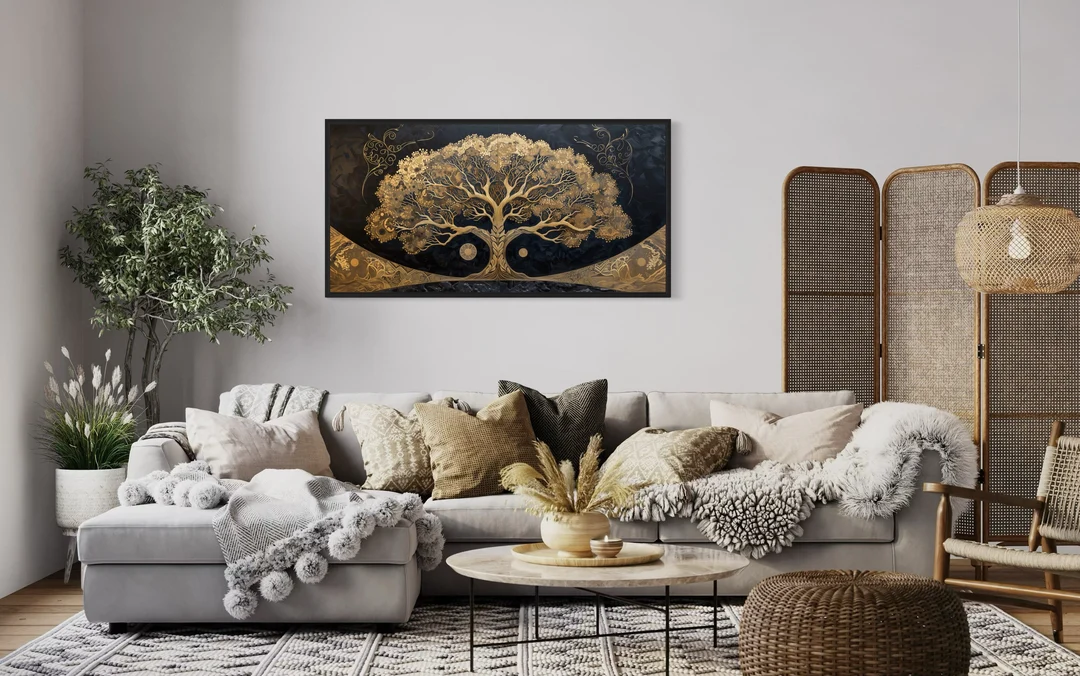
Example of a Yggdrasil tree design used as framed canvas wall art in a living-room setting, similar to what you might see in DHgate listings and other online decor shops.
Check key specifications for physical Yggdrasil prints
For any physical Yggdrasil print, start with the dimensions. Listings may use inches, centimeters, or both, so it helps to measure the width of your wall or key furniture and compare it directly to the listed size instead of trusting photos alone. Small accent pieces might be closer to a sheet of printer paper, while large statement prints can span a sofa; getting this wrong is how a dramatic world-tree design ends up looking tiny and lost, or oversized and cramped.
Then look for clues about resolution or print method. When a listing mentions a high-resolution source image or a specific print process such as giclée or other fine-art printing, you can generally expect sharper lines in the branches and cleaner gradients in the sky around the tree. If the description stays vague about how the image is printed, or never mentions resolution at all, I’d lower my expectations or ask the seller for more detail before paying for a large size.
Material type makes a big difference in how the piece feels and lasts. Canvas has a textured, painterly look and usually feels solid when stretched over a frame. Poster paper can range from very light, flimsy sheets to heavier stock that resists curling; in general, heavier-weight poster or photo paper tends to feel more premium and hold up better on the wall. Metal prints use a rigid panel that can give Yggdrasil art a sleek, modern look, and their sturdiness often justifies a higher price for buyers who want something long-lasting.
Check finish and extras so you’re not surprised by extra work or costs. A framed or stretched canvas may arrive ready to hang, while a rolled poster or unmounted photo print will likely need a frame, mounting board, or other hardware you provide yourself. Listings that mention protective coatings, lamination, or included hanging hardware give you a more complete picture of what will arrive and how much effort it will take to get the art on your wall.
Finally, note any claims about the intended environment. Most Yggdrasil art prints are meant for indoor use; if a listing boasts outdoor durability or weather resistance without explaining the materials or protective finish that make that possible, treat those claims cautiously. I would be skeptical of bold promises about sun, moisture, or scratch resistance unless the description clearly connects them to specific materials or coatings, and I’d favor pieces that describe their construction plainly over those that rely on marketing language alone.
Use listing photos and descriptions as real quality evidence
Once you’ve found a Yggdrasil design you like, treat the photos as evidence, not decoration. Listings that let you zoom in on the preview image are especially helpful: fine branches, rune-like details, and subtle gradients around the tree should look crisp rather than blocky or fuzzy. If you can see obvious pixelation, jagged edges, or compression artifacts when you zoom, that same softness is likely to show up in the print or in a large digital display.
Stronger listings usually show the art from more than one angle and include close-ups of the surface. A clear shot of canvas weave, a metal panel’s sheen, or the grain of heavy paper tells you there is a real, textured print behind the listing, not only a flat mockup. By contrast, a single, heavily edited image with dramatic lighting or unrealistic glow may be fine for inspiration, but it doesn’t prove what the actual product looks like when it arrives.
Read the description with the same critical eye. Specific details such as “230 gsm matte poster paper,” “HD metal print,” “giclée inkjet printing,” or a stated pixel resolution for digital files can be compared across listings and give you a concrete sense of quality. Generic phrases like “premium,” “luxury,” “vibrant colors,” or “museum quality” are marketing language unless they are backed by those kinds of measurable specs or by buyer reviews that describe the print in real-world terms.
Lifestyle photos are most useful when they look believable and help you judge scale. A Yggdrasil canvas shown above a sofa, bed, or desk should roughly match the dimensions listed; if the picture makes a small size look huge, or the brightness and contrast look nothing like the zoomed-in preview, assume the image is a digital mockup and rely more on the written measurements. Comparing what you see in the photo to the stated height and width is a good way to spot exaggerations.
Overall, favor listings that combine clear, specific specs with honest-looking photos over the absolute cheapest option with vague claims. Detailed images and descriptions don’t guarantee perfection, but they do increase your confidence that the Yggdrasil art will look close to what you expect. If you only need a casual, temporary piece or a quick digital wallpaper, you might accept thinner evidence and a bit more risk, as long as you’re making that trade-off consciously.
Evaluate DHgate seller reliability for Yggdrasil art
Even a listing that looks great on its own is only as reliable as the seller behind it, so it helps to read DHgate’s seller signals carefully. Look at the overall seller rating, but also at how many completed transactions or orders they have handled; a long history with solid scores usually points to more predictable service than a brand‑new store with only a handful of sales. Check how long the store has been active and whether the seller replies clearly and politely to questions sent through DHgate’s messaging system.
Buyer feedback is often the most informative part of a DHgate listing, especially for art and print products. Instead of stopping at the star average, scan recent comments for mentions of print clarity, color accuracy, packaging quality, and shipping time. A few isolated complaints are normal on any marketplace, but repeated reports of blurry Yggdrasil trees, prints that arrive much smaller than expected, or consistently slow shipping are red flags, even if the numeric rating still looks acceptable.
DHgate’s dispute and refund mechanisms can help if an order goes wrong, but they work best when you stay within the platform’s process. Communicate with the seller through DHgate rather than private channels, keep screenshots of the listing, photos of any problems, and copies of your messages, and pay attention to the timelines for opening and escalating a dispute. Platform protections reduce the risk of being left with nothing, yet they are not a guarantee that you will love the final piece or get instant resolutions.
When you have a choice, I would rather buy Yggdrasil art from a DHgate seller with a clear track record, detailed feedback on print quality and delivery, and responsive communication, even if their price is slightly higher than a weaker-looking alternative. That extra margin often buys you more predictable results and fewer headaches than chasing the absolute lowest price from a store with thin history and vague reviews.
A quick checklist for reviewing a Yggdrasil art listing on DHgate
- Confirm what you’re actually buying: a ready-to-hang physical piece or a digital file. Make sure it fits your plan—wall art, desktop wallpaper, or a file you’ll send to a print shop.
- Compare the listed dimensions with your wall or furniture measurements so the Yggdrasil design won’t end up too small to notice or overpowering in the room.
- Check materials and finish details: canvas vs paper vs metal, print method if stated, and whether frames, protective coatings, and hanging hardware are included or need separate purchases.
- Scan listing photos and text for real evidence of quality, such as zoomable previews, close-ups of the branches and texture, multiple angles, and specific specs, instead of trusting generic claims like “premium” or “high definition.”
- Read recent buyer reviews that mention print clarity, color accuracy, build quality, and packaging, not just the star rating or comments about shipping alone.
- Look at DHgate seller signals like overall rating, number of completed orders, how long the store has been active, and whether they respond helpfully to questions through the platform.
- Review shipping estimates, any notes about international delivery or customs, and DHgate’s return and dispute timelines so you know how long you might wait and how problems will be handled.
- Judge whether the price matches the stated quality and remaining risk; if you skip parts of this checklist or choose the absolute cheapest option, accept that you’re trading some certainty for lower cost or faster access.
Avoid common pitfalls when buying Yggdrasil art online
- Downloading a low-resolution digital file or ignoring file size can leave you with pixelated, blurry prints once you enlarge the Yggdrasil tree for your wall.
- Relying on photos instead of checking dimensions may lead to a print that looks dramatic online but arrives much smaller than expected and gets visually lost above your sofa or desk.
- Assuming a piece comes framed or includes hanging hardware when the listing never says so can add surprise costs for frames, mounts, and tools before it ever reaches your wall.
- Not checking whether the artwork matches standard frame sizes can push you into more expensive custom framing or force awkward cropping that cuts off parts of the design.
- Ignoring long or variable international shipping times, possible customs duties, or DHgate dispute deadlines can mean extra fees, a much longer wait than you planned, or missing the window to resolve issues if something goes wrong.
- Using the checklist to verify format, specs, seller signals, and policies up front is what helps you avoid these outcomes—less money wasted on reprints, fewer framing surprises, and fewer empty walls waiting for delayed orders.
Decide between ready-to-hang art and digital Yggdrasil files
Choosing between a ready-to-hang Yggdrasil piece and a digital file comes down to how much of the quality work you want the seller to handle versus what you’re willing to manage yourself. With physical prints—whether canvas, framed posters, or metal panels—the seller is responsible for the materials, printing, and finishing. Your main job is up front: read the listing on DHgate carefully, confirm the format and dimensions, check the preview images for sharp branches and clean lines, and make sure the seller’s ratings and reviews support the promises they’re making. Once it arrives, you mostly judge whether the real piece matches what was shown and described.
Digital downloads flip that balance. Even if the file is high resolution, it can still look underwhelming if it’s printed on thin paper, with a low-end printer, or stretched to a size the file wasn’t designed for. After downloading a Yggdrasil design, you’ll need to choose a reputable print service, pick a paper weight and finish that suits the style (for example, matte for a more subtle look, glossy for high contrast), and keep the print size in line with the file’s resolution and aspect ratio so the tree doesn’t end up soft or distorted. Different printers, inks, and papers can all shift colors slightly, so if color accuracy really matters to you, it’s worth choosing a service that highlights professional or calibrated printing rather than the cheapest option.
I’d personally invest more time, and a bit more money, when the artwork will be a main feature—like a large Yggdrasil tree over a sofa or in a home office—either by ordering a high-quality ready-to-hang print from a seller with strong evidence of good workmanship, or by using a quality print lab for a downloaded file. For smaller accents, experimental decor, or purely digital uses such as desktop or phone wallpapers, instant downloads can be ideal: you can focus on a clean, sharp file and accept simpler printing and lower costs, knowing that minor compromises won’t dominate the room.
Check licensing and usage rights for downloadable Yggdrasil art
Downloadable Yggdrasil art is still protected by copyright, and paying for or accessing a file does not automatically give you unlimited rights to reuse it however you like. In most cases you’re buying a license to use the artwork under certain conditions, not the underlying copyright itself, so rights such as reproducing, reselling, or using the design on products remain controlled by the artist or rights holder unless they clearly say otherwise.
Listings for digital art often spell this out in license language. Common patterns include “personal use only” terms that allow you to print or display the Yggdrasil tree for your own decor, limits on how many copies you can print, or separate pricing tiers for commercial use, such as using the design on merchandise, marketing materials, or client projects. Some offers come directly from individual artists who write their own detailed terms; others rely on generic stock wording or very brief statements that leave important details unstated.
Before you download, it helps to scan the listing for explicit statements about personal versus commercial use, whether selling printed versions is allowed, and any rules about sharing the file, posting it in downloadable form, or embedding it in products you sell. If the terms are vague or missing, a cautious default is to assume personal, non‑commercial use only and to contact the seller through DHgate or another platform channel if you want to do more than decorate your own space. This guide is not legal advice, and usage rights can depend on both the specific listing and your local law, so careful reading and, when needed, direct questions to the seller are essential before using downloaded Yggdrasil art beyond basic personal decor.
FAQ: uniqueness, editions, and color expectations for Yggdrasil art
Is Yggdrasil art usually sold as limited editions?
Some Yggdrasil pieces are released as limited editions with numbered runs or certificates of authenticity, but many designs are mass-printed or widely licensed and sold on multiple platforms, including DHgate. If uniqueness matters to you, look for clear edition language such as “limited edition,” an edition size (for example, 1/100), or a certificate of authenticity in the description. Without those specifics, assume the piece is not a scarce collectible and treat it as an open, reproducible design.
How can I tell if a Yggdrasil design is unique or widely used?
Uniqueness depends on the artist and licensing, not just the tree motif itself. Check whether the listing names a specific artist or brand and whether the same image appears across multiple stores or products when you search for it online. Descriptions that mention exclusivity or original artwork from a named artist are more likely to be unique, while generic, uncredited designs that show up in many places are usually stock or broadly licensed. When uniqueness is important, ask the seller directly through DHgate whether the piece is exclusive or licensed for multiple uses.
Should I expect color differences between my screen and the final Yggdrasil print?
Yes. Screens are backlit and often set to vivid color modes, while prints depend on inks, paper, and the printer’s calibration, so some shift in brightness or tone is normal. Dark greens and blues around the Yggdrasil tree may look slightly flatter or warmer in print than on your monitor. If you’re very sensitive to color, favor sellers or print services that mention color-managed or professional printing processes, and consider ordering a smaller test print or sample before committing to a large, prominent piece. Even then, expect minor variations rather than a perfectly exact match.