
If you’re looking at electrical testing equipment on DHgate, the real question isn’t whether a tester looks cheap or powerful. It’s whether the tool and the seller’s conditions together seem safe and reliable enough for the work you need to do. This guide shows you how to read DHgate listings for key specifications and build-quality cues, then combine them with seller, payment, shipping and refund checks to make a careful, informed choice without relying on brand names or external reviews.
How this guide helps you judge electrical testers and sellers on DHgate
This guide focuses specifically on judging electrical testing equipment offered on DHgate, not on finding other stores or recommending particular brands. The goal is to help you assess two things in a listing: whether the tester looks technically suitable and safe for the work you plan to do, and whether the seller and transaction conditions seem trustworthy enough to accept the risk.
On the technical side, you’ll use information such as measurement ranges and functions, accuracy, input protection, safety category ratings, and visible build quality (materials, probes, casing, insulation) to decide if a tool is appropriate for household or more demanding work. On the transaction side, you’ll rely on DHgate-specific signals like seller rating and feedback, order history, payment method (kept on-platform), shipping promises, and dispute or refund terms to judge whether the offer is being made in a transparent, responsible way.
Personally, I care far more about clear specifications and an honest, responsive seller than the lowest possible price. If a DHgate listing hides basic safety-relevant details such as voltage range or category rating, or makes its refund and shipping terms hard to find or confusing, I would rather walk away and keep looking. Only if someone has very tight budget constraints and the seller’s overall feedback is strong would I treat a sparsely documented listing as worth considering at all.
Common electrical testing tools you’ll see on DHgate and what they’re for
Once you know this guide is about judging offers on DHgate, it helps to recognise the main types of electrical testing tools you’re likely to see so you can focus on the category that fits your task before worrying about detailed specs.
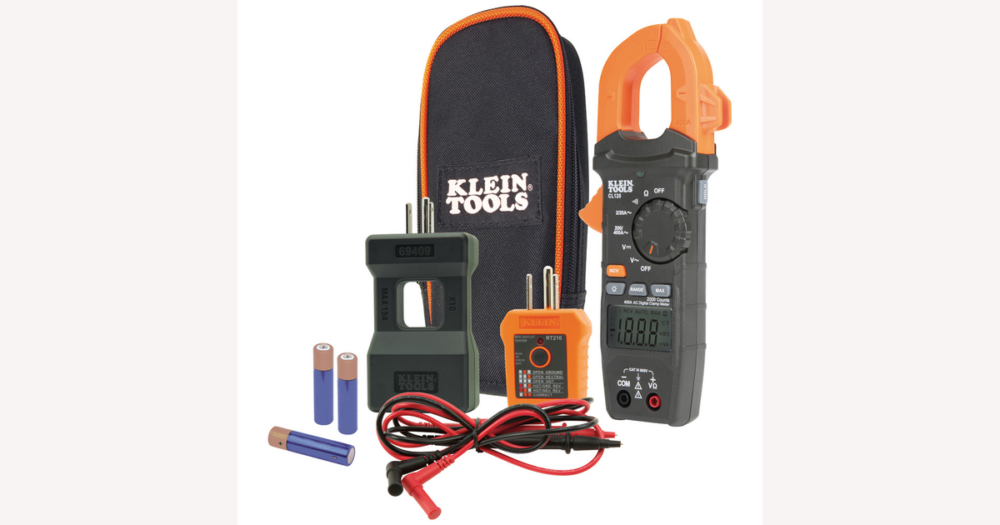
Digital multimeters are the general-purpose option: they measure voltage, current and resistance, and often include extras like continuity and diode tests. For basic household troubleshooting—checking if an outlet has power, confirming a battery voltage, or tracing a simple wiring issue—a straightforward multimeter is usually the right starting point. Clamp meters are designed to measure higher currents without breaking the circuit; you clamp the jaws around a conductor, which makes them better suited to jobs like checking current draw on appliances or working around distribution boards, more in the realm of serious DIY or professional work.
Non-contact voltage testers are small, pen-like tools that let you quickly check if a wire, outlet or terminal is live without touching bare conductors. They’re useful for fast safety checks at home, but they don’t replace a proper multimeter when you need actual readings. Outlet or GFCI testers plug directly into a socket to show common wiring faults; these are mainly aimed at household outlets and basic installation checks. Simple continuity testers—often just a battery and indicator in a handheld tool—tell you whether a circuit path is complete and can be handy for cable and connection checks.
For most everyday household tasks, a reliable digital multimeter plus, optionally, a non-contact voltage tester or outlet tester is usually enough. If you expect to work with higher currents, more complex electrical systems or in a professional environment, clamp meters and better-specified multimeters with clearer safety category ratings and ranges become more appropriate. Recognising which category a DHgate listing belongs to makes it easier to decide which specifications and safety features truly matter for what you plan to do next.
Key specifications that signal technical suitability and safety
- Measurement functions: Check that the spec table clearly lists the functions you need—typically voltage, current, resistance and continuity. For many electrical jobs you’ll also want both AC and DC measurement, so look for explicit “AC” and “DC” ranges rather than vague wording.
- Ranges and accuracy: Look for numeric voltage, current and resistance ranges that match your tasks (for example, household mains-level voltage versus low-voltage electronics). An accuracy class or tolerance (such as ±0.5% or ±1% of reading) is a sign the manufacturer has thought about measurement quality; clearer ranges and accuracy figures make it easier to judge whether the tool is suitable for basic checks or more demanding work.
- Input protection: In the specs, seek mention of fuse ratings on the current inputs, overload protection, and clear input jack labeling (for example, separate jacks for high current versus standard measurements). These details show that fault conditions—like accidental overloads—have been considered in the design, which matters for both safety and reliability.
- Safety categories and maximum voltage: Safety category ratings such as CAT II, CAT III or CAT IV, combined with a maximum working voltage, indicate the environments the tester is intended for—from local appliance circuits (often CAT II) up to distribution panels and service entrances (typically CAT III or IV). Using a tool with a lower category rating than the system you’re measuring can be hazardous, because it may not be designed to withstand the possible surges or fault energy in that environment.
- Insulation and housing cues: Spec tables and descriptions sometimes mention double insulation, reinforced casing or a protective holster. Combined with photos of a robust, rubberized housing rather than thin plastic, these are hints that the outer design aims to protect both you and the instrument from drops and accidental contact, even though they don’t prove internal build quality.
- Spec clarity as a trust signal: I tend to favour DHgate listings that show a complete, consistent spec table—with ranges, accuracy, safety category and maximum voltage—over cheaper options that only promise “high accuracy” or “safe design” without numbers. Remember that all listing specs are still claims, not independently verified measurements, but vague or incomplete specs deserve extra caution and are often a reason for me to walk away or ask the seller more questions before considering them.
Judging materials and build quality from photos and descriptions
With the numbers checked, look closely at how the tester appears to be built. In DHgate photos and descriptions, pay attention to the casing material: a rubberized or reinforced housing with visible bumpers usually suggests better impact protection than thin, brittle-looking plastic with sharp edges. A solid-feeling case is a basic line of defence against drops and everyday knocks.
Probes and leads are another major clue. Thicker, well-insulated leads with clearly moulded strain relief where they enter the plugs tend to be more robust than very thin, shiny insulation that looks easy to kink or crack. Proper banana plugs or other secure connectors, together with input jacks that look firmly mounted rather than flimsy, suggest that the mechanical design is less likely to fail under normal use.
Display and controls matter for real-world usability. In close-up photos, look for a display that appears large enough to read at arm’s length, with good contrast and legible markings. Buttons and dials should look evenly moulded and well-labelled, not loose or poorly printed; clear detents on a rotary selector often indicate more precise construction than a dial that seems wobbly or misaligned.
Some listings mention dust or water resistance, often through IP ratings such as IP54 or IP65, or generic terms like “rugged” or “water-resistant.” Treat these as marketing statements, but use them as comparison points when they line up with other details—rugged casing, sealed buttons, and sensible ranges—rather than appearing out of nowhere on an otherwise basic-looking tool.
I’m more comfortable with DHgate offers that show multiple, close-up photos of the actual hardware—especially the leads, input jacks and casing—from different angles. A single, generic-looking image or obvious stock photo gives me much less confidence, and I treat that as a caution flag rather than a reassuring sign. However, even detailed images and material descriptions can’t prove long-term durability or internal design; they’re comparative hints only, so it’s still wise to combine them with spec checks and seller feedback before deciding to trust a listing.
Matching features and ranges to your actual electrical tasks
- Start from the work you actually do. For typical household checks on mains outlets and simple circuits, look in the DHgate spec table for safe voltage measurement within local mains ranges, basic AC and DC voltage, continuity, and simple resistance. If you work on more demanding or professional tasks—such as troubleshooting larger installations or complex electronics—you’ll usually need higher current ranges, more precise resistance, and extra functions like frequency, duty cycle, or true RMS AC measurement spelled out with clear limits.
- Decide whether you need AC measurement, DC measurement, or both. Listings that mention “AC voltage” are suited to mains circuits, while “DC voltage” is used for low‑voltage electronics, batteries, and automotive wiring. If you might work on both types of circuit, look for separate AC and DC ranges in the spec table rather than a vague “voltage” line that doesn’t distinguish between them.
- Treat extra functions as optional, not automatic must‑haves. Features such as diode test, temperature measurement, data hold, or min/max can be genuinely useful if you regularly diagnose electronics, check sensors, or record readings over time. If you mostly just confirm whether power is present and that a circuit is continuous, those functions may never be used, so don’t let them distract you from the core ranges and safety details.
- Be wary of tools that either skip essentials or promise everything without clarity. If a DHgate listing lacks basic functions you know you need—like continuity, AC measurement for mains, or any stated current range—that’s a sign it may be under‑featured for the job. At the other extreme, a very cheap tester with a long list of buzzword features but no clear ranges, accuracy, or limits is hard to trust and may not perform any of those tasks well.
- Prefer a tester whose feature set plainly matches your job, even if it costs more than an ultra‑cheap device with vague promises. I’m more comfortable when the listing bullets and spec table line up: the ranges, AC/DC modes and any extras are clearly defined, and nothing important feels missing or exaggerated. Use that alignment between your task list and the DHgate specs as a simple pass/fail test before you spend time on deeper safety and seller checks.
Safety markings and certifications: useful but not proof
Checklist: evaluating a DHgate seller before you buy
- Review the seller’s overall rating and the number of completed orders, giving more weight to sellers with a meaningful track record, especially for electrical tools or similar products.
- Read feedback comments for patterns about product quality, accuracy of the description, shipping speed, and how the seller handled problems or returns.
- Check how long the seller appears to have been active on DHgate, preferring a sustained presence over brand‑new accounts with little history.
- Send a concise question about a key specification or safety detail to see how quickly the seller replies and whether the answer shows basic technical understanding.
- Treat repeated complaints, non‑answers, or very generic copy‑paste replies as serious warning signs and be ready to walk away from the listing when these issues cluster.
- I personally lean toward sellers with substantial history and detailed feedback even at a slightly higher price, and I avoid those who push for quick decisions or offer only vague, generic answers.
Order and payment safety steps on DHgate
- Confirm the full item cost before checkout, including shipping, taxes and the currency used, so the total price is clear and acceptable.
- Make sure payment is processed through DHgate’s official system and decline any request for direct bank transfers, wallet payments or other off‑platform methods.
- Check estimated processing and shipping times and any stated conditions or cut‑off dates to ensure the delivery window fits your needs.
- Save or capture order confirmations, listing details and any pre‑sale chat with the seller so you have a record if you need to raise a dispute later.
- Paying outside DHgate removes platform protections and is a significant risk; I personally avoid any seller who asks for side payments or unusual payment arrangements.
Understanding shipping, disputes, and refunds for electrical testers
On DHgate, shipping, dispute and refund terms are part of the overall trust decision for electrical testing equipment because they determine what happens if the tool arrives late, damaged or not as described. Before you commit, check which shipping methods the seller offers, whether tracking is included, and the estimated delivery window. Longer or untracked options are not automatically bad, but they do increase uncertainty; I prefer listings that clearly show trackable shipping with realistic delivery times rather than vague promises.
Read the seller’s stated return or replacement policy for faulty or misdescribed testers, paying attention to time limits, conditions and who pays return shipping. Some sellers may only accept returns within a short window or require the product to be unused; others may offer replacement for defective tools. Treat a clearly written policy as a positive signal and be cautious if the policy is missing, confusing or contradicts itself.
Alongside seller policies, look up DHgate’s own buyer protection and dispute information so you understand how platform-level support works if you need to open a case. Check what kinds of problems (damage, non-delivery, not-as-described) are covered, what evidence is typically needed—such as photos, tracking records and chat history—and any deadlines for submitting a dispute or refund request. Platform rules can change, so use current help or policy pages rather than relying on memory or third-party summaries.
Because these conditions affect your ability to recover money or get a replacement, they should influence whether you proceed with a listing. I personally favour offers where shipping options, return terms and dispute handling are explained up front in plain language. If those details are vague, hidden or inconsistent, I treat that as a trust negative even when the technical specs look good and would rather walk away than rely on unclear protection.
Trustworthy vs risky DHgate listings: patterns to watch for
- More trustworthy patterns: Detailed spec tables that clearly list measurement ranges, accuracy and safety category ratings; multiple close-up photos that match the description and show the casing, leads and markings; safety information that is consistent across title, description and images; seller ratings and feedback that are broadly positive over a meaningful number of orders; and prompt, specific replies when you ask about voltage ranges, category ratings or build details. Prices that sit within a reasonable band for similar tools—neither implausibly cheap nor dramatically high without explanation—also support a sense of realism.
- Risky patterns: Specs that are vague, incomplete or missing key details like voltage range or category rating; photos that look generic or stock, or that don’t match the described tool; safety or rating claims that contradict each other between images and text; prices far below what comparable testers typically cost, especially when combined with sparse or generic feedback; and any attempt to steer you toward paying outside DHgate’s system. A seller pushing off-platform payment is a major warning sign regardless of how attractive the listing appears.
- Decision rule in practice: When several reassuring signals cluster—clear specs, matching photos, consistent safety information and solid seller history—the offer looks more trustworthy, though no listing is ever fully proven. When multiple red flags appear together, especially an implausibly low price plus weak feedback and off-platform payment requests, it is usually safest to treat the offer as a no-go. I personally walk away when I see a cluster of warning signs, even if the tool seems like a bargain, and would only consider accepting higher risk if my budget were very tight and the seller’s long-term track record on DHgate were unusually strong.
What remains unverified in listings and how to double-check
FAQ: Professional use, warranty, and dealing with unsafe or defective tools
Are electrical testers bought on DHgate suitable for professional work?
They can be, but only when the listing provides unusually strong documentation. Professional‑grade test equipment normally requires clear evidence of compliance with relevant standards, predictable calibration, and reliable support. On DHgate, that means detailed spec tables, realistic safety category ratings, consistent markings across photos and description, and, ideally, extra documentation from the seller. Without that level of clarity, DHgate tools are better treated as budget or backup options rather than primary instruments for critical safety work or formal inspections.
What kind of warranty or after‑sales support should I expect for electrical testing equipment on DHgate?
Warranty and support are not uniform across DHgate; they depend on each seller’s policy and the platform’s buyer protection rules. Before you buy, look in the listing and seller notes for explicit warranty terms—coverage period, what counts as a defect, and who pays return shipping—and check DHgate’s current buyer protection information so you understand any platform‑level guarantees. If warranty language is vague, missing or inconsistent, assume support may be limited and let that influence how much money and trust you are willing to commit.
What should I do if the electrical tester I receive from DHgate seems unsafe or defective?
Stop using it immediately, especially on mains power or critical circuits. Document what you see with clear photos and short notes—for example, damaged casing, loose probes, incorrect readings or missing safety markings—then contact the seller through DHgate messaging to explain the problem and request a solution. If the response is poor or the issue is serious, open a dispute within the platform’s allowed timeframe, referencing the original listing claims and your evidence. Given the safety risk, it is usually better to replace a questionable tester rather than continue relying on it, even if a partial refund or replacement takes time to resolve.