
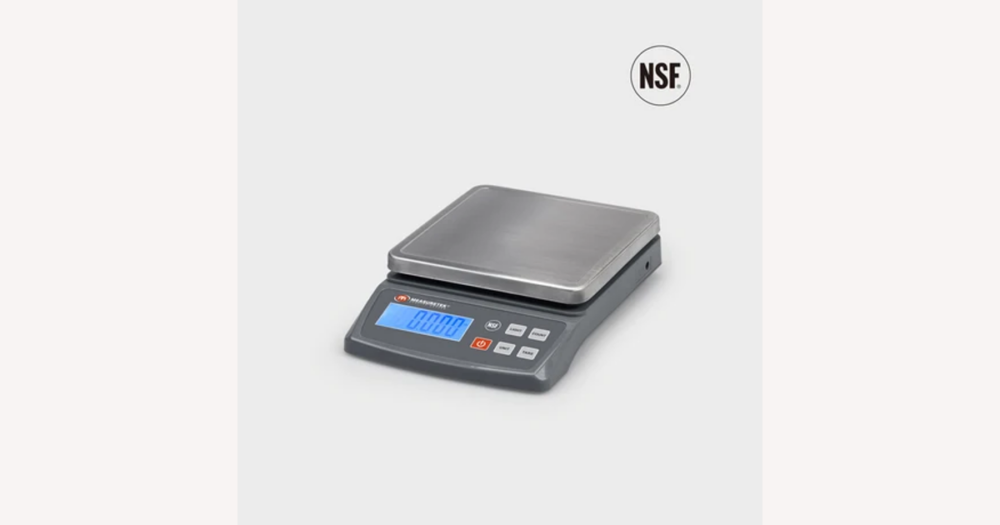
If you want a digital scale you can trust, start by ignoring the flashy app screenshots and focusing on the basics: clear accuracy and capacity specs, repeatable readings and solid construction. On DHgate, that means checking the scale’s stated precision, the apparent sturdiness of its platform and feet, and whether the seller provides meaningful documentation rather than vague marketing. Once those reliability fundamentals are in place, smart features or brand names are a bonus, not the main reason to choose a scale.
What makes a digital scale genuinely reliable?
On DHgate, a reliable digital scale is one that tells you clearly how much it can weigh, how fine its increments are, and how accurate its readings should be, then actually delivers those readings consistently on a flat, stable surface. Digital models use electronic load cells that, when made and calibrated properly, tend to hold precision better than mechanical spring (analog) scales, which can drift as parts wear.
Build quality matters as much as the numbers on the label: a solid platform that does not flex, non‑slip feet, and a stable housing for the sensors reduce wobble and random jumps in weight. Reliability means you can step on or place an object several times and see the same value within the stated tolerance, not just a one‑off perfect reading for a product photo.
Smart features such as Bluetooth, Wi‑Fi apps, bioimpedance body‑composition metrics, multiple profiles or cloud backups can be useful, but they are extras. They do not automatically make the scale more precise, and sometimes listings talk a lot about graphs and metrics while saying very little about accuracy, capacity or materials. If a DHgate listing gives vague specs, mixes units inconsistently, or offers thin documentation about how the scale measures and is calibrated, I would skip it even if the interface looks polished and the app screenshots are impressive.
Match scale type to your use before thinking about brands
- Bathroom and smart body scales: Designed to track a person’s weight trends over time, usually with higher maximum capacity (often around 150–200 kg) and coarser readability (for example 0.1 kg steps). Smart versions may add body‑composition estimates and app syncing. Brands often mentioned in this segment include RENPHO, Xiaomi, Omron, Tanita and Cecotec.
- Kitchen and food scales: Built for weighing ingredients, supplements or small packages, with lower capacity (typically a few kilograms) but finer readability (down to grams or fractions of a gram). Their reliability is about consistent small increments, which matters for recipes, portion control and basic nutrition tracking.
- Lab and precision balances: High‑accuracy instruments intended for controlled measurements in scientific or technical settings. They combine relatively low capacity with very fine readability and strict calibration procedures. Examples from research include Sartorius, Ohaus, Kern & Sohn, Baxtran, Radwag and Gram Precision; these are excessive for casual bathroom use but essential where exact mass matters.
- Commercial counter and platform scales: Robust devices for trade, retail counters or warehouse platforms, often with steel constructions, larger weighing surfaces and features geared towards selling by weight or inventory control. Observations mention commercial models sold by firms like Balanzas Precisur; these differ clearly from household scales in capacity, durability and compliance needs.
- Decision rule: For a reliable purchase, first choose the type that fits your task—bathroom or smart body scales for personal weight trends, kitchen scales for ingredients, lab balances for precise experimental work, and commercial scales for trade or bulk goods. A lab balance is overkill for home weight tracking, while a simple bathroom scale is not appropriate for selling by weight or lab measurements, regardless of brand.
Recognizable brand families (as reference points, not prescriptions)
- Lab and industrial brands as professional benchmarks: Names such as Sartorius, Ohaus, Kern & Sohn, Baxtran, Radwag and Gram Precision are widely cited for lab-tested precision, industrial robustness and detailed technical documentation. They typically publish clear capacity and readability figures, accuracy tolerances, calibration procedures and maintenance guides.
- Consumer bathroom and smart-scale brands as household benchmarks: Withings, RENPHO, Xiaomi, Omron, Tanita, Cecotec, Vitafit and similar families are known for large user bases and broadly satisfactory everyday performance in bathroom and body-composition scales. Their better models usually state capacity, increment size (for example 0.1 kg) and basic accuracy claims, and offer apps or multiple user profiles.
- Illustrative names, not DHgate prescriptions: These brand clusters are examples based on general reputation from external guides, not a list of recommended sellers, stores or DHgate offers. The page cannot promise that specific models are available, optimal or supported on DHgate, and you should not treat any of these names as automatic approval of a particular listing.
- How to use these brands when evaluating DHgate listings: Treat them as benchmarks for what good documentation looks like. When you encounter an unfamiliar brand on DHgate, compare its listing and manual against the patterns you see from these examples: clearly stated capacity and readability, realistic accuracy or tolerance, mention of sensor and calibration features, and some indication of support or warranty. I would personally lean toward a scale—famous or not—that follows these clarity and support patterns, and only consider a lesser-known brand when its specs and documentation are as transparent as the better-known references.
How to read digital-scale specs for real-world reliability
| Specification | What it means | Why it matters for reliability | Typical ranges by use |
|---|---|---|---|
| Maximum capacity | The highest weight the scale is designed to measure before it overloads or becomes inaccurate. | If capacity is too low, you risk overloading the scale; if it is very high but paired with coarse increments, small changes may be lost. Clear capacity limits help you match the device to real loads and avoid damage. | Bathroom/smart scales: often around 150–200 kg. Kitchen scales: a few kilograms (for ingredients or small parcels). Lab balances: low capacities tailored to samples. Commercial platform scales: higher capacities for bulk goods or trade weighing. |
| Readability / increment size | The smallest change the display can show (for example 0.1 kg, 5 g, 0.01 g). It is not the same as overall accuracy but indicates resolution. | Smaller increments make trends and small differences easier to see, but excessively fine resolution without solid accuracy can be misleading. A reliable scale offers increments appropriate to the task and backed by realistic specs. | Bathroom scales: commonly 0.1 kg steps (some claim around 0.1 kg variation, like certain Withings models). Kitchen scales: gram-level or finer (1–5 g steps) for recipes and portion control. Lab balances: much finer readability for precision work. Commercial scales: increments chosen to balance speed and accuracy, such as 5 g steps on steel platform models. |
| Stated accuracy / tolerance | The manufacturer’s claim about how close readings should be to true weight, often expressed as ± a certain value over a range. | This spec shows how trustworthy measurements should be under normal conditions. Vague statements like “high precision” without numbers or missing accuracy information are a bad sign. I would rather choose a scale with conservative, clearly stated accuracy than one with impressive marketing and no tolerance data. | Bathroom scales: may specify tolerances around typical body-weight ranges, sometimes noting expected variation. Kitchen scales: often state accuracy over a few kilograms. Lab and industrial scales: usually provide detailed tolerances and calibration requirements. Commercial trade scales: must meet regulatory accuracy rules and clearly document them. |
| Sensor and calibration features | Details about the weighing technology and how the scale keeps readings stable: electronic load cells, autocalibration, gravity compensation, position control, automatic zeroing and similar functions. | Well-described sensor technology and calibration options reduce drift and help the scale stay accurate over time. Features like auto-zero and autocalibration can improve usability, but only when they are explained plainly rather than marketed vaguely. Clear mention of how to calibrate—and when—signals a more serious design. | Bathroom/smart scales: often rely on load cells with automatic zeroing and simple calibration routines. Kitchen scales: may offer manual calibration options for finer work. Lab balances: strict calibration procedures and environmental controls. Commercial scales: robust load cells with routine calibration and position control to ensure legal-for-trade accuracy. |
| Construction materials | What the body and platform are made of—plastics, tempered glass, stainless steel, painted steel or combinations of these. | Materials affect stability, durability and how well the scale resists flexing or damage. A rigid, well-built platform helps sensors work consistently; flimsy housings and cheap finishes can introduce variability or shorten lifespan. Reliable models pair sound materials with non-slip feet and solid assembly. | Bathroom scales: often tempered glass tops with plastic frames or full plastic bodies. Kitchen scales: plastic or stainless-steel platforms that clean easily. Lab balances: metal frames and stable bases to minimize vibration. Commercial counter/platform scales: heavy-duty steel structures and larger platforms, like the commercial models referenced in industrial catalogs, built to withstand frequent loading. |
DHgate-focused checklist for evaluating digital scale offers
- Confirm the listing states maximum capacity and readability or accuracy with clear numbers (for example “up to 180 kg, 0.1 kg increments, ±0.3 kg”), and check that they fit your intended use—coarse steps are fine for trend‑tracking, but not for dosing ingredients or samples.
- Scan the photos and description for sensor and platform details: look for mention of electronic load cells, auto‑zero or autocalibration, and solid surfaces such as tempered glass or stainless steel with non‑slip feet. If materials or sensor type are barely described, I would treat the listing as a weaker candidate.
- Open the DHgate seller page and review ratings, badges, transaction history and buyer feedback. Consistent comments about product quality, stable readings and honest descriptions are a good sign; scattered complaints about faulty electronics or “numbers jumping” would make me move on.
- Read the shipping, warranty and buyer‑protection information before ordering. Check how long delivery is expected to take, whether returns are accepted for defective scales, and how DHgate’s dispute and refund mechanisms would apply if the device arrives damaged or clearly inaccurate.
- When the scale arrives, place it on a flat, hard surface and test it with several loads: step on and off a few times, weigh the same object repeatedly, and, if possible, use a known weight (such as a packaged food with stated mass) to see if readings are stable and close to expectation across low and high loads.
- If readings jump around, drift after a few seconds, or miss obvious reference weights by a wide margin even after following the manual’s calibration instructions, stop relying on the scale. Take photos or video of the issue and use DHgate’s dispute or refund process promptly instead of hoping the problem will “settle in” over time.
Reliability red flags to avoid in digital scale listings
- Treat any listing that claims “high precision” or “professional accuracy” without giving concrete numbers for readability and tolerance as a red flag. Without at least basic figures, you cannot judge reliability, and I would usually skip that offer.
- Be skeptical of very fine readability (for example 0.01 kg or 1 g) combined with unusually low prices and vague build descriptions. Extreme precision requires careful engineering and materials; when documentation is thin, those claims are more marketing than trustworthy specs.
- Watch for missing or token calibration information. If the manual and listing barely explain how to zero or calibrate the scale, or rely on boilerplate text copied across many products, that suggests measurement quality is not a priority, and I would only proceed after asking the seller specific questions.
- Avoid offers whose descriptions focus mainly on Bluetooth, Wi‑Fi, apps and dozens of body metrics while saying little about sensors, platform stability, feet, or materials. Overemphasis on connectivity with almost no mention of how the scale actually weighs is a sign that reliability may be secondary.
- Check seller‑side signals: inconsistent ratings, repeated complaints about erratic readings, fast breakage or poor handling of returns all point to higher risk. In that situation, I would either choose a different DHgate seller with clearer policies or walk away entirely rather than gambling on the listing.
How far can user reviews and ratings take you?
User reviews and star ratings are helpful for seeing how a digital scale behaves in everyday use, but they are not the same as controlled accuracy tests. When a popular model—such as some RENPHO bathroom scales on major marketplaces—shows hundreds of thousands of reviews with high average scores, that mainly proves that many people find it convenient, easy to use and “close enough” for routine weighing, not that every unit has been checked in a lab.
Reviews are most useful when you read them for patterns, not isolated comments. Look for repeated mentions that the readings are stable from day to day, that the scale feels sturdy months after purchase, that the app connects reliably, and that customer service actually helped when something went wrong. Pay attention to consistent complaints about fluctuating numbers, fragile build, short lifespans or unhelpful support—those are more meaningful than one extremely positive or negative story.
Treat sheer review volume or a high star rating as one input, secondary to clear specifications and documentation. A scale is more convincing when its listing states capacity, readability and accuracy tolerance, explains calibration, and is backed by a seller with solid DHgate ratings and fair shipping and dispute terms. I would only let good reviews tilt a decision between otherwise similar options; I would not buy a scale whose specs are vague or missing just because crowd feedback looks impressive.
Objective ways to verify reliability beyond marketing
More objective signals of reliability come from standards and calibration information rather than marketing language. When a brand or model mentions compliance with trade or laboratory norms and the manual clearly explains how to level, zero and calibrate the scale, that suggests more serious quality control than listings that only promise “high precision” without details. Clear documentation makes it easier for you to keep measurements consistent over time.
Independent or official test reports add another layer of evidence. Government or metrology studies, like national tests of digital scales, typically evaluate how accurately different models perform under controlled conditions, checking repeatability, tolerance and sometimes durability. These documents are technical verification tools: they rarely recommend specific retailers, name DHgate sellers or tell you where to buy, but they show what kind of performance a scale can deliver when used correctly.
In practice, you can search for technical reports, certifications or calibration guidance related to a brand or model and treat any credible results as corroborating evidence. Lack of published tests does not automatically mean a product is poor, especially for lower-cost household scales, but when I have to choose between two similar offers, I would give extra weight to the one with clear calibration instructions or known test results. On DHgate, that still needs to be combined with the usual checks on specs, seller history, shipping and dispute policies before you trust the listing.
FAQ: Smart features, batteries and affordable-but-accurate scales
Do Bluetooth/Wi‑Fi apps and many body metrics make a digital scale more reliable?
Not automatically. Smart features mainly add convenience, tracking and integration with health apps. Reliability still depends on clear capacity and accuracy specs, stable repeatable readings on a flat surface, decent materials and documented calibration. On DHgate, treat connectivity and extra body metrics as optional bonuses you consider only after the basic accuracy and build criteria look solid.
How does battery type affect day‑to‑day use and reliability?
Disposable cells (AAA, coin cells) and USB‑rechargeable batteries mainly differ in how often you replace or recharge them. Low battery can cause unstable or flickering readings, so keeping the scale properly powered matters, but battery chemistry itself does not define sensor accuracy. For a DHgate purchase, check that the listing explains battery type and replacement or charging, then watch for odd readings that might signal weak power rather than a faulty scale.
Can a cheap digital scale still be accurate enough for home use?
Yes, for routine home weight tracking a modestly priced scale can be reliable if it has clear specs (capacity, increments, basic accuracy), stable readings under repeated tests, a sturdy platform and a DHgate seller with decent ratings and buyer protection. I would avoid ultra‑cheap offers that use vague phrases like “high precision” without numbers, show flimsy construction or provide almost no documentation about how the scale measures and can be calibrated.
Do multi‑user profiles affect weight‑measurement reliability?
No. Multi‑user profiles are mainly an organizational feature that lets different people store their data separately or sync to their own apps. They do not change how the load cells or sensors measure weight. When evaluating a DHgate listing, treat profiles as a convenience extra; decide on the scale’s reliability based on specs, build quality, calibration information and seller track record instead.