
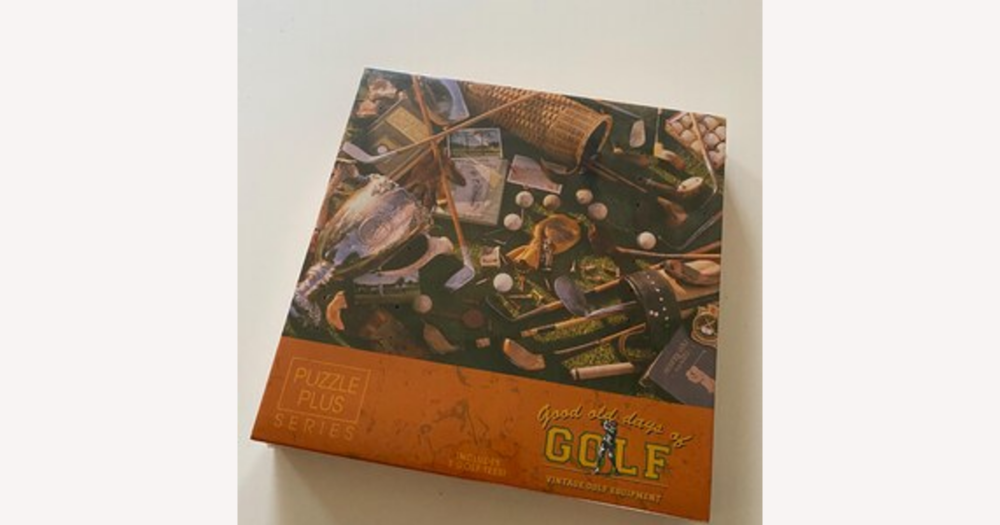
If you want a golf jigsaw puzzle that feels genuinely premium, DHgate is less a single store and more a huge catalog you need to read carefully. Instead of hunting for one magic seller, focus on listings that clearly state piece count and finished size, explain the board material and print quality, and come from DHgate sellers with solid ratings, real buyer feedback, and transparent shipping and refund terms. That combination of puzzle evidence and marketplace protections does far more to ensure a satisfying golf puzzle than any “luxury” label in the title.
Turn “where to buy” into “how to judge” golf jigsaw puzzles online
DHgate and other large marketplaces host many golf jigsaw puzzles, but there isn’t a single “best” store to rely on. The practical move is to search broadly for terms like “golf jigsaw puzzle” and then treat the results as a catalog you sort by evidence, not by branding alone.
For a high-quality golf puzzle, the listing itself should do most of the convincing. Clear specs such as piece count and finished size tell you how challenging the puzzle will be and how big it will look on the table or on a wall. Stated materials and print details—whether it’s standard cardboard, thicker board, or wood, and whether the artwork is described as high-resolution—help you judge how sturdy the pieces will feel and how sharp the golf scene will appear once completed.
Seller signals matter just as much as the puzzle specs. On DHgate, I’d look for a seller with solid ratings, a meaningful history of completed orders, and buyer feedback that mentions puzzle quality and shipping reliability. Combined with platform-level buyer protections—secure payment handling, published shipping estimates, and dispute and refund processes—these details give you more confidence than vague labels like “premium” or “luxury” ever could.
Personally, I’d skip a listing that shows a beautiful golf course photo but hides the basics: no piece count, no finished dimensions, no material information, and a seller with little or no visible history. I’d rather choose a simpler-looking puzzle where the listing spells out the specs and the DHgate seller has consistent positive feedback, even if the artwork feels less dramatic at first glance.
Because you can’t handle the puzzle in person, the main risks are flimsy, easily warping boards, blurry or dull printing compared with the photos, missing or duplicate pieces, and shipping that takes longer than you expected. The rest of this guide focuses on the puzzle specs, materials, listing cues, and DHgate-specific safety checks you can actually see, so you can narrow down golf jigsaws that look genuinely well made without needing direct product recommendations.
Match golf puzzle specs to your skill level and display plans
A few technical specs largely determine how a golf jigsaw puzzle will feel to build and display: piece count, finished dimensions, aspect ratio, and board thickness. Under about 500 pieces, most puzzles suit quicker, easier builds or family sessions; they tend to simplify fairways or focus on bold, high-contrast elements like flags and golf balls. Around 500–1000 pieces is the standard adult challenge range, where you start to see more subtle gradients in grass, sky, and water, or more detailed course maps. Above 1000 pieces, golf scenes can become serious projects, with fine detail in bunkers, tree lines, and contour shading that rewards patient puzzlers.
Finished size and aspect ratio matter both for how the artwork looks and how it fits your space. Wide rectangular puzzles work well for panoramic fairways, long views down a hole, or clubhouse scenes; they’re natural candidates for hanging over a desk or sofa, but you’ll want to check whether the dimensions are close to standard frame sizes. More square layouts often emphasize a central motif—a close-up of a ball on the green, a logo-style graphic, or a compact course diagram—and can be easier to place in smaller frames or narrower wall areas. If you already know where you might display the finished puzzle, matching the listed dimensions to that space is essential.
Board thickness is a quiet but telling quality signal. Thicker pieces generally lock together more firmly, resist warping when humidity changes, and feel more satisfying to handle, especially when you’re working through large monochrome areas like expanses of fairway or sky. Very thin, bendable pieces are more likely to fray at the edges, separate into layers, or lift when you move assembled sections, which can be frustrating if you plan to reassemble the puzzle or frame it long-term.
When you’re choosing a golf jigsaw online, it’s worth treating these specs as non‑negotiable. I would favor listings that clearly state piece count, finished dimensions, and at least the board material or thickness description, and I’d be wary of buying a puzzle where those details are vague or missing—especially if I intend to frame the finished course scene or give the puzzle as a gift. Clear specs make it much easier to match the puzzle to your skill level and display plans before you commit to an order.
Materials, print resolution, and what ‘premium’ really means
Once you’ve checked specs like piece count and size, the next quality signal for a golf jigsaw puzzle is what it’s made of. Most listings on DHgate and other marketplaces use standard cardboard or chipboard: it’s light, affordable, and fine for casual use, but thinner boards can flex or delaminate if you reassemble the puzzle often or plan to frame a detailed course scene. Some puzzles use thicker or laminated “premium” board, which adds weight and rigidity; pieces tend to lock more cleanly and stay flat, which I’d prefer for intricate fairways, greens, and sky gradients where small misalignments show. Wooden puzzles are less common and typically cost more, but they feel solid in the hand and can turn a favorite golf artwork into a more durable keepsake, especially when the cut shapes are decorative as well as functional.
Print quality matters just as much as material for golf imagery. Higher-resolution printing and decent color management keep grass textures crisp, flags and pin details sharp, and sky or water gradients smooth rather than banded. On a lower-quality print, large areas of fairway can look muddy and flat, and shadows in bunkers or under trees may blur together, making both the build and the finished picture less satisfying. Close-up listing photos of assembled sections—especially edges where colors meet—are one of the few concrete clues you have; if they look pixelated, washed out, or inconsistent from one area to another, I’d treat that as a warning sign regardless of how nice the scene appears in the main hero image.
Marketing phrases like “dust-free,” “eco-friendly ink,” “high-resolution art,” or “luxury board” sound reassuring, but they don’t point to shared standards across brands or sellers. In practice, they’re loose descriptions of construction choices rather than certified guarantees. I’d treat them as small bonuses only when they sit next to clear material details (e.g., thick laminated board) and visible evidence such as close-up photos of clean cuts and vibrant colors. If a listing leans heavily on this language but stays vague about what the puzzle is actually made of or how it looks up close, I wouldn’t rely on the adjectives alone to judge quality.
Pick a golf puzzle theme that matches your style and challenge level
- Artistic course maps: These puzzles often show hole layouts, contour lines, and labels, with lots of fine line work and similar shades of green and beige. They tend to be among the most challenging because many pieces share subtle patterns and small text details, rewarding patient puzzlers who enjoy a slow, absorbing build.
- Panoramic fairway or clubhouse scenes: Wide views down a hole, across a practice green, or toward a clubhouse usually include large areas of grass, trees, and sky. Those smooth gradients can make the puzzle demanding, since big regions of similar color offer fewer obvious placement clues; choose these if you like long, meditative sessions and don’t mind hunting for small differences in texture.
- Close-up shots of balls, clubs, or tees: Tight compositions with strong contrasts—white ball against green, shiny metal against dark turf, bold flag colors—give clearer pattern and color cues. They’re typically friendlier for casual puzzlers or mixed-ability groups because distinct shapes and edges make it easier to spot where pieces belong.
- Cartoon or humorous golf illustrations: Stylized characters, exaggerated swings, and graphic course elements usually break the image into solid blocks of color and bold outlines. That structure lowers difficulty and can make these themes ideal for family use or gifts when you want a relaxed, playful experience instead of a serious challenge.
- As a practical rule, combine theme and piece count when choosing difficulty: intricate maps and panoramic scenes in higher piece counts suit puzzle fans who want a demanding project, while high-contrast close-ups or cartoon art in moderate counts work better if you prefer something lighter or you’re buying for someone who’s newer to puzzles.
Use listing photos and details to spot better manufacturing quality
When you’re judging a golf jigsaw puzzle from an online listing, start by zooming in on photos of individual pieces and the interlocking edges. Clean, consistent cuts with smooth contours and no frayed cardboard layers, peeling, or obvious misalignment suggest better die-cutting than edges that look ragged or crushed.
Then look for images of the completed puzzle. Sharp grass textures, clear flag details, and smooth gradients in the sky or water indicate decent print resolution and color control; if the finished image looks noticeably blurry, muddy, or off-color compared with the main artwork, you’re likely seeing weaker printing rather than just camera issues.
In the description, concrete manufacturing and packaging cues matter more than big adjectives. Mentions of precision die-cutting, minimal puzzle dust, sturdy boxes, inner bags, or protective wrapping show some care in production and shipping. By contrast, listings that shout “premium,” “luxury,” or “high-end” but offer no close-ups, no detail on materials, and no packaging notes leave real build quality uncertain.
I’d personally favor a modestly branded golf puzzle that shows clear macro photos, notes on cutting and packaging, and honest specs over one covered in glossy language with little visible evidence—especially from an unfamiliar seller on DHgate or another marketplace. Treat solid visual and descriptive detail as a positive signal; treat its absence as extra uncertainty you should weigh alongside seller reputation and price rather than automatic proof of poor quality.

Close-up puzzle photos like this help you judge whether edges are cleanly cut and golf imagery is printed sharply before you order.
Understand the main risks of buying golf jigsaws sight-unseen
A simple DHgate checklist for safer golf puzzle orders
- Open the seller’s DHgate profile first and check the overall rating, the number of completed orders, and how recently they’ve made sales; a steady history with many transactions is more reassuring than a high score on only a handful of orders.
- Read the puzzle listing carefully for clear basics: piece count, finished dimensions, board material, golf theme, and any included accessories such as a reference poster or storage bag. If any of these are missing or vague, treat that as real uncertainty about what you’ll receive.
- Confirm that payment is processed through DHgate’s own secure checkout rather than off-platform transfers or unusual methods. Avoid any seller who asks you to pay outside DHgate, because that usually means giving up platform-level buyer protection.
- Review the shipping options, cost, tracking availability, and estimated delivery window, and compare them with when you actually need the puzzle—especially for gifts or events. Listings that offer clear tracking and realistic timelines are safer than those with only broad ranges or minimal detail.
- Skim DHgate’s buyer protection, dispute, and refund information as it applies to damaged or not-as-described items, and check how this seller handles problems in their policies and feedback. You want to know what happens if pieces are missing, the print quality is poor, or the parcel never arrives.
- Once you’ve checked seller rating, puzzle specs, payment method, shipping, and protections together, decide whether the overall picture feels comfortable for the price and your intended use. I personally won’t place an order if any of these elements are opaque—especially seller history, specifications, or recourse—because DHgate usually offers enough alternative listings that I don’t need to accept that level of uncertainty.
Read DHgate seller ratings and reviews as partial evidence, not proof
DHgate’s seller rating, transaction history, and recent activity work best as a quick snapshot of how reliably a seller has performed over time. A solid rating that’s been earned across many completed orders, with evidence of recent sales, usually indicates a more stable track record than the same score on just a few transactions months ago.
To go beyond the numbers, read buyer feedback for specifics. Comments that mention puzzle details—piece thickness, print sharpness, whether all pieces were included, how well the image matches the listing photos—alongside notes on delivery speed and packaging tell you much more than generic “good seller” remarks. For golf puzzles especially, mentions of color accuracy and overall condition are particularly useful.
At the same time, ratings and reviews have limits. They can be biased, incomplete, or too sparse to represent typical outcomes, and a few very positive or very negative experiences don’t prove what most buyers will see. Treat these signals as partial evidence that you weigh together with clear specs, good listing photos, and DHgate’s buyer protections, not as proof that everything will go perfectly.
In practice, I’d lean on established sellers with plenty of completed orders and detailed, recent feedback when the purchase matters more—such as a time-sensitive gift or a puzzle I plan to frame and display. I might still consider a newer seller with fewer reviews if their specs are clear, the photos look credible, and DHgate’s protections cover the risk, but only when I’m comfortable with the possibility that the outcome could be more variable.
Quick shortlist: traits of a premium-feeling golf jigsaw puzzle
- Puzzle build and challenge: clear piece count and stated finished size, with a piece count that matches how much time and difficulty you actually want (for many adults, that often means somewhere in the mid-range rather than a tiny or very large puzzle).
- Board quality: listings that mention thicker or upgraded cardboard, laminated board, or wooden pieces, and show photos where pieces lie flat without curling or obvious warping, are more likely to feel sturdy and satisfying to handle.
- Print sharpness: look for references to high-resolution printing and close-up photos where golf details—fairways, greens, flags, and sky gradients—appear crisp and well-aligned, not blurry or dull compared with the main image.
- Cut precision and dust: zoom into edge photos for clean, consistent cuts and tight-fitting tabs; any mention of reduced puzzle dust or clean finishing is a minor bonus when it matches what you can see in the images.
- Seller reliability: prioritize DHgate sellers with solid overall ratings, plenty of completed orders, and recent, detailed feedback that mentions puzzle quality and shipping, rather than relying on a brand name or artwork alone.
- Safe logistics and protections: prefer listings with transparent shipping costs and timelines, clear return or refund terms, and visible buyer protections; I would prioritize these traits and the build-quality signals above over brand recognition or especially striking artwork, because they more reliably predict a satisfying puzzle and safer transaction.
FAQ: accessories, estimating difficulty, and price expectations
Do online golf jigsaw puzzles on DHgate usually come with accessories like posters, storage bags, or special boxes?
Accessories are typically extras, not guarantees. If a golf puzzle includes a reference poster, zip storage bag, or upgraded box, the listing will usually say so clearly in the description or images. When there’s no mention of accessories at all, assume you’re getting only the puzzle and standard packaging, and treat any add-ons as a bonus rather than an expectation.
How can I estimate how difficult a golf jigsaw puzzle will be if the listing doesn’t describe piece shapes?
Use the combination of piece count, finished size, and artwork style as your main difficulty signals. Higher piece counts and larger dimensions generally mean a longer, more challenging build. Intricate course maps or panoramic fairways with lots of similar greens and sky tones are harder than bold, high-contrast close-ups or cartoon scenes. Even without piece-shape details, matching these factors to your experience level gives a realistic sense of how demanding the puzzle will feel.
What do price differences and ‘premium’ labels usually mean for golf jigsaw puzzles on marketplaces like DHgate?
Higher prices or ‘premium’ branding often reflect thicker or upgraded board material, more complex or licensed golf artwork, or stronger packaging and presentation, but they’re not proof of better quality on their own. Treat price and labels as tentative hints, then look for concrete support: clear specs, close-up photos of pieces and printing, and solid seller ratings with detailed feedback. If those evidence points are weak or missing, a higher price doesn’t necessarily buy you a better puzzle.
How should I put all of this together when judging a golf jigsaw puzzle listing online?
Start with the basics—piece count, finished size, materials, and artwork type—then check listing photos for cut quality and print sharpness, and review DHgate seller ratings, feedback, and shipping and refund terms. When these elements line up, you have a repeatable method to weigh any golf puzzle listing, even if some details (like accessories or exact difficulty) stay imperfectly described, and can decide whether the remaining uncertainty feels acceptable for the price and your plans.