
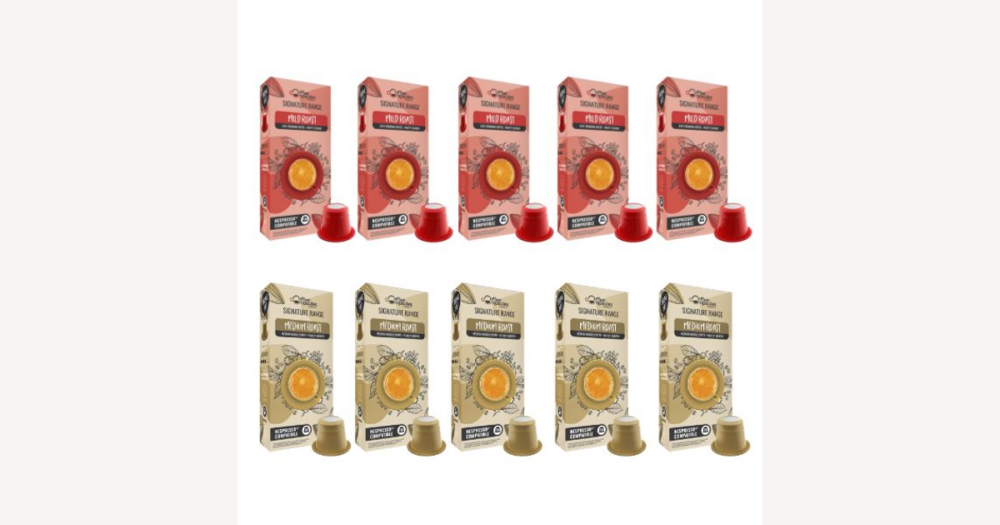
If you search for “Nespresso capsules” on DHgate, you’re not buying official Nespresso coffee—you’re choosing among third‑party Nespresso‑style compatible capsules from independent sellers. The safe way to shop is to treat every offer as a technical product: check which machine system and models it claims to fit, how the capsule is built and shown in photos, and how reliable the seller looks, then decide whether that level of detail matches your own tolerance for risk, price, and everyday coffee quality.
What you’re really buying on DHgate: compatible Nespresso-style capsules
On DHgate you are almost always looking at third‑party Nespresso‑style compatible capsules, not official Nespresso‑branded coffee. DHgate is a marketplace where independent sellers list their own products, so any use of the word “Nespresso” in a title or description is a compatibility claim or a brand reference, not proof that the capsules come from Nespresso or carry its guarantees.
That means every listing should be treated as a technical product that may or may not be well designed for your specific machine. Instead of trusting the brand name in the text, focus on hard details: which machine system and models the seller says the capsules fit, how the capsule shape looks in photos, what materials are used, and how clearly the seller explains those points. Seller ratings and reviews matter too, but they support the decision rather than replacing careful reading of the specs.
Personally, I value proven compatibility and transparent listings more than the very lowest price. I would rather pay a bit extra for capsules where the seller names the machine system and models, shows clear close‑up photos, and has a track record of satisfied buyers. Someone who is extremely price‑sensitive might choose to experiment with cheaper, less detailed offers and accept a higher risk of misfits or disappointing coffee. If you prefer predictable performance, though, it’s wiser to treat vague “for Nespresso” wording as a warning and favor well‑documented options.
With that distinction in mind, match each listing to your exact Nespresso machine system and model to avoid obvious compatibility mistakes.
Match capsule specs to your exact Nespresso machine system
Start by confirming your own machine’s exact brand, model, and system family. For Nespresso, the key distinction is between OriginalLine machines (such as Citiz, Pixie, Essenza, Lattissima, Inissia and similar models) and other systems like Vertuo or entirely different brands’ capsule lines. You need to know which group your machine belongs to before any DHgate listing can be meaningfully “compatible” with it.
When you use an OriginalLine machine, prioritize listings that clearly say “compatible with Nespresso OriginalLine” and, ideally, list specific models like Citiz or Pixie rather than only “for Nespresso.” Stronger listings often show close‑up photos of the capsule from the side and base, with the familiar small, slightly tapered OriginalLine shape. If the seller mentions capsule diameter or height, you can loosely compare those numbers with a genuine OriginalLine capsule or with typical measurements you find from trusted sources to rule out obviously different geometry.
Treat compatibility text that stays vague—only “for Nespresso,” mixes system names (for example mentioning Original and Vertuo in the same sentence), skips machine models entirely, or shows capsule shapes that look noticeably taller, wider, or differently curved—as red flags. Those offers carry a higher chance of capsules jamming in the brew head, failing to pierce correctly, or leaking under pressure. Careful matching of system names, specific model references, and capsule visuals is the most reliable way on DHgate to avoid obvious fit problems before you ever place an order.
Understand capsule materials, build quality, and disposal
Once you know which capsules fit your machine, pay attention to what they are made of. On DHgate you will mostly see three constructions: fully aluminum shells that look similar to official Nespresso capsules; plastic bodies with a foil or peelable top; and compostable or biobased designs that may have slightly thicker or more matte walls. Listings often describe this directly with words like “aluminum,” “plastic,” “biodegradable,” or show it in close, well‑lit photos of the capsule’s side, top, and base.
Material rigidity and wall thickness affect how well a capsule holds its shape when the brew head clamps down and the piercing needles and water pressure do their work. Aluminum shells usually stay rigid and within tight tolerances, which can help them seat and pierce cleanly. Plastic capsules vary more: thick, sturdy plastic can behave predictably, while very thin walls or uneven seams may flex, leading to imperfect piercing or minor leaks. Compostable or biobased capsules are designed to be weaker in waste streams, so their walls may deform more under pressure; if the design is not carefully engineered, that can increase the chance of misfits in some machines.
Because you cannot touch the capsules before buying, use DHgate photos and text to read this construction. Clear close‑ups of the top and base, visible thickness of the rim, and explicit material terms are helpful; blurry photos, generic icons, or vague descriptions like “eco‑friendly” without saying what the capsule is actually made of make assessment much harder. If you care about predictable operation day after day, treat unclear construction as a sign to skip that listing.
Many listings add claims about richer crema, better flavor, or superior environmental benefits. Those are marketing statements, not independently verified tests, and DHgate content alone cannot prove that one capsule tastes like an official Nespresso or delivers a specific recycling outcome. Use them, at most, as hints about what the seller wants to emphasize rather than as hard evidence that the capsule will perform or dispose exactly as promised.
For everyday use I would prioritize capsules whose materials are clearly described, whose photos show solid‑looking rims and tops, and whose design appears straightforward to separate or discard if you care about waste handling. When a listing looks very cheap, with flimsy construction in photos or almost no material detail, I would rather pay slightly more for a capsule that seems robust and well specified; that trade‑off usually buys you more predictable brewing and fewer frustrations with capsule fit or mess in the drip tray.
How to read intensity, blends, and flavor labels on capsule listings
Once the physical capsule looks acceptable, turn to what the listing says about the coffee itself. Intensity numbers, blend percentages, roast levels, and flavor names on DHgate are brand‑specific descriptions, not standardized lab measurements. A capsule marked 8/12 or 11/12, “70% arabica, 30% robusta,” “dark roast,” or named after a style like “Napoli” or “Ristretto” tells you how that seller positions the capsule, but it does not guarantee that it will taste like an official Nespresso capsule with the same label.
A few simple reading rules help. Higher intensity numbers generally point to stronger, fuller‑bodied coffee; lower numbers usually mean milder cups. A higher proportion of robusta in the blend tends to bring more bitterness and crema compared with pure arabica. Dark roasts usually taste more intense, sometimes more bitter, while light roasts lean toward brighter, gentler flavors. Use these rules to decide whether a listing sounds closer to the kind of profile you enjoy rather than to predict an exact match to a familiar branded capsule.
Because each manufacturer defines its scale differently, a level 8 from one seller can be quite different from a level 8 elsewhere, and a city name or classic style in the title does not guarantee that the underlying blend or roast matches the original reference. On DHgate it is safer to compare labels within one seller’s catalog—choosing between that seller’s 6/12 and 10/12, or their “medium roast” versus “dark roast”—than to expect direct parity with Nespresso originals or reviews you have seen for other brands.
Overall, treat intensity scores, blend ratios, roast descriptors, and flavor names as rough guides to style and strength, useful for narrowing options but not for promising a precise taste experience. When available, reviews that mention flavor, aroma, or how well the coffee extracts in real machines are more informative than numbers alone. I would use the labels to filter a seller’s range and rely on detailed feedback to judge whether their capsules are likely to deliver the kind of cup I want.
Use DHgate seller and product signals to judge reliability
On DHgate, the most useful reliability clues for compatible Nespresso-style capsules come from the seller’s overall record and the specific listing’s feedback. Start by checking the overall seller rating and how many orders or transactions that score is based on: a solid rating earned over many completed orders is more reassuring than the same number built on only a handful of sales. Then look at the capsule listing itself—its average rating, how many reviews it has, and whether buyers have posted clear photos of the capsules and brewed shots in real machines.
Strong evidence usually looks like reviews spread over time, written in full sentences, with photos that show the capsule shape, base, and how extraction works in the cup. When several buyers independently mention good fit in OriginalLine machines, normal piercing, and flavor that matches the description, you can be reasonably confident the product works as advertised. I would treat this kind of detailed, consistent feedback as worth paying a little more for, especially if I want predictable everyday coffee rather than a one-off experiment.
Weaker or suspicious patterns include very few reviews, lots of one-line comments that say only “good” or “OK,” identical wording repeated across multiple reviews, or a near-perfect score with almost no detail behind it. That kind of profile might still be fine, but it deserves skepticism, particularly when combined with vague compatibility wording or limited photos. The Q&A section is another signal: sellers who answer questions clearly, acknowledge limits, and respond promptly feel more transparent than those who ignore questions or reply with copy-pasted phrases.
All of these signals reduce uncertainty but never guarantee uniform quality or compatibility for every buyer. Capsules are consumables, batches can vary, and a seller’s performance can change over time. It is worth revisiting ratings and recent reviews before each new order rather than assuming past feedback still applies. I personally prioritize sellers with transparent profiles, many detailed reviews, and clear photos even if their price is slightly higher; a more budget-driven buyer might accept thinner evidence, but they should do so knowing the odds of a disappointing order are higher.
Key risks of buying compatible capsules on a marketplace—and how to reduce them
Even with careful seller checks, several things can still go wrong when you order compatible Nespresso-style capsules from a marketplace. The main risk is physical incompatibility: capsules that jam in the holder, fail to pierce cleanly, leak during extraction, or simply feel the wrong size or shape for your machine. Another risk is misleading or incomplete wording—titles that say only “for Nespresso” without naming OriginalLine or specific models, or listings that mix different systems in one description. Beyond the product itself, cross-border logistics can cause long transit times, lost or heavily delayed packages, or customs issues, and if something goes wrong you may face friction around refunds or disputes.
You can reduce compatibility risk by doing a targeted check on each listing before you pay. Confirm that the text names your machine’s system (for example, Nespresso OriginalLine) and, ideally, lists several specific models similar to yours. Compare close-up capsule photos to the shape and base style you know works in your machine, and read reviews looking specifically for comments about fit, piercing, and jamming. When a listing relies on vague claims like only “for Nespresso,” mixes OriginalLine and other systems, or offers few clear photos, treat it as higher risk and consider skipping it if you want predictable performance.
For shipping, choose tracked options when available, read the estimated delivery window carefully, and assume cross-border delivery will take longer and be less flexible than local retail. Avoid tiny, urgent orders that cannot tolerate delays; it is usually more sensible to buy enough to justify the wait and shipping cost while still matching how quickly you use the capsules. To prepare for disputes or refunds, check the seller’s stated return terms, learn the basics of DHgate’s buyer protection, and keep all communication and evidence—photos of misfit capsules and screenshots of descriptions—inside the platform so you have a clear trail if you need to open a case.
No checklist can remove risk completely, so decide in advance how much uncertainty you are comfortable with. I would skip offers that fail key checks on system naming, photos, or reviews, even if they look cheaper or more adventurous, because I value reliable fit and straightforward disputes. Someone who enjoys experimenting or is extremely price-sensitive might accept thinner evidence and more ambiguous wording, but they should expect that occasional jams, weak coffee, or delivery frustrations are part of that trade-off rather than a surprise.
A practical DHgate buyer checklist for Nespresso-style capsules
- Write down your exact coffee machine brand, model, and system family (for example, Nespresso OriginalLine) so you can compare every DHgate listing against the correct system.
- Open a listing and confirm it explicitly names your system and, ideally, compatible models close to yours, then check capsule photos to see that the shape and base match the capsules you know work in your machine.
- Identify the capsule materials and construction from the description and photos, and avoid listings where walls, tops, or seams look flimsy, inconsistent, or are poorly explained.
- Review the seller’s overall rating and store history, then read the listing’s reviews and buyer photos, looking for repeated confirmation of good fit and acceptable extraction rather than relying on a single generic comment.
- Check pack size, total item price, and shipping cost together, and estimate an approximate per‑capsule cost so you’re not misled by large packs that only look cheap once shipping is included.
- Read available shipping options, estimated delivery times, and tracking details, and decide whether the timing and reliability make sense for when you actually need the capsules.
- Before ordering, review the seller’s return policy and DHgate’s buyer protection timeframe, and reserve large or repeat orders for listings that pass most of these checks.
- Default toward listings that clearly satisfy the majority of these steps and treat thinly detailed or inconsistent offers as optional experiments, not your everyday coffee supply.
Original Nespresso vs compatible capsules on DHgate: what you’re trading
| Aspect | Official Nespresso capsules | Compatible capsules on DHgate |
|---|---|---|
| Fit and basic compatibility | Designed and tested by Nespresso for specific machine families, so capsule dimensions and piercing behavior are standardized and predictable. | Produced by various manufacturers, with more variation in dimensions, materials, and base design; fit and piercing are claimed in the listing and must be verified through specs and photos. |
| Performance consistency | Brand-controlled production and quality checks make extraction and crema more consistent from box to box, within the same capsule line. | Quality can vary between sellers and batches; some offers perform well, others feel weak or inconsistent, so you rely heavily on detailed reviews and buyer photos to gauge real-world performance. |
| Price | Generally higher and more fixed per capsule, with limited room for deep discounts outside promotions. | Often lower per capsule and more flexible, but effective cost depends on pack size and shipping; you may see both genuine savings and very cheap capsules that cut corners. |
| Variety | Curated range of blends, intensities, and special editions under one brand, with clear naming and standardized information. | Broad mix of blends, intensities, flavors, and pack sizes from many brands, including niche or experimental offerings; variety comes with more noise and a wider spread in build and coffee quality. |
| Information and policies | Sold through official channels or large retailers that usually offer standardized product information, clear warranties, and familiar return processes. | Each DHgate seller controls their own listing quality, photos, and policies; you depend on capsule descriptions, seller ratings, reviews, and DHgate’s buyer protection rather than a single brand guarantee. |
| Overall trade-off | Higher cost in exchange for predictable fit, flavor style, and straightforward customer service—suited to buyers who prioritize certainty. | You trade some built-in certainty for potential savings or special variants and must manage compatibility and quality risk by carefully reading specs, photos, and seller signals. DHgate naturally focuses on these compatible options, so the checklist in this guide is your main tool for deciding whether a specific offer is worth the gamble. |
Shipping, customs, and pack-size choices for cross-border capsule orders
When you order coffee capsules on DHgate, you’re using a cross‑border marketplace, so many items ship from overseas warehouses with different carriers, speeds, and tracking options. Delivery times depend on the seller, the shipping method, and your country’s handling processes, so two listings can have very different timelines even if the capsules look similar.
Before you pay, read each listing’s shipping section carefully: check which methods are offered, whether tracking is included, and the estimated delivery window. Slower, cheaper options can be fine if you’re replenishing well in advance, but they’re risky if you’re almost out of capsules; in that case it’s safer to choose a method with clearer tracking and shorter, more predictable estimates. Customs checks or local handling can add extra days or, in some regions, fees, so plan to order with a buffer instead of relying on the earliest possible date.
Think about how much coffee you actually drink and pick pack sizes that make sense for cross‑border ordering. Very small packs often aren’t worth the shipping effort and wait, while very large quantities tie you to one product whose compatibility and flavor you haven’t fully validated yet and may run up against shelf‑life limits. For a new DHgate capsule source, a moderate initial order usually balances unit price, convenience, and risk: you get enough capsules to justify international shipping without betting months of coffee on a listing you haven’t tried.
FAQ: brand naming, misfit capsules, and sustainability claims
Can DHgate sellers write “compatible with Nespresso” or use the Nespresso name in their titles?
Yes, many third‑party brands on DHgate use phrases like “compatible with Nespresso” or mention models such as Citiz or Pixie to describe which machines their capsules are designed to fit. From a buyer’s perspective, that wording is a compatibility claim, not proof that the capsules are official Nespresso products or endorsed by Nespresso. Treat any use of the name as something you need to verify—by checking machine system and model details, capsule photos, and reviews—rather than as a guarantee of origin or brand‑level quality.
What should I do if the capsules I bought don’t fit or pierce properly?
Stop using the capsules as soon as you notice jamming, leaking, or piercing problems so you avoid damaging your machine. Take clear photos or a short video showing the capsule, how it sits in the holder, and what happens when you try to brew. Then contact the seller through DHgate’s messaging system, describe the issue politely, and refer to the compatibility claims in the listing (such as the machine models named). If you can’t reach a solution, open a dispute within DHgate’s buyer protection period and upload your documentation; clear, timely evidence and platform‑based communication usually give you the best chance of a refund or replacement.
How should I interpret eco or sustainability badges on DHgate capsule listings?
Treat eco and sustainability badges as marketing first and evidence only if they come with recognisable, independent certifications. Look for specific names and certifying bodies—such as well‑known environmental or fair‑trade schemes—and any explanation of what standard the product meets. Be cautious about generic green icons, leaves, or phrases like “eco‑friendly” or “green coffee” without details, and assume unverified logos are seller claims rather than proven environmental performance. If clear certification information is missing or unfamiliar, factor that uncertainty into your decision and focus on the basic capsule specs, materials, and seller reliability instead.