
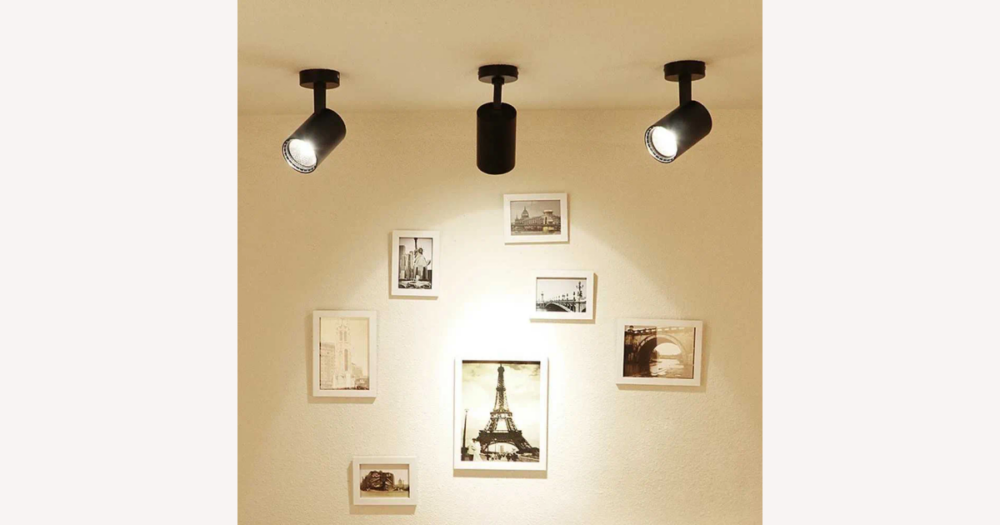
On DHgate, the safest way to find durable industrial ceiling spotlights is to treat each listing as an engineering puzzle: look for solid housing materials, meaningful enclosure ratings, sensible wattage and mounting details, then combine those product checks with DHgate’s seller ratings, official payment system, shipping information, and dispute tools. If the specs and platform signals line up, a slightly higher price is usually worth it; if materials or electrical details are vague and the seller record is thin, it’s better to walk away, even when the deal looks tempting.
How to assess durability and safety on DHgate
On DHgate, there isn’t a single store or label that guarantees durable industrial ceiling spotlights; you have to judge each listing by how solid the fixtures look on paper and how safe the transaction will be. The practical approach is to read the technical information carefully—housing material, enclosure ratings like IP or IK, wattage and heat management, and mounting details—and then layer in DHgate-specific checks such as seller ratings and transaction history, the use of DHgate’s own payment system, and the shipping and dispute options shown in the listing and help pages.
Personally, I care much more about robust construction and clear compatibility than about styling or the absolute lowest price. I would rather pay a bit more for a spotlight with a convincing aluminum housing, sensible thermal design, and clear voltage and mounting information from a seller with consistent feedback than gamble on a cheaper option that hides its materials or gives vague electrical details.
The rest of this guide builds on that method by unpacking which specs and technical checks matter most when you’re deciding whether a DHgate spotlight is likely to be durable and safe to install.
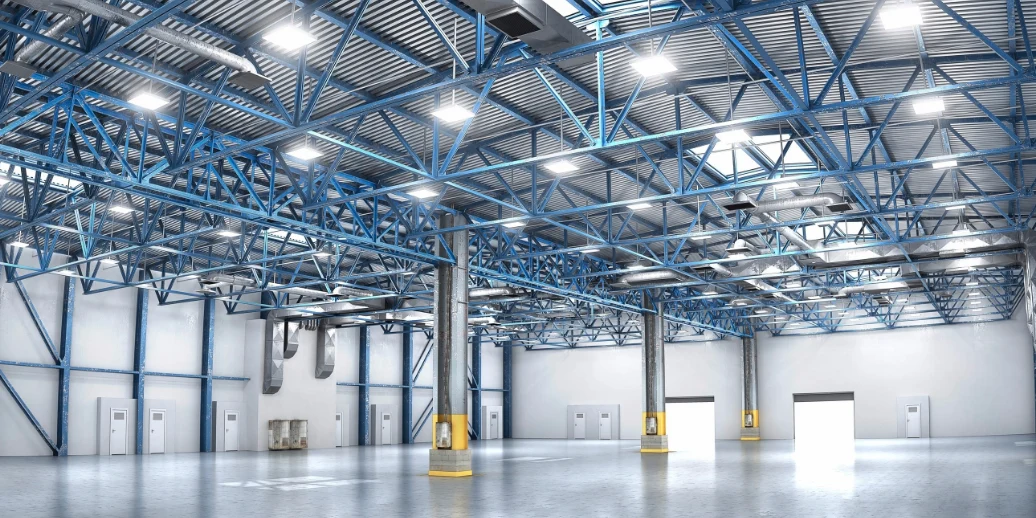
Industrial ceiling spotlights with metal housings mounted along a warehouse ceiling, showing how the fixtures and brackets sit above the workspace.
Specs that matter for industrial spotlight durability
- Housing material and build: Thicker cast or extruded aluminum housings generally handle heat and mechanical stress better than thin or flimsy-looking plastic shells. Look for mentions of aluminum or other metals, and avoid listings where the body material is unclear or looks fragile in photos.
- Corrosion resistance and finishes: In humid, dusty, or mildly corrosive environments, powder coatings, anodized finishes, or notes about corrosion resistance can help the housing last longer. These finishes support durability but don’t guarantee it, so treat them as one positive sign among others rather than proof that the light will survive any environment.
- IP ratings (dust and moisture): An IP rating such as IP65 or IP66 indicates how well the spotlight is protected against dust and water ingress. Higher ratings usually mean better protection, but the exact number has to match your environment—basic indoor areas need less protection than damp or washdown zones.
- IK ratings (impact resistance): Where given, IK ratings show how well a fixture can withstand physical impact, with higher values generally offering more protection against knocks or hits. Industrial ceilings with occasional contact from equipment benefit from fixtures that state an appropriate IK level instead of leaving impact resistance unspecified.
- Wattage and heat management: The higher the wattage, the more important the spotlight’s heat sinks, ventilation paths, and stated maximum operating temperature become. Listings that pair moderate wattage with visible heat-dissipation features are more likely to manage heat sensibly than tiny housings claiming very high power with no mention of cooling.
- LED chip and driver information: References to specific LED chip types or driver brands, or at least basic performance notes like expected lumen output and driver type, suggest the seller has thought about the core electronic parts. Completely unspecified LEDs and drivers make it harder to judge whether the light will run reliably over time.
- Mounting hardware quality: Brackets, screws, and connection points are part of durability too, especially on industrial ceilings. Listings that show sturdy metal brackets, secure fasteners, and clear mounting diagrams give more confidence than those with minimal hardware photos or vague descriptions of how the fixture is fixed in place.
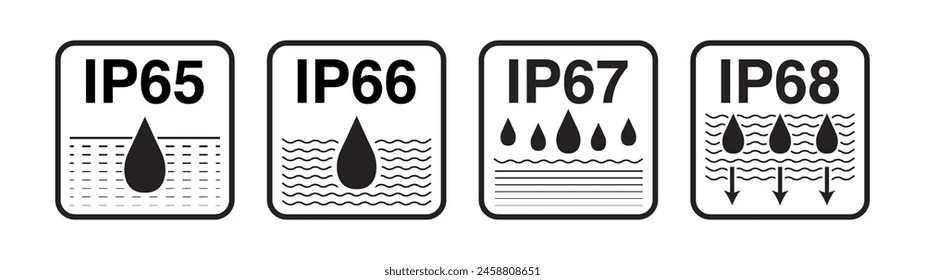
Example graphic showing common IP65–IP68 markings, similar to what you might see on a product label or in a listing image.
Checking electrical and mounting compatibility before you buy
- Match the stated input voltage and frequency to your local supply, such as 120 V, 60 Hz in the US versus 220–240 V, 50 Hz in many other regions, and treat vague or conflicting power descriptions as a compatibility risk.
- Check overall fixture dimensions and, for recessed spotlights, the required ceiling cutout size so the body and trim can actually fit the space available.
- Confirm the mounting type—surface-mounted, recessed, track, or pendant-style—and make sure your ceiling structure and wiring layout can safely support that installation method.
- If the spotlight is part of a track or rail system, verify that the specified track standard and connector type match any existing hardware or planned system so the head can lock in correctly.
- Review beam angle, approximate lumen output, and colour temperature to decide whether the light will give narrow task illumination or broader area coverage that suits your specific industrial workspace.
- Treat unclear or missing compatibility information as a stop sign: message the seller with precise questions or move on to a better-documented listing instead of assuming any fixture will fit and work everywhere.
Reading quality signals without over-trusting marketing claims
- Give more weight to listings with detailed, internally consistent specs—power, voltage, materials, IP ratings, and dimensions—that line up with the photos and the described industrial use, rather than short or contradictory descriptions.
- Treat mentions of common certifications such as CE or RoHS as claims that may be useful, but only rely on them after you’ve checked whether the seller can provide documentation or a plausible explanation of how the product meets those standards.
- Look for multiple clear photos showing the housing thickness, heat sinks, wiring points, and mounting hardware; these reveal more about build quality than a single stylized image of the fixture in use.
- Read patterns in buyer feedback over time—comments about build quality, brightness, and reliability across several orders—since repeated, consistent experiences are more informative than one-off reviews.
- Be cautious with weaker signals such as generic labels like “industrial-grade,” “premium,” or “50,000-hour lifespan” that appear without supporting data, single extremely positive or negative reviews, and certification logos that aren’t backed by any explanation or paperwork.
- Use these quality signals as part of a broader judgment that still depends on solid specs and DHgate’s platform protections; none of them, on their own, guarantees durability or a trouble-free purchase.
How DHgate’s platform fits into a safer spotlight purchase
On DHgate, you typically buy industrial ceiling spotlights through the platform’s own checkout and payment channels rather than sending money directly to a seller. Keeping the transaction inside DHgate helps ensure your order, payment, and any later dispute are tied to a single, trackable record.
Once you place an order, DHgate generally provides order tracking and messaging tools so you can follow shipment progress and contact the seller if you need clarification about specs, shipping details, or any problems with the fixtures when they arrive.
If the spotlights turn up damaged, incorrect, or not as described, DHgate offers mechanisms for reporting the issue and requesting a resolution or refund, but the exact rules—deadlines, what counts as acceptable evidence, and which situations qualify—depend on current DHgate policies.
Because those policies and protections can change, you should always confirm the latest conditions on DHgate’s official help and policy pages before relying on any assumption about buyer protection. A carefully chosen, durable product still benefits from knowing how to use DHgate’s payment, tracking, and dispute tools if something goes wrong in transit or the listing turns out to be misleading.
A simple research sequence for buying spotlights on DHgate
- Search DHgate for industrial ceiling spotlights using relevant keywords and categories, treating the results as a pool of candidates rather than assuming any one listing is automatically the best or safest choice.
- From those results, shortlist a small set of listings that at least mention core technical details such as housing material, wattage, voltage or voltage range, and any stated IP rating or other protection information.
- Open each shortlisted listing and apply the durability and compatibility checks you’ve built from earlier sections, skipping options where the specs are vague, contradictory, or obviously incomplete for an industrial installation.
- Review the seller’s ratings, number of completed transactions, and feedback patterns over time, giving preference to sellers with steady, reasonable performance rather than focusing only on a perfect score or a single glowing review.
- Compare available shipping methods, estimated delivery times, and any notes on packaging or insurance, which matter more for heavy, fragile industrial fixtures than for small consumer items.
- Before you pay, confirm that you are using DHgate’s official payment system in checkout and avoid any suggestion from a seller to move the payment off-platform by bank transfer, direct wallet transfer, or other informal methods.
- Take a moment to read DHgate’s current help resources on disputes and refunds, and keep copies of key information such as the listing details, screenshots of the specs, and order confirmations in case you need to raise an issue later.
- In practice, I would walk away from listings with weak specs or inconsistent seller signals even if the price looks attractive, because the whole research sequence is meant to reduce avoidable risk, not just to find the lowest possible upfront cost.
Common red flags and how to respond to them
- Missing or very generic technical specs — no clear housing material, voltage, wattage, IP rating, or mounting details — suggest the seller doesn’t prioritize accuracy. Treat this as a major risk and either send specific questions (e.g., “What is the housing material and IP rating?”) or move on to listings with fuller, consistent information.
- Contradictory or unclear power and mounting descriptions — such as mixed voltage ranges that don’t match your region, or references to both recessed and surface mounting without explanation — can lead to unsafe installations. Slow down, ask the seller to clarify the exact input voltage, frequency, and mounting type, and avoid any listing that stays vague.
- Photos that don’t match the written specs or show obviously different housings or connectors indicate poor listing control. Ask for current photos of the actual product and only proceed if the images and specs line up; if they don’t, I would walk away.
- Listings that say little or nothing about warranty or after-sales support are risky for industrial fixtures that are costly to replace. If warranty, return, or support terms aren’t stated, ask explicitly how defects, early failures, or wrong items would be handled and prefer listings with clear, written conditions.
- Weak seller signals — very few completed transactions, low overall ratings, or repeated feedback mentioning quality, delivery, or description problems — increase the chance of hassle if something goes wrong. In these cases, favor sellers with steadier performance and more detailed feedback, even if their prices are slightly higher.
- When you notice one or more of these red flags, respond by sending targeted pre-sale questions, requesting real-product photos, and comparing alternative listings. If a seller is evasive or multiple issues appear together, a cautious buyer treats that as a reason to choose a clearer, better-documented listing rather than accepting the risk for a lower headline price; I personally would move on rather than try to save a little upfront and risk costly rework later.
Balancing price against durability and seller reliability
- Very low-priced, sparsely documented spotlights: Pros include lower upfront cost and the appearance of a bargain, plus a wide range of options. The trade-off is that these listings often provide minimal specs, few or generic photos, and limited seller history, which makes durability, compatibility, and after-sales support much harder to judge.
- Very low-priced, sparsely documented spotlights: Cons are higher uncertainty about housing material, ratings, and electrical fit, and a greater chance of problems if the product arrives damaged or not as described. If something goes wrong, thin documentation and weak seller records can make it harder to argue your case in a dispute.
- Moderately priced, well-documented spotlights: Pros include clearer information on materials, wattage and voltage, IP or other protection ratings, and mounting details, along with more complete photos and a stronger track record of transactions and feedback. This extra clarity usually reduces the risk of buying a fixture that fails early or doesn’t fit your installation.
- Moderately priced, well-documented spotlights: The main con is higher upfront cost; you may pay more per fixture than the cheapest listings. However, the added detail and seller history make it easier to evaluate the product before purchase and to point to concrete specs and feedback if you need support later.
- For industrial installations where failures, downtime, and rework are expensive, it usually makes sense to lean toward slightly higher-priced listings with solid specs and reliable sellers rather than chasing the absolute lowest price. I personally prefer paying a bit more for documented durability and compatibility, while remembering that price alone never guarantees quality — the real signal is the combination of technical detail and seller track record.
FAQ: Are DHgate spotlights suitable for tough workshop or damp environments?
Can industrial ceiling spotlights from DHgate safely be used in workshops or damp areas?
Some DHgate spotlights may be suitable for demanding environments, but only when their listings spell out the right specs. Look for a clearly stated IP rating that matches your level of dust and moisture exposure, any IK or impact-resistance information if the fixtures could be knocked or struck, a sensible operating temperature range for your climate, and robust housing materials and finishes such as metal bodies with durable coatings. If a listing leans on phrases like “industrial-grade,” “workshop-ready,” or “waterproof” without giving specific ratings or conditions, treat that as marketing language rather than proof of performance. For workshops, garages, or damp spaces, it’s safer to either choose better-documented products or message the seller to request precise IP/IK ratings, temperature limits, and material details before you commit to an installation.