
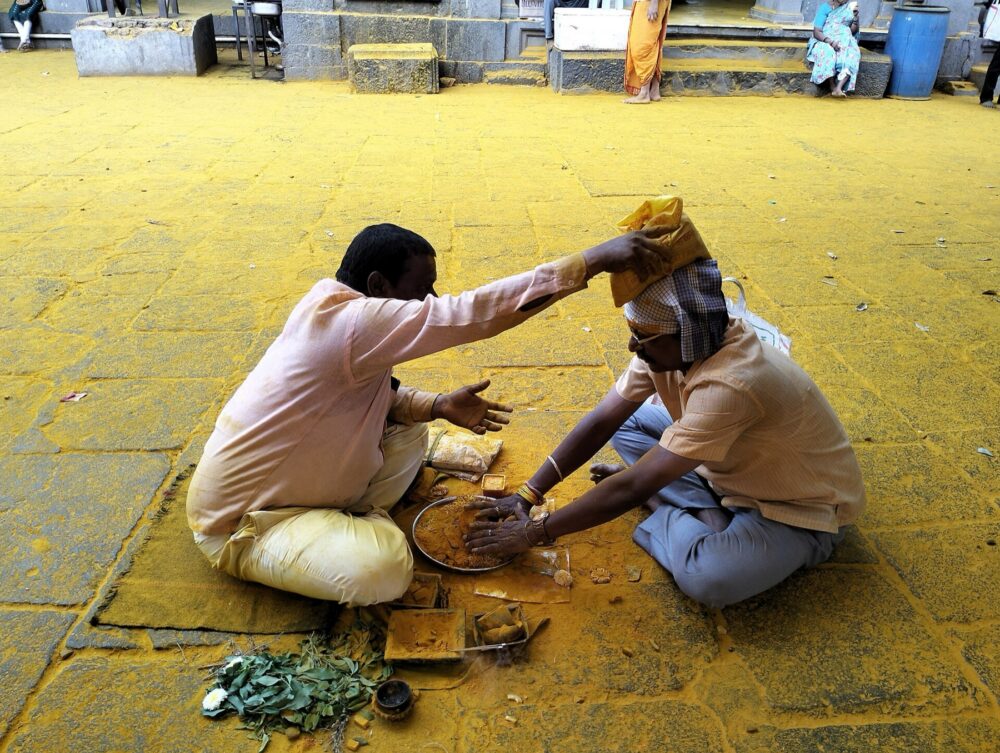
You choose puja mats and seating by matching the material, thickness, and size to how they’ll actually be used—devotees sitting on the floor, deities on a platform, or a full mandir layout—then deciding whether you care more about traditional patterns and ritual guidance or low prices and broad availability. Specialist Indian retailers tend to focus on authentic wool, cotton, velvet, and kusa/darbha grass aasans with clear ritual cues, while large marketplaces like DHgate function more as discovery and price-comparison hubs for generic mats and textiles.
If you’re in the US shopping for yourself or for a small ecommerce store, start by deciding whether you need seating for people, a base for idols or a puja table, or both. That drives every other choice: a thin handwoven cotton chatai for group ceremonies, a thicker wool or cotton aasan for long meditation, and smaller velvet mats for deities on the altar.
What Puja Mats and Aasans Are, and How They’re Used
Puja mats and aasans are simply defined, clean surfaces reserved for ritual use. They mark off sacred space and give either the devotee or the deity a dedicated seat.
Guides like Aalacart’s puja aasan overview describe two main uses:
- Devotee seating aasans: mats placed on the floor where you sit to perform japa, homa, or daily puja.
- Deity/mandir mats: smaller mats or cloths beneath idols, kalash, lamps, or on the puja table.
Bhumikart’s placement article points out that many setups use separate mats: one for the deity platform and one or more for devotees. For example:
- A small square velvet mat under a murti or photo frame.
- A larger rectangular cotton or wool mat for the person performing the ritual.
- Multiple chatai-style mats for guests during a group Satyanarayan puja.
Once you know who or what is “sitting” on the mat, you can stop scrolling endless listings and focus on a narrow subset of products.
Matching Types, Materials, and Sizes to Your Ritual Setup
Specialist retailers and guides converge on a handful of core materials: wool, cotton, velvet, and kusa/darbha grass. Each feels different under you and carries its own associations.
Shops such as IBHI, LoveNspire, and Spundhann show how these break into sub-types like handwoven aasans, chatai mats, and mandir mats with various thicknesses and finishes.
Here’s a compact way to think about it:
| Material / Type | Typical Use (editorial judgment based on sources) | Comfort & Feel | Pros (for most buyers) | Watch-outs |
|---|---|---|---|---|
| Wool aasan | Devotee floor seating for japa, longer meditation | Warm, cushioned, good on cold hard floors | Insulating, feels substantial and “special” | Can be too warm in hot climates; may shed fibers |
| Cotton handwoven mat | Daily home puja, group ceremonies, kids’ seating | Medium-soft, breathable, flexible | Natural fiber, easy to fold and wash | Thin versions may feel hard on tile for long sessions |
| Velvet deity mat | Under idols, kalash, lamps, or on a puja table | Smooth, visually rich | Strong visual focus, often with zari borders | Shows lint and stains; usually decorative, not for long sitting |
| Kusa/darbha grass aasan | Meditation, certain traditional rituals | Firm, slightly textured | Traditional, natural, often highlighted as ritually pure | Less cushioned; edges can be scratchy if poorly finished |
| Chatai-style woven mat | Large gatherings, floor rows for ceremonies | Firm, wide area coverage | Good for many people; commonly used in India | Bulkier to store; quality varies by weave |
Sizes and shapes. Bhumikart notes both square and rectangular formats in common use:
- Small squares for deity platforms (for example, many velvet aasans on Giri-style sites are under a foot per side).
- Medium rectangles for individual seating—aasan mats on retailers like IBHI often cover roughly one person in a cross-legged pose.
- Long chatai strips for multiple people in a row.
If you’re planning a home mandir with one primary devotee:
- Pick one medium wool or cotton aasan for your seating.
- Add one or two small velvet or cotton mats for deities and key objects.
For an ecommerce buyer curating SKUs, that often translates into:
- 1 wool aasan SKU (devotee focus).
- 1-2 cotton or chatai SKUs (ceremony seating and everyday use).
- 1 velvet deity mat SKU (mandir visuals).
You don’t need every material; you need a coherent mini-line that clearly signals how each mat is meant to be used.
Buying Factors and Market Options (Including DHgate)
Specialist sites like Aalacart, Bhumikart, IBHI, LoveNspire, and Spundhann focus almost entirely on puja mats and related textiles. You’ll typically see:
- Clear ritual signaling (“deity aasan,” “meditation mat,” “mandir mat”) so you’re less likely to buy something unsuitable.
- Emphasis on natural fibers and handwoven construction for floor comfort.
- Traditional patterns and borders that visually match other puja items.
Broad marketplaces, by contrast, mix puja mats with general home textiles and rugs. That includes platforms like DHgate, which its own editorial blog describes as hosting a wide range of products from global vendors at competitive prices, with buyer reviews and ratings to help with discovery and comparison. On DHgate you’re more likely to encounter:
- Generic mats, cushions, and textiles that can be repurposed as seating.
- Lower prices per piece, especially in bulk, but with less ritual-specific labeling.
A practical approach is:
- Use specialist sites to define your spec (material, size, traditional pattern).
- If you then explore DHgate or other general marketplaces, filter for those specs and use reviews and photos to judge whether the product really matches your intended ritual use.
For additional DHgate platform context, use What DHgate is and how the marketplace works, Find trusted sellers on DHgate, and Review the DHgate order-readiness checklist.
For small ecommerce businesses, choosing a handful of SKUs that clearly serve different setups—devotee vs deity, short vs long sittings—matters more than chasing every variant on every platform. Once your spec is locked, DHgate becomes one of several places to check pricing and variety rather than the place that defines what a puja mat should be.