
If you’re looking for hanging file organizers on DHgate, this guide won’t hand you a ranked list of “best” products. It shows you how to judge organizer types, specs, materials and DHgate buyer signals yourself so you can confidently choose options that suit a busy, high-traffic office.
How this guide helps you choose hanging file organizers on DHgate
On DHgate, this guide helps you research hanging file organizers as a category rather than handing you a list of “top‑rated” products or places to buy. It won’t rank specific organizers, point to external stores, or tell you which exact listing to pick.
Instead, it focuses on what matters in a busy office: understanding the main organizer formats, reading specs like size standard, capacity and hardware, judging materials for durability, and applying DHgate‑specific checks on sellers, ratings, shipping terms, disputes and refunds so you can assess listings yourself.
Once that scope is clear, the guide covers the physical formats of hanging file organizers you might use in a high‑traffic office, then shows how to combine that choice with DHgate safety checks before you order.
Main types of hanging file organizers and when they fit a busy office
For central, high-volume storage in a busy office, cabinet hanging file folders sit on rails inside drawers or larger filing cabinets. They’re designed to hold dozens or hundreds of files in a compact footprint, keep paperwork aligned and supported, and cope with multiple people opening and closing drawers all day. When cabinets are sturdy and rails match the folder hooks, this is usually the most efficient way to manage long-term records and shared reference files.
Desktop hanging racks or boxes are smaller frames or containers that sit on a desk, shelf or side table and hold a limited set of hanging folders or loose files. They work well for quick-access project documents, active client files or paperwork one person needs to reach constantly without getting up. The trade-off is footprint and capacity: they take up valuable surface space and usually suit one primary user at a time, so they’re better for individual workstations or low-traffic teams than for the main office archive.
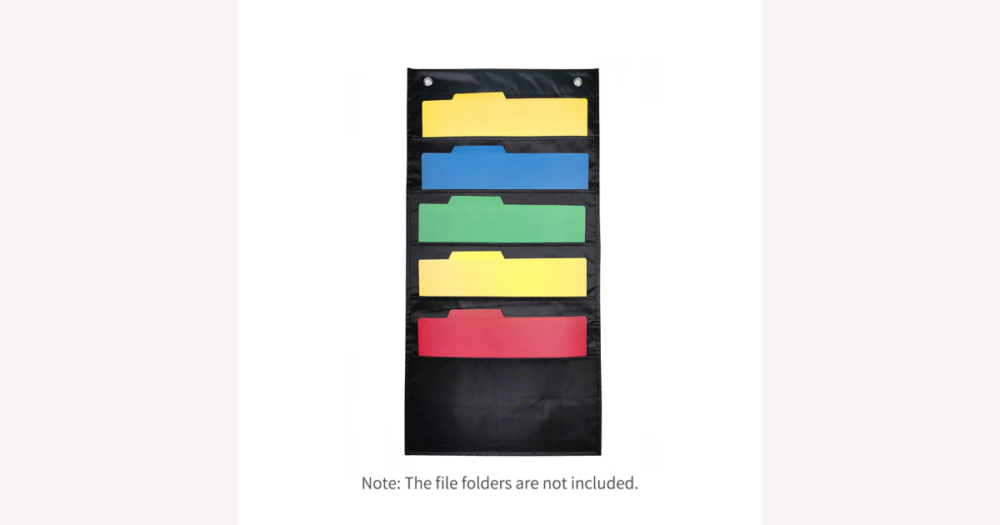
Wall- or door-mounted pocket organizers use vertical space to hold files, folders or envelopes in separate slots. In busy environments, they shine for shared information or frequently accessed documents—think in-trays near reception, job tickets in a workshop, or forms people grab on the way into a meeting room. They offer very fast access and strong visibility, but expose contents to view and work best when pockets and mounting hardware are robust enough to handle constant use and occasional overloading.
Compared across formats, cabinet systems maximise capacity and stability with a relatively small floor footprint but require drawer access and work best when staff know which drawer to open. Desktop racks make the fastest personal access at the cost of desk space and limited capacity, while wall or door pockets prioritise speed and visibility for everyone, using vertical space but offering less privacy. For truly high-traffic, multi-user file access I would favour solid cabinets with quality hanging folders or a well-built wall organizer over small, decorative desktop racks, and only lean on those lighter options where usage is occasional or the office is mostly digital.
Key specs to check for busy-office hanging file organizers
- Confirm the size standard. Check whether the organizer and any included folders are described as A4, letter or legal size, and match that to the paper you actually use. A4 paper is roughly 21 × 29.7 cm, while US letter and legal are based on 8.5″ widths; mixing standards can leave files sitting too low, too high, or not hanging correctly on the rails.
- Treat capacity claims cautiously. Listings may quote a maximum number of folders, pockets or documents, but in a busy office that “maximum” usually feels overstuffed. Assume you’ll need a little headroom so folders can slide easily and staff aren’t fighting jammed drawers or bulging pockets all day.
- Check physical dimensions against your furniture. Compare the organizer’s stated length, width and height with the internal measurements of your drawers, the depth of shelves, and the space available on desks or walls. A rack that technically fits but blocks a drawer from closing or overhangs a narrow shelf will cause daily frustration.
- Consider load and construction. Look for any stated weight limits, and read between the lines: thicker metal or plastic, reinforced corners and sturdy rails usually cope better with heavy files than thin panels or flexible frames. In a high-traffic office, it’s safer to choose something slightly overbuilt than to risk bending, sagging or cracking under everyday loads.
- Check hardware and attachment details. Note whether the organizer uses side rails, hooks, grommets, brackets or mounting screws, and think about how that matches your existing cabinet rails, drawer lips or wall surface. For wall or door organizers, confirm that the hanging method suits your material (plasterboard, timber, glass) and any limits on drilling or adhesive.
- Match every spec to your current setup. Before you shortlist anything on DHgate, mentally test these numbers and hardware against your real files, cabinets and working space. In a shared office where multiple people handle files all day, I’d prioritise true-to-spec sizing and generous, realistic capacity over decorative cut-outs or complex shapes that don’t actually fit or hold enough.
Materials and build quality: what they mean for everyday use
Steel wire or mesh organizers are built from thin metal rods or perforated panels. They’re generally resistant to warping, handle heavy loads well and look professional in most offices. The trade-off is weight and sound: they can be heavier to move and tend to make more noise when files slide along the rails or mesh surfaces.
Solid metal panel designs use sheets of steel or another metal to form drawers, sides or full frames. They’re typically the most robust option, holding up to frequent use, heavy folders and occasional bumps without bending. Because they’re heavier and less flexible, they work best as permanent, central storage where the organizer stays put and different staff access it throughout the day.
Rigid plastic organizers vary widely. Thin, brittle plastic can crack or deform under weight, but thicker, well-moulded plastic frames often strike a good balance between durability and lighter weight. Plastic surfaces are usually quieter than bare metal when files slide, and they’re easier to move around, which suits changing layouts or smaller offices—as long as the plastic is clearly substantial rather than flimsy.
Fabric, cardboard and hybrid designs (such as fabric bodies with cardboard inserts or light metal frames) are usually lighter, softer-looking and more portable. They can work well for low-volume, occasional use—temporary project files, spare paperwork or mostly digital teams where only a few documents need hanging storage—but they’re more prone to sagging, tearing or losing shape if overloaded or handled constantly.
For central, high-traffic storage I would choose robust metal or sturdy, thick plastic every time, even if that means a plainer look or a bit more weight. I’d only opt for fabric, cardboard or very lightweight designs where files are light, access is occasional, or portability matters more than longevity—for example, a mobile project rack rather than the main office archive.
Choosing formats for a busy office: trade-offs across types and materials
| Organizer type | Typical materials | Access speed & multi-user use | Space footprint | Sturdiness vs weight | Visibility vs privacy | Best-fit busy-office scenarios |
|---|---|---|---|---|---|---|
| Cabinet hanging folders in filing cabinets | Solid metal drawers with metal or sturdy plastic hanging folders | Fast for labelled files once set up; several people can access different drawers, but one drawer is usually used at a time | High floor footprint for the cabinet, minimal extra desk or wall space; suits dedicated storage areas | Very sturdy and stable but heavy; designed to stay put rather than move around | Files are mostly hidden inside drawers; good for privacy and a tidy look but less visual reminder of active work | Central, high-volume storage for shared records, archives and reference files where reliability and privacy matter more than quick visual access |
| Desktop hanging racks or boxes | Steel wire or mesh frames; thick rigid plastic boxes; occasional fabric or cardboard for light use | Very fast access for one person; small teams can share if the rack is placed centrally, but it’s best for 1–2 users at a time | Uses desk or floor space near the user; compact compared with a full cabinet but can feel cluttered if too many racks are scattered around | Metal racks are robust but heavier; thick plastic balances sturdiness with easier repositioning; lightweight fabric or cardboard is easy to move but more fragile | Files are exposed and easy to see, which helps with active projects but offers little visual privacy | Personal or team project hubs, current work files near a desk, or flexible setups where organizers are moved or reconfigured often and capacity needs are moderate |
| Wall or over-door pocket organizers with hanging capability | Metal wall racks; rigid plastic pocket systems; fabric or hybrid pockets with hooks or rails | Fast grab-and-go access, especially for frequently used documents; several people can see and access labelled pockets at once | Uses wall or door surface instead of floor or desk space; ideal where horizontal space is tight but vertical surfaces are available | Metal and rigid plastic pockets stay shaped under load but add weight to the wall; fabric or cardboard pockets are lighter yet more prone to sagging if overfilled | Highly visible; labels are easy to scan, but documents are more exposed and may be readable at a glance unless protected | Shared quick-access stations for forms, in-trays and active files in corridors or meeting areas, or space-saving storage where you want everything visible and reachable without adding more furniture |
In a crowded office where several people are constantly reaching for shared paperwork, sturdy cabinet systems or metal wall racks usually make the most sense. Cabinets with hanging folders keep large volumes of files in a compact, protected footprint, while heavy-duty wall racks turn spare vertical space into a clearly labelled access point for common forms or active projects.
For a personal desk with limited space, a compact but solid desktop box or rack is often more practical. A well-made wire rack or thick plastic hanging box keeps today’s project files close at hand without committing you to the size and cost of a full cabinet, and you can move it if your layout changes.
In a mostly digital office that only needs occasional paper storage, lighter fabric or cardboard-based organizers can be acceptable if they’re treated as low-volume, low-stress storage. A fabric wall pocket or collapsible hanging box can hold spare paperwork or temporary project files without dominating the room—as long as you don’t overload it or rely on it as the main archive.
When files are handled all day by multiple people, I would always lean toward simpler, heavy-duty designs over visually elaborate but flimsy organizers. A plain metal cabinet or solid rack that quietly does its job is far better than a stylish but lightweight system that warps, sags or misaligns folders after a few months of busy-office use.
Reading ratings and reviews on DHgate without overtrusting them
On DHgate, overall star ratings and review counts can give a rough sense of how satisfied past buyers have been with a hanging file organizer. A moderate-to-high average rating backed by many reviews spread over months or years usually signals that the product has met general expectations more consistently than an item with only a handful of ratings.
Look closely at recent comments that mention build quality, sturdiness and sizing. For organizers, useful reviews often talk about whether the frame feels solid or flimsy, whether folders sit correctly on the rails, and whether the size matches A4 or letter/legal documents as advertised. When those notes line up with the listing’s specs and materials, they can reinforce your confidence that the product behaves as described.
Buyer-uploaded photos are especially helpful. If real-world images of the organizer match the listing photos in design, finish and apparent thickness of metal or plastic, that’s a good sign that you’ll receive something close to what’s shown. Photos that clearly demonstrate how folders hang, how full pockets look, or how the organizer sits in a cabinet or on a wall can help you visualise fit in your own office.
Treat certain patterns as red flags: very few reviews for a product that claims heavy-duty use, clusters of complaints about flimsiness or mis-sizing, or buyer photos showing a noticeably different design, colour or scale than the listing. These signals suggest a higher risk that the organizer won’t meet busy-office demands or won’t match its description.
Ratings and reviews are always subjective, though, and no single comment represents typical performance. Use them as one input alongside the hard details—specs, materials, and seller history—rather than the deciding factor. For hanging file organizers, it’s safer to prioritise clear sizing information, solid-looking construction and a reliable seller, then use reviews to confirm that other buyers felt those promises were met.
DHgate buyer checklist for hanging file organizers
- Start with seller reliability. On DHgate, favour sellers with longer account history, a solid number of completed transactions, and an overall rating that stays consistently positive. Scan feedback for patterns like late shipping, poor packaging or items arriving different from the photos—those are red flags for a busy office order.
- Confirm every order detail before you add organizers to the cart. Check that the size standard (A4 vs letter/legal), stated capacity, colour, quantity and format (single units vs multi‑packs) match your measurements and office plan, not just the product photos.
- Use DHgate‑supported secure payment methods and keep all communication and payment within the platform. Buyer protections—such as mediation if items arrive damaged or not as described—apply far more cleanly when you don’t move the transaction to external channels.
- Review shipping options carefully, especially to Australia. Note the carrier or method, estimated delivery window, whether tracking is included, and any conditions about delays or customs. For a busy office, it’s usually worth preferring tracked shipping even if it adds a little cost.
- Read dispute and refund terms before you commit. Locate the seller’s return policy on the listing, check who pays for return shipping, whether restocking fees apply, and how long you have to open a dispute if organizers arrive mis‑sized, damaged or noticeably different from the description.
- Take the time to run through this checklist slowly. I’d rather spend extra minutes upfront checking specs, shipping and refund conditions than gamble on a cross‑border order that’s hard, slow or expensive to return if the organizers don’t fit a busy office as expected.
Common pitfalls when buying hanging file organizers on DHgate
- Ordering the wrong size standard is one of the easiest ways to end up with unusable organizers. If a rack or set of hanging folders is built for letter/legal but your office uses A4 (or vice versa), files may not hang correctly or sit at an awkward height. Match the listed size standard to your paper type and double‑check centimetre measurements against your own notes before buying.
- Capacity labels can be optimistic. An organizer advertised for a high number of files or pockets might cope with that load only under light, occasional use. In a busy office, overloading thin rails or light frames can lead to bowing, sticking drawers or torn fabric. Treat capacity as a ceiling, favour sturdier materials for heavy use, and plan a bit of margin rather than packing every slot to its limit.
- Compatibility issues with existing cabinet rails or wall hardware can leave a new organizer sitting in a cupboard unused. Before ordering, compare listing photos of hooks, rails and mounting points with your actual drawers or walls, and use the earlier spec and measurement guidance to confirm that widths, hook styles and mounting hole positions line up.
- Ignoring who pays for return shipping or restocking fees can make fixing a mistake unexpectedly costly. International return postage from Australia to an overseas seller may exceed the price of the organizers themselves. That’s why the DHgate buyer checklist stresses reading the return and refund policy in advance, so you know whether a mis‑sized or damaged delivery is realistically worth sending back.
- Use the work you’ve already done—spec checklist, measurements and the DHgate buyer checklist—as your main defence against these problems. Confirm size standards and dimensions, choose materials that match your usage level, check hardware compatibility in photos, and understand return terms before ordering so most pitfalls are dealt with long before a parcel reaches your office.
Measure your office and map specs before browsing DHgate
- Confirm your size standard. Measure the height and width of the paper and folders you actually use and note whether they match A4 (about 21 × 29.7 cm) or US letter/legal dimensions; this is the size label you’ll need to see in DHgate listings.
- Measure where the organizer will sit. For drawers, record interior width, depth and height, plus the distance between rails and any stops or handles; for desks or walls, measure the usable width and height, marking anything that blocks the space such as power points, skirting boards or monitor arms.
- Estimate real capacity needs. Count how many hanging files, folders or stacks of paper you’re storing now, then add a buffer for growth so you’re not ordering an organizer that only just fits today’s volume.
- Choose formats and materials that match your workload. Note which organizer types (cabinet folders, desktop racks/boxes, wall or door pockets) you prefer and whether you want heavier metal or thick plastic for high-traffic areas, or lighter materials for occasional-use storage.
- Turn these notes into DHgate search terms. Combine your size standard, format and material (for example, “A4 hanging file organizer metal” or “wall file pockets A4 plastic”) and, where possible, apply filters or skim for listings whose stated widths, heights and capacities meet or exceed your measurements.
- Keep your mini spec sheet beside you while browsing. Use it to quickly rule out organizers that don’t match your size standard, space measurements or capacity, so you only spend time comparing DHgate listings that genuinely fit your office constraints.
FAQ: Compatibility, bulk orders, and mismatched deliveries
Can I mix hanging file organizers bought on DHgate with the branded folders I already use?
Yes, you usually can, but ignore brand names and focus on standards and hardware. Check that both your existing folders and any new organizers are built for the same paper size (A4 vs letter/legal) and that the hanging style matches—side rails with hooks, centre rails, or specific bracket shapes. If the size standard or rail/hook style differs, folders may sit too low, too high or not hang securely, even if they look similar in photos.
Should I order hanging file organizers in bulk straight away for a large office?
For a larger office it’s safer to place a small trial order first. Use one or two units to confirm that real dimensions match your measurements, folders sit correctly, and materials feel sturdy enough for busy use. Once you’re happy with fit and build quality, you can reorder or scale up to dozens of units. This approach reduces the risk of having many unusable organizers, especially with international shipping and potentially costly returns from Australia.
What should I do if organizers from DHgate arrive damaged or don’t match the listed specs?
Start by documenting the problem: take clear photos of the damage or misfit, and capture any labels or measurements that differ from the listing description. Contact the seller through DHgate’s messaging system, share the evidence, and ask for a resolution that fits their stated return and refund policy. If you can’t agree, open a dispute within DHgate’s timeframe, referencing the listing specs, your photos and any packaging issues. Before returning items, double-check who covers return shipping and whether restocking fees apply, using the buyer checklist and policy notes you reviewed before ordering.