
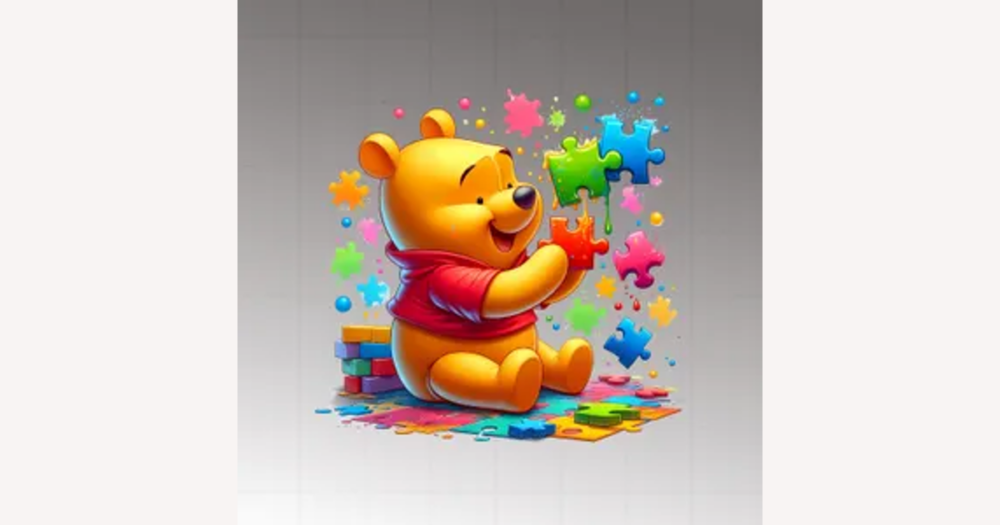
If you want a Winnie the Pooh puzzle on DHgate that a beginner can genuinely finish, start by matching the piece count and image style to their real patience level, then only consider listings where the basic seller ratings, shipping estimate and refund terms look trustworthy. Lower piece counts, larger pieces and clear Pooh artwork are usually more important than an impressive, complex design, especially for a first-time puzzler.
What makes a Winnie the Pooh puzzle genuinely beginner-friendly?
For a true beginner on DHgate, think of “beginner” as someone who has little or no jigsaw experience and may lose interest if the puzzle feels impossible. That usually means staying with lower piece counts and a clear, simple Winnie the Pooh scene. For young children and very cautious starters, aim for listings in roughly the 12–30 piece range; this keeps the activity short and achievable. For older children or adult beginners who already enjoy similar activities like board games or simple model kits, a Pooh jigsaw around 50–100 pieces can still be manageable, as long as the image is straightforward.
Treat these numbers as guidance rather than strict rules. A patient 6‑year‑old who loves sitting still might cope with more pieces than a restless 10‑year‑old, and an adult who enjoys visual tasks may be comfortable starting a little higher. When you read a DHgate listing, weigh the piece count against what you realistically know about the beginner’s attention span, frustration tolerance and past experience with similar activities, and only go above these ranges when you’re confident they’ll enjoy the challenge.
Image clarity matters as much as piece count. Puzzles that show large, well-defined characters—Pooh, Piglet, Tigger, Eeyore—against simple, solid-colour areas and clear borders are much easier than busy collages, dark night scenes or artwork filled with tiny background details. In product photos, look for scenes where Pooh and friends are immediately recognisable, the background is not crowded with small objects, and colour blocks (like blue sky, green grass, red balloons) are clearly distinct from one another. This gives beginners obvious visual clues to sort and match pieces.
Finished size also affects how easy the puzzle is to handle. For the same number of pieces, a larger finished picture usually means larger pieces, which are easier to pick up, turn and place; a very small finished size can mean tiny pieces that are fiddly and frustrating for new puzzlers. When a DHgate listing shows both piece count and dimensions, favour puzzles that combine modest piece counts with a reasonably large finished size and clear Pooh artwork. Personally, for a true beginner I would choose fewer pieces, larger pieces and straightforward scenes over intricate, visually impressive designs, and only relax that preference once the beginner has shown they enjoy similar activities and want more of a challenge.
How do puzzle materials and construction affect a beginner’s experience?
Once you have a suitable difficulty in mind, the puzzle’s materials and construction decide how forgiving it will be for a beginner. Most Winnie the Pooh puzzles you’ll see in general guides are either cardboard jigsaws or wooden puzzles, and both can work. Thicker, sturdier cardboard pieces are less likely to bend, split or fray if a beginner forces them into place or stacks them roughly, so they tend to feel more forgiving than very thin card that creases easily.
Many wooden Pooh puzzles use chunky shapes or large pieces that are easier for small hands to grasp, and they often come in lower piece counts aimed at younger children. That solid feel can be reassuring and more durable in everyday use, but wooden puzzles are heavier and usually focused on simple images rather than detailed scenes. For older, careful beginners who want more detailed artwork, a well-made cardboard jigsaw can be a better balance.
Surface finish—glossy versus matte—mainly affects glare. A glossy puzzle can reflect bright overhead lights and make colours harder to read from some angles, while a matte finish tends to reduce reflections. For most beginners this is a minor factor, but if the puzzle will be used under strong lighting, it is worth preferring listings that mention a non-glare or matte surface.
Fit and cut quality matter because they determine how stable the finished picture feels. When pieces are snugly cut and interlock cleanly, the image stays together and beginners feel rewarded once they’ve matched the picture correctly. Very loose or poorly cut pieces can slide apart even when they’re in the right place, which is frustrating for new puzzlers. Listings and reviews that mention “tight fit”, “good cut” or “pieces line up well” are helpful signs, while repeated comments about gaps or pieces that don’t sit flat are a warning.
All of these durability points are typical tradeoffs rather than guarantees; individual products vary, and DHgate listings may not describe every detail. Based on that uncertainty, for a true beginner—especially children—I would prioritise thicker, sturdier pieces and simple, robust construction over thinner, intricate designs, and only choose more delicate, finely cut puzzles for older, careful users who value detailed Pooh artwork and are unlikely to handle the pieces roughly.
How should age labels and puzzle format guide your choice?
| Beginner profile | Approximate age label on listings | Puzzle format examples | Typical piece count range | What the format expects from the user |
|---|---|---|---|---|
| Toddlers / very young children | Around 1–3 years / “2+ years”, “3+ years” | Knob puzzles, chunky wooden shape puzzles, simple tray puzzles with big pieces | 3–12 very large pieces | Short attention span, basic grasping and matching of obvious shapes or characters; needs big, easy-to-place pieces and clear one-step successes. |
| Preschoolers | Around 3–5 years / “3+ years”, “4+ years” | Tray puzzles with a fixed frame and picture underneath, simple flat jigsaws with large pieces | 10–30 large pieces | Can follow a picture guide, match colours and outlines, and stay with the activity a bit longer; still benefits from a frame and clear, uncluttered Pooh scenes. |
| Early school-age children | Around 6–9 years / “6+ years”, “8+ years” | Standard flat jigsaws with interlocking pieces, small multi-pack sets of Pooh puzzles | 30–100 medium-sized pieces per puzzle | Manages more pieces, subtler colour differences and longer sessions; can enjoy simple scenic backgrounds and repeated practice across several small puzzles. |
| Adult beginners | Teenagers and adults / often “8+ years” or general age guidance | Standard flat jigsaws with interlocking pieces, multi-pack sets with low piece counts | 50–300 pieces depending on patience and similar hobby experience | Can usually handle standard jigsaw cuts and extended sessions, but may prefer simpler, character-focused Pooh images and moderate piece counts while building confidence. |
For toddlers and very young children, Winnie the Pooh puzzles work best when they are as simple and chunky as their toys. Knob puzzles and thick wooden shape boards with just a few large pieces let small hands grab and place Pooh, Piglet or honey pots without worrying about interlocking tabs. Listings that show big, recognisable characters and very low piece counts are a safer choice than anything that looks like a traditional jigsaw.
Preschoolers can usually handle a little more structure. Tray puzzles with a fixed frame and a picture printed underneath create a clear outline to follow, so a child can match colours and shapes while still having a guide. At this stage, slightly higher piece counts and simple flat jigsaws with large pieces are fine as long as the Pooh artwork is bright, uncluttered and easy to read at a glance.
Once children reach early school age, standard flat jigsaws with interlocking pieces become more engaging. They can manage dozens of pieces, notice subtler colour differences and stick with the puzzle for longer. For these beginners, a Winnie the Pooh scene with a clear foreground and not too much tiny background detail keeps the challenge enjoyable, and multi-pack sets of several small puzzles can offer good practice if each puzzle stays in a manageable piece range.
Adult beginners usually do not need special formats; any standard jigsaw is acceptable from a safety perspective. Here, I would treat age labels mainly as a minimum-age and choking-hazard guide, then focus on piece count and image simplicity instead. A Pooh design with clear characters, strong colour blocks and a moderate number of pieces is more forgiving than a dark, highly detailed collage, and is a better starting point if the adult is unsure about their patience or experience.
Across all ages, listing age labels such as “3+ years” or “6+ years” are soft indicators of complexity and safety rather than guarantees about skills or outcomes. For a true beginner child, I would follow those labels and favour chunkier, simpler formats—knob, tray or low-piece jigsaws—over more advanced puzzles. For an adult beginner, I would use age labels only to confirm basic safety and then let piece count and how busy the Pooh artwork looks decide whether the puzzle feels approachable.
What checks should you run on a DHgate listing before you order?
- Confirm the puzzle’s piece count suits the beginner you have in mind, staying toward the lower end of the ranges you’ve chosen if you are unsure about their patience or experience.
- Check the finished size in the listing and look closely at the product photos to infer piece size, preferring Winnie the Pooh puzzles where pieces appear reasonably large and easy to grasp rather than tiny and fiddly.
- Review the Pooh artwork shown in the images: prioritise clear, character-focused scenes with distinct colour areas, and avoid extremely busy collages or very dark, subtle designs for a first-time puzzler.
- Verify that the listed age recommendation and puzzle format—such as knob puzzle, tray puzzle, flat jigsaw or multi-pack—fit the beginner’s age, skills and attention span based on the profiles you’ve matched earlier.
- Once the puzzle itself looks suitable, check DHgate seller ratings and the number of completed transactions as broad reliability signals, noting any patterns in the feedback rather than single scores alone.
- Read a sample of buyer reviews to see what people say about puzzle quality and shipping, paying attention to repeated comments on image clarity, piece fit and delivery experience rather than isolated opinions.
- Confirm that the estimated delivery time and shipping cost are acceptable for you, and make sure the listing explains how shipping is calculated to your location so you are not surprised by extra charges.
- Look for basic information about refund or return terms and any buyer protection mentioned in the listing or seller details, so you understand what happens if the Pooh puzzle arrives damaged, incomplete or very different from what was described.
- I would not place an order unless both the puzzle specs and the seller information look solid on these points, and I would happily skip a very appealing design if ratings, reviews or refund details seem too thin or unclear to trust.
What common pitfalls should you avoid when buying for a beginner?
- Picking a Winnie the Pooh puzzle with far too many pieces for the beginner’s age or patience is the fastest route to frustration. If you are unsure, stay with the lower ranges you’ve already identified and skip listings that jump to several hundred small pieces for a first-timer.
- Ignoring finished-size measurements can leave you with tiny pieces that are awkward to grasp and place. Treat missing or very vague size info as a warning and prefer DHgate listings that clearly state the completed puzzle dimensions or show pieces that look reasonably large in relation to a hand or familiar object.
- Highly detailed or very dark Pooh scenes can be visually confusing even when the piece count seems reasonable. For true beginners, avoid busy collages, night-time scenes or designs where characters blend into the background, and favour clear, character-focused artwork with distinct colour blocks.
- Assuming polished stock photos guarantee sharp printing or good piece fit is risky. Those images mainly advertise the design, not actual production quality, so look for honest photos of real puzzles where possible and treat perfect-looking marketing shots as decorative, not proof.
- Skimming past low seller ratings, a sparse transaction history or only a handful of reviews can leave you with little confidence about reliability. On DHgate, it’s safer to choose Pooh puzzles from sellers with more complete feedback and steady activity, and to be cautious when key signals are thin or mixed.
- Vague or incomplete listings—missing piece count, unclear material description, no size information or almost no text—are classic red flags. If you cannot work out how big the puzzle is, what it’s made from or how many pieces it has, either ask the seller clear questions and wait for a useful reply or move on to a more transparent listing.
- My own stance is conservative: I would rather pass on a Winnie the Pooh puzzle listing if core specs or seller signals feel ambiguous than risk a demoralising experience for a beginner. I’m willing to accept minor unknowns only when the key beginner-friendly criteria are clearly met and the seller’s history and feedback look solid enough to trust.
How can you read reviews and photos without overtrusting them?
On DHgate, photos and listing text mainly showcase the puzzle’s design and claimed specs; they don’t always reveal how sharp the printing really is, how even the colours look or how well the pieces fit together. Treat them as clues rather than proof.
For Winnie the Pooh puzzles, look for multiple images, especially any buyer-uploaded photos where available, that show the completed puzzle. Check whether Pooh and his friends appear clearly defined, whether outlines are crisp and whether colours look even instead of patchy or washed out. Blurry characters or obvious colour banding in real-life photos are signs that print quality may disappoint a beginner.
Reviews are most useful when you read for patterns instead of single opinions. Encouraging signals include several buyers mentioning good piece fit, satisfying image clarity and complete sets with no missing pieces. Warning signs include repeated complaints about missing or duplicated pieces, very blurry printing or boxes arriving crushed and open; these themes matter more than an isolated negative comment.
Overall ratings and familiar brand names can support your confidence, but they don’t guarantee quality, particularly when there are only a few reviews. A four- or five-star average based on a tiny sample is still limited evidence, so weigh it alongside the detail in written feedback and the photos you can see.
Marketing phrases such as “high quality”, “premium” or “educational” are promotional language, not proof of how the puzzle will feel in a beginner’s hands. Give more weight to concrete details—piece count, size, materials—and to specific buyer remarks about fit and clarity than to broad claims in the description.
I would use reviews and photos to reinforce a choice that already fits beginner-friendly specs and passes basic DHgate seller checks, not to override earlier doubts or justify a much more complex Pooh design for a novice. When evidence and specs point in the same direction, I feel confident; when they clash or remain thin, I’d rather pick a simpler, clearer option for a true beginner.
Quick checklist before you buy any Pooh puzzle for a beginner
- Confirm the puzzle’s piece count and format match the beginner’s profile, choosing lower counts and simpler formats for young children or very cautious starters.
- Check that the Pooh imagery in the listing looks clear, bright and character-focused rather than crowded, very dark or heavily patterned.
- Verify the finished size suggests appropriately large pieces for the beginner; avoid very small overall sizes that imply tiny, fiddly pieces.
- Note the material type and any mention of thickness, preferring sturdier cardboard or chunky wood if the puzzle will get rough handling or be used by small hands.
- Confirm that the age recommendation aligns with the beginner’s age and that the puzzle format (knob, tray, flat jigsaw, multi-pack) suits their skills and attention span.
- Review the DHgate seller’s rating and review volume to ensure there is enough feedback to form a basic impression of reliability.
- Scan buyer reviews for repeated comments on image clarity, piece fit, completeness and shipping experience, instead of relying on single opinions or generic praise.
- Check shipping cost and estimated delivery time to make sure they’re acceptable for your budget and when you need the puzzle to arrive.
- Look for basic return or refund information and any DHgate buyer protection mentions, so you understand what happens if the puzzle arrives damaged, incomplete or not as described.
Answers to a few remaining beginner puzzle questions
Should adult beginners follow the same criteria as children when choosing a Winnie the Pooh puzzle on DHgate?
The core principles are the same for any beginner: keep an eye on piece count, image clarity, finished size and basic material quality. For adult beginners, you usually don’t need child-specific formats like knob or tray puzzles, and safety age labels mainly act as a minimum-age guide.
Adults can comfortably start a little higher in piece count than young children—often somewhere in the 50–150 piece range—if they already enjoy similar activities such as board games, crosswords or model kits. It’s still wise to avoid jumping straight to very high counts or extremely intricate collage-style designs as a first step, because those can feel overwhelming even for grown-ups who are new to jigsaws.
For an adult novice, I’d look for a standard jigsaw with clear Pooh characters, strong colour blocks and a moderate number of pieces, then only move up to more detailed scenes or higher counts once they’ve shown they enjoy the challenge and want more complexity.
How much should I prioritise the Winnie the Pooh theme versus puzzle simplicity for a true beginner?
The Pooh theme should make the puzzle enjoyable, but it shouldn’t override the basics that help a beginner actually finish it. When listings give you a choice, I’d prioritise clear, character‑focused artwork—Pooh and friends shown prominently against simple backgrounds—over crowded, abstract or very dark designs. Those simpler scenes give first‑timers obvious visual clues and reduce frustration.
If the beginner is a big Winnie the Pooh fan, it’s tempting to choose the most elaborate artwork or busy collage just because it looks impressive. I would resist that for a true novice unless the piece count is very low and the image still reads clearly at a glance. In situations where quality or difficulty is hard to judge from the DHgate listing, I personally would put the likelihood of the beginner finishing and enjoying the puzzle ahead of collecting the most intricate Pooh scene, and choose the design that looks straightforward and readable rather than the fanciest option.