
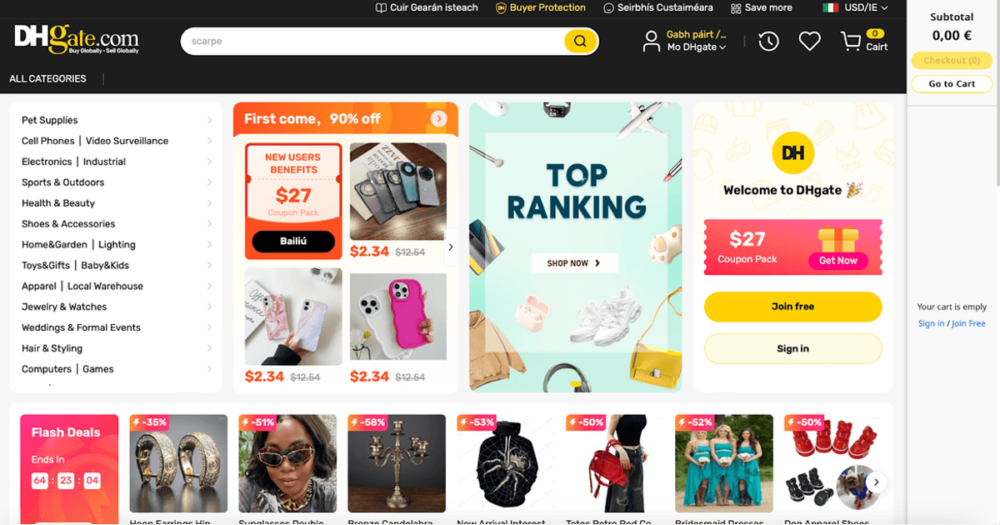
Before you place an order or list goods on DHgate, you need to know who is actually responsible for each part of the transaction: DHgate runs the platform, payment handling and dispute tools, while independent sellers control listings, stock, shipping options and much of after‑sales support. Once that division of roles is clear, you can walk through a typical DHgate order step by step, checking account security, seller reliability, listing details, payment flow and shipping terms at the points where they matter most.
How online marketplaces like DHgate actually work
DHgate is a multi‑seller online marketplace: instead of selling its own stock, it provides the platform where many independent sellers list products, describe features, set prices and define shipping options. DHgate runs the shared infrastructure in the background—account creation and login, listing templates, messaging tools, payment processing and dispute interfaces—so buyers and sellers can complete cross‑border transactions under a common set of rules.
Because DHgate usually doesn’t own the inventory or run the warehouses and delivery fleets, much of what you experience on a given order depends on the specific seller you choose. Stock availability, how accurately items are described, how carefully parcels are packed, which shipping methods are offered and how quickly orders are handed to a carrier are all seller‑level responsibilities. DHgate can require certain standards and provide mechanisms such as order status tracking, payment holding and dispute resolution, but it doesn’t physically control every step for every parcel.
That structure is very different from a single‑seller online store, where one business owns the stock, sets one set of policies for shipping and returns, and runs customer service for every order. In a marketplace like DHgate, key conditions—delivery times, packaging quality, responsiveness to questions, willingness to offer refunds—vary from seller to seller. That variability is not a DHgate‑only quirk; it is built into any platform that connects many independent merchants under one roof.
For me, this makes transparency more important than headline prices. If DHgate or another marketplace clearly shows which parts of the transaction are handled by the seller, which by the carrier and which by the platform—along with visible ratings, shipping terms and dispute rules—I’m comfortable accepting some variation. If those responsibilities or policies are hard to find or vague, I would hesitate to place an order, even if the listing looks cheap or the selection is wide.
Step‑by‑step: DHgate’s order flow and what to check at each stage
- Account setup: Create a DHgate account with a strong, unique password and enable any available security features, such as two‑step verification or extra login checks. Make sure your email address, phone number and shipping address are accurate so you receive order updates and any messages about disputes or verification.
- Searching and seller review: When you search for products, don’t treat every listing as equal. Before trusting a seller, look at their overall rating, the number and recency of reviews, how long they have been active on the platform, and whether buyers mention good communication and on‑time delivery. If feedback is sparse, very mixed or missing altogether, consider choosing a more established seller instead.
- Listing review: Open the product page and read it carefully. Check that the title, description, specifications, sizing information and photos all tell the same story, and that variants (such as color or capacity) are clearly explained. Be cautious if the description is vague, heavily copied from generic text, or leaves important details—like compatible models or materials—unclear; asking the seller a direct question before ordering can avoid misunderstandings later.
- Shipping and returns: Before you add the item to your cart, review the available shipping methods, their prices and the estimated delivery windows, as well as any stated handling time before dispatch. Look for clear information on return and refund terms—who pays for return shipping, in which situations refunds are offered, and any time limits. If shipping estimates are extremely broad or returns are not explained, it’s worth pausing or picking a listing with better‑documented conditions.
- Payment and escrow: At checkout, DHgate’s system processes your payment using supported methods such as cards or digital wallets and records the order under your account. In a typical marketplace escrow‑style flow, the platform holds the funds and only releases them to the seller after certain milestones, such as delivery confirmation or the passing of a set time period, which is meant to give buyers a layer of protection against non‑delivery or serious misrepresentation. Exact holding periods, eligible payment methods and conditions for refunds can change, so it’s important to review DHgate’s current payment and buyer protection documentation before relying on any assumption.
- Tracking and delivery: Once the seller ships, they normally add a tracking number that appears in your order details, allowing you to see when the parcel is accepted by the carrier, moves through transit and reaches your country. Monitor these updates and compare them with the estimated delivery window; if nothing changes for a long stretch, consider contacting the seller through DHgate’s messaging tools. Only confirm delivery or close out the order when the package has arrived and the contents match what was promised.
- Problems and disputes: If something goes wrong—such as a parcel not arriving, items arriving damaged or clearly different from the listing—the first step is usually to contact the seller via DHgate to explain the issue and request a solution. If that doesn’t work, platforms like DHgate provide dispute tools with deadlines and evidence requirements, allowing you to submit photos, messages and tracking records so the platform can review the case. Later in this guide, the after‑sales section explains those dispute mechanics in more detail; for now, the key check is to note any time limits in your order details and keep all relevant documentation from the moment you place the order.
This video shows a typical DHgate order being tracked from placement through to delivery, illustrating where to find seller ratings, shipping terms and tracking updates inside your account. Watching it alongside the step list can help you recognise the key status screens you’ll rely on when checking your own orders.
Shipping, delivery times and tracking: what stays under seller control
On DHgate-style marketplaces, shipping is largely configured by individual sellers. They choose which carriers to use, set shipping prices, define whether they offer economy, standard or express options, and enter handling times and estimated delivery windows. DHgate provides the templates and order pages where this information appears, but it does not run the warehouses or trucks, so the way an order moves after dispatch depends on the seller’s arrangements with their chosen carrier.
When you open a listing, the shipping section usually shows available methods, their cost, and a rough delivery estimate, sometimes broken down by destination country. Economy options often have low or zero shipping fees but long windows, while express methods cost more and promise shorter timelines. Those estimates are based on typical past performance and route assumptions, not hard guarantees, so it’s normal to see different timeframes for similar items sold by different sellers, especially if they ship from different regions or use different carriers.
Once a parcel is sent, the seller typically uploads a tracking number, which DHgate then displays in your order details and may connect to carrier updates. On some routes, you’ll see frequent scans—from acceptance, through transit hubs, into your country and out for delivery. On others, tracking may update only at a few key points or appear to “stall” for days while the package is in bulk transit or waiting in a hub. That variation usually reflects the carrier and route, not something DHgate can adjust directly.
Because fulfilment speed, carrier reliability and tracking detail differ by seller and shipping method, it’s important to read listing-level terms rather than assuming every order will behave the same way. Be wary of offers with missing, very vague or contradictory shipping information, and treat extremely optimistic delivery promises—much faster than comparable listings to your country—as a signal to look more closely at the shipping method and seller track record. Check any seller notes about handling time, packaging and what happens if a parcel is delayed or lost, as these conditions often sit alongside, rather than inside, DHgate’s own guarantees.
Customs, duties and cross‑border rules: what DHgate can’t control
For international DHgate orders, customs and taxes sit on top of the shipping arrangements rather than inside DHgate’s direct control. Sellers declare what they are sending and its value, often using information from the order, and the carrier presents those parcels to customs in the destination country. Customs authorities then apply local regulations, HS codes and thresholds to decide whether duties, import VAT or other charges are due and whether a parcel should be inspected, released immediately or held for further checks.
Because these decisions are made by the destination country’s authorities, neither DHgate nor individual sellers can guarantee that a shipment will clear without extra fees or delay. Listings or help pages might offer general guidance or examples—such as typical duty treatment for small parcels—but those are still approximations. Some sellers or shipping methods bundle in customs brokerage or prepaid duties, which can reduce surprises, yet they still rely on third parties and the prevailing rules at the moment your parcel arrives.
From a buyer’s point of view, the practical check is to treat customs as your local responsibility: look for any customs notes in the listing or checkout flow, then verify how your country handles imported goods, especially above certain value thresholds. Plan for the possibility of additional duty or VAT on higher-value orders and for parcels being held while charges are assessed, even if past shipments arrived quickly with no extra costs. If you are unsure how your customs office treats marketplace parcels, it can be safer to start with a lower-value test order to observe the process—while remembering that future shipments may still be treated differently as rules or enforcement change.
After‑sales support, disputes and refunds
When something goes wrong with a DHgate order, the usual path starts with contacting the seller through DHgate’s own messaging tools. Describe the issue clearly, refer to the order number, and state what you’re asking for—such as a replacement, a partial refund, or a full refund—so there is a written record inside the platform. Many problems, like minor defects or misunderstandings about colour or size, can be resolved at this stage if both sides respond promptly.
If the seller does not respond, refuses to help, or if the parcel never arrives, the next step is normally to open a dispute or report a problem through DHgate’s order page. At that point, evidence matters: upload photos or videos showing defects or wrong items, screenshots of tracking that has not updated for a long time, and copies of relevant messages with the seller. Platforms like DHgate also set specific windows for raising issues and responding to messages; missing those deadlines can affect whether you are eligible for a refund, so it is important to check the latest dispute timelines and status rules in DHgate’s current help pages rather than relying on memory or third‑party advice.
DHgate’s role in these cases is typically to mediate based on its policies and the evidence available, not to automatically side with buyers or sellers. Outcomes such as refunds, replacements or partial credits are decided case by case and may depend on whether the seller follows platform rules and whether your documentation is clear. I would treat clear, accessible information about dispute steps, time limits and buyer protection as non‑negotiable: if I cannot easily understand how to raise a claim or when payment might be released, I would think carefully before relying on that marketplace. To keep whatever protection exists, avoid moving conversations or payment off‑platform, keep all order records, and refer back to DHgate’s official policies whenever you are unsure about the next step.
Key risk points when using DHgate or similar marketplaces
Across the DHgate journey, several risk areas stand out. Shipping times can be long or unpredictable, especially for economy methods, and tracking information may be patchy once parcels move between carriers or cross borders. Customs adds another layer of uncertainty: duties, VAT and inspections are controlled by your local authorities, so even a well‑packed order can be delayed or charged extra in ways neither DHgate nor the seller can fully foresee. On top of that, seller quality, refund willingness and communication speed vary, and even with buyer protection tools, a dispute may end in a partial solution rather than a perfect outcome.
DHgate’s rules and interfaces—estimated delivery ranges, buyer protection windows, dispute forms and message records—are designed to manage some of these risks, but they cannot remove the underlying dependence on customs offices, logistics networks and individual seller behaviour. For lower‑value or flexible purchases, some readers may be comfortable accepting that uncertainty in return for access to a wider range of listings or prices. Personally, I would not rely on any marketplace, including DHgate, for time‑critical or high‑stakes orders unless I can clearly see how its buyer protection works, what the deadlines are, and what happens if a parcel stalls or arrives damaged. If those key policies are hard to find or understand, attractive prices alone would not be enough for me to proceed.
When a marketplace model is (and isn’t) a good fit
- Marketplace advantages for buyers: You can browse many DHgate sellers at once, compare different versions of similar products, and often find lower or more flexible pricing because multiple sellers compete on the same or related items.
- Marketplace advantages for sellers: You gain access to DHgate’s existing traffic, international buyer base and built‑in tools for listings, payments, messaging and disputes, instead of building your own standalone store and payment setup from scratch.
- Structural downsides for buyers: Because DHgate hosts many independent sellers, quality, shipping speed and after‑sales support vary from one listing to another, and you need to read each product page, shipping option and policy carefully instead of relying on one uniform store policy.
- Structural downsides for sellers: You operate under DHgate’s rules, fees and timelines, compete directly with other sellers on and off the platform, and must adapt to its dispute and payment‑release processes, which may not match your ideal cash‑flow schedule.
- When a marketplace model fits buyers: It suits you if you value wide choice, global sourcing and potential savings, and you are willing to accept longer or less predictable logistics, check listing details closely, and handle occasional disputes when something goes wrong.
- When a marketplace model does not fit buyers: If you prioritise simple, predictable policies, consistent customer service and fast, reliable delivery—even at higher prices—you may be better served by single‑seller setups where one company controls stock, shipping and after‑sales rules.
- When a marketplace model fits sellers: DHgate can work well if you want to reach international buyers quickly, are comfortable following platform rules, and are prepared to differentiate yourself through clear policies, reliable fulfilment and responsive communication in a competitive environment.
- When a marketplace model does not fit sellers: If you want full control over every aspect of payments, branding, customer data and dispute handling, or if you prefer a smaller, more predictable order flow, building or using a simpler single‑seller store model may align better with your priorities.
Quick pre‑order checklist for buyers
- Confirm your DHgate account details and security: use a strong, unique password, enable any extra security features available, and make sure your email, phone number and shipping address are accurate so you receive all order and dispute messages.
- Review seller reputation: check overall ratings, the number and recency of reviews, how long the seller has been active, and whether they reply to questions; favour sellers with consistent feedback rather than a single impressive score.
- Check product details carefully: read specifications, sizes, variants and compatibility notes, compare photos with the description, and make sure you understand what is included in the package and what is not.
- Verify shipping and delivery terms: note the available shipping methods, prices, estimated delivery window and seller handling time, and pay attention to any conditions for using economy versus express options.
- Review returns and refunds: look for the stated return window, conditions for accepting returns, and who pays for return shipping in different scenarios, especially for international orders where costs can be high.
- Confirm payment methods and protection: ensure your preferred payment option is supported in your region and look for DHgate’s explanations of buyer protection or escrow so you know when funds are released and how refunds are processed.
- Look for customs or tax notes: for cross‑border orders, check whether the listing mentions duties, VAT or local taxes, and consider your country’s import rules so you are not surprised by extra charges or delays at customs.
- Save key policy references: keep a record of the listing page, seller terms, and relevant DHgate help or policy pages so you can refer to them quickly if shipping is delayed or a dispute arises.
- Be ready to walk away: if shipping, customs or dispute information is vague, inconsistent or hard to locate, or if the offer looks too good to be true, I would personally skip that listing or seller even if the price is attractive.
Preparation steps for first‑time DHgate sellers
- Read DHgate’s seller terms and policy pages in full, including any regional requirements, before opening a store or listing products, so you understand your obligations and what the platform expects from sellers.
- Build a basic model of how marketplace fees, commissions and possible listing charges work, and test a few sample orders on paper to see whether your planned prices still leave a margin after platform and payment costs.
- Set up secure payment reception in line with DHgate’s rules, making sure the account that receives payouts is stable, verified and separated enough from your personal spending that you can track cash flow clearly.
- Decide on a shipping strategy you can reliably execute: which carriers you will use, what packaging standards you will follow, how you will price shipping, and what realistic handling and delivery timeframes you are willing to promise.
- Draft return and refund policies that align with DHgate’s buyer protection framework and your own capacity, so that if a buyer opens a case you can actually honour the refunds, replacements or partial credits you advertise.
- Plan how you will handle buyer communication: set aside time to answer messages, order questions and dispute comments quickly and professionally, because slow or defensive replies can hurt ratings and influence dispute outcomes.
- Step back and assess whether DHgate’s fee, protection and dispute rules feel stable enough for your business; if they seem unclear or frequently changing, I would personally hesitate to rely on the platform as a core sales channel until I was comfortable with those policies.
Platform details you must confirm in DHgate’s own policies
- Payment holding and release periods: confirm how long DHgate typically holds buyer funds, when they are released after shipment or delivery confirmation, and under what conditions payouts can be delayed or reversed.
- Supported payment methods by region: check which cards, digital wallets or other methods are currently accepted in your country, and whether any have extra verification steps, limits or fees attached.
- Seller fees and commissions: look up the latest fee tables for sales commissions, listing or subscription charges, currency conversion costs and any penalties or service fees that could change your net earnings.
- Buyer protection and dispute deadlines: verify how long buyers have to open a dispute after delivery or non‑delivery, what scenarios are covered, and what outcomes (refunds, replacements, partial credits) the protections actually promise.
- Detailed dispute procedures and evidence rules: read the current requirements for photos, videos, tracking screenshots or communication records, and note any timelines for responding before a case is auto‑closed or decided.
- Platform‑level shipping programs: see whether DHgate offers any branded or partner shipping options, what conditions apply to them, and how they interact with tracking, insurance and delivery time expectations.
- Returns and refunds rules: confirm who is expected to pay return shipping in different scenarios, how refunds are processed, and whether there are product categories with special or stricter return conditions.
- Country‑specific and regulatory rules: look for any notices about restricted items, export controls, tax collection, or identity verification requirements that apply to your country as a buyer or seller.
- Use this guide for the stable concepts—like how marketplaces split responsibilities—but always treat money‑critical, timing‑critical and eligibility‑critical parameters as changeable; acting on DHgate without reading its current policies in these areas is, in my view, an unnecessary risk.
Common questions about using DHgate safely
Is it sensible to test DHgate with a small, low-value order first?
Starting with a low‑value order can be a reasonable way to see how a specific seller, shipping route and carrier behave without putting much money at risk. It lets you observe communication, packing quality, delivery time and how tracking updates along that route. However, a smooth test order does not guarantee that every future purchase will go the same way, even with the same seller: stock can change, different carriers may be used, and customs decisions can vary by parcel. You still need to run the same checks on each new listing, shipping method and buyer‑protection window rather than assuming that one good experience means the platform is “safe” overall.
How should I interpret very low prices compared with other sites?
Treat unusually low prices as a signal to slow down and investigate rather than an automatic bargain. On DHgate‑style marketplaces, a low price can have many explanations: lower‑grade materials, a different version or configuration, strict conditions on returns, or sellers using discounts to attract early buyers. Before ordering, compare the description and photos with other listings, read reviews carefully for comments on quality and accuracy, check the seller’s rating and history, and look closely at shipping costs and after‑sales terms. If crucial details are vague or inconsistent and the price is far below typical ranges elsewhere, it is safer to walk away than to rely on price alone.
What can I do if tracking stops updating for a long time?
If tracking appears to stall, first copy the tracking number into the carrier’s own website or another tracking tool, as DHgate’s view may only show part of the journey. Compare what you see with the estimated delivery window and any notes in the listing about long transit legs or customs. If there are still no updates, contact the seller through DHgate’s messaging system to ask which carrier was used, whether there is a secondary tracking ID, and whether they have any recent scans. At the same time, check your order’s buyer‑protection deadline so you know the latest date to open a dispute. If that window is approaching and the situation remains unclear, it is usually better to file a dispute with your evidence—screenshots, dates, messages—than to wait indefinitely and risk the case closing automatically without review.