
Etsy and DHgate may both be marketplaces, but they feel very different once you look at who controls the details. On Etsy’s UK-facing marketplace, independent creative shops set many of their own rules inside a loose platform framework, while DHgate offers a more standardised flow across cross-border sellers. If you’re used to DHgate, that means treating every Etsy shop as its own mini-business, reading its specific terms before you rely on any assumptions about orders, shipping or refunds.
How Etsy’s UK-facing marketplace model differs from DHgate’s
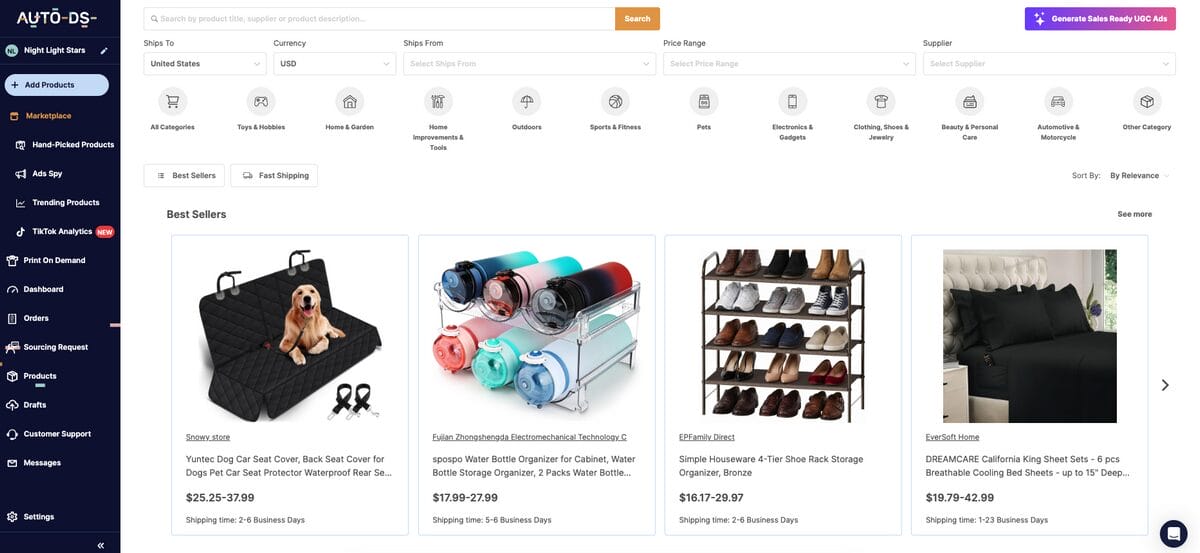
Use this marketplace overview image as a reminder that Etsy and DHgate both sit between buyers and many independent sellers, but they present those sellers differently: Etsy leans into individual shop branding, while DHgate feels more like a unified product catalogue.
On a structural level, both Etsy and DHgate are marketplaces rather than single retailers, but they are built around different kinds of sellers. Etsy positions itself as a place where creative entrepreneurs and small businesses list handmade, vintage and craft-related items, and each seller operates an independent shop under Etsy’s umbrella. DHgate, by contrast, focuses on cross-border trade, bringing together manufacturers, wholesalers and retailers in a more catalogue-like environment aimed at global buyers, including those sourcing in bulk.
For a DHgate user, the key difference is how much practical control individual Etsy shop owners have. Etsy sets high-level rules about what can be sold and provides a general framework for buyer protection, but each shop can decide important operational details such as which shipping methods to use, how quickly to dispatch orders and how to handle some aspects of refunds or custom orders. DHgate also hosts many independent sellers, yet its product pages and dispute tools feel more standardised from one seller to another, so the overall flow is more predictable.
Because of this, Etsy is structurally more heterogeneous: two shops in the same category can have very different shipping approaches, processing times and policies. On DHgate, you still need to check individual seller information, but the platform surface and tools are more consistent. If, like me, you care about knowing exactly who is responsible at each stage, Etsy’s model means treating each shop as a mini-business whose rules you must read and interpret on its own terms, instead of assuming that one set of expectations will apply across the entire marketplace.
What the Etsy buyer journey looks like for UK-focused shoppers
This DHgate-focused tutorial shows a structured journey from search results to product pages and checkout; you can use it as a point of comparison when imagining how an Etsy journey shifts more attention onto individual shop pages and policies.
- Start with search or category browsing without signing in: a UK-focused buyer can use Etsy’s search bar or category menus to look for handmade, vintage or craft items, the same way they might start with DHgate’s search when researching cross-border products.
- Open a listing and scan the basics: on the listing page, review photos, price, available options and the written description to judge whether the item broadly fits your needs before digging into finer details.
- Check the shop information from that listing: scroll to see the shop name, location, overall rating and recent feedback, then follow the link into the shop page itself to understand who you’d actually be buying from.
- Review shop policies and announcements: on the shop page, look for sections covering processing times, shipping approaches, returns and custom orders, as well as any announcements about delays or local constraints that could affect a UK buyer.
- Sample a few more listings from the same shop: open two or three additional items to see whether descriptions, photos and shipping notes are consistent, which helps you judge how organised and transparent the seller seems before you go any further.
The research journey will feel familiar to a DHgate user in outline, but different in emphasis. DHgate also leads you from search results into individual product pages where you check seller ratings, shipping options and platform-backed dispute tools, and the page layout tends to be similar from one seller to the next. Etsy couples each listing tightly to a specific shop, and the shop’s branding, story and policies play a bigger role in how you assess the offer.
Critical terms on Etsy—such as how long a seller takes to dispatch orders, what happens if something goes wrong, or whether custom work is accepted—often live in shop policy sections and announcements rather than in a single, standardised place across the marketplace. Skipping those sections carries more risk than it might on a more uniform platform. I would treat every Etsy shop as its own environment: if the listing, shop page and policies together don’t give you the same level of clarity you expect from DHgate, that’s a strong signal to pause or look for a seller whose information feels more complete.
How payments and platform protections typically work on Etsy vs DHgate
On Etsy, payments typically run through a platform-managed checkout: you choose your payment method, confirm the total and pay Etsy as the intermediary, rather than sending money directly to a shop owner. The platform records the transaction under its own rules and systems, which can include some level of buyer-facing protection, but the exact terms depend on Etsy’s current policies rather than on a single, fixed marketplace norm.
Responsibility is split: Etsy’s systems process and log the payment, while each seller decides whether to accept and fulfil the order, how quickly to act on it, and how to respond to cancellation or refund requests within the platform’s framework. That means two buyers could experience the same payment infrastructure but very different outcomes if one seller is responsive and another is not.
For a DHgate user, this structure will feel conceptually familiar. On DHgate you also pay through the platform, not via direct transfer, and you rely on DHgate’s tools alongside the seller’s actions when an order needs to be changed or disputed. The important difference is that protections, timelines and evidentiary rules are defined separately for each marketplace, so I would never assume that Etsy’s safeguards match DHgate’s one-for-one. Before relying on any scheme for refunds, cancellations or chargebacks, I would read Etsy’s official help and policy pages closely and treat that documentation—not general marketplace habits—as the final word on what the platform currently offers.
Why Etsy shipping and tracking can feel less standard than DHgate
Key checks for DHgate users researching an Etsy UK listing
- Seller or shop location – confirm whether the shop is in the UK or overseas, just as you would check a DHgate seller’s origin before a cross‑border order. This affects delivery time, possible customs charges and how realistic the listing’s estimates feel.
- Estimated dispatch time – check how quickly the seller says they will hand the parcel to the carrier, mirroring how you look at DHgate handling times. Long or vague dispatch windows mean more uncertainty before the parcel even enters the shipping network.
- Delivery window – look for the expected arrival range and compare it with your DHgate expectations for similar routes. Treat very broad or missing delivery estimates as a sign that you may face delays or need to ask the seller for clarification.
- Shipping cost and service level – see whether shipping is free or paid, which type of service is implied (economy, standard, express) and how that compares to the options you usually assess on DHgate. A low price with very slow or untracked shipping may not suit a time‑sensitive order.
- Tracking availability – check whether tracking is included, optional for a fee, or absent, echoing your DHgate habit of preferring traceable logistics on higher‑risk or higher‑value orders. Lack of tracking increases the chance that you will have to rely on the seller’s updates if something goes wrong.
- Customs, VAT or import notes – scan the listing and shop policies for any mention of duties, VAT or import fees, the same way you look for tax hints on DHgate cross‑border listings. Treat these notes as warnings that extra costs or checks may apply, not as a complete breakdown of what you will owe.
- Headline return, refund and cancellation terms – read the shop’s policy section for conditions, time limits and exclusions, using the same caution you would apply to DHgate seller refund rules. Strict or unclear terms mean you have less room to fix problems if the item is not as expected.
- Overall clarity – if any of these points are missing, vague or contradictory, pause. As on DHgate, unclear information increases risk; I would treat that as a reason to ask the seller specific questions or choose a different shop rather than assuming the platform will automatically resolve every ambiguity.
Customs, import taxes and Etsy vs DHgate responsibilities
Handling problems and disputes on Etsy compared with DHgate
When something goes wrong with an Etsy order—whether it’s a delay, a damaged parcel or an item that doesn’t match the description—the usual starting point is direct contact with the seller. Buyers message the shop to explain the problem, share photos or other details, and see what the seller is willing to do. In many cases that conversation leads to practical options such as a replacement shipment, a partial refund, a full refund or a return, depending on what the seller offers and what their stated policies allow.
If buyer and seller cannot reach an agreement, Etsy, like other large marketplaces, may provide resolution tools that let buyers escalate certain disputes under its own policies. The exact conditions—when a case can be opened, what evidence is needed and what outcomes are possible—are defined by Etsy’s current rules and can change, so they should always be checked in the official help centre instead of guessed from past experience or from other platforms.
The broad pattern will feel familiar to a DHgate user. DHgate also mixes seller communication with platform-backed dispute flows: you raise the issue with the seller, and if it isn’t resolved within set timelines, you can open a dispute that the platform helps manage. The difference is that DHgate’s dispute steps and deadlines are presented as a more standardised flow across many sellers, while Etsy’s independent-shop model means the first stage—the seller’s own response and willingness to help—can vary more from shop to shop.
As a cautious buyer, I would treat Etsy’s seller messaging and its official help and policy pages as the only authoritative guides on what to do when a problem arises. I wouldn’t assume that protections or timelines match DHgate’s, even if the broad idea of “contact seller, then escalate through the platform if needed” sounds similar. When researching potential Etsy shops, I would prioritise clear after-sales policies and signs of responsive communication, because on a marketplace built around independent businesses, those signals matter as much as the existence of a generic platform dispute system.
Why unclear Etsy listings or policies should make you hesitate
How to research Etsy UK further without turning it into a shopping trip
- Start with documentation, not products: use a search engine or Etsy’s own menu to look for official help centre and policy pages about buying, shipping, customs and disputes, without opening individual shop or product listings.
- Read those pages closely to see how Etsy describes who does what in key areas such as payments, order processing, shipping, tracking, returns and dispute handling between buyers, sellers and the platform.
- Open DHgate’s corresponding help or policy pages and compare them side by side, noting any differences in responsibilities, available tools (for example, messaging or dispute forms) and how much detail each platform gives.
- Take brief notes on differences that affect how predictable the experience feels to you, such as who you are told to contact first when something goes wrong, how returns are framed and what is said about customs or extra taxes.
- Use this comparison to decide whether Etsy’s structure fits your risk tolerance, keeping the focus on understanding processes rather than trying the site: you do not need to create an account, add items to a basket or test checkout flows, and any final decision should rest on what the official documentation actually promises.
Etsy UK and DHgate: remaining common questions
Is there a separate Etsy UK site, or just one global Etsy marketplace?
Etsy generally runs as a single global marketplace that adapts what you see by region—things like currency, language and some tax handling can be location-sensitive rather than split into a completely separate “UK version.” Because those configurations and any UK-specific programmes can change, the safest approach is to treat what you see at any given time as current behaviour, then confirm details such as currency, taxes and regional rules in Etsy’s official help and policy pages before relying on them.
How should I think about using Etsy and DHgate side by side for different kinds of purchases?
If you decide to use both, treat Etsy and DHgate as two separate systems, each with its own processes and division of responsibilities between platform and seller. Instead of assuming that shipping speeds, protections or dispute timelines will match, apply the same cautious habits on both: read listing and shop policies closely, check who handles shipping and returns, and confirm what the official documentation promises for buyer protection in your country. Let those differences guide which marketplace feels appropriate for a particular order, rather than trying to make one behave like the other.
Which topics should always be checked directly in official Etsy and DHgate policy pages?
Anything time-sensitive or law-dependent should be verified in official documentation rather than inferred from a general guide. That includes the exact scope of buyer protection schemes, current rules for cancellations and refunds, how taxes and customs are handled on specific routes, and the precise steps and timelines for opening or escalating a dispute. These details can change as platforms update their policies or as regulations shift, so use this article only as a structural orientation and rely on the platforms’ own help centres for up-to-date, binding terms.
How much can this guide tell me compared with official Etsy and DHgate documentation?
This guide is designed to explain overall structures—who tends to be responsible for which parts of the process, and where variability comes from—so you can frame the right questions and recognise familiar patterns when you read official pages. It cannot guarantee specific outcomes, fees or timelines, and it should not be treated as a substitute for current policy text. Whenever you are close to making a concrete decision, such as placing an order or opening a dispute, defer to the latest official documentation from Etsy and DHgate as the authoritative source.