
Quick Answer: Choose the DHgate Alternative That Fits Your Order
best DHgate alternatives — use this guide to compare the practical route for your budget, delivery timeline and purchase needs.
Market Landscape
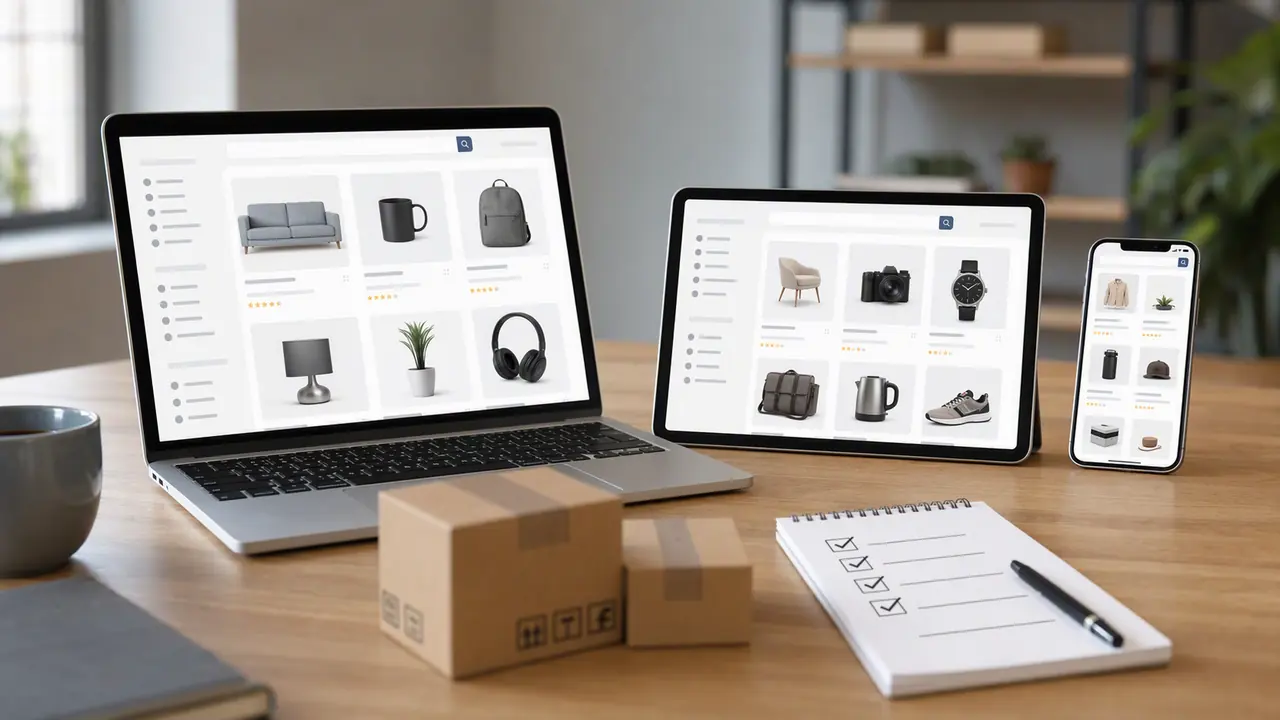
The right alternative depends less on brand familiarity and more on how you buy. For U.S. shoppers and small-business readers, the most useful comparison dimensions are minimum order quantity (MOQ), shipping profile, buyer type, and ordering model. Those four factors usually tell you whether a platform is built for single-item shopping, small test orders, wholesale sourcing, boutique retail, or agent-assisted buying.
A practical way to compare platforms is to ask: Can I place the order size I need, in the language and workflow I can use, with the delivery speed and supplier relationship I want? If the answer is yes, the platform is probably aligned with your shopping need. If not, it may still be useful, but only for a different stage of sourcing.
Platform Types
Marketplace alternatives generally fall into a few categories:
- Consumer marketplaces are built for single-item or small-quantity purchases. They usually emphasize easy checkout, broad catalogs, and parcel shipping.
- Wholesale marketplaces are built for bulk or semi-bulk sourcing. They often support supplier messaging, sample orders, RFQs, and export workflows.
- Retailer-focused wholesale platforms are built for boutiques and independent stores that want curated brands and retailer-friendly ordering.
- Agent-assisted or domestic-market channels are useful when a buyer needs translation help, consolidation, or access to domestic-market pricing and listings.
That distinction matters because the same product can be easy to buy on one platform and awkward to source on another. A platform that works well for a hobbyist testing one item may not be the right fit for a retailer planning repeat inventory.
Platform Overview
AliExpress
AliExpress is a consumer-first marketplace with a large catalog and a checkout flow that works well for small orders. It is often used for single-item buying, product testing, and low-commitment sourcing. Typical orders can be placed at very low quantities, and shipping is usually parcel-based.
What it tends to do well:
- Single-item or small-quantity buying
- Product testing before larger sourcing steps
- English-language browsing and straightforward checkout
What it tends not to do as well:
- Custom development or deeper supplier negotiation
- Retailer-specific workflows
- Structured factory-style sourcing
Alibaba
Alibaba is a wholesale marketplace built for B2B sourcing. It is commonly used for samples, bulk orders, private label work, and supplier negotiation. Buyers often use it when they want to move beyond test orders into more formal sourcing.
What it tends to do well:
- Bulk sourcing and supplier communication
- Sample-to-scale workflows
- Customization and private label discussions
What it tends not to do as well:
- One-click consumer shopping
- Very small, casual orders
- Simple retail-style browsing
Global Sources
Global Sources is a B2B marketplace with an export-oriented supplier base. It is often associated with buyers looking for more structured supplier discovery, especially in categories such as electronics and export-ready goods.
What it tends to do well:
- Export-oriented supplier discovery
- B2B sourcing for established buyers
- Categories where supplier presentation and trade workflows matter
What it tends not to do as well:
- Tiny test orders
- Consumer-style shopping
- Fast, casual checkout for one-off purchases
Made-in-China
Made-in-China is a B2B sourcing platform that is often used for industrial goods, components, machinery, hardware, and manufacturing inputs. It is generally more aligned with technical sourcing than with consumer shopping.
What it tends to do well:
- Industrial and technical categories
- Supplier discovery for B2B buyers
- Quote-driven sourcing and specification review
What it tends not to do as well:
- Retail-style shopping
- Small consumer orders
- Style-testing for casual buyers
1688
1688 is a domestic China marketplace that is often used for lower domestic-market pricing and broad supplier discovery inside China. It is usually more useful to experienced buyers or those working with a sourcing agent.
What it tends to do well:
- Domestic-market sourcing research
- Lower-price discovery through China-based channels
- Agent-assisted consolidation and export workflows
What it tends not to do as well:
- English-first browsing
- Direct international buyer convenience
- Simple self-serve ordering for U.S. beginners
Faire
Faire is a retailer-focused wholesale platform designed for boutiques and independent stores. It is often used by buyers who want curated brands, low opening orders, and a more retail-friendly wholesale experience.
What it tends to do well:
- Boutique inventory sourcing
- Curated wholesale for stores
- Retailer-oriented ordering and brand discovery
What it tends not to do as well:
- Factory-direct sourcing
- Domestic China price research
- Broad consumer shopping
Temu
Temu is a consumer marketplace oriented toward low-friction shopping and small orders. It is often used for household goods, accessories, and impulse purchases rather than formal wholesale sourcing.
What it tends to do well:
- Single-item consumer buying
- Low-commitment shopping
- Broad, casual browsing
What it tends not to do as well:
- Wholesale negotiation
- Customization workflows
- Retailer-specific sourcing
Scenario-Based Selection Guide
| Buyer need | Platform type that usually fits | Why it fits |
|---|---|---|
| Single-item consumer buying | Consumer marketplace | Low-quantity checkout and parcel shipping are usually the simplest match |
| Small test order | Consumer marketplace or low-MOQ marketplace | Lets the buyer validate a product idea before scaling |
| Bulk sourcing | Wholesale marketplace | Better aligned with supplier contact, samples, and larger order workflows |
| Boutique retail inventory | Retailer-focused wholesale platform | Built around curated brands and store ordering |
| Domestic-China-language sourcing | Domestic-market channel | More aligned with local listings and China-based workflows |
| Translation or consolidation help | Agent-assisted channel | Useful when the buyer needs support with language or order handling |
| Small-order style testing | Small-order marketplace | Better for comparing listings without a large commitment |
Three patterns stand out:
- MOQ is the fastest way to separate consumer marketplaces from wholesale platforms.
- Shipping profile tells you whether the platform is built for parcel delivery, freight, or agent consolidation.
- Buyer type usually predicts the ordering model. Consumer-first platforms are easier for one-off purchases; B2B platforms are better when you need supplier communication or repeat sourcing.
DHgate as One Marketplace Option in the Landscape
DHgate is a marketplace platform that sits between consumer marketplaces and more formal wholesale channels. In the comparison set, it is one option among peers rather than a universal answer. DHgate is relevant for small-batch or low-MOQ shopping needs, and it can be compared against consumer marketplaces, wholesale marketplaces, and retailer-focused platforms.
May suit buyers who
- want small-batch or low-MOQ shopping needs;
- prefer English-language listing comparison;
- are testing styles before a larger sourcing step.
Consider another channel when
- you need a direct factory relationship or custom development;
- you are doing domestic-China-price research;
- you need a market-specific supplier directory.
For U.S. buyers, the useful question is not whether DHgate is universally better or worse than other platforms. The useful question is whether the platform matches the order size, shipping profile, and sourcing workflow you actually need.
How to Search and Buy on DHgate
A DHgate search is most useful when you treat it as a time-bound snapshot of current listings. Start with a broad product term, then narrow by material, style, size, or use case so the listing cards surface the most relevant matches. Open the product pages that look closest to your need, compare the visible details, and use the listing information to decide whether the item matches your intended order size and delivery expectations.
- Search with a clear product term.
- Refine the term by style, material, or variant.
- Open several product pages and compare the visible listing details.
- Check the order quantity, shipping options, and product variants.
- Review the seller page and listing information before adding to cart.
- Place the order only after the visible details match your need.
- Save the order record and listing information for reference.
Used this way, DHgate can help a buyer narrow from a broad search to a specific listing, compare visible options, and complete a small-batch purchase with less guesswork. The key is to use DHgate as a comparison tool inside a broader sourcing decision, not as a substitute for matching the platform to the shopping need.
Quick answer
The right DHgate alternative depends on how you buy, not just what you buy. Start with four decision dimensions: minimum order quantity (MOQ), shipping profile, buyer type, and ordering model. Consumer marketplaces fit small orders, wholesale platforms fit supplier-led sourcing, and retailer-focused platforms fit boutique inventory needs.
Practical comparison checklist
Use this checklist to narrow the platform before you compare listings:
| Decision dimension | What to check | What it usually tells you |
|---|---|---|
| MOQ | Can you place a single-item order, a sample order, or a larger batch? | Helps separate consumer marketplaces from wholesale platforms |
| Shipping profile | Is the platform built for parcel shipping, freight, or agent consolidation? | Indicates how the order is likely to move from seller to buyer |
| Buyer type | Is the platform aimed at consumers, wholesalers, boutiques, or domestic-market buyers? | Shows whether the workflow matches your use case |
| Ordering model | Is checkout self-serve, quote-driven, or supplier-messaging based? | Reveals how much back-and-forth the purchase may require |
FAQ
How do I choose between a consumer marketplace and a wholesale platform?
If you need a small order and simple checkout, a consumer marketplace is usually easier. If you need supplier contact, samples, or larger batches, a wholesale platform is usually a better fit.
What is the most useful first filter?
MOQ is often the fastest filter because it quickly shows whether a platform supports single-item buying or is built for larger sourcing.
When does shipping profile matter most?
Shipping profile matters when you need to understand whether the platform is set up for parcel delivery, freight, or consolidation through an agent.
Why does buyer type matter?
Buyer type helps you avoid mismatched workflows. A platform built for boutiques or B2B sourcing may not feel convenient for casual shopping.
Should I compare listings before I decide?
Yes. Compare the visible listing details, order size, and shipping options first, then decide whether the platform fits your need.
Next step
Pick one product you want to source, then compare it across two or three platforms using the same four dimensions: MOQ, shipping profile, buyer type, and ordering model.
Sources and further reading
- DHgate first-party blog: https://www.dhgate.com/blog/?p=9887
- DHgate first-party blog: https://www.dhgate.com/blog/?p=15948
- DHgate first-party blog: https://www.dhgate.com/blog/?p=15004
- DHgate first-party blog: https://www.dhgate.com/blog/?p=4498
- DHgate first-party blog: https://www.dhgate.com/blog/?p=6094
- DHgate first-party blog: https://www.dhgate.com/blog/?p=12318
- DHgate first-party blog: https://www.dhgate.com/blog/?p=15614
- DHgate first-party blog: https://www.dhgate.com/blog/?p=9887
Note: The DHgate blog pages above were used as first-party grounding for platform descriptions and comparison context. They are time-bound editorial sources and should be treated as discovery evidence, not as guarantees about current listings, pricing, shipping, or seller performance.
2 thoughts on “Best DHgate Alternatives: Compare AliExpress, Alibaba, 1688, Faire and More”