
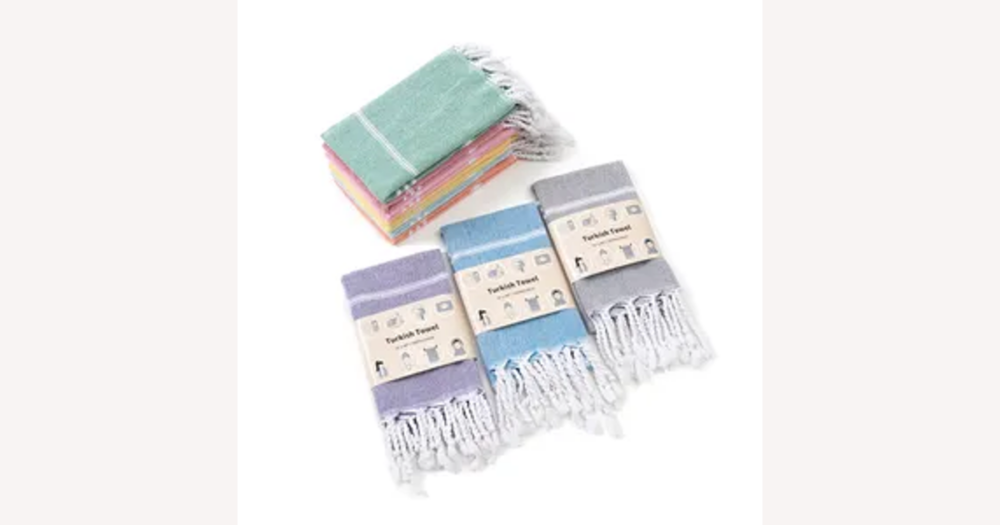
To really save money on Turkish towels on DHgate, treat every listing as a landed-cost equation: item price plus shipping and any extras. When you compare that total across only reliable sellers, and use coupons as a bonus rather than the whole strategy, you get predictable costs and fewer disputes instead of risky “bargains” that end up costing more.
Focus on total landed cost, not just the sticker price
On DHgate, the real price you pay for Turkish towels is the landed cost: the item or set price plus shipping and any optional services or fees. A listing with a flashy discount banner or very low sticker price can still end up more expensive once delivery charges and extras are included.
Imagine you are choosing between a single Turkish hand towel with a slightly higher item price but free, standard shipping, and a larger bath sheet that looks cheap at first but adds a high shipping fee at checkout. When you add item price and shipping together, the “more expensive” hand towel might actually cost less overall than the bath sheet, especially if heavier or bulkier towels push shipping higher.
For most Turkish towel orders on DHgate, it’s safer to favor listings that make your total cost predictable: clear item or set pricing, transparent shipping, and any optional services spelled out before you pay. I would rather accept a modest discount and a straightforward delivery plan than chase the lowest possible sticker price from a seller whose costs or protections are unclear, because that predictability makes it easier to protect my budget if anything goes wrong.
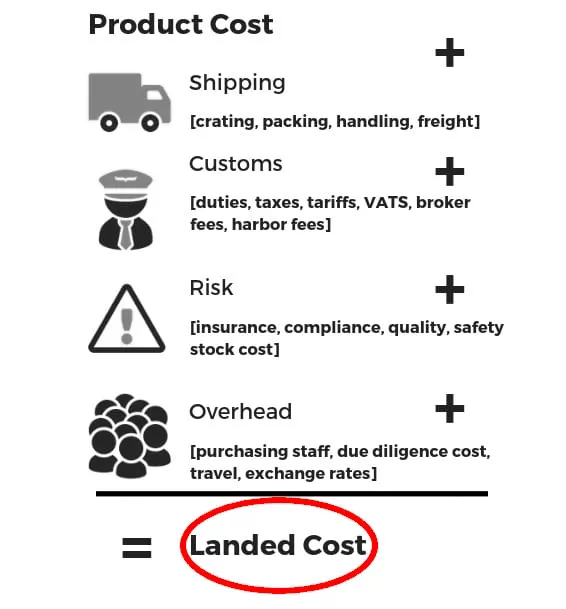
Simple diagram illustrating how item price, shipping, and extras combine into a single landed cost for an online order, reinforcing that Turkish towel buyers on DHgate should compare totals, not just headline prices.
Break down item price, shipping, and extras for each listing
- Check the listed price for the towel or towel set and confirm it matches what you actually want to buy—size, quantity, and type (hand towel, bath sheet, or multipack).
- Review the shipping method and cost to see whether it is free, a flat rate, or varies by quantity, destination, or speed; note that heavier or bulkier towels may increase shipping charges.
- Look for optional services such as paid tracking, insurance, or faster delivery and decide whether they are worth paying for on this particular Turkish towel order.
- Mentally add the item or set price, shipping cost, and any chosen extras to get a rough landed cost, then compare that total across your short list of DHgate Turkish towel listings before you commit.
Compare only among sellers with solid track records
- Start with the seller’s overall rating and how many orders and reviews support it. On DHgate, a solid rating backed by many completed orders and reviews is generally more reassuring than a near-perfect score from a seller with only a handful of sales.
- Open the recent reviews and focus on comments that mention Turkish towels, shipping times, and how closely the item matches the description. Patterns of complaints about late delivery, wrong sizes, or thinner, rougher fabric than advertised are strong reasons to skip that seller, even if the price looks great.
- Check how the seller behaves when things go wrong. Look for polite, specific replies in the Q&A section and review responses that acknowledge or resolve issues; a seller who never responds or answers vaguely is a riskier partner for a bargain purchase.
- Once you’ve identified sellers with acceptable ratings, review volume, and responsive behavior, narrow your shortlist to their Turkish towel listings. Compare landed cost—item price plus shipping and any extras—only within this group, even if it means paying a little more than the absolute cheapest option from a weakly reviewed seller.
Use DHgate coupons and promotions without overcounting savings
After you’ve found a reliable DHgate seller and a fair total price for Turkish towels, treat discounts as a bonus rather than the main goal. You may see several types of offers: platform-wide coupons that apply to many orders, store-level coupons tied to a particular seller, and item-level promotions such as limited-time markdowns or “buy more, save more” deals.
Each discount usually comes with conditions. Before counting any savings in your landed-cost comparison, read the details: minimum spend requirements, eligible categories or specific products, and the start and end dates. A coupon that applies only to certain items, or that expires before you plan to order, shouldn’t be part of your pricing plan.
On many marketplaces, not every promotion can be combined, and some discounts override others at checkout. Build your cart and test it to see which coupons and offers actually apply to your Turkish towels, then base your decision on the real final total rather than the list of visible banners.
This cautious approach keeps you from overbuying or trusting a weak listing just to chase a discount tier. I would first lock in a towel order from a cooperative, established seller with clear shipping and item details, and only then use any coupons or promotions that genuinely reduce that already reasonable landed cost.
Don’t let ultra-cheap listings turn into expensive delays
Double-check towel details before you pay
- Confirm the towel dimensions and type—such as hand towel, bath towel, or oversized beach towel—against how you plan to use it, so you don’t receive something too small or too large.
- Check the material description for fiber type, weave style, and any blends, so you have a realistic expectation of weight, softness, and how the Turkish towel will feel in use.
- Verify that you’ve selected the correct color or pattern variant, especially when multiple options share the same photos and the listing layout makes it easy to click the wrong one.
- Confirm the pack size and what is included in the set: how many towels, whether they’re all the same size and color, and whether any extras are part of the offer.
- If any key detail is unclear, use DHgate’s on-platform messaging to ask the seller for clarification before you pay instead of assuming it will match your expectations; a quick question can prevent disputes, returns, or replacement orders that eat into your savings.
Protect your money with clear terms and evidence
If a Turkish towel order on DHgate goes wrong, the platform’s dispute tools usually look at what was promised versus what actually happened: the listing details, the agreed shipping and refund terms, and the messages exchanged through DHgate, compared against the towel that arrived or failed to arrive.
To protect your money, keep all communication with the seller inside DHgate’s messaging rather than moving to email or chat apps, and save key information from the listing such as size, material, color, pack size, and shipping method. If there is a problem—damaged fibers, staining, the wrong towel size, or a design that clearly doesn’t match the photos—take clear photos or a short video that show the issue next to the towel as described.
When you open a dispute, organize those screenshots and images so it is easy to see the gap between what the listing and messages promised and what you received. Buyers who can clearly document that mismatch generally have a stronger case for a refund or partial refund, which limits the real cost of a problem order. Careful pre-order checks and choosing solid sellers reduce the chances you ever need a dispute, but having evidence ready is part of keeping your DHgate towel budget safe when something still goes wrong.
Balance single towels and multipacks to lower per-item cost
| Order type | How costs behave | When it usually makes sense | Main risk |
|---|---|---|---|
| Single towel from one seller | Total spend and risk stay low, but shipping and any fixed fees are concentrated on a single item, so the per-towel cost can be relatively high. | When you just want to test a seller or towel style, or only need one towel for personal use. | Paying more per towel than you would with a small bundle, especially if shipping is expensive or coupons only apply above a certain order value. |
| Small multipack from the same seller (2–5 towels) | Shipping is shared across several towels and it’s easier to reach coupon thresholds, so the average cost per towel often drops. | When you’re confident you’ll use the towels over time or can resell them, and you want to improve per-item pricing without tying up too much cash. | Ordering more towels than you truly need, which can strain cash flow or storage for small resellers if quality or demand isn’t as good as expected. |
| Large, inventory-style multipack (10+ towels) | Per-towel cost can look very low because shipping and discounts spread across many items, but a lot of money is locked in one order. | When you already know the towel and seller are reliable and have a clear plan to use or resell the full batch. | Being stuck with unsold or unwanted inventory if the towels disappoint or demand is weaker than planned, turning apparent savings into wasted stock and tied-up capital. |
Avoid overbuying untested towels just for a discount
Build a repeatable, low-risk strategy for saving on towels
A low‑risk way to save on Turkish towels from DHgate is to turn the checks in this guide into a simple habit. Begin by filtering for sellers with solid ratings, enough reviews to feel meaningful, and shipping options that match how quickly you need the towels and how much tracking you want.
For each shortlisted listing, look at landed cost rather than the headline price: the towel or set price, the shipping charge, and any paid extras that actually matter to you. Then run a quick pre‑order check on the towel itself—dimensions, material, colors or patterns, and pack size—and use DHgate’s messaging to clear up anything that looks vague before you pay.
Once the basics look good, treat discounts as a bonus. Apply platform or store coupons that clearly meet their spend, category, and date rules, but avoid padding your cart with extra towels you don’t need just to unlock a higher tier. Keep screenshots, order details, and photos of any problems so you have evidence ready if you need to open a dispute.
This cautious approach may not always deliver the single lowest price you see on the page, but it tends to produce steady savings over multiple orders, with fewer disputes and surprises. I would rather give up a small extra discount in exchange for clear terms, predictable shipping, and decent buyer protection; if you want to experiment with a riskier bargain, keep that to a very small, low‑stakes order instead of making it your default way to buy.
Are off-platform deals worth the extra risk?
Should I accept a seller’s offer to move my Turkish towel purchase off DHgate for a lower price?
In most cases, no—taking a Turkish towel order off DHgate just to save a little on price isn’t worth the extra risk. When you pay or arrange the deal outside the platform, you typically lose access to DHgate’s structured buyer protections, including its dispute and refund tools. If the towels never arrive, arrive damaged, or don’t match the description, it’s much harder to recover your money without those systems backing you up.
On-platform communication and payment keep everything tied to a clear order record: the listing details, agreed price, shipping terms, and your messages with the seller. That documentation can support a claim if something goes wrong. Off-platform deals often rely on informal promises, which are harder to enforce and may leave you with little leverage.
I would rather pay a slightly higher, transparent price through DHgate than gamble on a cheaper off-platform offer, especially for larger or repeated towel orders. If a seller invites you to move the conversation or payment elsewhere, treat it as a caution flag—stick to DHgate’s tools or consider choosing a different seller instead.