
V-shaped aluminum LED channels stay affordable when you control three things: product specs, pack structure, and where you buy. For most US buyers and small ecommerce brands, the best value usually comes from multi-pack channel kits that include diffusers and mounting hardware, bought from a channel that matches your volume: domestic web retailers for smaller projects and wholesale-style or cross-border platforms for larger runs. You keep your price per foot down by getting the right length and diffuser quality, avoiding overpaying for extra accessories, and checking shipping and import costs before you commit.
These products are not LED fixtures on their own. They’re extruded aluminum profiles that hold LED strip lights, especially in corners and under cabinets, and they’re normally sold in 1-2 meter sections with plastic covers and end caps. For example, VEVOR’s V-shape channel kits listed through Best Buy include 3.3 ft (about 1 m) aluminum sections plus milky diffusers, end caps, and mounting clips aimed at under-cabinet projects.Source LEDwholesalers sells a similar angled V-shape channel system as a professional mounting option for LED strips, focused on cabinets and display cases.Source Those elements – aluminum extrusion, diffuser, hardware, and pack size – are what you’re really budgeting for.
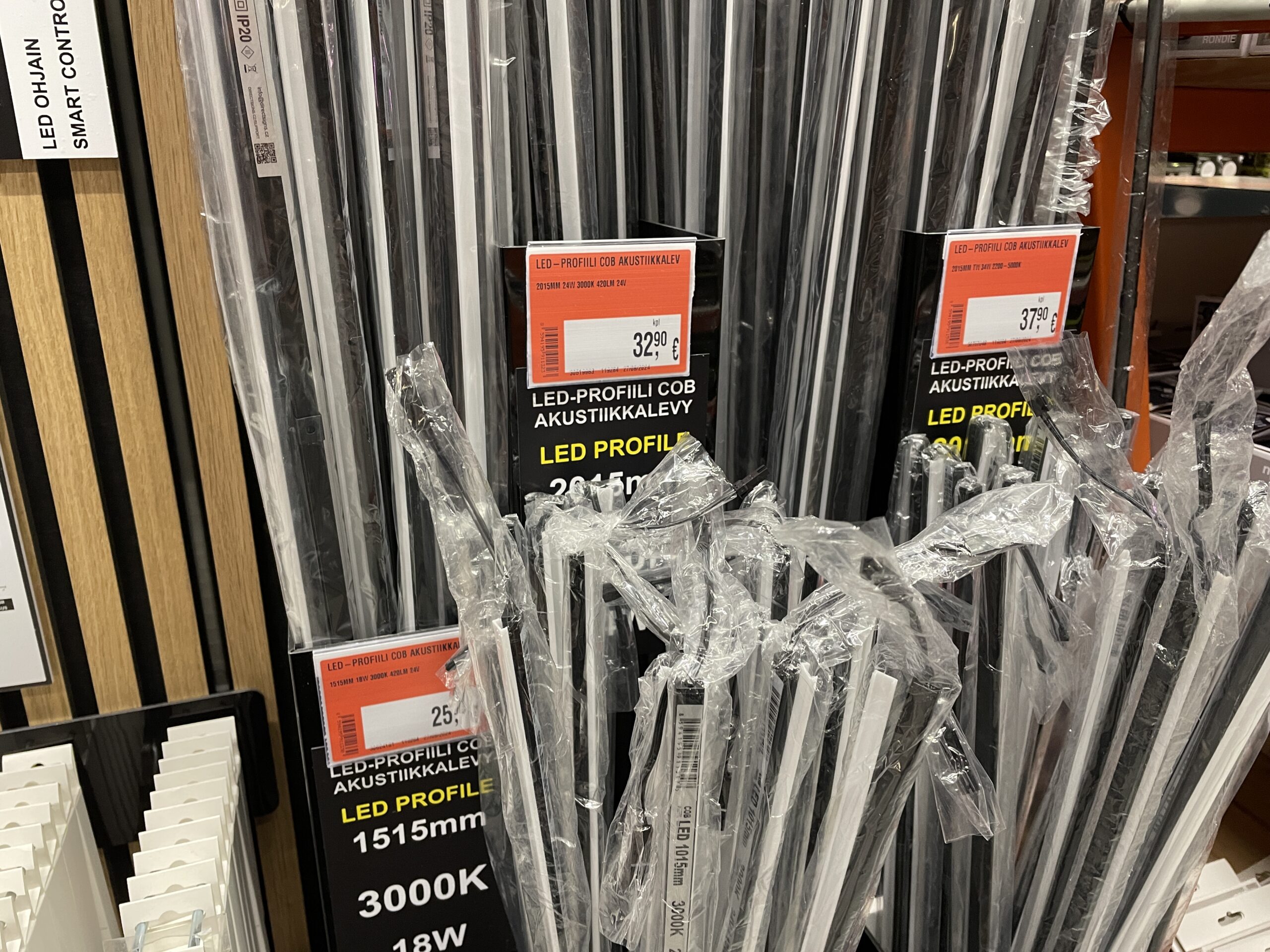
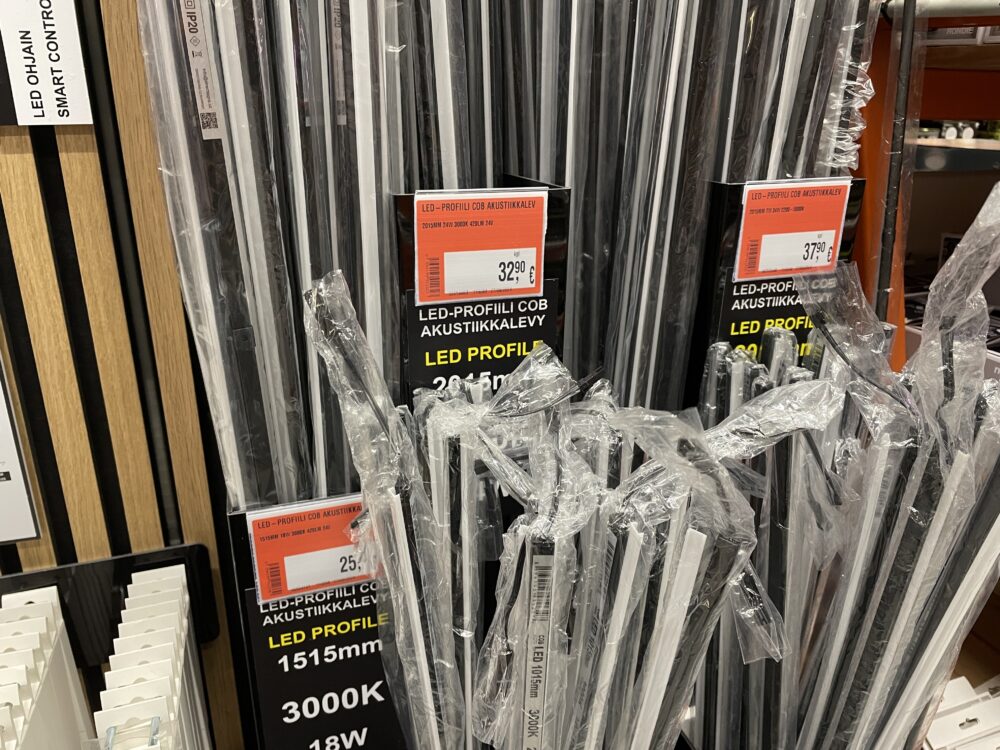
LED strip channels and profiles in a hardware store; photo by Ypsilon from Finland, CC0 via Wikimedia Commons.
What Actually Makes V-Shaped Aluminum LED Channels Expensive or Cheap?
You’ll see big price swings for what look like similar corner channels. That usually comes down to four specific cost components:
1. The aluminum profile itself. Shorter pieces and thinner profiles cost less, but they may not dissipate heat as well or look as clean in long runs. SuperlightingLED’s corner-channel lineup ranges from very small profiles for tight furniture applications up to large 80+ mm corner profiles that can house much wider strips.Source Wider, heavier profiles use more aluminum and drive the base price up.
2. Diffuser type and quality. Most V-shape kits include a plastic cover. Milky diffusers soften hot spots and give you more even light, which matters if your LEDs sit close to the surface. Clear covers are cheaper but show individual diodes more. Retail kits like the VEVOR pack or LEDlightsworld’s V-shaped channels offer milky or black diffusers aimed at “soft, glare-free lighting” and better dust protection.SourceSource If you’re lighting a premium retail display, paying more for better diffusers can be worth it; for utility garage lighting, you may not need it.
3. Accessories in the kit. Many US-focused multi-packs include mounting clips and end caps by default. VEVOR’s kits include all of these, and Amazon’s top V-shape channel listings bundle corner connectors and screws.Source Channels that ship as bare extrusions can look cheaper at first, but once you add hardware separately your project total rises. If you’re doing multiple small installations, kits with full accessories usually beat piecemeal buying.
4. Shipping, customs, and fees. For domestic purchases (Amazon, Best Buy, specialty LED sites), you’re mainly dealing with standard parcel shipping inside the US. Cross-border sourcing adds transit time and potential import duties. Those costs spike if you’re moving heavier aluminum in long lengths. For a small kitchen retrofit, domestic shipping is often the cheapest and simplest. For a reseller importing large quantities, unit price savings can offset freight and customs – but only if you factor them in up front.
A quick budgeting trick is to treat channels as a per-foot cost, then layer shipping and any import fees on top. For instance, a 10-pack of 2 m channels might look pricey, but the cost per foot, including diffusers and hardware, can be quite low compared with buying 2-3 small kits at retail.
Quick reference: what drives cost up or down?
| Cost lever | How it affects price and value |
|---|---|
| Profile size and thickness | Larger, heavier corner profiles cost more but handle wider strips and heat better. |
| Diffuser type | Milky/black covers add cost but improve glare control and perceived quality. |
| Included accessories | Bundled clips, end caps, and connectors raise list price but can lower total project spend. |
| Pack length and quantity | Bigger, longer packs improve per-foot cost if you actually use the footage. |
| Shipping and import factors | Domestic shipping is simpler for small jobs; freight and duties matter more on cross-border bulk orders. |
How Pack Size, Specs, and Customization Change Your Price Per Foot
If you’ve ever wondered why two “10-pack V channels” can be several dollars apart per set, it’s because of the underlying specs. Here are the levers that matter.
Pack size and length
Domestic kits usually sit in a few predictable formats:
| Example channel type | Typical section length | Common pack style | Budget impact (editorial judgment) |
|---|---|---|---|
| VEVOR under-cabinet V-shape kit | ~1 m (3.3 ft) | 10-20 sections with hardware | Good for single kitchen or office run |
| Amazon corner-channel multi-packs | 1 m or 2 m | 10-pack or 20-pack bundles | Better per-foot pricing in larger packs |
| SuperlightingLED large corner profiles | ~1-2 m (varies) | Individual or bulk orders | Higher per-foot cost for oversized runs |
If you only need a few short runs, smaller domestic packs avoid waste. Once you cross into dozens of feet, it’s usually cheaper to buy longer sections in bigger packs and cut them yourself.
Strip width and corner angle
SuperlightingLED’s corner profiles cover strip widths from very narrow (a few millimeters) up to roughly 20 mm, with different corner geometries like 30°, 45°, and 60° beam directions for 90° corners.Source Narrow channels that fit standard 8-10 mm strips cost less; wider or deeper channels that can handle dual-row or high-output strips cost more. Custom angles or unusual shapes also push the price up because they don’t ride on the same economies of scale as commodity 16×16 mm V-channels.
For budget projects, stick to standard strip widths and common corner angles unless your design absolutely demands something exotic.
Diffuser color and finish
Upgrading from a simple clear cover to a milky or black diffuser adds unit cost but can reduce returns or complaints about glare. LEDlightsworld’s V-shaped channels, for example, offer milky and black covers for different looks and light distributions.Source If you’re reselling or installing in visible spaces (retail, hospitality), spec’ing higher-end diffusers can be more cost-effective than saving a few cents per foot and winding up with harsh light.
Accessories and connectors
Corner connectors, extra clips, and designer end caps make installations faster and cleaner but add cost. Amazon kits that include specialized corner connectors or curved profiles will show higher list prices than basic straight channels.Source For installers doing repeat work, those accessories often pay for themselves in labor savings; if you’re DIY-ing one room, you can often live with simpler hardware.
Choosing the Best Sourcing Channel and Keeping Total Costs Down
You have three realistic sourcing routes for V-shaped aluminum LED channels: domestic retail/wholesale, general marketplaces, and cross-border platforms.
Domestic specialty sites and retailers
US-focused outlets like LEDwholesalers and SuperlightingLED cater to under-cabinet, bookshelf, and display-case projects with professional-grade extrusions.SourceSource You’ll generally pay mid-range prices but get clear specs, familiar returns processes, and faster delivery. Big-box-connected listings (like VEVOR kits via Best Buy) sit in a similar lane and are well suited to homeowners, contractors, and small shops doing limited runs.
Marketplace benchmarks (Amazon)
Amazon’s search for “v shape led channel” returns hundreds of results across brands, pack sizes, and lengths.Source That makes it a useful benchmark: you can quickly see what a 10-pack of 1 m V-channels with milky covers and hardware is going for, then compare that per-foot cost to other channels. For US buyers who need 10-20 meters of corner lighting with predictable shipping, those marketplace kits often land in a good-enough price range.
Cross-border and wholesale-friendly options (including DHgate)
If you go this route, your total cost depends less on the sticker price and more on your homework: checking what’s actually included in the lot (covers, end caps, clips or bare profiles), confirming aluminum length and strip-width compatibility, and estimating freight plus any customs or brokerage fees. For US importers, it also helps to understand how duties and taxes apply to lighting hardware; see this guide on customs, tariffs and import fees for a general overview before you finalize numbers.
Practical Ways to Trim Spend Without Hurting Quality
You don’t need a complex spreadsheet to keep V-shaped channel costs under control. A few project-specific tactics go a long way:
- Lock your strip spec first. Decide LED strip width and brightness, then choose the smallest standard channel that fits. SuperlightingLED’s 2-20 mm coverage range means you don’t need an oversized profile if you’re running a single 8 mm strip.Source
- Buy in the largest pack you’ll actually use. For a kitchen and a hallway, a 10-pack of 1 m channels from a domestic retailer may be enough. For an ecommerce brand planning dozens of customer installations, a 20-pack or cross-border lot can drop your per-foot price significantly.
- Prefer complete kits for small projects. For a homeowner or small shop, VEVOR-style packs with diffusers, end caps, and clips bundled in are often cheaper than sourcing hardware separately once you account for multiple shipments.Source
- Benchmark against a marketplace. Use Amazon’s V-channel results as a sanity check on per-foot pricing before committing to a specialty site or cross-border order.Source
- Avoid unnecessary customization. Custom angles or non-standard lengths are rarely budget-friendly unless they solve a very specific problem for a high-visibility installation.
For buyers who intend to build a recurring business around these profiles – selling pre-cut corner kits, for example – it’s worth exploring wholesale suppliers across several platforms. You can start with a domestic baseline, then evaluate cross-border suppliers (including those discussed in this wholesale-supplier overview) as your volume grows.
The real budget win is not chasing the lowest channel price in isolation, but hitting the right combination of profile size, diffuser quality, pack structure, and sourcing route for your specific project or product line.