
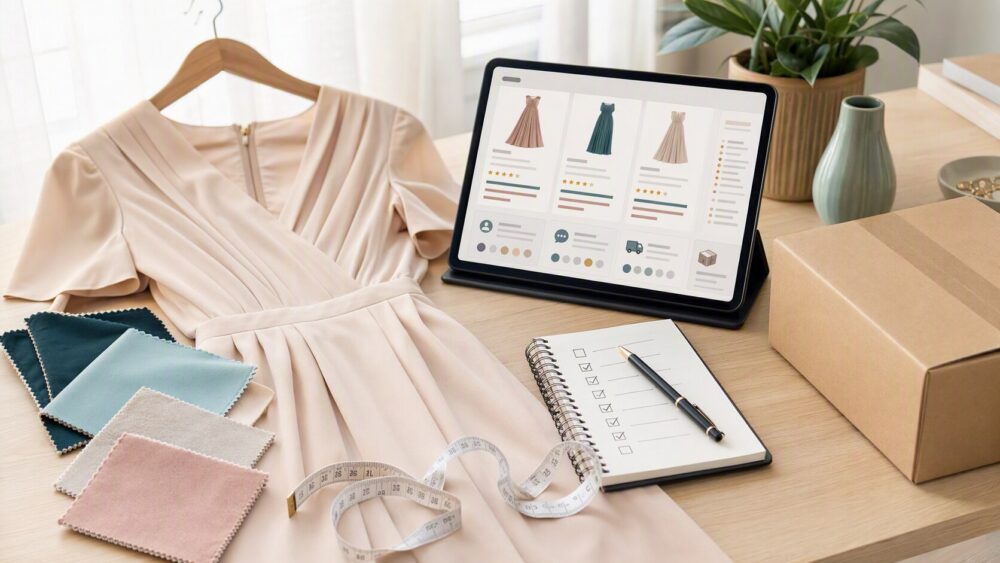
Quick answer: Ordering a dress from DHgate can be workable when you treat it as a marketplace purchase and verify the current listing carefully. Before paying, compare the size chart, fabric and lining details, selected variation, seller history, recent buyer photos, shipping terms, and return or dispute information. Keep seller messages and order records inside the platform, and do not order if important fit or delivery details remain unclear.
What Does Safety Mean for a DHgate Dress Order?
Most buyers are not asking whether DHgate exists or whether a dress can be ordered at all. They want to know whether the order can be completed safely, what protections are available if the dress is not as described, and what they need to do to preserve their rights.
That is the right frame for DHgate. It is a marketplace, not a single store, so the order experience depends on the listing details, the seller’s responses, and how well you use the platform’s built-in tools. The safest way to think about it is not “Will this always go perfectly?” but “Can I verify the listing, keep proof, and use DHgate’s process if there is a problem?”
For dress buyers, that usually means checking photos, sizing, shipping details, and message history before you pay. It also means understanding that the platform’s protection is tied to the order record, not to a general promise about every purchase.
How DHgate Works as a Marketplace
DHgate operates as a marketplace where independent sellers list products and buyers place orders through the platform. DHgate’s own brand materials describe it as a platform that connects buyers and sellers rather than a company that manufactures the products itself. That matters because the listing page, seller profile, and order record are the main sources of information you should use before buying a dress.
In practice, DHgate’s marketplace structure means you should look at the product page as a decision document. Read the description, inspect the size chart, review the shipping estimate, and check the seller’s visible history and feedback. If anything on the page is unclear, use DHgate messaging before you order so the conversation is saved in the platform record.
The platform’s role is to provide the transaction environment, order tools, and dispute pathway. Your role is to use those tools in a way that leaves a clear record of what was promised and what was received.
How DHgate Buyer Protection and Disputes Work
DHgate’s buyer protection is order-based. The seller typically does not receive funds until the order is completed or confirmed, and if there is a problem, the buyer is expected to use the Return & Refund or dispute process through the order page. Official help materials describe common dispute reasons such as item not received, damaged item, wrong item, or item not as described.
The key point is that protection depends on the order record. If you receive the wrong dress, a damaged item, or a listing that does not match what arrived, you should document the issue immediately with photos, video, tracking screenshots, and message history. Then open the dispute from the order page and upload the evidence.
DHgate’s help materials also describe seller response and escalation steps. If the seller does not resolve the issue, the case can be escalated for review. That makes timing important: do not wait until the order is closed or the after-sale window has passed before acting.
How to Judge a DHgate Dress Listing and Seller
A careful listing review is a practical way to improve your odds of a smooth order. Start with the seller profile and the product page, then move through the listing in the same order you would inspect a garment in person: description, measurements, photos, and policy details.
Look for these on-platform signals:
- Feedback with real photos: Photo reviews help you compare the listing image to actual buyer receipts.
- Clear sizing information: Dress purchases depend on measurements more than generic size labels.
- Detailed product description: Fabric, lining, closure type, length, and color notes should be visible.
- Recent communication: Message the seller and see whether the reply is specific and timely.
- Visible policy details: Shipping, return, and dispute-related information should be easy to find.
A useful rule for dress shopping on DHgate is to treat vague listings as incomplete. If the page does not show enough detail for you to judge fit and finish, ask for measurements, additional photos, or clarification before ordering.
A Safe First-Order Workflow on DHgate
For a first dress order, move from fit verification to order documentation rather than relying on a product photo or a standard size label.
- Shortlist comparable listings. Compare the same dress type, selected variation, fabric notes, measurements, and shipping estimate across more than one seller.
- Confirm fit and construction before payment. Check the size chart against your measurements and ask about lining, closure, length, fabric, color, and any remaining fit question in the platform message thread.
- Save the details you relied on. Keep screenshots of the listing, selected variation, size chart, seller messages, shipping information, and checkout record.
- Inspect the delivery promptly. Photograph the unopened package, then the dress, tags, measurements, and any mismatch or damage before confirming receipt.
- Use the order path if there is a problem. If the item is not received or does not match the listing, open the available return, refund, or dispute path from the order page and attach clear evidence promptly.
Current listing details can change. Before paying, save the product page, selected variation, size chart, seller replies, shipping information, and checkout record that you relied on for the purchase.
Dress order checklist
- Fit: Measurements, size chart, length, and the selected size are all clear.
- Construction: Fabric, lining, closure, color, and selected variation match the listing description.
- Seller evidence: Recent feedback, buyer photos, and direct seller replies are consistent with the listing.
- Timing: Processing estimate, shipping method, and delivery timing fit your event or use date.
- Order record: Listing screenshots, messages, shipping details, and checkout confirmation are saved.
FAQ
Can I rely on listing photos alone?
No. Use photos together with the written description, selected variation, size chart, fabric and lining details, recent buyer feedback, and seller replies.
What should I ask the seller before ordering a dress?
Ask about the selected size, measurements, fabric, lining, closure, color, length, processing time, and any detail that affects fit or delivery timing.
Should I use my usual clothing size?
Do not rely only on a standard size label. Compare the seller’s measurements with your own measurements and the fit details of a similar garment you already own.
What should I save before checkout?
Save the listing page, selected variation, size chart, seller messages, shipping details, and checkout confirmation.
What if the dress does not match the listing?
Use the order page to open the available return, refund, or dispute path. Attach listing screenshots, messages, package photos, and clear photos or video of the issue promptly.
Next step
Before ordering, compare at least two similar dress listings, check the measurements line by line, and ask the seller any remaining fit or fabric question inside the platform. Choose an option only when the listing and order details are specific enough to document.
Sources and further reading
- DHgate Blog — Is DHgate Safe to Order From?
- DHgate Blog — Is DHgate Safe to Buy From?
- DHgate Blog — What Is DHgate Website?
- DHgate Blog — Is DHgate a Real Company?
- DHgate Blog — Tulle Layered Dress
Note: Listing availability, selected variations, sizing, fabric details, seller information, shipping terms, return options, and order outcomes can change. Review the current listing, seller messages, checkout details, and order record before paying.