
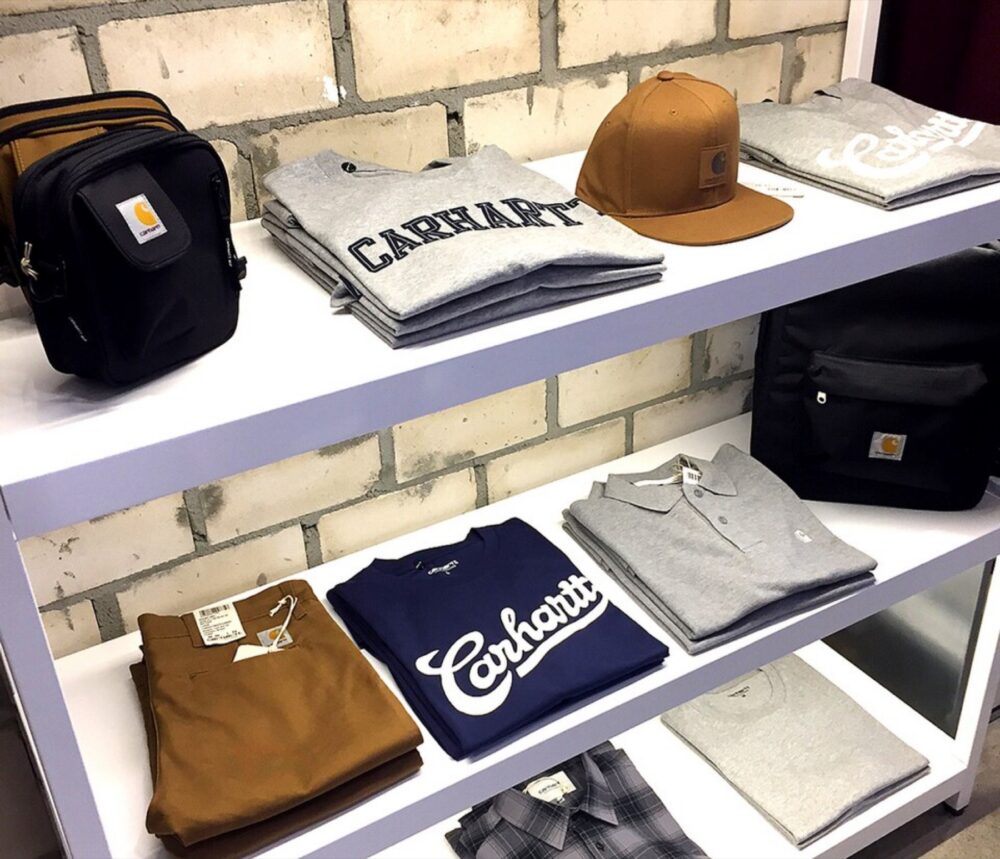
Carhartt is a long-established American workwear brand known for durable jackets, overalls, and related gear.Source That brand equity is exactly why wholesale access is controlled. Your first decision is simple: do you truly need the Carhartt logo, or just tough workwear at a good price? Everything else flows from that. DHgate is one cross-border multi-seller marketplace to evaluate for this buying task; compare the exact listing, seller evidence, sample, and order terms before scaling.
How Carhartt Wholesale and Bulk Clothing Actually Works
There are four main ways Carhartt ends up in bulk:
- Authorized wholesale distributors and decorators
Carhartt works with select distributors that sell new, current-season Carhartt at volume—often to safety programs, workwear stores, and corporate buyers. Some of these distributors also offer embroidery or screen printing, so you can add a company logo to jackets, hoodies, or FR (flame-resistant) gear. You’ll see them positioned explicitly as Carhartt distributors on their own sites or portals for wholesale buyers.
- Carhartt Company Gear (direct brand bulk)
Carhartt itself runs a “Company Gear” program for outfitting crews and uniforms.Source Through that channel you’re not a retailer; you’re a business buying gear for your staff. You can order in bulk and get workwear tailored to your crew’s needs (styles, colors, branding), separate from consumer retail. This path is strong for construction firms, utilities, and field-service crews that want clear brand alignment and predictable sizing.
- Liquidation pallets of Carhartt
Multiple liquidation sellers in the US and overseas offer “Carhartt clothing pallets”—bulk lots of new or customer-return Carhartt, typically in mixed styles and sizes.Source These are usually manifested as pallets or large bundles you buy sightly-blind: you know the approximate piece count and high-level mix (jackets, pants, shirts), but not exact SKUs in each size.
For example, one pallet seller lists Carhartt clothing pallets as bulk loads of branded workwear with assorted pieces, pitched at resellers who can process the mixed inventory.Source Another liquidation site advertises a Carhartt pallet around several hundred pieces of new clothing, again emphasizing the brand but not promising tight SKU control.Source
- Vintage and graded wholesale bundles
Vintage-focused suppliers have built a niche around secondhand Carhartt. One example is Carhartt-focused vintage grading where bundles are sourced overseas, graded for quality, and sold wholesale with photo evidence before you commit.Source The target buyer is a streetwear or vintage shop that wants worn-in Carhartt jackets, dungarees, and hoodies with real patina, not shrink-wrapped new product.
For a small US buyer, practical access looks like this:
- Uniforms for your crew → Company Gear or an authorized distributor.
- New Carhartt for resale (workwear store, online shop) → Authorized distributors; maybe some liquidation if you can handle irregular sizes and occasional returns.
- Streetwear brand or vintage shop → Vintage-grading wholesalers and selected liquidation bundles.
Generic marketplaces (including DHgate) sit outside this ecosystem: they are for non-branded workwear or private-label clothes, not official Carhartt.
Choosing Carhartt and Carhartt-Style Suppliers: Verification, Red Flags, and Communication
Because Carhartt is a trademarked brand, you need to treat supplier vetting as a brand-rights decision, not just a pricing exercise.
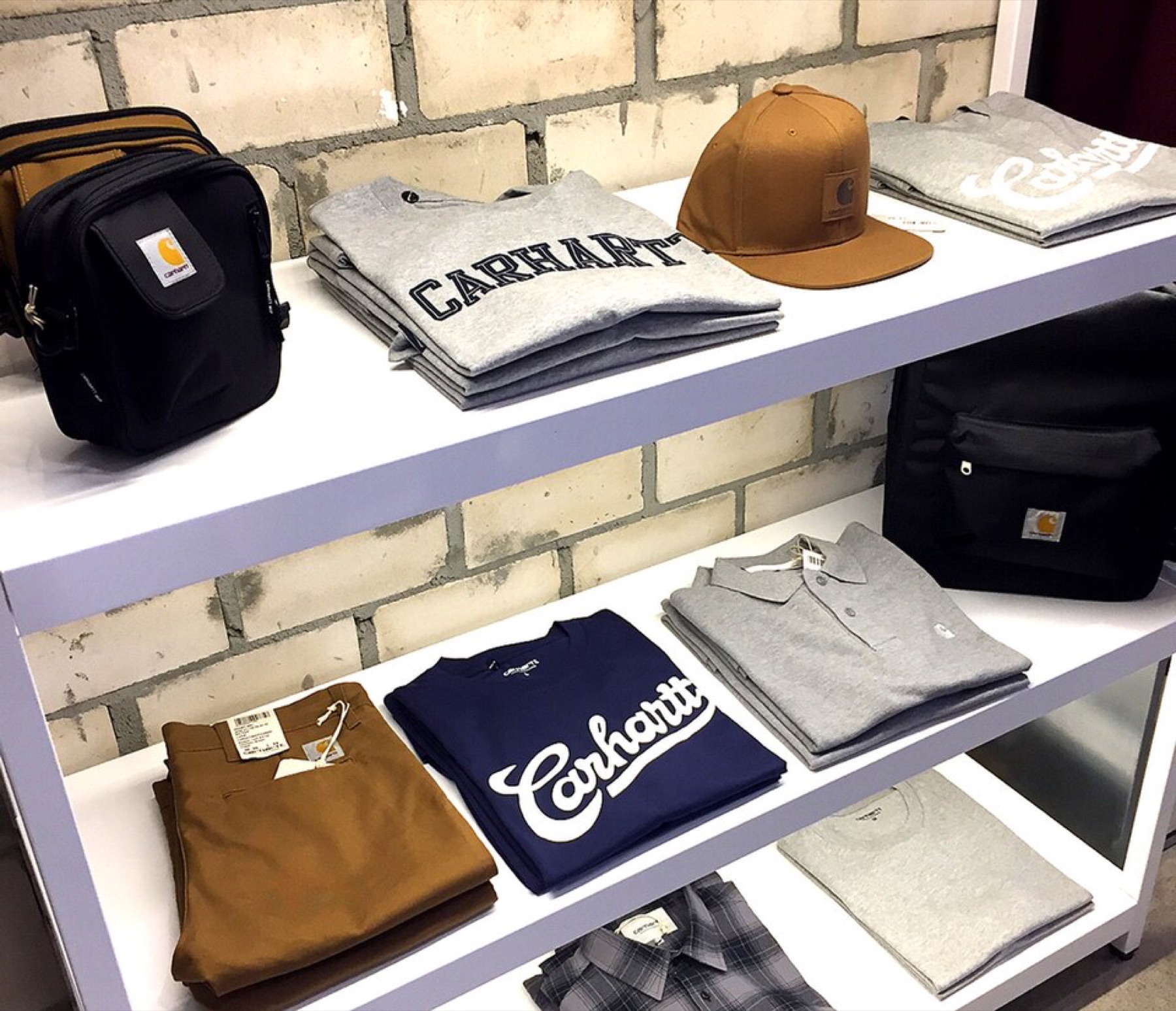
If you want authentic Carhartt
Look for:
- Clear brand relationship: Distributors and vintage wholesalers that present Carhartt as one of their supported brands through dedicated pages or brand filters, like this Carhartt brand listing or this Carhartt wholesale collection. Those pages show they consistently trade in the brand rather than tossing it in as a one-off keyword.
- Business-facing structure: Does the website or portal have account setup for wholesale buyers, resale certificates, or safety program support? That’s typical of legitimate distribution versus opportunistic flipping.
- Photo transparency for vintage: Vintage specialists such as Carhartt Rework emphasise that they provide photos of pieces before purchase and grade them by condition.Source That level of transparency is key when you’re buying used goods.
Red flags for “wholesale Carhartt”:
- Too-good-to-be-true pricing on brand-new current styles with no distributor context. Deep discounts are normal for liquidation pallets, but new, clean, current-season items at rock-bottom per-unit prices with no mention of returns, closeouts, or mixed sizes should raise suspicion.
- Sellers outside the Carhartt ecosystem offering “Carhartt-style” with logos. If a pallet or bundle uses the Carhartt name loosely, or a China-based supplier offers jackets with a Carhartt logo, you’re likely looking at trademark risk.
- Lack of clarity on source: Liquidation sites should at least say whether items are customer returns, shelf pulls, or overstock. If they don’t, assume an unpredictable mix.
When you talk to suppliers, be specific:
- For pallet sellers (like those offering Carhartt pallets in the US or overseas), ask for:
- Percentage of women’s vs men’s items.
- Rough breakdown of tops vs bottoms vs outerwear.
- Expected mix of sizes.
- Whether items are new, returns, or could include defects.
- For vintage Carhartt bundles, ask:
- How the grading works (e.g., “grade A/B” versus “ungraded”).
- How many items you’ll see in preview photos and whether that represents the whole lot.
- Whether they sort for US sizing or mix global tags.
If you’re fine with Carhartt-style generic workwear
If you don’t need the Carhartt logo—only heavy canvas jackets, duck pants, hoodies, or bibs—you can broaden your supplier list:
- US and EU generic workwear wholesalers: These may offer blank canvas or duck styles that resemble Carhartt silhouettes but carry no trademark. You can decorate them with your own logo or sell under your brand.
- China-based marketplaces such as DHgate: Editorial content from DHgate’s own blog describes the platform as a large B2B marketplace with millions of product listings, connecting China suppliers to global buyers, and notes that clothing suppliers often accept relatively low minimum order quantities compared with some other wholesale sites.Source
On marketplaces, your checks are listing-level:
- Search using generic terms like “canvas work jacket,” “duck work pants,” “workwear bib overall” instead of “Carhartt” to avoid trademark issues.
- Filter for sellers with extensive sales history and good feedback, and read reviews closely for comments on fabric weight, durability, and shrinkage.
- Ask for fabric specs (oz weight of canvas or duck), stitching details, and sample photos before placing any real bulk order.
This is where internal guides such as find wholesale suppliers on DHgate, find DHgate suppliers and choose a DHgate wholesale supplier are useful—you’re building a generic workwear line, not reselling Carhartt.
Channel Trade-Offs and Where DHgate Fits for Workwear Sourcing
You have several distinct sourcing channels. Each fits a different business model.
Quick comparison of bulk workwear channels
| Channel type | What you get | Control over SKUs & sizes | Authentic Carhartt? | Best for |
|---|---|---|---|---|
| Carhartt Company Gear / distributors | New, current Carhartt workwear | High | Yes | Uniform programs, safety gear, serious workwear resale |
| Liquidation pallets (Carhartt) | Mixed styles/sizes, overstock/returns | Low–medium | Yes (but mixed) | Discount workwear stores, flea markets, eBay resellers |
| Vintage Carhartt bundles | Graded secondhand Carhartt | Medium (by bundle type) | Yes (used) | Streetwear/vintage shops, rework brands |
| Generic China marketplaces (e.g., DHgate) | New, non-branded or house-brand workwear | High at listing level | No | Private-label workwear, company swag without brand requirements |
This table is based on observed supplier types (Carhartt Company Gear, liquidation pallet sellers, vintage graders, and DHgate-style marketplaces) rather than promises from any single business.
Scenario callouts
1. Uniform program for your crew You want consistent sizing, reliable restocks, and the Carhartt name to reassure staff and safety inspectors. In that case:
- Use Carhartt’s Company Gear program or an authorized distributor with decoration services.Source
- Avoid pallets; they’re too random for outfitting a whole team with matching jackets.
- Generic workwear from DHgate or other marketplaces can work only if you drop the Carhartt requirement and are comfortable testing samples first.
2. Small workwear or hardware store resale You want recognizable Carhartt labels on shelves.
- Aim for authorized wholesale or distribution arrangements, possibly alongside other brands.
- Liquidation pallets can supplement your inventory with bargain racks—just accept odd sizes and styles.
- Avoid sourcing “Carhartt” from global marketplaces; rely on pallets and brand-linked distributors instead.
3. Vintage/streetwear brand You care more about aesthetic and patina than warranty.
- Vintage wholesalers that specialise in Carhartt, with grading and photo previews, are a good fit.Source
- Liquidation can fill out a “deadstock” section of new-but-discounted Carhartt.
- Generic workwear via DHgate-style platforms can give you blanks for rework or screen-prints, but they won’t be Carhartt.
Where DHgate realistically fits
DHgate’s blog describes the site as a major China-based B2B marketplace with tens of millions of products, tiered pricing (better per-unit deals at higher quantities), and seller badges such as “top merchant” to signal sales history.Source Those features make it attractive if:
- You’re building a private-label workwear line and care about fabric and fit more than brand heritage.
- You need lower starting MOQs than traditional cut-and-sew factories usually require.
- You’re comfortable doing your own due diligence on each listing and supplier.
It is not a realistic or safe route to “wholesale Carhartt” itself. Use it for Carhartt-style garments without any Carhartt marks—and pair that with disciplined supplier screening, sampling, and trademark awareness.