
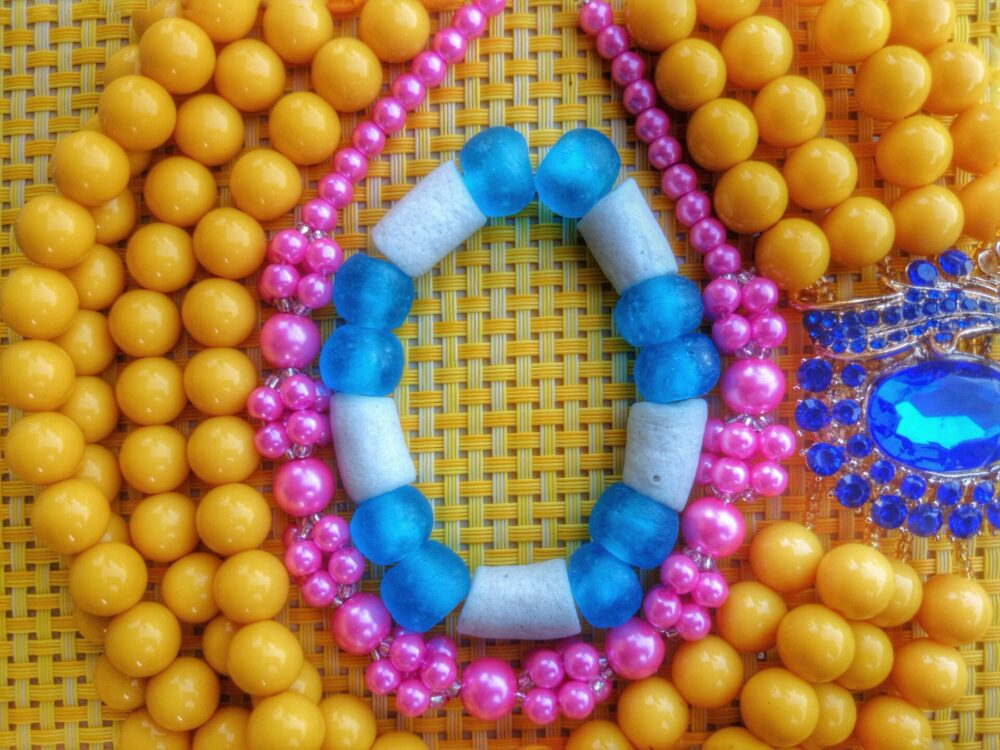
Yes, you can wholesale jewelry beads and supplies on DHgate, and it can work well for US crafters and small ecommerce brands that need variety without huge orders. DHgate is a China-based B2B marketplace with tens of millions of products and hundreds of thousands of suppliers, and its own editorial positions the site as suitable for small and medium businesses buying Chinese goods at wholesale prices. The catch: you still have to vet each bead supplier carefully, run a small test order, and compare your true landed cost against US bead wholesalers and other cross-border sites before you commit.
How Wholesale Jewelry Beads and Supplies Are Sourced Today
Jewelry beads and findings (clasps, jump rings, ear wires, chains, crimps) sit in a global supply chain that’s more fragmented than it looks from a craft store aisle.
Most mass-market glass, acrylic, metal, and generic gemstone beads are produced in China and other Asian hubs, then sold through export wholesalers and online marketplaces. Specialty cuts, branded crystal, and premium seed beads often come through more controlled distributor networks; for example, US-facing wholesalers like Artbeads and Beadaholique focus on curated assortments and branded components rather than factory-direct bulk lots.
Domestic US bead wholesalers such as Continental Beads and Crystal Findings usually sit between you and overseas factories. They import in bulk, manage quality and assortments, and then resell in smaller, predictable packs to retailers, Etsy makers, and local bead stores.
Cross-border marketplaces like DHgate and Alibaba plug you more directly into the manufacturing side. DHgate’s own editorial describes the platform as connecting manufacturers and suppliers in China with global buyers and emphasizes breadth (tens of millions of products) across categories including fashion accessories. That translates into a huge catalog of generic beads, charms, and findings, often at low per-unit cost—but with more responsibility on you to define specs, check quality, and manage import details.
Choosing and Vetting Bead Suppliers Across Borders
If you shift from buying retail bags of beads to sourcing wholesale cross-border, your risk moves from “this strand is a bit off” to “this entire 10 kg carton is wrong.” You need bead-specific checks, not just generic supplier advice.
Start with product evidence, not price. Alibaba’s bulk-buying guidance stresses category-specific requirements and sample plans. For beads, that means you should pin down:
- Material and grade (e.g., 304 vs 316L stainless steel findings, natural vs dyed gemstone, lead/nickel-free claims)
- Size tolerances (4 mm rounds that actually measure 3.6-3.8 mm can change your designs)
- Hole consistency (especially on seed beads and pearls)
- Plating or coating type and expected durability
On DHgate or similar marketplaces, use search filters to get close to your needs, then click into sellers that look specialized in jewelry findings rather than general “craft” sellers.
Run a quick supplier vetting pass. DHgate’s own guidance for ecommerce buyers suggests using platform filters, checking supplier ratings and transaction history, and requesting samples before large orders. Applied to beads and findings, your short checklist could be:
- Does the seller’s catalog focus mainly on jewelry components (hundreds of SKUs of beads/findings) or are beads just a side category?
- Are there detailed photos for each bead style (close-up, different angles, color variants), not just a single catalog image?
- Do past buyers mention consistency of color lots and plating, or do reviews complain about tarnish, flaking, or mismatched sizes?
- Can the seller quote a per-lot tolerance (e.g., allowable size variation) in writing?
If a supplier passes that basic scan, message them directly. Ask specific questions: “How many bead colors are in one 1 kg bag?”, “Do you mix grades or keep all strands in a lot from the same stone batch?”, “What is the base metal under this gold plating?” Their answers and response time will tell you a lot about how they handle detail and custom requests.
Always test with samples. DHgate editorial explicitly recommends ordering samples before committing to larger orders. For beads, think in terms of:
- At least one small pack from each material family (glass, gemstone, plated findings) you plan to buy
- Enough pieces to run your own tests: stringing, bending, basic stress on clasps, and a few weeks of wear or simulated wear
Use that sample phase to build your acceptance criteria: what level of variation, surface flaws, or plating wear is acceptable for your audience and price point.
MOQ, Pricing and Channel Choices: Is DHgate Right for Your Bead Business?
Minimum order quantity (MOQ) and pricing tiers drive whether cross-border sourcing makes sense for low-ticket items like beads.
DHgate’s editorial content highlights relatively low MOQs compared with some other B2B sites, and a tiered pricing system where unit cost drops as your order quantity increases. That aligns well with small US bead businesses that can’t absorb huge factory MOQs but still want better margins than local retail.
Here’s a compact way to think about your channel options:
| Channel type | Typical MOQ feel (editorial judgment) | Pricing structure | Best fit scenarios |
|---|---|---|---|
| DHgate-style marketplace | Often low to moderate, seller-set | Tiered; per-unit price drops with quantity | Testing new bead lines, variety with limited capital |
| Alibaba-style bulk suppliers | Moderate to high, factory-driven | Bulk-focused; aggressive at larger volumes | Scaling a proven design needing large repeat orders |
| US bead wholesalers (e.g., Artbeads, Continental Beads) | Low, pack-based | Fixed pack prices, occasional volume deals | Fast replenishment, curated brands, smaller batches |
Run a quick landed-cost scenario. Even without exact numbers, you can structure your calculation:
- Product cost: unit price × quantity (including any tiered discount).
- Domestic handling: packaging, labeling, and storage.
Compare that total landed cost per strand or per gram with buying similar items from US wholesalers like Bead3 or Artbeads’ jewelry supplies section. If your landed cost savings are thin—especially on small orders—cross-border sourcing may not be worth the additional complexity yet.
When DHgate is a good fit.
DHgate is typically most useful for:
- US Etsy/Amazon sellers who want to test many bead styles (colors, sizes, finishes) without meeting high MOQs
- Small craft stores looking to introduce an affordable “bulk bead bar” or findings wall with lower per-unit costs
In those cases, start with a tightly scoped pilot: a single DHgate supplier, a few bead families, clear specs, and a sample-first order. Then expand only if quality, communication, and replenishment terms meet your needs.
When to avoid cross-border bead sourcing entirely.
You may be better off staying with US bead wholesalers or distributors if:
- Your brand promises very high-end or branded components (e.g., specific crystal or premium seed beads) that rely on controlled distribution
- You need fast, predictable replenishment for in-person classes and can’t risk international lead-time variability
- Your team isn’t ready to handle customs paperwork or long-distance issue resolution
If that’s your situation, treat DHgate and similar marketplaces as optional sourcing experiments, not core supply.
For readers who do decide to use DHgate, it’s worth pairing this bead-specific planning with more general marketplace guidance. DHgateWiki has step-by-step coverage on how to find wholesale suppliers on DHgate, locate DHgate sellers, and choose a DHgate wholesale supplier; combine those general checks with the bead-specific vetting and landed-cost math above for a safer first order.