
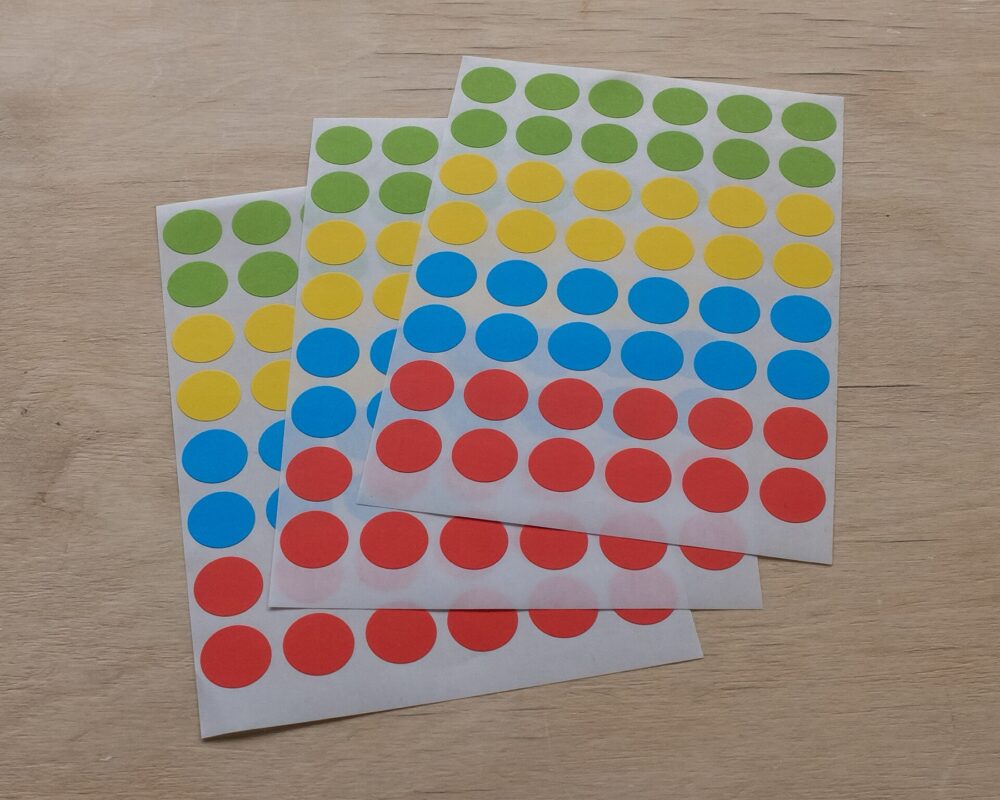
If you’re buying planner sticker sheets wholesale, the “right” channel is the one that gives you an acceptable landed cost per sheet, room for margin, and repeatable reorders. That might be DHgate, a wholesale marketplace like Faire, or a local print shop. DHgate can work for budget stationery if you treat it as a marketplace to negotiate tiered pricing, request samples, and time bulk orders around promotions instead of assuming every listing is a good deal.
For most small US sticker brands, your decision hinges on three numbers: landed cost per sheet, planned retail price, and how often you’ll need to reorder. Once you can calculate those, it’s much easier to see whether cross-border sourcing actually beats domestic options.
What Really Makes Up the Cost of Wholesale Planner Sticker Sheets
Your true cost per planner sticker sheet isn’t just the unit price the seller quotes. For imported sheets, it usually looks more like this:
- Product cost – the per-sheet wholesale price, which often drops at higher quantities because of tiered pricing.
- International shipping – parcel or express freight spread across all sheets.
- Tariffs and import fees – duties and any brokerage or clearance charges.
- Platform and payment costs – payment processor fees, currency conversion, and sometimes marketplace commissions.
DHgate’s own editorial guidance for sellers stresses that wholesale prices vary with order quantities, and understanding pricing tiers is key to margin analysis. In practice, that means you’ll often see a per-unit price for 100 sheets, a lower one for 500, and so on. Buying in bulk typically lowers your unit cost, which only helps you if your resale price holds and you actually sell through the inventory.
Here’s the core margin math you’ll use, adapted to planner stickers. Profit margin for wholesalers is:
(selling price − cost of goods sold) ÷ selling price × 100%
Say you plan to sell a sheet for $3.50 in your online shop.
- You negotiate a cross-border deal and estimate these landed costs per sheet:
- Product: $0.80
- Shipping (spread across the batch): $0.25
- Tariffs and fees (spread across the batch): $0.10
Total landed cost per sheet: $1.15
- Margin calculation:
- Selling price: $3.50
- COGS: $1.15
Margin = (3.50 − 1.15) ÷ 3.50 × 100% ≈ 67%
At that margin, you still have room for packaging, marketing, and discounts. If your landed cost creeps up to, say, $2.00 per sheet because of small MOQs or expensive shipping, that same $3.50 price yields (3.50 − 2.00) ÷ 3.50 ≈ 43% — often still workable, but much tighter.
For budget control, build a simple spreadsheet where you change order quantity, shipping method, and tariff assumptions and watch how the per-sheet landed cost responds.
How MOQ, Customization, and Channel Choice Change Your Price
Planner stickers are low-price, high-variation items. Three factors will push your per-sheet cost up or down more than anything else.
1. Minimum order quantity (MOQ) and tiered pricing
Wholesale sellers almost always set MOQs for printed stationery. On DHgate and similar marketplaces, you’ll see that buying more units from one seller often unlocks lower per-unit prices. The catch: you’re tying cash up in inventory.
Editorially, you can think in bands:
- Low MOQ (e.g., test runs) – higher unit price, lower total risk. Good for validating a design.
- Mid-range MOQ – better pricing tiers, still manageable for a small shop.
- High MOQ – lowest unit price, but only makes sense if you have reliable demand.
2. Custom vs. stock designs
- Stock designs (generic functional icons, date dots, seasonal motifs) tend to be cheaper, with lower MOQs. You’re competing with other retailers selling the same look.
- Custom designs (your brand art, color palettes, and layout) usually require setup fees and higher MOQs. The per-sheet cost is higher at small volumes, but you control the brand and can often price higher.
For custom planner stickers, a local or regional printer might be cost-competitive at small quantities, especially when you factor in shipping and tariffs on imported goods.
3. Channel choice: DHgate vs. wholesale platforms vs. local suppliers
Here’s a compact, decision-focused comparison.
| Channel type | Typical cost behavior (editorial) | Where it fits for planner stickers |
|---|---|---|
| Cross-border multi-seller-style cross-border marketplace | Often offers bulk discounts; per-sheet price can drop at higher quantities from one seller, but you add international shipping and tariffs on top. | Best when you want very low per-unit cost on large runs and are willing to manage lead times and import complexity. |
| Wholesale marketplaces (e.g., Faire) | Connects retailers to multiple brands. Prices are usually higher per sheet than direct factory sourcing, but shipping is domestic and order quantities can be smaller. | Good if you want curated, ready-to-resell sticker brands with shorter lead times and simpler logistics. Faire lists various planner sticker sheets from different suppliers. Example product page. |
| Local or regional printers | Higher per-unit cost, but minimal tariffs and simpler communication. Shipping is cheaper and faster, or you can pick up. | Strong choice for custom branded sheets, small MOQs, and hybrid products (stickers plus matching notepads, etc.). |
No single channel is always cheaper. The real savings from DHgate-style sourcing come from bulk deals: buying many matching units under one seller’s contract so the per-item cost drops. You trade that for higher upfront spend and more inventory risk.
Using DHgate Strategically for Sticker Sheet Reorders and Budget Control
DHgate’s editorial blog positions the platform as business-to-business at its core, which is why bulk discounts and tiered pricing show up so often. Those can work in your favor for planner stickers, but only if you approach buying more like an importer than a casual shopper.
Start small, then ramp up
Bulk-buying guidance from DHgate emphasizes starting with smaller orders and requesting samples before committing. For stickers, that’s essential:
- Request samples for each material and finish you care about (matte vs. glossy, removable vs. permanent adhesive).
- Place a small initial order at the seller’s MOQ to validate print quality, color accuracy, and packaging.
Use that first run to calculate real landed cost per sheet — including whatever tariffs and fees you actually paid — instead of relying only on quoted unit prices.
Use bulk discounts and sales events deliberately
DHgate highlights that its B2B foundation supports discounts for buyers who purchase multiple units from one seller, and that promotional campaigns and sales periods are used to ease tariff-related cost pressure. For a planner sticker business, that translates into a few practical tactics:
- Ask about tiered pricing: message sellers to confirm what price breaks they offer at higher quantities and whether they can quote for mixed designs on the same paper stock.
- Time large reorders around promotions: keep an eye out for bulk-oriented sales events and only place big, predictable reorders during those windows.
- Consolidate SKUs with one seller: if you can source multiple sticker styles from the same supplier, those units may qualify for better pricing because you’re placing a larger overall order.
Plan reorder points with margin in mind
You don’t need advanced inventory software to avoid stockouts and cash crunches on imported sticker sheets. A simple approach:
- Estimate your average weekly sales for each sheet once you’ve sold a few batches.
- Reorder point ≈ lead time (in weeks) × average weekly sales.
If you sell 40 sheets per week and your realistic lead time is five weeks, your reorder point is about 200 sheets. Place your next order when inventory drops near that level, assuming you’re happy with your margin at that quantity.
From a budget angle, you’d then decide whether to:
- Hold your MOQ constant and accept the existing per-sheet cost; or
- Step up to the next pricing tier (say, doubling the order) if the per-sheet discount is large enough to materially improve margin.
When DHgate makes sense — and when it doesn’t
DHgate is most compelling for planner sticker sheets when:
- You have stable, repeat demand for specific designs.
- You can afford larger runs to access better pricing tiers.
It’s a weaker fit when:
- You’re still testing designs or branding, and don’t want to commit to high MOQs.
If you decide DHgate is worth exploring for stickers, pair this article with more general marketplace guides like our comparison of DHgate vs. AliExpress, Alibaba and Temu and sourcing tips in Find wholesale suppliers on DHgate. For the import side of your math, the customs overview in Understand customs, tariffs and import fees will help you refine your landed-cost calculations.