
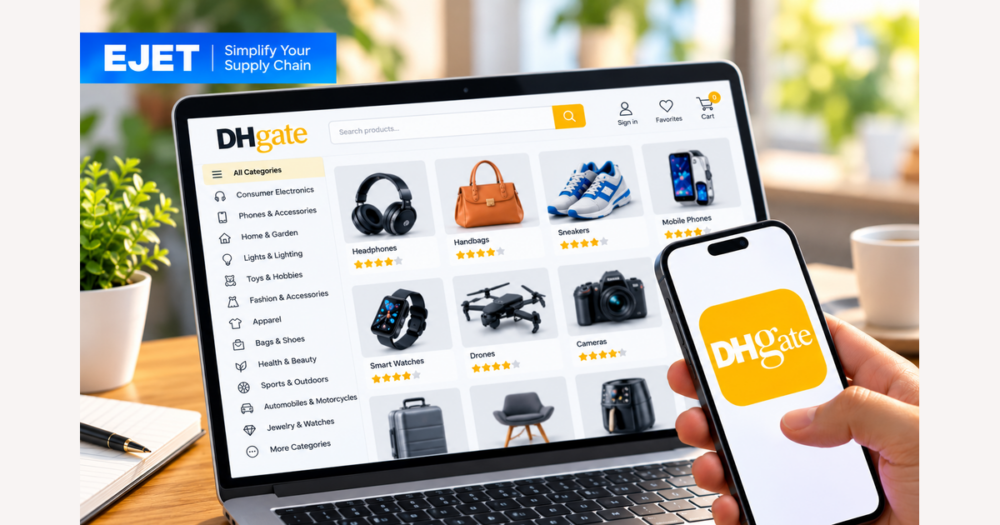
If you want to know whether an online market app like DHgate is actually right for your shopping, start by ignoring “top app” lists and star ratings and asking a more practical question: does this app give you enough clear information and protection to shop confidently? The best fit depends on what you buy, your budget, and your comfort with long or variable delivery times. Apps that surface detailed specs and materials, seller history, secure payment options, predictable shipping, and transparent dispute and refund rules are better suited to higher‑stakes purchases, even if they feel slightly more complex. Sleeker apps that show fewer details can still work for low‑risk, everyday buys—but only if you understand the limits and keep those trade‑offs in mind.
Define what “best” means for your shopping
For online shopping apps, including DHgate, there isn’t a single universally “best” choice—what works well depends on what you buy, how much you want to spend, and how comfortable you are with variable delivery times. An app that’s ideal for someone hunting occasional bargains on small, low‑stakes items may feel frustrating to another shopper who regularly orders higher‑value goods and needs clear protections if something goes wrong.
I care most about clear, verifiable information and buyer protections: if an app like DHgate makes it easy to see detailed product specs and materials, seller history, payment rules, shipping timelines, and dispute and refund policies, I’m willing to accept a slightly busier interface. You might reasonably prioritize different things—if you mostly buy inexpensive, everyday items and prefer very simple browsing, you may accept less visible detail as long as you understand the trade‑offs.
For this guide, the lens for judging DHgate and other shopping apps is a small set of concrete criteria: seller reliability, listing detail quality (especially specifications, materials, and compatibility), payment security, shipping predictability, and dispute/refund transparency. Popularity lists and app store star ratings can show that an app is widely used, but they don’t tell you whether it exposes these checks clearly enough for you to make informed decisions. Treat these criteria as your core test of whether an app is genuinely right for your shopping, not just widely downloaded.
Understand how marketplace apps work and why seller reliability comes first
Once you know what matters most to you in a shopping app, it helps to understand how a global marketplace like DHgate is built. Instead of one retailer controlling all inventory and policies, DHgate provides shared infrastructure—search, listings, payment tools, and dispute channels—for many independent sellers. Each merchant runs their own store inside the app, sets prices, manages stock, and handles shipping, while the platform defines the overall rules and tools buyers can use to judge and contact those sellers.
That structure means your experience on DHgate or any marketplace is only as strong as the individual sellers you choose and the reliability signals the app exposes. In a single‑retailer app, you mostly judge the brand; in a marketplace, you judge dozens of separate stores. I treat seller reliability metrics as a hard first filter: I would rather skip a very cheap listing than gamble on a seller with weak evidence.
Useful reliability signals are usually visible inside the app and are more concrete than vague labels like “trusted seller.” Look for overall rating levels, the number and recency of reviews, and whether those reviews say anything specific about the product rather than repeating generic praise. Check store age and transaction volume to see whether the seller has a track record, and notice whether there are signs of repeat customers. Pay attention to communication too—sellers who respond clearly to questions and don’t push you to pay outside the platform are safer bets than those who reply slowly or insist on off‑app payment methods. When ratings are low, history is thin, or messaging feels pushy, I treat that as a reason to walk away, even if the price looks appealing.
Judge product specs, materials, and compatibility before you buy
Once you’ve found sellers on DHgate or another marketplace who look reliable, slow down and read their listings like a set of specs, not a slogan. Solid listings spell out concrete details: for electronics, that means model numbers, supported standards or ports, voltage, and compatible devices; for clothing, clear sizing information, fabric composition, and fit notes; for accessories, exact measurements, materials, and any weight or capacity limits; for anything that must work with another device, a list of supported models or systems and any compatibility restrictions.
I cross‑check those details across the whole listing: title, bullet points, description, and images. Dimensions in the text should match any diagrams; the fabric listed in the description should make sense with how the item looks in photos; a model number in the title shouldn’t change in the fine print. When specs contradict each other, are missing, or are covered only by phrases like “premium quality” or “high‑end material,” that’s a sign the seller hasn’t been careful—or may not know exactly what they’re offering.
For higher‑stakes purchases, I would rather walk away from a tempting price than accept fuzzy specs or unclear materials; the risk of getting something incompatible, unsafe, or far from what I expected isn’t worth it. If you mostly buy very low‑cost, low‑risk items, you might tolerate a bit more ambiguity, but even then it’s sensible to lower your confidence when the basic facts aren’t clearly stated or consistent. On DHgate or any app, repeated patterns of vague listings are also a clue about the platform’s overall quality controls and how much extra effort you’ll need to protect yourself.
Tell quality evidence from marketing claims
Specs and materials tell you what a product is supposed to be; reviews and other signals help you see how it behaves in real use. The most useful buyer reviews talk about specific situations—how often someone used the item, over what period, and for which task. Comments like “used daily for three months” or “works fine with my laptop and phone” are more informative than “great product.” I look for concrete pros and cons (“zippers feel sturdy, but the lining is thin”) and photos that clearly match the listing and show the product’s actual condition rather than staged marketing shots.
Those evidence‑based signals are different from promotional copy, whether it’s seller‑written descriptions, slogans like “best on the market,” or review patterns that feel off. Red flags include many 5‑star ratings with no text, short generic phrases repeated across lots of reviews, or several reviews that reuse the same wording or structure. These might not prove anything on their own, but they’re much weaker evidence than a smaller set of detailed, balanced reviews spread over time.
No single review guarantees quality, so I treat the overall pattern as more important than the star average. Personally, I give more weight to a handful of specific, honest‑sounding reviews—even if they mention minor drawbacks—than to a wall of generic 5‑star praise. On DHgate or any other app, that mix of consistent detail, realistic pros and cons, and matching buyer photos is what makes me feel more confident that the product will behave as described.
Check payment security and order records inside the app
A shopping app feels much safer when payments stay inside the platform and use well‑known, trusted methods. On DHgate‑style marketplaces, look for in‑app checkout that routes you through recognized gateways or card processors, not links or instructions to send money directly. Before you pay, check for a secure connection indicator (such as HTTPS and a lock icon in your browser for web checkout), make sure the payment screen clearly shows the total amount, currency, and any fees, and confirm that you’re still within the official app or website rather than an external chat or form.
Equally important is how the app documents your orders. After payment, you should receive a clear order confirmation with an order ID, item details, quantities, prices, shipping method, and the address you provided—ideally both in‑app and by email. A good marketplace keeps a stable list of past orders where you can see status updates, tracking numbers, and conversation history with the seller, so you have a record if you ever need to open a dispute or request a refund. I’m willing to accept a slightly more complex interface if it means my payments are routed through an escrow‑like system, held until I confirm receipt, and backed by solid order records I can refer to later.
Any seller who tries to move payment off‑platform—by asking you to wire money, send funds through a separate app, or pay via private messages—is a hard red flag. Even if the price looks fantastic, paying outside the app usually means losing the platform’s protections, documentation, and dispute tools. The safest move is to walk away from that offer and, if you see similar behavior from multiple sellers, question whether that app is a good place for higher‑stakes shopping at all.
Make sense of shipping costs, delivery times, and tracking
Shipping is where the structure of a marketplace app really shows. Domestic shipping—seller and buyer in the same country—usually involves shorter transit times, fewer handoffs, and no customs processing. Cross‑border shipping, which is common on global platforms like DHgate, can add extra steps: international carriers, customs clearance, and possible inspections. That often stretches delivery into weeks rather than days, especially for low‑cost economy services, and estimates can vary more when packages move through several hubs.
To avoid surprises, treat the shipping section of each listing as carefully as you treat the specs. Read the carrier names, available methods, and cost breakdown for your address, and pay attention to the estimated delivery window rather than a single date. Check whether tracking is included, optional for an extra fee, or missing entirely, and compare these details across different sellers offering similar items. Personally, I’m comfortable choosing slower, cheaper shipping for non‑urgent, low‑value purchases when the longer timeline is clearly stated, but I prefer faster, trackable options—and often a different seller or app—when the item is time‑sensitive or more expensive.
Long delivery estimates aren’t automatically a bad sign if they’re transparent and consistent with cross‑border shipping realities; what matters is whether the app and seller are upfront about costs, methods, and timing. If shipping information is vague, contradictory, or buried, or if there’s no realistic way to track a package, that’s a signal to reconsider the seller and possibly the platform. Choose the combination of price, speed, and tracking that matches how soon you actually need the item and how much risk you’re willing to accept.
Evaluate dispute, refund, and buyer protection policies
Before you trust any shopping app with higher‑stakes purchases, find its dispute, refund, and buyer protection rules in a dedicated help or policy area. On DHgate‑style marketplaces this usually lives under headings like “Buyer Protection,” “Order Disputes,” or “Refund Policy.” Open those pages before you buy and read them with the same attention you give product specs.
Focus on a few practical questions. How do you open a dispute—through an in‑app form, order page, or message thread—and at what point in the order timeline is that allowed? What documentation does the app ask for, such as order screenshots, photos of defects, shipping or tracking information, and copies of messages with the seller? Does the policy describe typical resolution stages (seller response, platform review, final decision) and give rough timelines for each?
Check how refunds are actually processed: does the platform hold funds and issue refunds back to your payment method, or are you relying on individual sellers to send money directly? Look for language that explains whether and when the platform steps in between buyer and seller—for example, if a merchant refuses to respond or the two sides disagree—and whether there are clear deadlines for escalation.
Apps that spell out these steps in plain language, keep policies easy to find from your account or order pages, and give concrete examples of required evidence are better candidates for serious shopping. When rules are vague, buried, or rely heavily on slogans like “buyer protection” without explaining what that means in practice, I’d limit my use to very low‑cost, low‑risk items if I use the app at all. Clear, accessible dispute and refund policies are a major reason to choose one platform over another, especially if you regularly order higher‑value goods or rely on cross‑border shipping.
Compare global marketplaces with single-retailer shopping apps
| App type | Seller structure | Shipping and delivery | Policies and buyer protection | Pricing and selection | Best suited to shoppers who… |
|---|---|---|---|---|---|
| Global marketplace apps (e.g., DHgate‑style platforms) | Many independent sellers share one platform; each store sets its own prices, listings, and service level. | Mix of domestic and cross‑border shipping; timelines and reliability vary by seller and method, with more trade‑offs between speed and cost. | Platform provides overarching rules and tools, but dispute and refund details can differ by seller; policies may feel more complex to read and use. | Often wide selection across many categories and a broad price range, including lower‑priced options and niche items. | Want variety and good prices, are willing to compare sellers, read listings and policies closely, and accept more variability in shipping and outcomes. |
| Single‑retailer shopping apps (big‑box or brand‑run stores) | One company controls inventory, pricing, and service, with a unified supply chain and support team. | Shipping options and delivery times are usually standardized and more predictable across orders, especially within one country. | Dispute, refund, and buyer protection rules are typically centralized and consistent, making them easier to understand and remember. | Selection is more curated, often focused on certain categories or brand lines; prices may be higher but with tighter quality control. | Prefer minimal friction, clear and consistent policies, and predictable shipping, even if that means fewer choices and paying more for convenience and support. |
Global marketplaces and single‑retailer apps solve different problems. If you care most about having many options, hunting for specific specs or materials, and squeezing the best price from a wide pool of sellers, a DHgate‑style marketplace can make sense—as long as you’re comfortable reading seller histories, comparing shipping methods, and navigating more layered dispute rules.
If, instead, you want shopping to feel predictable and low‑effort, a single‑retailer app with unified policies and standardized shipping often fits better. I’d lean toward marketplaces when I’m willing to manage variability to get breadth and cost savings, and toward single‑retailer apps when I value simple rules, consistent support, and faster, more reliable delivery for everyday purchases. The “best” app is the one whose structure matches how much detail and variability you’re prepared to handle.
Use a practical checklist to test any online market app
- Check whether the app’s main focus and product categories match what you usually buy. On a DHgate‑style marketplace, that means confirming it actually carries the types of items and price ranges you care about.
- Review how seller ratings, reviews, and store profiles are presented, and note whether reliability information—transaction volume, store age, and recent feedback—is easy to find and understand.
- Open several listings to inspect specs, materials, and compatibility details, looking for clear dimensions, material types, model numbers, supported devices, and consistent information between title, description, and images.
- Test the payment flow with a small or mock checkout to confirm that recognized methods are supported, the connection is clearly secure, totals and fees are transparent, and payments stay inside the official app or website.
- Examine shipping options, costs, estimated delivery windows, and tracking availability for a few example items so you can see the real trade‑off between price, speed, and predictability—especially for cross‑border orders.
- Locate and skim dispute, refund, and buyer protection policy pages to understand what happens when an order goes wrong, what evidence you’ll need, and whether refunds are processed through the platform or left to sellers.
- If you’re still unsure, place a small, low‑cost, non‑urgent test order using in‑app payment only, and watch how the platform manages communication, shipping updates, and any minor issues before trusting it with higher‑stakes purchases.
Watch this walkthrough for a concrete example of how to apply the checklist on a DHgate‑style marketplace—where to find seller metrics, listing details, payment options, shipping information, and policy pages inside the app.
Watch for common red flags in any shopping app
- Vague or missing product specs, such as no clear dimensions, materials, or compatibility information, especially for items where those details should be standard.
- Contradictory or copy‑paste listing details—for example, materials or model numbers that don’t match photos, or identical wording repeated across many unrelated products.
- Sellers pushing you to pay outside the app through direct transfers, third‑party chats, or informal arrangements instead of the platform’s official checkout and gateways.
- Dispute, refund, or buyer protection policies that are hard to find, written in very general terms, or leave key points like timelines and evidence requirements undefined.
- Review histories dominated by generic, overly positive comments, strange repetition, or very few specific, recent reviews that actually describe how the product was used.
- Treat a single minor issue as a prompt to slow down and check more carefully, but when several of these red flags show up together, I would walk away from that seller or app and look for a safer alternative—even if the price looks attractive.
Should you rely on one main app or use several?
There isn’t a single correct answer to whether you should commit to one main shopping app like DHgate or keep several in rotation—the choice comes down to how much complexity you’re willing to manage. Concentrating most of your purchases in one or two well‑understood apps has clear advantages: you get familiar with the interface, learn exactly where to find seller ratings, specs, shipping details, and dispute policies, and build a feel for how that platform usually handles problems. It also makes life simpler when you need to track orders, check past receipts, or open a dispute, because everything lives under a small number of logins and policy frameworks.
Using multiple apps can still be reasonable, especially if you’re hunting specific deals or niche items. Comparing prices, features, and availability across platforms can help you spot better value or find products that aren’t listed everywhere. The trade‑off is that each additional app brings its own seller rules, payment flows, shipping patterns, and dispute processes to learn and monitor. I would treat one or two trusted apps as a core base for most purchases, then only add more if you’re comfortable keeping track of different policies and support channels—and apply the same safety and quality checks from this guide to every app you use, not just your favorite one.