
DHgate can be a useful place to look for sliding bookcase doors and hardware kits, but the safest approach is to treat it as a research surface, not a shortcut. By classifying the types of solutions you’ll see, checking dimensions and materials against your actual space, and weighing seller reliability and DHgate’s protections before you pay, you can decide which listings are clear and sturdy enough to deserve serious consideration.
What you can realistically buy for a sliding bookcase on DHgate
DHgate does host listings for sliding or hidden bookcase-style doors as well as hardware kits—tracks, rollers, and other components—that can be paired with a bookcase you build or source locally. It’s a viable marketplace for exploring both complete sliding bookcase door solutions and separate hardware kits, but each option depends on how clearly the seller describes what is included and how the system is meant to be installed.
This guide focuses on how to use DHgate thoughtfully rather than telling you which specific listing to buy. It will help you understand the main solution types, the specifications and materials that matter, how to check compatibility with your doorway or wall, and what DHgate-specific buyer protections and seller checks to keep in mind. The underlying stance is strict: read descriptions carefully, match every key dimension and material claim to your space and intended load, and favor listings with detailed specs and hardware information—skipping vague or incomplete options except for very light, purely decorative uses where failure carries less risk.
Common sliding bookcase and hardware solution types
When you start browsing DHgate for a sliding bookcase, most options fall into three conceptual categories. First are complete sliding or hidden bookcase units: these include the door leaf, shelving, and the core hardware needed for the door to move. They arrive closer to ready-made furniture, but still depend on your wall and floor being able to support the weight and on the hardware being installed correctly.
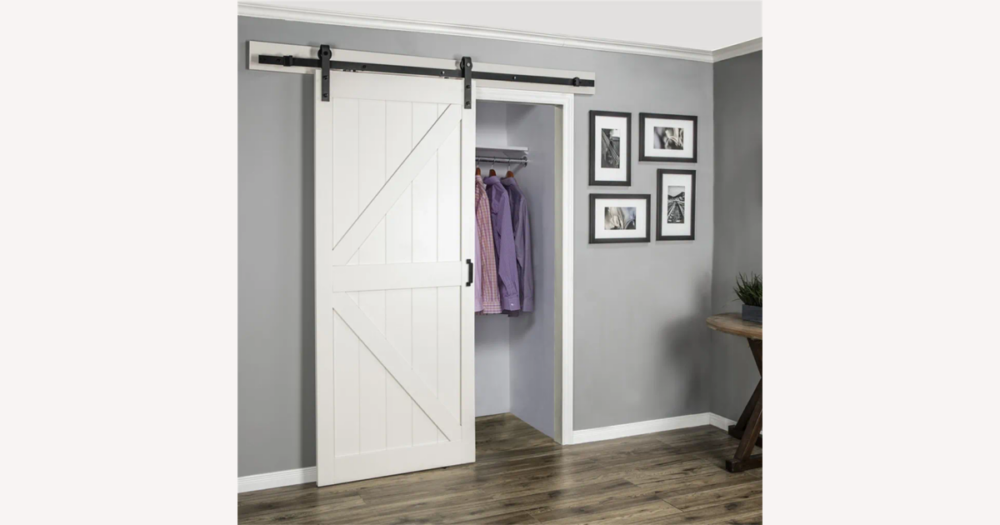
A second category is bookshelf-style door panels that slide on tracks, often in a barn-door-like configuration. These usually come as a panel plus a visible or semi-concealed track system. You still need to mount the track securely, align the rollers, and handle finishing details such as trim, stops, and any seals around the opening.
The third category is hardware-only kits: track sections, rollers, brackets, hinges, latches, and similar components designed to work with a bookcase or door you provide yourself. Here you or a local carpenter are responsible for designing and building the bookcase, choosing appropriate materials, and making sure the structure, fasteners, and surrounding wall can safely carry the moving load.
In terms of workload, complete units reduce design ambiguity but are large, heavy, and often best installed with careful structural planning or professional help. Hardware-only kits demand the most precision: accurate measurements, familiarity with framing and fasteners, and comfort adapting the hardware to your own bookcase plan. Understanding which of these three patterns a DHgate listing belongs to makes later specification and compatibility checks much more concrete.
Key specifications to check in sliding bookcase listings
- Opening and panel dimensions: Confirm doorway width and height, the finished opening size, and the planned panel width and height. Check panel thickness and overall depth, including shelf depth if the bookcase will hold items, so you can see whether the moving unit will clear trim, adjacent furniture, and the opposite wall.
- Track length and type: Look for stated track length and whether the seller indicates that tracks can be cut, joined, or extended. Note the track type—top-hung, bottom-guided, or barn-door-style with an exposed rail—and make sure it suits how you intend the door to move and the structural support you actually have.
- Weight capacity and load limits: Require a stated weight capacity for the door or bookcase as a whole and, ideally, for the shelves or storage load. These limits are central to safety and everyday usability; a hidden bookcase loaded with books or decor can be very heavy, and the hardware must be rated to carry that moving weight.
- Mounting style and structural requirements: Check whether the system is designed for wall-mounted, ceiling-mounted, floor-guided, or jamb-mounted installation. Listings should spell out what kind of structure is required—framing, anchors, or reinforcements—and you should only choose hardware that matches the wall, ceiling, or floor construction in your space.
- Required clearances and movement space: Look for notes about side clearance along the wall, overhead clearance above the track, and floor levelness at the opening. A sliding or pivoting bookcase needs enough room to travel without binding; uneven floors, low ceilings, or nearby obstacles can make an otherwise compatible set of dimensions unusable.
- Included components vs. items you must source: Expect a clear inventory of what the kit actually includes—track sections, rollers, brackets, hinges, handles, latches, stops, guides, and fasteners—versus what you must provide yourself, such as the bookcase body, specialized anchors, or trim pieces. Treat any ambiguity here as a sign that you may need extra parts or professional help.
- Clarity as a selection filter: For anything beyond a very light, purely decorative sliding shelf, treat listings that lack precise dimensions, weight limits, mounting details, or component lists as ones to skip. On DHgate, it’s safer to focus on hardware and units whose specifications are detailed enough to compare directly with your own measurements and structural conditions.
Materials and hardware quality: what to look for
For the bookcase itself, DHgate listings often mention broad material categories such as solid wood, MDF, particleboard, veneered panels, or paint-ready finishes. Solid wood and well-built veneered panels tend to be stronger and heavier, which can feel more substantial but also demand hardware with higher weight capacity and a structure that can carry the load. MDF and particleboard are typically lighter and easier to finish but may be less tolerant of heavy loads or rough handling. None of these labels guarantee performance, but they do signal how the door will look, how much it might weigh, and how carefully you’ll need to treat it.
Hardware descriptions usually reference metals and finishes like steel, aluminum, iron, possible stainless variants, powder-coated surfaces, or plated finishes. Steel or stainless hardware with a quality coating is often better at resisting corrosion and can support heavier use, while thinner or more decorative hardware may suit only light loads. Smooth, well-machined rollers and guides tend to run more quietly and consistently than simple stamped parts, which can feel rough or noisy when the bookcase moves.
For a frequently used, load-bearing sliding bookcase—especially one full of books or equipment—I would gravitate toward heavier-duty hardware, solid or robust panel materials, and listings that describe the metal type and finish in concrete terms. A lighter, more decorative installation that moves only occasionally can tolerate simpler materials and hardware, as long as the overall weight stays modest.
DHgate descriptions may rely on non-technical phrases such as “premium material” or “high-quality hardware.” When you care about long-term reliability, treat those generic labels as insufficient. Favor listings that clearly state what the structural components, tracks, and rollers are made from and how they’re finished, and be skeptical when important parts are described only vaguely. Clear material and hardware information makes it much easier to judge whether a sliding bookcase system is appropriate for your space and expected level of use.
Complete sliding bookcase vs hardware kit: which path suits you?
Choosing between a complete sliding bookcase unit and a hardware-only kit on DHgate mostly comes down to how much design and building work you want to take on. A full sliding bookcase or bookshelf door bundles the structure and core hardware, so you are not starting from a blank sketch. Your main jobs are to verify that the stated doorway size, panel width and height, thickness, and mounting requirements match your opening, and to plan how you will safely install or hire installation for a large, heavy piece that needs to move smoothly and stay anchored.
Hardware-only kits work differently: the listing usually supplies tracks, rollers, brackets, and guides, while you or a local professional design and build the bookcase or door leaf to those specifications. That means more precise measuring and some basic engineering judgment about weight and structure. You have to make sure the hardware’s rated capacity matches the estimated weight of a filled bookcase, that the mounting style is compatible with your wall or ceiling construction, and that the travel distance and clearances work with your layout. In practice, full units shift more burden to handling and anchoring a single large object, while hardware kits demand ongoing carpentry or woodworking effort to create something that truly fits the hardware.
If you have limited DIY experience or are uncomfortable interpreting sparse technical details, leaning toward well-documented complete units can make sense, provided the listing spells out dimensions, weight capacity, and installation requirements in concrete terms. Confident DIY buyers or those working with local carpenters often prefer flexible hardware kits, because they can tailor the bookcase to their space, but that only works when the kit’s specs are equally clear. I care most about precise specifications and material information; whether it’s a full unit or a kit, I would skip any listing that leaves key details like track type, weight capacity, or mounting requirements ambiguous unless the project is purely decorative and low-risk.
How to measure your space and match it to a DHgate listing
- Measure the doorway or wall opening width and height carefully, and note wall thickness at the opening so you can compare it to the bookcase or door thickness in DHgate listings.
- Measure the available wall space on the side where the bookcase or door will slide, including any space behind adjacent furniture, to see how far a sliding panel can travel without hitting an obstacle.
- Check ceiling height around the opening and decide whether the track would mount to the wall above the opening or to the ceiling; measure those mounting areas so you know how much room you have for brackets and hardware.
- Assess floor levelness with a simple level or by observing gaps; identify baseboards, thresholds, rugs, or other obstacles that could interfere with smooth movement or floor guides, and note their height.
- Identify the wall and framing materials—such as wood studs behind drywall, masonry, or another structure—so you can judge whether they can carry the combined weight of the hardware and a filled bookcase, and what kind of anchors or fasteners they will require.
- Estimate the total weight of the bookcase or bookshelf door when loaded, including shelves, books, decor, or equipment, so you can compare that estimate to any weight-capacity figures shown in DHgate hardware or unit listings.
Once you have measurements and notes, start matching them directly to DHgate listing specifications. Compare your opening width and height to the recommended door or panel size, accounting for any clearance the listing requires at the top, bottom, and sides so the bookcase can move without scraping trim or flooring. Check that track length covers the travel distance you measured and that any plan to cut or extend tracks aligns with what the seller says is acceptable. Look closely at the mounting style—wall-mounted, ceiling-mounted, or floor-guided—and make sure it is compatible with the wall and ceiling structure you identified, including the location of studs or other solid anchor points.
Cross-check the listing’s stated clearances around the opening against the baseboards, thresholds, and nearby fixtures you observed, so you can see whether the bookcase will clear them when sliding. Then compare your estimated loaded weight to the listing’s weight capacity or “maximum load” figures; for a frequently used, heavy bookcase, that number should comfortably exceed your estimate rather than just match it. If any critical detail—panel dimensions, track length, weight capacity, mounting requirements, or clearance guidance—remains missing or vague, treat that as an unresolved risk. I would either ask the seller specific questions until the specs are clear or move on to a different listing, especially when the installation will carry substantial weight or be used every day.
A short embedded video can make the measuring process easier to visualize: watching someone measure a door opening, check wall space to the side, and account for ceiling height and floor levelness helps you see how close you need to be when recording your own dimensions for a sliding bookcase project.
Red flags and missing information to treat as deal-breakers
- Missing or incomplete core specs: the listing does not state weight capacity for the door or shelves, leaves out track length or panel size, or never explains the mounting style or required clearances around the opening.
- Vague structural materials: load‑bearing parts such as the bookcase frame, track, rollers, and brackets are described only as “high‑quality material” or similar marketing phrases, with no clear indication of wood type, metal type, thickness, or finish.
- Minimal or unclear installation guidance: complex hardware is shown in photos but the description offers little more than “easy to install,” with no step sequence, tools, or structural requirements for the wall, ceiling, and floor.
- Visual and textual inconsistencies: photos that don’t match the written description (for example, different track styles, door thicknesses, or hardware counts) or images that show components not mentioned as included in the package.
- Review and feedback problems: buyer comments mentioning poor fit, missing components, hardware bending or failing, or specs that differ from what the description promises, especially when these issues recur across multiple reviews.
- Treat uncertainty as a risk: for any sliding bookcase that will carry real weight and be used regularly, significant gaps or contradictions in specs, materials, or installation details should be considered unresolved risk. Use DHgate’s messaging tools or listing Q&A to ask precise questions, and walk away if the seller cannot give clear, consistent answers; only accept more ambiguity for light, decorative setups where loads and stakes are much lower.
Checking DHgate sellers and listings for reliability
Evaluating DHgate sellers is just as important as reading the listing itself when you are buying specialized hardware or a sliding bookcase. Start by checking the seller’s overall rating, how many transactions they have completed, and the tone of detailed buyer feedback. A long history of orders with consistently positive, specific comments about product quality and communication is a better signal than a high score based on only a few reviews.
Look at the broader catalog to see whether the seller regularly offers similar hardware or home‑improvement products, and whether their descriptions are technically coherent across listings. Listings that consistently spell out dimensions, weight limits, materials, and installation requirements suggest a seller who understands their products; a mix of detailed and very vague listings is a sign to slow down and read more carefully.
Use listing Q&A or direct messaging on DHgate to ask technical questions and gauge responsiveness. Ask about doorway size compatibility, track type and mounting, weight capacity, and included components, and pay attention to how quickly and clearly the seller answers. Detailed, consistent replies that match the written description are reassuring; evasive, very short, or contradictory responses are not.
Remember that DHgate is a marketplace and payment intermediary, not the manufacturer of the sliding bookcase or hardware kit. You are relying on individual sellers for product quality, packaging, and after‑sale communication, with DHgate providing the platform and transaction framework.
For mechanically complex or load‑bearing setups, I would treat a combination of strong seller reputation and thorough listing information as essential. I would rather choose a slightly more expensive, well‑documented option from a seller with solid feedback than gamble on a cheaper listing with vague specs, limited reviews, or slow, unclear answers—especially when the hardware will be supporting a heavy, frequently used bookcase.
How DHgate shipping, disputes, and refunds factor into your decision
When you buy a sliding bookcase or hardware kit on DHgate, you are using cross‑border shipping arranged by individual sellers. Large or heavy items can mean longer delivery timelines, higher shipping costs, and more complicated handling, so it’s important to read the estimated delivery window, any size or weight notes, and packaging descriptions carefully before you commit.
Responsibility for damage or loss in transit is shaped by DHgate’s current buyer protection policies and the seller’s own terms. Those rules can change, and they are written on DHgate rather than in this guide, so you should always check the latest policy pages and the specific listing’s conditions to see how problems such as non‑delivery, visible damage, or missing parts are supposed to be handled.
As a marketplace, DHgate typically provides an order record, processes your payment, and offers a dispute system when items are not received or differ significantly from the description, but it does not manufacture or ship the bookcase itself. Outcomes depend on the facts of the case, current platform rules, and seller cooperation, so you should treat the dispute process as a structured way to raise issues, not a guaranteed refund in every situation.
Sliding bookcases and hardware kits are often heavy, oversized, or semi‑custom, which makes returns and refunds more complicated. Some listings may be non‑returnable, or may require you to cover return shipping and careful repackaging. Before placing an order, review DHgate’s official help or policy pages and the seller’s return and refund conditions, and weigh the risk of shipping cost, handling difficulty, and potential dispute friction as part of your decision about whether to buy at all.
Pre-purchase checklist for sliding bookcases on DHgate
- Confirm that the listing clearly states panel and track dimensions, weight capacity, mounting style, and required clearances for the sliding bookcase or hardware kit.
- Check that materials for structural components and hardware—such as the wood or panel type for the bookcase and the metal used for tracks and rollers—are described specifically, not just in vague or generic terms.
- Match every listed dimension and capacity limit to the doorway or wall measurements, structural notes, and clearance requirements you have already recorded for your space.
- Review the seller’s ratings, feedback, and product range, and consider how clearly and promptly they answer technical questions about specs, compatibility, and installation on DHgate.
- Verify shipping costs, estimated delivery time, and any stated size or weight notes that could affect how the item is packed, moved into your building, or handled by the carrier.
- Read DHgate’s current dispute and refund information alongside the seller’s return policy so you understand how issues such as non‑delivery, damage, or not‑as‑described hardware would be handled before you pay.
FAQ: hardware-only sourcing and local installation
Is DHgate better suited for buying hardware-only kits than full sliding bookcase units?
DHgate can work for both, but it’s often more naturally used for hardware-only kits—tracks, rollers, brackets, and guides—that you or a local professional pair with a custom bookcase. Hardware kits are easier to ship and can be adapted to your space with local materials, as long as someone can interpret the specs and install them correctly. Full sliding bookcase units can simplify design because the structure and core hardware arrive together, but they introduce more risk around bulky cross-border shipping, handling damage, and precise fit with your opening and surrounding walls. In either case, I would only consider listings that clearly state dimensions, weight capacity, track type, mounting style, required clearances, and material information, and I’d skip vague options except for light, decorative projects where the stakes are low.
How should I plan local installation when ordering sliding bookcase hardware or units from overseas on DHgate?
Treat installation as a separate project and plan it before you buy. For heavy or mechanically complex setups, consider involving a local carpenter or contractor and share the listing’s drawings, dimensions, materials, weight limits, and installation requirements with them so they can confirm whether your wall, ceiling, and floor can support the system safely. Agree on how the hardware will be anchored, how the bookcase will be built or adapted, and who is responsible if on-site conditions don’t match the listing’s assumptions. I would keep my standards strict for any load-bearing installation—no purchase without clear specs and material details—and only relax those expectations for very light, decorative uses where a failure would be inconvenient rather than genuinely risky.