
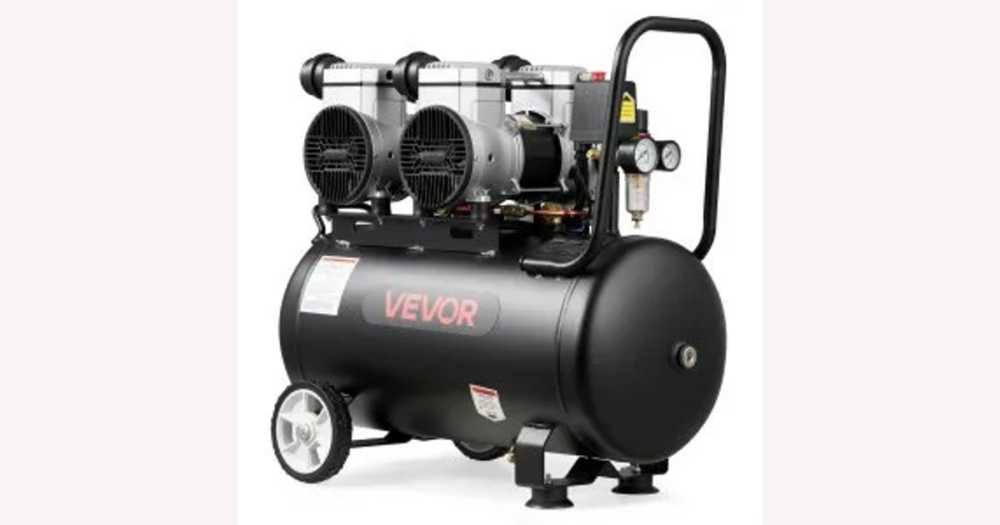
A 50‑liter air compressor on DHgate can look cheap at first glance, but the only price that matters for your budget or margin is the total landed cost: item price, shipping, taxes or import duties where applicable, platform or payment fees, and real discounts. This guide shows you how to read those pieces on DHgate, factor in country‑ and bank‑specific charges, and decide whether a specific offer is genuinely good value rather than an expensive surprise waiting at checkout or customs.
Redefine what a “good price” on DHgate really means
DHgate can be a useful place to find 50‑liter air compressors with attractive headline prices, but for this guide a “good price” never means the sticker alone. On DHgate, what really matters is the total landed cost of getting a usable compressor to you: the item price plus shipping, any taxes or import duties that may apply, platform or payment‑provider fees, and whatever discounts are genuinely applied to your order.
When I look at 50‑liter compressors on DHgate, I care more about that transparent total cost and the clarity of protections than about chasing the absolute lowest tag. A listing that looks slightly more expensive up front can be better value if the shipping terms, potential taxes, and refund conditions are clear and fair, because surprise charges or weak terms can wipe out apparent savings and hurt your margin.
If your upfront budget is extremely tight, you might decide to prioritize the lowest visible price and accept more uncertainty in shipping, fees or protection. It’s a valid choice, but it’s important to understand that you’re trading lower immediate spend for higher risk that the eventual landed cost or hassle will be higher than it first appears.
The rest of this page shifts the focus from “where can I buy a 50‑liter compressor cheapest on DHgate?” to “how do I judge whether a specific DHgate offer is truly good value for my budget or profit goals?”, using the different cost elements and terms you can see on the platform alongside charges that depend on your country and payment method.
Understand every part of the landed cost
Once you treat “good price” as total landed cost, it helps to break that cost into specific pieces you can look for on each DHgate listing and during checkout. Some components are usually shown directly on DHgate; others depend on your country, customs rules and payment method, so you have to confirm them yourself before you judge whether a deal is truly cheap.
| Cost component | What it covers | Where you usually see it | How it can change the real price |
|---|---|---|---|
| Base item price | The listed price of the 50‑liter compressor itself, before shipping, taxes or fees. | Product listing and order summary on DHgate. | A very low item price can look like a bargain, but if other costs are high it may only bring the total back up to average; a slightly higher item price with fair terms can still be the better deal. |
| Shipping options | Freight to your destination, including speed, carrier and whether customs handling or insurance is included. | Shipping section on the product page and checkout, often with multiple options. | Cheap shipping that is slow, untracked or excludes customs handling can add risk and extra local costs, while more expensive but transparent shipping can prevent delays and surprise charges. |
| Import duties and local taxes (e.g. customs, VAT) | Government charges that may apply when the compressor enters your country or region. | Not usually fully detailed on DHgate; may appear as an estimate or note, but final amounts depend on local rules. | A low online price can turn into a costly purchase if customs or VAT are higher than expected; you should treat these as context‑dependent and check with local authorities or logistics providers before deciding a price is “cheap.” |
| Platform or payment‑provider fees | Service, currency conversion, cross‑border or card‑processing fees linked to how you pay for the order. | Payment method selection and checkout; details are often in DHgate’s payment information and your bank or card terms. | Small percentage fees or poor exchange rates can quietly raise your real cost per unit, especially on higher‑value orders, changing a marginal bargain into an average deal. |
| Discounts, coupons and promotions | Price reductions from DHgate or the seller, such as coupons, store promotions or platform‑wide sales events. | Coupon and promotion banners on product pages, in the cart, and on DHgate’s promotions screens. | A strong coupon can turn a fair price into a very competitive landed cost, but limits like minimum order values, expiry dates or excluded items can mean the discount doesn’t actually apply to the compressor you’re judging. |
Know which compressor specs are worth paying for
Even on DHgate, where headline prices for 50‑liter compressors can look very sharp, most of the base price differences still come from the specs and design choices behind the machine. A 50‑liter tank is your starting point, but what you’re really paying for is how fast that tank fills, how long the compressor can run without overheating, how loud it is, and whether it’s built for casual home tasks or for a workshop that relies on it every day.
Motor power is one of the clearest price drivers. Higher horsepower or kilowatt ratings usually mean faster recovery, better support for air‑hungry tools, and more comfortable operation at higher pressures—and they usually cost more. That premium makes sense if you’re running impact wrenches, spray guns or multiple tools in a workshop, but it can be unnecessary if you only need short bursts of air for inflating, light nail guns or occasional DIY work. In that lighter‑use scenario, paying for the strongest motor on DHgate doesn’t necessarily improve your real value once you factor in landed cost.
The choice between oil‑lubricated and oil‑free designs also affects price. Oil‑lubricated units tend to be positioned for heavier or longer‑duty use and may demand a bit more budget and maintenance. Oil‑free compressors are often marketed as cleaner and lower‑maintenance and can be priced either as budget options or as specialized units for environments that care about air quality, such as dental or lab settings. When you see a noticeable premium for an oil‑free, low‑noise compressor that claims to be suitable for medical or dental use, treat that as a specialization cost: it can be worth it if you genuinely need that environment fit, but it’s overspend if the compressor will live in a garage where a standard unit would do.
Noise level and duty expectations are subtler but important price factors. Quieter compressors often use design tweaks—sound insulation, better pump geometry, different motor choices—that raise manufacturing cost and therefore price. I would rather pay modestly more for a unit that stays tolerable in a home or shared workshop than choose the absolute cheapest option and end up with complaints or limited usable hours. Similarly, some compressors are described as more suitable for frequent or continuous use; as long as this is framed as marketing rather than proven certification, it’s a hint about intended workload, not a guarantee. If your income or workflow depends on the compressor, paying a bit more for a model positioned for heavier duty can be a sensible trade‑off; if you only use it occasionally, a simpler unit may offer better value.
Cosmetic extras—paint colors, decorative gauges, bundled cheap accessories—or marketing buzzwords that don’t clearly relate to power, durability or noise tend to add cost without helping your tools run better. When I evaluate a 50‑liter compressor price on DHgate, my rule of thumb is simple: pay more where the spec directly supports your planned tools, run time or environment, and skip features that won’t change how well the compressor serves you. A reader who needs reliable daily operation or has strict noise constraints may rationally accept a higher base price because it protects against downtime and complaints; someone buying for occasional home use may sensibly choose a more basic, lower‑priced compressor and keep their landed cost—and budget—tighter. Treat bold claims about “industrial quality” or “super‑silent” performance as marketing unless you can verify them; the safest pricing decisions focus on clear specs and realistic expectations, not slogans.
Check if a low price comes from a trustworthy seller
Once you know what specs you’re willing to pay for, the next question is whether a very low price on DHgate is coming from a seller you can trust. DHgate typically shows seller information such as an overall rating score, the number of completed transactions, percentages of positive feedback, and detailed buyer reviews. Some sellers may also display badges or participate in guarantees that indicate a certain level of reliability or alignment with DHgate’s policies. These signals help you judge whether a cheap offer is more likely a genuine deal or a warning sign.
The most useful way to read this information is to look for patterns rather than fixating on a single extreme review. A long history of orders with a solid average rating and a high share of positive feedback usually suggests that buyers receive what they expected. When you read the comments, pay attention to repeated themes: several buyers mentioning delayed shipping, misdescribed products, damaged packaging, or poor communication is more significant than one isolated complaint. Likewise, multiple reviews praising accurate descriptions, on‑time delivery and responsive support say more about the seller than one very enthusiastic comment alone. One review—positive or negative—never defines the typical experience, so avoid letting a single story override the broader pattern.
It also helps to distinguish platform‑provided metrics from marketing claims written by the seller. Ratings, completed order counts, tenure on the platform and official badges are generated or verified by DHgate. Promotional phrases in the listing description—“top quality,” “no‑risk purchase,” “fastest shipping”—are self‑reported and should be treated more cautiously unless they’re backed by actual buyer feedback and clear, written policies. If the marketing language is very aggressive but the ratings, order history or reviews look thin or inconsistent, that gap is a sign to slow down and reassess whether the low price truly fits your risk tolerance.
Personally, I’m willing to pay a little more to buy from sellers whose feedback and policies look solid and consistent, because that often reduces the chance of disputes, unusable stock or long delays that quietly erode profit. A reader who prioritizes the lowest possible upfront cost may decide to accept offers from newer or more mixed‑review sellers, but it’s important to recognize that this trades price for higher uncertainty. When you judge whether a cheap 50‑liter compressor listing on DHgate is genuinely good value, weigh the headline number against these trust signals: a slightly higher item price from a reliable seller can result in a better overall outcome than the absolute lowest sticker attached to fragile terms and weak feedback.
Follow a simple sequence to evaluate any DHgate offer
- Clarify what you need the 50‑liter compressor to do: the tools you’ll run, how often you’ll use it, acceptable noise levels, and whether it must run continuously or only in short bursts. Decide your minimum specs for power, duty expectations, and noise so you can ignore listings that are clearly under‑ or over‑built for your situation.
- Compare the listing’s specs with those needs. Check tank size, motor power, duty cycle or recommended usage, noise claims, and intended setting (home, workshop, light industrial). Skip offers that fall short, and be cautious about paying for much higher capability unless you have a clear reason, such as reliability or future expansion.
- Review DHgate seller information: overall rating, number of completed transactions, share of positive feedback, and buyer comments. Look for patterns that match or contradict the trust signals described earlier, such as repeated mentions of delayed shipping or accurate descriptions, rather than focusing on a single extreme review.
- Read the shipping and policy sections carefully. Note the shipping method, estimated delivery timeframe, whether tracking is included, and any conditions around returns or refunds. Pay close attention to who pays return shipping and whether returns are accepted for damage, misdescription, or only for very narrow reasons.
- Check for DHgate or seller coupons and platform discounts, and see which ones genuinely apply to your order. Watch for conditions like minimum order values, limited‑time offers, or restrictions on certain categories so you don’t assume savings that you won’t actually receive at checkout.
- Estimate your total landed cost by adding the item price after discounts to shipping and any local taxes or import duties you already know apply. Treat customs, VAT, and brokerage charges as context‑dependent: use your usual carrier, customs information, or accounting guidance to confirm them rather than guessing exact amounts from the listing.
- Compare this estimated total with other DHgate offers that meet your specs and with rough local price benchmarks for similar compressors. Decide whether the deal fits your budget or margin targets once all costs and conditions are included, not just the headline number.
- Use this lightweight sequence as your default routine: it keeps attention on fit, seller reliability, and full landed cost instead of chasing the absolute lowest sticker price. I would rather follow these steps and skip one bargain than discover later that hidden terms or fees wiped out the apparent savings.
Avoid common cost and contract pitfalls
- Shipping that looks cheap or free at first but only covers certain regions, methods, or parts of the journey, leaving you to pay extra carrier, handling, or remote‑area fees later. Always check the detailed shipping description and any exclusions.
- No‑return or very restrictive return policies for bulky items like compressors, where only a narrow set of issues qualify for a refund. If returns are limited or not accepted at all, a low price can turn into sunk cost if the unit arrives damaged or not as described.
- Return shipping that is your responsibility. Sending a heavy compressor back internationally can cost more than the savings you thought you were getting, especially if you must use a trackable, insured method. Factor that potential cost in before treating a listing as a low‑risk bargain.
- Ignoring customs, VAT, or brokerage charges that may apply when the compressor enters your country. These charges can be significant and are usually separate from DHgate’s item and shipping prices, so they need to be considered as part of your landed cost and profit margin.
- Overlooking currency conversion and payment‑provider fees. Paying in a foreign currency through a card or wallet can add small percentage fees or unfavorable exchange rates that quietly increase your real cost per unit.
- Misreading estimated delivery times or not noticing that some dates are ranges rather than guarantees. If the compressor is needed for a project, workshop upgrade, or resale schedule, longer or uncertain shipping windows can disrupt plans and tie up capital in inventory that arrives too late.
- Treating a low sticker price as automatically “too good to miss” without checking contract language on shipping, returns, and after‑sales support. These terms directly affect your landed cost and profit, and weak or unclear policies can erase the advantage of a cheap headline price if something goes wrong.
Weigh DHgate against local sourcing
| Aspect | DHgate sourcing | Local sourcing |
|---|---|---|
| Total cost | Headline unit prices are often lower, but you must add international shipping, possible import duties or VAT, currency conversion and payment fees to get the real landed cost. | Sticker prices tend to be higher, but taxes are clearer, shipping is minimal or included, and there are fewer extra fees, so the final cost is more predictable. |
| Delivery time | Cross‑border shipping can take significantly longer, with variable transit times and customs clearance that may delay arrival. | Pickup or domestic delivery is usually faster and more reliable, which suits urgent projects or tight schedules. |
| Risk and protections | Relies on DHgate’s buyer protection, seller policies, and international logistics; problems may take longer to resolve and require evidence and platform‑mediated disputes. | Returns, exchanges, and support are typically easier, often backed by local consumer laws and face‑to‑face service, but at a higher price point. DHgate becomes attractive when its landed cost for equivalent specs is clearly lower and you’re comfortable accepting extra risk and delay; if you need the compressor quickly or have low risk tolerance, paying more locally can be the safer choice. |
Common questions about protections, refunds and mismatched orders
Does DHgate generally offer buyer protection for purchases like 50‑liter compressors?
DHgate typically provides a buyer protection framework that covers many orders, including higher‑value items such as 50‑liter compressors. In general, this means your payment is held until the order is confirmed, and you can raise a dispute if the goods are not delivered or are materially different from what was described. The exact scope of protection—what counts as “not as described,” how non‑delivery is defined, and which outcomes are available—depends on current DHgate policies and the individual seller’s terms, so you should always read the buyer protection and store policy sections carefully before placing an order.
How do disputes and refunds usually work on DHgate?
On DHgate, disputes and refunds are usually handled through a platform process rather than private messaging alone. In most cases, you need to open a dispute within a defined time window (for example, after delivery or after the order is marked completed), explain the problem, and upload supporting evidence such as photos, videos, or tracking information. The seller may respond with a proposed solution—partial refund, replacement, return for refund—and DHgate can step in if you and the seller cannot agree. Outcomes depend on the details of the case and current rules, so treat any timeline or resolution as conditional and check the latest dispute and refund guidance on DHgate before you rely on it for a high‑value compressor purchase.
Are shipping costs usually included when I get a refund?
Shipping costs are often treated differently from the item price in refund scenarios. Original shipping may or may not be refunded, and return shipping can sometimes be your responsibility, especially for bulky items like compressors that must be sent back by trackable, insured methods. Some sellers or promotions may offer more generous terms, but many do not. Because shipping on a heavy compressor can be significant, you should read both DHgate’s refund policy and the seller’s specific shipping and return conditions to see whether outbound and return freight are covered. Those details can change the real cost of resolving a problem and therefore whether an offer is truly a “good price” for your budget.
What should I do if the compressor arrives damaged, incomplete, or not as described?
If a 50‑liter compressor arrives damaged, missing parts, or materially different from the listed specs, start by documenting everything clearly: take photos of the packaging, the compressor, any damage, serial labels, and the parts or features that don’t match the description. Keep all order records, including messages, invoices, and tracking. Then contact the seller through DHgate’s messaging system and open a dispute through the platform within the allowed time window, attaching your evidence and explaining what outcome you’re seeking (replacement, repair, partial refund, or full refund). Follow DHgate’s dispute process rather than agreeing to solutions that bypass it, because the formal process is what connects you to platform‑level protection if the seller does not respond or you cannot agree on terms.
Why do buyer protection and refund rules matter for my budget and profit?
Buyer protection and refund mechanics directly affect how much risk you take on when you treat a low sticker price as a good deal. Disputes can tie up funds for weeks, delay projects that depend on the compressor, and add extra costs such as repacking or return freight. If resolving problems is slow or restrictive, a cheap headline price can become expensive in time and cash flow. When you judge whether a DHgate offer on a 50‑liter compressor is truly a “good price,” include the clarity and reliability of protection and refund terms in your calculation alongside item price, shipping, taxes and fees. A slightly higher upfront cost from a seller with clear, fair policies can protect your margin better than the absolute cheapest listing with vague or weak terms.
Do DHgate’s protection rules and timelines stay the same over time?
No. DHgate’s platform policies, buyer protection rules, and dispute timelines can change, and individual sellers may update their store‑level terms as well. Any example structure—such as needing to open a dispute within a certain number of days or specific conditions for return shipping—is only a general pattern. Before committing to a compressor purchase, check the current buyer protection, refund, and return pages on DHgate, and read the seller’s policy section on the listing. Treat these up‑to‑date terms as part of your landed‑cost calculation, because changes in eligibility or timelines can alter both your risk level and the real cost of fixing problems if they arise.