
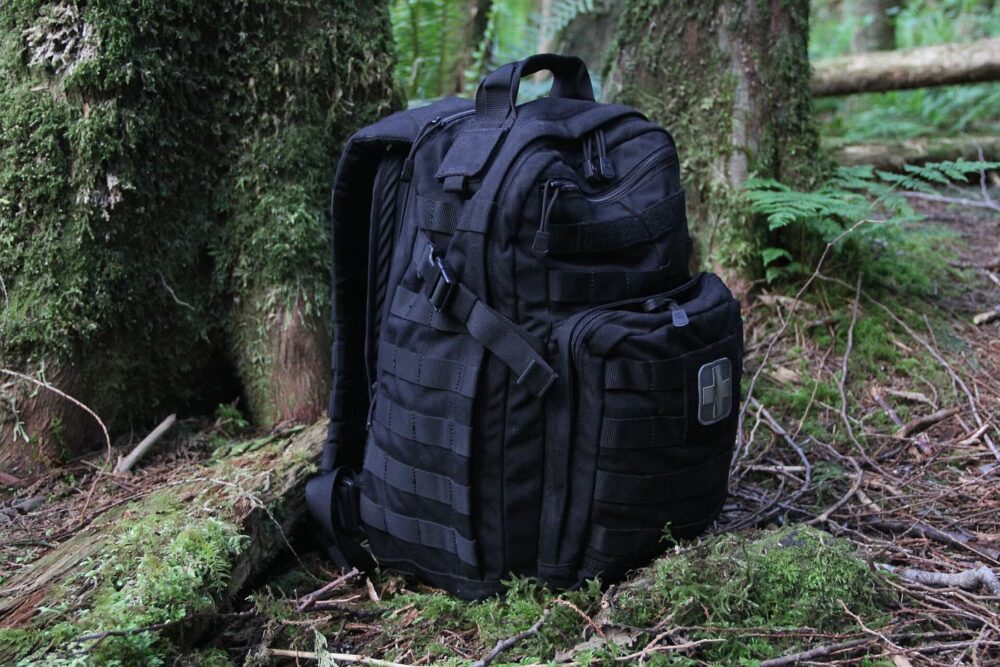
Wholesale tactical bags and backpacks are bulk-purchased, rugged packs built around durability, organization, and modular gear carry. If you’re buying for US outdoor customers or a small ecommerce shop, your real decision isn’t “which brand is best”—it’s matching specific pack types, materials, and suppliers to how your buyers actually use them, and then choosing a sourcing channel that fits your volumes and risk tolerance.
For outdoor-focused resale, three specs matter first: fabric denier and type (e.g., 500D–1050D nylon or Cordura), capacity (liters or cubic inches tied to real missions), and tactical features like MOLLE webbing and hydration compatibility. Brands highlighted by tactical gear guides—such as 5.11 RUSH72, Condor 3-Day Assault, Maxpedition Falcon-II, Mystery Ranch, and GORUCK—often use 1000D–1050D nylon, heavy stitching, and 20-55L layouts built for field use. Those details are your benchmark for wholesale spec sheets, even when you’re buying unbranded or private-label packs.
How Wholesale Tactical Backpacks Fit the Outdoor and Tactical Gear Market
Wholesale tactical packs sit at the intersection of military-inspired gear and mainstream outdoor use:
- Use cases: law enforcement and security; hunting and bushcraft; hiking and camping; everyday carry (EDC) with a tactical aesthetic; medical and responder kits.
- Form factors: assault-style backpacks (3‑day packs), EDC/daypacks (20-30L), hydration-ready hiking packs, chest rigs and sling bags, waist packs, and specialized medical/first-aid backpacks.
Wholesale-focused suppliers like VegaTactical group products into assault packs, EDC, and MOLLE backpacks targeting military and outdoor applications. Highland Tactical’s wholesale catalog promotes bulk military-style backpacks built from tear-resistant materials to handle rugged terrain and heavy loads. China-based manufacturers such as Zennison position themselves as factories offering tactical backpacks at wholesale pricing with options like custom logos and door-to-door shipping.
Across these models, the supply chain tends to look like this:
- Design & fabrication in China and other Asian manufacturing hubs for unbranded/private-label packs.
- Branding and higher-end technical design split between US and European brands (5.11, Mystery Ranch, GORUCK, Maxpedition, Condor, etc.), many of which are profiled in AET Tactical’s brand guide.
- Distribution through US wholesalers with warehousing plus direct factory export for cross-border buyers.
For wholesale buyers, this means you can source:
- Private-label tactical packs directly from Asian factories (e.g., Zennison, 367 Bags) if you want your own branding and have enough volume.
- Stocked wholesale inventory through US-based tactical wholesalers like Highland Tactical for faster replenishment and simpler logistics.
- Mixed-quality packs via open marketplaces and B2B platforms, where tight spec control and sampling become critical.
Your first step is deciding the mission types you’re supplying—3‑day field packs vs. day-hike bags vs. EDC slings—and writing those into your wholesale brief (capacity range, fabric, MOLLE coverage, zipper and hardware expectations) before you talk to any supplier.
Choosing and Vetting Tactical Bag Suppliers for Outdoor-Grade Quality
Poor wholesale tactical packs usually fail in the same places: thin fabric, weak stitching, cheap hardware, soft MOLLE webbing, and inflated capacity claims. To keep your outdoor customers happy, you need to treat quality as a checklist you can inspect, not just a promise in a product description.
1. Fabric and denier: specify your threshold
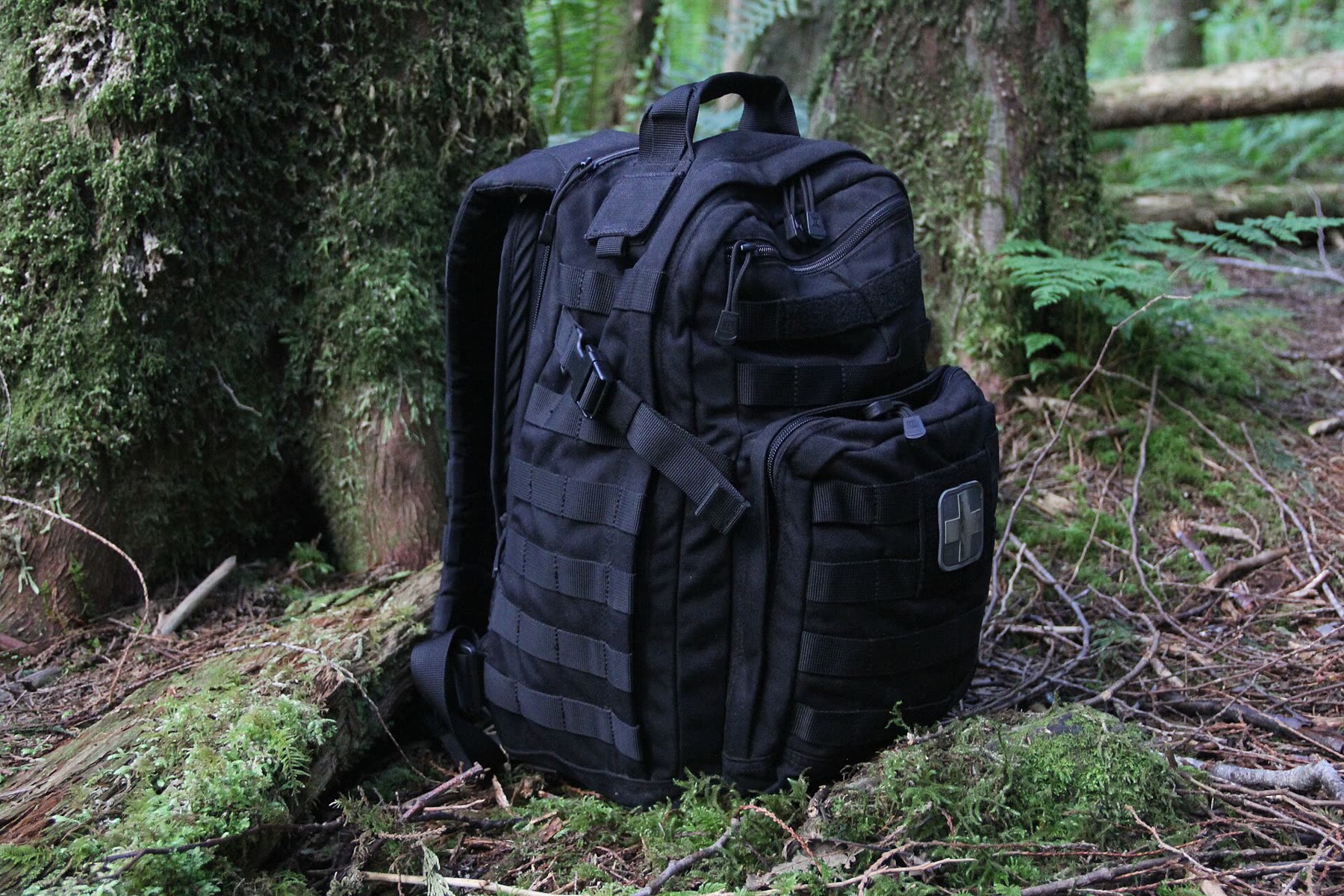
Field-tested packs from brands like 5.11 and Condor often use 1000D–1050D nylon with water-resistant coatings and abrasion resistance. When you source wholesale:
- Ask the supplier to list fabric type and denier (e.g., “1000D nylon,” “500D Cordura”) on spec sheets.
- Require coating details (PU coating, DWR) if you’re selling into wet climates.
- Treat vague terms like “high-density fabric” without a denier number as a red flag.
2. Stitching, seams, and load-bearing points
Outdoor-grade tactical packs rely on reinforcement more than on fabric alone.
On samples, check:
- Bar-tacks or box‑X stitching at strap attachment points, drag handles, and key MOLLE rows.
- Seam allowance: seams that are too narrow, with loose threads, are likely to fail under heavy loads.
- Shoulder strap attachment: gently stress straps to see if stitching pulls away from the body.
A China-based factory like Zennison markets quality control as part of its wholesale pitch; take that as an invitation to ask them to photograph stress points and close-ups of stitching before you approve bulk production.
3. MOLLE webbing and attachment strength
Tactical buyers often judge a pack by its MOLLE:
- Check webbing spacing and alignment against standard MOLLE (rows should be even and compatible with common pouches).
- Physically tug on MOLLE rows in your sample to see if stitching separates from the body.
- Confirm reinforcement where you expect heavy pouches (mag carriers, medical kits).
Wholesale catalogs like VegaTactical’s call out MOLLE compatibility as a core feature—mirror that in your spec list instead of assuming “MOLLE-style” marketing copy is enough.
4. Capacity and layout honesty
Many “40L” or “50L” tactical packs do not carry like their claimed capacity.
In your sampling and communication:
- Ask for exact dimensions (H×W×D) of the main compartment and total pack.
- Request flat-lay photos with standard gear (sleeping bag, helmet, 3L hydration, etc.) so you can judge real packing volume.
- For multi‑day packs, benchmark against known 50-55L designs like the 5.11 RUSH72 or Condor 3‑Day Assault highlighted in tactical backpack lists; your wholesale pack doesn’t need to match them exactly, but it shouldn’t be dramatically smaller.
5. Supplier vetting and sampling game plan
Instead of a generic “check reviews,” give yourself a structured process:
- Shortlist by specialization: factories visibly focused on tactical packs (Zennison, 367 Bags) and tactical wholesalers (Highland Tactical, VegaTactical) are more likely to understand field requirements than general bag exporters.
- Request 2-4 samples across your main use cases: e.g., one 3‑day pack, one daypack, one waist pack or chest rig.
- Build a simple inspection sheet for each sample: fabric type/denier, hardware feel, stitching at strap bases, MOLLE strength, zipper smoothness, and comfort loaded to a realistic weight.
- Use video calls or detailed photo sets with overseas factories to clarify any defects or adjustment needs before placing your first production order.
This is where you actually avoid the “minefields” that tactical wholesalers warn about—flimsy webbing, misleading capacity numbers, and cut corners on stitching—by spotting them early in a controlled sample run instead of in your first customer reviews.
Order Volumes, Pricing, and Sourcing Channels (Including One DHgate Use Case)
Once your specs are nailed down, the next decision is how much you’re buying and through which channel. Minimum order quantities (MOQs) and price tiers vary widely between US wholesalers, overseas factories, and open marketplaces.
Here’s a practical way to think about it:
| Scenario | Typical Channel Fit | What You Gain | What You Risk |
|---|---|---|---|
| 50-200 packs, need fast delivery | US tactical wholesalers (e.g., Highland Tactical) | Shorter transit, simpler returns, known brands or stable SKUs | Higher unit cost, limited customization |
| 200-1,000+ packs, private label | China-based manufacturers (e.g., Zennison, 367 Bags) | Logo/customization, lower unit cost, control over specs | Longer lead times, QC burden on you |
| Mixed small batches, broad range | Marketplaces and B2B platforms | Wide variety of designs and prices, flexible quantities | Highly variable quality, more vetting work |
US wholesalers such as Highland Tactical’s wholesale operation focus on stocked, tear-resistant military-style packs aimed at rugged terrain and heavy loads. You’re mostly buying established designs with less flexibility on fabric changes or pocket layouts, but you benefit from domestic warehousing and more predictable replenishment.
A bounded DHgate marketplace snapshot (2026-10-14)
Open marketplaces can be useful when you want variety or smaller lots, but they demand tighter listing-level checks. As of 2026-10-14, DHgate includes tactical backpack and bag listings marketed for hiking, camping, climbing, hunting, and everyday carry with wide price variation. For example:
- Large‑capacity waterproof tactical backpack for outdoor sports, hiking, camping, climbing, hunting, and travel, listed between $195.11–$215.11 (Large Capacity Tactical Backpacks).
- Outdoor tactical backpack for hiking, camping, trekking, hunting, with prices ranging from $42.26–$88.51 (Outdoor Tactical Backpack Bags).
- High quality large capacity tactical backpacks described as waterproof and multi‑functional hiking bags, in the $19.05–$19.95 price range (High Quality Large Capacity Tactical Backpacks).
- Multi‑functional tactical computer/backpack bags for trekking and camping around $22.95–$24.04 (Multi Functional Computer Bags Outdoor Trekking Backpack).
- Modular tactical assault backpack described as field military equipment for hiking and camping, listed around $177.77–$186.19 (Tactical Assault Backpack Modular Backpack).
Prices and availability can change, and these listings are not endorsements. If you explore this route, treat each product and seller as a separate sourcing project:
- Read the full spec listing and reconcile fabric claims, capacity, and MOLLE features with your written requirements.
- Use photos and Q&A to clarify material denier, stitching, and hardware before ordering.
- Start with small test orders and inspect samples before committing to larger volumes.
If you plan to lean heavily on DHgate or similar marketplaces, you may find it useful to also read guidance on how to find wholesale suppliers on DHgate and choose a DHgate wholesale supplier so you’re approaching individual sellers with clear checks.
Putting it together for your outdoor customers
For a US-based outdoor or tactical gear business, the decision isn’t simply “domestic vs. overseas.” It’s:
- Define who you’re outfitting: hunters with heavy loads, hikers who care about comfort, or EDC customers who want urban-friendly tactical styling.
- Lock in non‑negotiable specs: fabric type/denier, capacity range, MOLLE layout, hardware quality.
- Choose supplier type based on volume and customization needs, and then vet using real samples and stitching/fabric checks.
- Pick the channel mix: maybe domestic wholesalers for core SKUs, factory orders for private-label hero products, and carefully vetted marketplace buys for niche styles.
If your volumes are small and your tolerance for QC work is low, a reputable US wholesaler may be a better fit than a cross-border factory. If you’re building a brand around tactical packs and willing to invest in sampling and spec control, direct manufacturing—possibly supplemented by marketplace testing of niche designs—can unlock better margins and more distinctive gear.
The best wholesale tactical backpacks for outdoor activities are the ones whose specs, suppliers, and sourcing routes match your customers’ missions and your business’s appetite for complexity. Use the performance standards set by serious tactical brands as your yardstick, and then insist that any wholesale partner—whether factory, wholesaler, or marketplace seller—meets those standards on paper and in your hands before you ship your first order.