
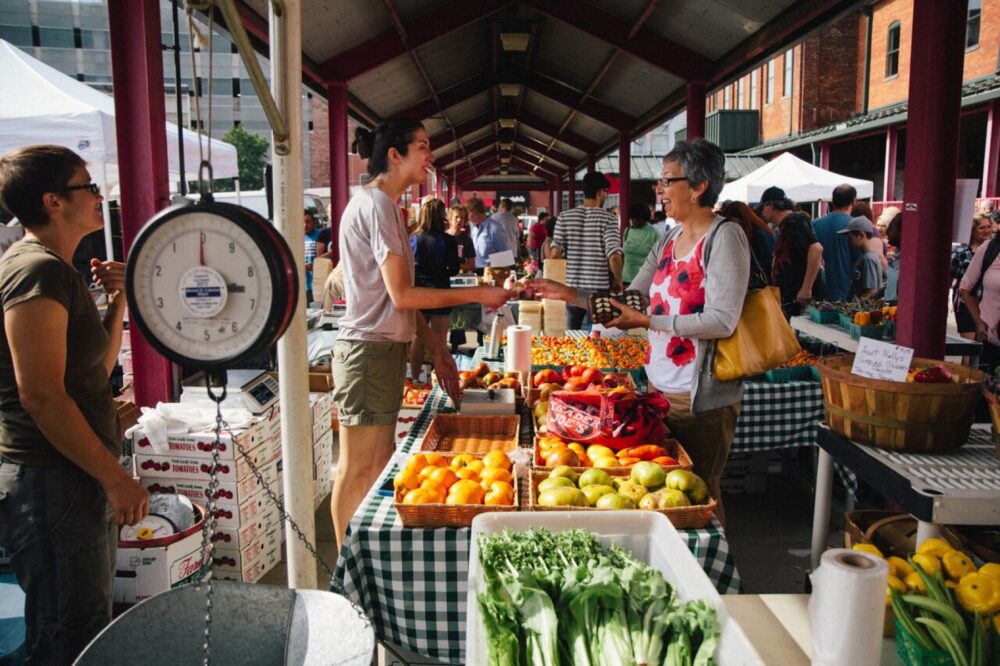
Yes, there are solid wholesale options for farmers market baskets and containers in the US. The right route depends on what you sell, how big your stall is, and whether you need branded, food-contact packaging or just generic bags and display baskets.
A small vegetable stand can often get by with case-quantity berry baskets, produce trays, and paper bags from a regional wholesaler. A CSA program or larger farm might layer in sturdier produce boxes and eco-friendly clamshells from national distributors. Cross-border marketplaces are usually only a fit for non-branded, non-regulated items like generic shopping bags or storage baskets, and require more careful vetting.
How Farmers Market Packaging and Supplies Work in Wholesale
For wholesale, farmers market packaging is a system, not a single product. Typical pieces include:
- Berry baskets and trays – pulp or plastic pints, quarts, and multi-pack trays for berries and cherry tomatoes.
- Produce clamshells – vented clear containers used for salad mixes, berries, or cut fruit.
- Eco containers – compostable or biodegradable boxes and clamshells for vendors promoting low-waste packaging.
- Bags – paper produce bags, plastic T‑shirt bags, mesh bags for onions or citrus.
- Boxes and crates – corrugated or heavy-duty produce boxes for transport and larger CSA shares.
US-focused wholesalers build assortments around these needs. For example, Saveway Supplies markets itself specifically to farmers market and CSA vendors with trays, baskets, clamshells, eco containers, plastic boxes, mesh bags, and paper produce bags grouped on one farmers-market page. That kind of category-level view makes it easier to build a complete packaging kit instead of piecing items together from generic office-supply catalogs.
National online distributors take a similar approach. WebstaurantStore’s farmers market supplies guide pairs education on layout and merchandising with categories for packaging and displays. KaTom also positions a farmers market supplies section at wholesale pricing and calls out fast shipping for display stands and produce packaging on its site.
Specialist produce-packaging vendors go deeper on boxes and farm-side needs. Globe Bag offers a variety of wholesale produce boxes in different sizes and materials, while KEVIDKO’s farmers market vendor packaging guide focuses on produce boxes and related containers tailored to farm and market use.
As a buyer, the pattern is clear: farmers-market-oriented suppliers usually organize assortments by produce type and stall format (berries, greens, CSA shares), while generic packaging vendors sort by material (paper, plastic, corrugate) without the same attention to how you actually sell.
Choosing and Vetting Packaging Suppliers for Your Stall
For baskets and containers, you’re not just choosing a product—you’re locking in repeat purchases. A misfit supplier means scrambling mid-season when you run out of the right size berry basket.
Focus your vetting on a few packaging-specific signals:
1. Farmers market focus vs generic packaging Suppliers like Saveway, Globe Bag, KEVIDKO, and WebstaurantStore explicitly mention farmers markets or farm vendors. That usually means:
- Sizes that align with common pricing (pint/quart berries, 1‑lb clamshells, half-bushel boxes).
- Case packs that make sense for a small stall instead of only pallet quantities.
- Some educational content on display and handling, not just item numbers.
Generic industrial packagers may be cheaper in bulk but can leave you with awkward sizes or volumes.
2. Assortment depth in your main product category If you sell mostly berries, a supplier with one or two basket options is a weak fit. Look for:
- Multiple basket sizes and materials (pulp vs plastic) in the same family.
- Matching trays that hold sets of baskets (3‑pack or 12‑pack berry trays like those highlighted by Saveway).
- At least one eco or premium option if you plan to differentiate on sustainability.
That depth reduces the chances you’ll need a second supplier just to cover basic variation.
3. Practical order information and support On the site or catalog, you should be able to clearly see:
- Case quantity (how many baskets, clamshells, or bags per case).
- Any minimum order requirement for shipment.
- Basic lead-time expectations (even if only framed as “ships quickly” like KaTom’s messaging).
If you have to call or email just to learn whether a product is sold by the case or pallet, that’s a time tax every season.
4. Local relationship potential Regional vendors (like Globe Bag in California or KEVIDKO’s focus on farmers markets) can sometimes:
- Offer pickup or lower freight for nearby farms.
- Respond faster on last-minute mid-season orders.
For a small stall, a reliable local or regional partner can be more valuable than chasing the absolute lowest unit price online.
5. Basic quality and compliance checks Any packaging that touches food should clearly state material type and intended use. Before committing:
- Confirm the material (pulp, PET, PP, paper, etc.) and whether the supplier describes it for produce or general use.
- Ask for samples or a small trial order to check stiffness, venting, and how it stacks in your actual display.
Avoid treating “farmers market” labeling as a guarantee of food safety or regulatory compliance; do your own checks against local health-department guidance.
Pricing, MOQs, and Which Wholesale Channel to Use
Most farmers market packaging is sold by the case, with an implicit minimum order quantity: you buy 250 berry baskets, 50 clamshells, or a bundle of produce boxes at once. For small vendors, the key decisions are how many cases to buy from whom, and whether cross-border sourcing headaches are worth any savings.
Here’s a practical comparison of the main channels:
| Channel type | Typical products for farmers markets | Order pattern & MOQ feel | Best for | Main trade-offs |
|---|---|---|---|---|
| Local/regional packaging wholesaler | Berry baskets, produce boxes, trays, bags, some displays | Case quantities, often flexible on mixed cases or small seasonal orders | Small stalls, farms that value quick communication and pickup | Prices may be higher than online bulk; assortment can be narrower. |
| National US online distributor (Saveway, WebstaurantStore, KaTom) | Full range: trays, baskets, clamshells, eco containers, display gear | Case quantities with clear product pages; shipping across the US | Vendors who want choice and reasonably fast shipping without huge MOQs | Freight costs and transit time; you’re one of many small accounts. |
| Specialist produce packager (Globe Bag, KEVIDKO) | Deeper assortment of produce boxes and farm-side packaging | Case or multi-case; may favor farm-scale orders but still accessible | CSA programs, larger farms, vendors needing specific box formats | Less focus on small display items; may push you toward bigger orders. |
| Cross-border marketplaces (e.g., Cross-border multi-seller) | Generic shopping bags, storage baskets, non-branded packaging boxes | Widely variable; listings may show per-piece pricing and require buyer checks | Vendors sourcing non-food-contact or non-regulated items cheaply | Longer lead times, customs, and limited visibility into materials and compliance. |
How DHgate fits in this mix
DHgate hosts a wide range of generic packaging and storage items—from shopping bags to foldable storage baskets and kraft paper boxes. For example, as of 2026-10-10 there are listings for reusable supermarket-style shopping bags and foldable plastic baskets under categories like Shopping Bags and Storage Baskets.
For a farmers market vendor, that sort of cross-border marketplace can make sense only for non-branded, non-regulated uses such as:
- Reusable shopping bags you loan or sell to customers.
- Storage baskets used behind the stall or as decorative display that does not directly package food for sale.
If you explore this route, treat each listing as a separate supplier relationship: examine photos and descriptions closely, check any available reviews, and start with a small order to confirm quality and fit. Do not assume food-contact safety or US regulatory compliance from general product text, and don’t rely on cross-border platforms for primary produce packaging that your health inspector will scrutinize.
For structured DHgate-specific supplier checks, you can dig further into tools like the guidance at Find wholesale suppliers on DHgate and related articles on identifying and choosing individual DHgate sellers.
Matching Your Stall Type to a Sourcing Strategy
Think about your operation size and style, then match it to a realistic sourcing mix:
- Single small stall, mostly local produce – Build your core with a farmers-market-focused US wholesaler (Saveway, KEVIDKO, Globe Bag). Buy berry baskets, trays, and produce bags by the case and add a few nicer display pieces from national distributors or retail options.
- CSA or multi-stall farm stand – Lean on specialist produce packagers for boxes and bulk containers, and use WebstaurantStore or similar for clamshells and display items. Your volume usually justifies more structured relationships and occasional pallet orders.
- Ecommerce spin-off (selling market-style boxes online) – Prioritize consistent, documented packaging from US suppliers with strong product detail pages. You’ll need repeatability and clear specs far more than rock-bottom prices.
In all three scenarios, cross-border marketplaces are a secondary, niche source for generic accessories, not the backbone of your packaging system.
If you treat baskets, trays, and containers as a long-term system and choose suppliers who understand farmers markets, you’re far less likely to be stuck mid-season with flimsy packaging or sizes that don’t fit your pricing.