
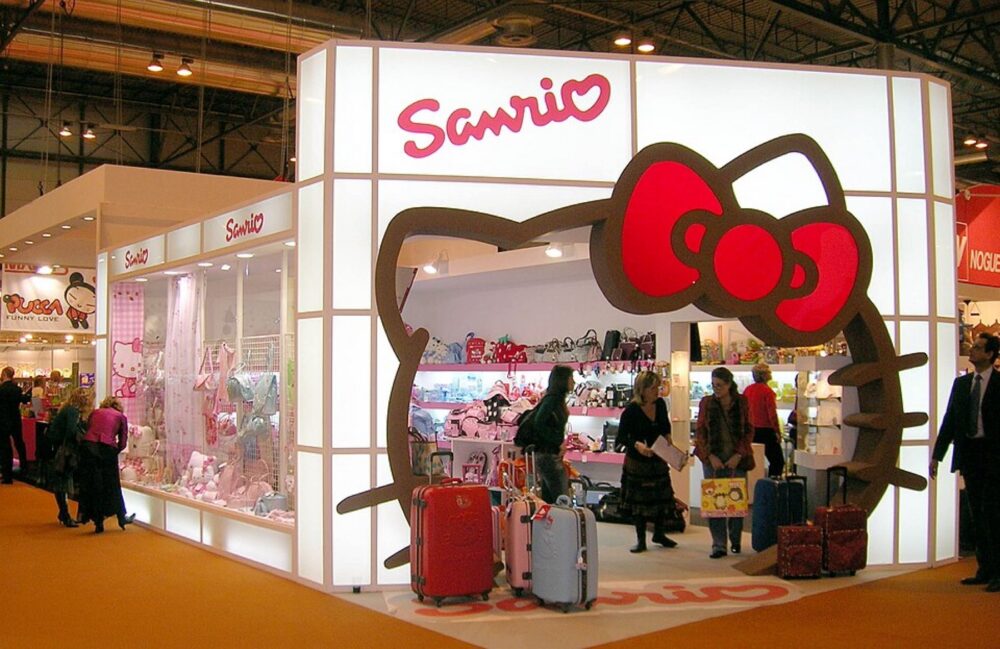
For a small US shop, the Hello Kitty/Sanrio wholesale question boils down to one decision: do you need officially licensed Sanrio characters, or will “Hello Kitty-style” kawaii items be enough? Official stock flows through Sanrio’s own business channels and named distributors; kawaii-adjacent goods come from general gift, fashion, and stationery suppliers worldwide. Once you know which bucket you’re in, you can match that to the right mix of US distributors, B2B platforms, and cross-border marketplaces.
If you plan to position your store as a destination for true Sanrio fans and collaborations, stick to official or clearly licensed wholesalers. If you just want cute, cat-and-bow aesthetics for impulse gifts or TikTok shop bundles, you have a much wider sourcing field—but also more work to avoid misleading branding.
How the Hello Kitty and Sanrio Wholesale Market Actually Works
Hello Kitty is a Sanrio property, so the “real” Hello Kitty wholesale market starts with Sanrio itself. On its business opportunities page, Sanrio lays out channels for licensing and wholesale, including a wholesale contact email for US orders and collaborations.Business Opportunities is where brand-origin deals and official partnerships are initiated.
From there, Sanrio works with distributors and wholesalers. For example, Enesco describes itself as the official wholesale distributor of Sanrio in North America, highlighting Hello Kitty ornaments and plush among its licensed lines.Enesco Sanrio licenses This is the kind of partner that feeds gift stores, specialty chains, and catalog houses with branded collectibles.
Other US-facing wholesalers promote Hello Kitty-branded merchandise across toys, apparel, and gifts. Kelli’s Gift Shop Suppliers has a dedicated Hello Kitty wholesale category for gift-shop style products like plush, accessories, and stationery, positioned for hospitals, boutiques, and small retailers.Wholesale Hello Kitty at Kelli’s B2B marketplaces such as Faire host a broad range of Hello Kitty or Sanrio-themed items—from makeup and plush to backpacks—so independent retailers can order through a single platform.Faire hello kitty collection
So in practice you’re looking at two overlapping markets:
- Officially licensed Sanrio merchandise, flowing through Sanrio’s own business contacts, official distributors like Enesco, and vetted wholesalers/B2B platforms that carry licensed lines.
- Kawaii or Hello Kitty-inspired imports, produced by general factories and trading companies, often sold through gift wholesalers, small brands on Faire, and cross-border marketplaces.
Your compliance risk and pricing power depend on which of those you choose.
Choosing and Vetting Hello Kitty and Sanrio-Themed Suppliers
Once you know whether you’re aiming for official or kawaii-adjacent, you can start vetting suppliers more precisely. For Hello Kitty specifically, that means asking concrete questions about licensing and rights—not just “are you legit?”
Here’s a focused checklist you can run through on any claimed Hello Kitty/Sanrio supplier:
- Licensing and brand claims
- Does the supplier explicitly state that items are officially licensed Sanrio products? If so, ask for documentation (license agreement excerpt, authorization letter, or a link to Sanrio/brand partner listings naming them).
- Cross‑check: Enesco’s Sanrio page is a good reference point for how an official distributor presents itself.Enesco Sanrio licenses
- Catalog fit and brand mix
- Official distributors usually carry multiple named Sanrio characters and keep branding consistent. If a wholesaler has a tiny Hello Kitty corner among generic knockoff characters, treat it as kawaii-adjacent, not official.
- On Kelli’s, the Hello Kitty wholesale section is clearly labeled and positioned alongside other licensed gift brands, which is what you want to see in a licensed-focused catalog.Wholesale Hello Kitty at Kelli’s
- Platform-level discovery vs individual brands
- On Faire, search “hello kitty” and inspect which brands are actually manufacturing the items.Faire hello kitty collection Are they presenting themselves as Sanrio partners, or just using “hello kitty” as a style keyword?
- Click through to brand profiles and look for any mention of official character licensing.
- Reliability signals you can verify
- Check contact details, business address, and years in operation via their site and external sources (state business records, Yelp/Google Business, trade show listings).
- For distributors with physical warehouses (common in US Hello Kitty wholesalers), look for minimum order info, pack sizes, and shipping policies—consistent, well‑documented terms are a good sign.
- Rights and positioning questions to ask upfront
- “Are these products manufactured under a license from Sanrio?”
- “Can you share the countries where these items are cleared for retail?”
- “Do you allow online resale on marketplaces (Amazon, Etsy, etc.), or are there restrictions?”
Written answers won’t replace a lawyer, but they give you a paper trail and force the supplier to be specific.
For stores that don’t need official characters—say a stationery shop that just wants kawaii cats, food, and pastel patterns—you can relax the licensing focus and look more at quality, consistency, and whether designs look obviously derivative of Sanrio IP. That’s still a judgment call, but it keeps you from paying a “brand” premium where none exists.
MOQ, Pricing, and Channels for Stocking Hello Kitty-Themed Goods
Hello Kitty/Sanrio wholesale behaves like other character-license categories: you pay more per unit for official branding, but you get clearer marketing hooks and fan demand. The way that price and MOQ show up depends heavily on the channel.
Typical patterns by channel
This table uses editorial judgment plus the specific examples above to sketch how small US retailers usually see Hello Kitty/Sanrio stock by route:
| Channel type | Typical MOQ feel (small retailer) | Pricing & product mix (editorial) | Best fit scenarios |
|---|---|---|---|
| Official distributors (e.g., Enesco) | Case packs; often mid- to high | Higher per-unit, branded collectibles, plush, ornaments | Gift shops, fan stores needing clear official status |
| US wholesalers (e.g., Kelli’s) | Cartons but manageable for small | Mid-range pricing, mix of toys, gifts, stationery | Hospital/airport gift shops, boutiques testing licensed stock |
| B2B platforms (e.g., Faire) | Varies by brand; often low MOQs | Wide range from small makers and distributors, mixed styles | New boutiques, online shops building a curated mix |
| Cross-border marketplaces (e.g., Cross-border multi-seller) | Often flexible; can be small lots | Broad mix of kawaii/Hello Kitty-labeled imports at varied price ranges | Low-budget tests of kawaii styles, with extra authenticity checks |
Official distributors tend to expect you to buy case packs and plan seasonal assortments. For example, it’s common for licensed plush and ornament programs to come in assortments and display configurations. US wholesalers like Kelli’s are slightly more flexible, with pack quantities tailored to small gift shops but still geared toward physical shelving.
On Faire, many small brands offer relatively low MOQs for decor, accessories, and stationery, which can be useful if you’re testing a Hello Kitty or kawaii subsection without committing to full case packs. You can also mix brands in a single order, which is handy when you want both official-feeling items and more generic kawaii styles.
Where cross-border marketplaces fit (including a DHgate snapshot)
Cross-border marketplaces broaden the field with Hello Kitty/Sanrio-labeled apparel, socks, plush, and accessories from multiple sellers. As of 2026-10-06, DHgate listings included items such as:
- A “Sanrio Hello Kitty Children’s Sweatshirt” in the kid’s hoodies category, shown at a price range of about $16.21–$35.74 from one seller.DHgate sweatshirt example
- “Sanrio Hello Kitty Anime Stuffed Toys” described as plush dolls and pillows, priced roughly $14.68–$30.12.DHgate plush example
- “Designer Hello Kitty Cartoon Anime Character Sanrio Socks” in the kids socks category, with a quoted range around $3.62–$4.22 per unit.DHgate socks example
- “Sanrio Hello Kitty Shoes” marketed as cute anime women’s accessories at a listed range near $21.02–$50.36.DHgate shoes example
- Ask vendors directly about licensing and where items are sold retail.
- Compare artwork and tags against known official releases from Sanrio and distributors like Enesco.
- Start with small test orders to inspect build quality and packaging before committing.
Cross-border stock can make sense if your goal is low-cost kawaii fashion or accessories where explicit Hello Kitty branding isn’t central to your marketing story. If your brand promise leans on “real Sanrio” or you expect hardcore collectors, you’re usually better off anchoring your assortment in official channels and using platforms like Faire and US wholesalers to round out the mix.
For more detail on vetting individual marketplace sellers, you can also look at general DHgateWiki guidance such as find wholesale suppliers on DHgate and find DHgate suppliers, then apply the licensing-specific questions from this article to any Hello Kitty/Sanrio listing you evaluate.