
Rounded-corner stickers and custom labels are easy ways to upgrade your packaging and branding, but the best place to buy them in bulk depends on how many you need, how custom your design is, and how much control you want over quality. For small to mid-size U.S. ecommerce brands, you’ll usually be choosing between domestic bulk sticker printers, general online print vendors, and cross-border marketplaces that can handle large, highly customized runs.
This guide explains how rounded-corner stickers fit into the broader print supply chain, how to vet suppliers, and when each sourcing channel makes sense.
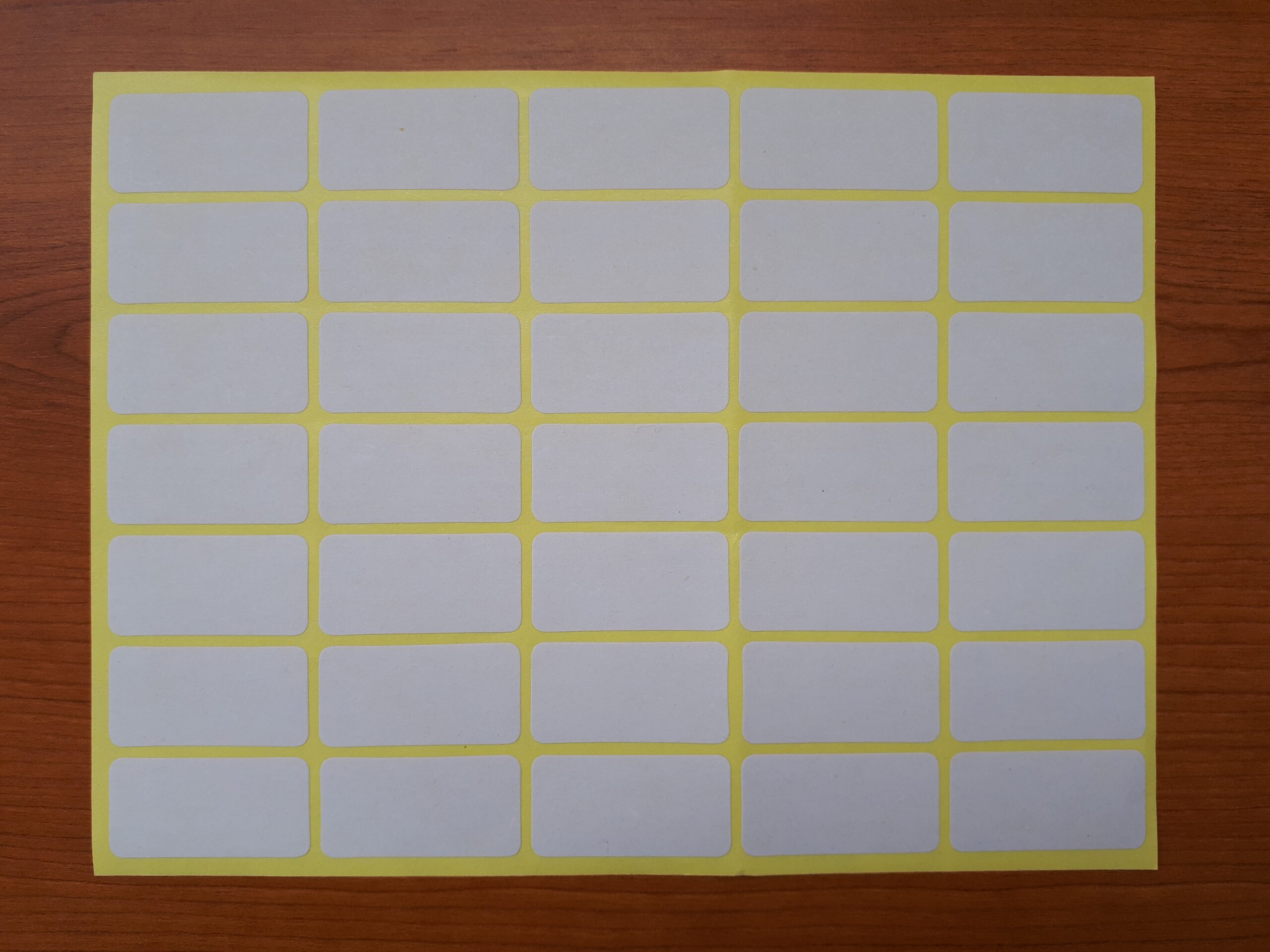
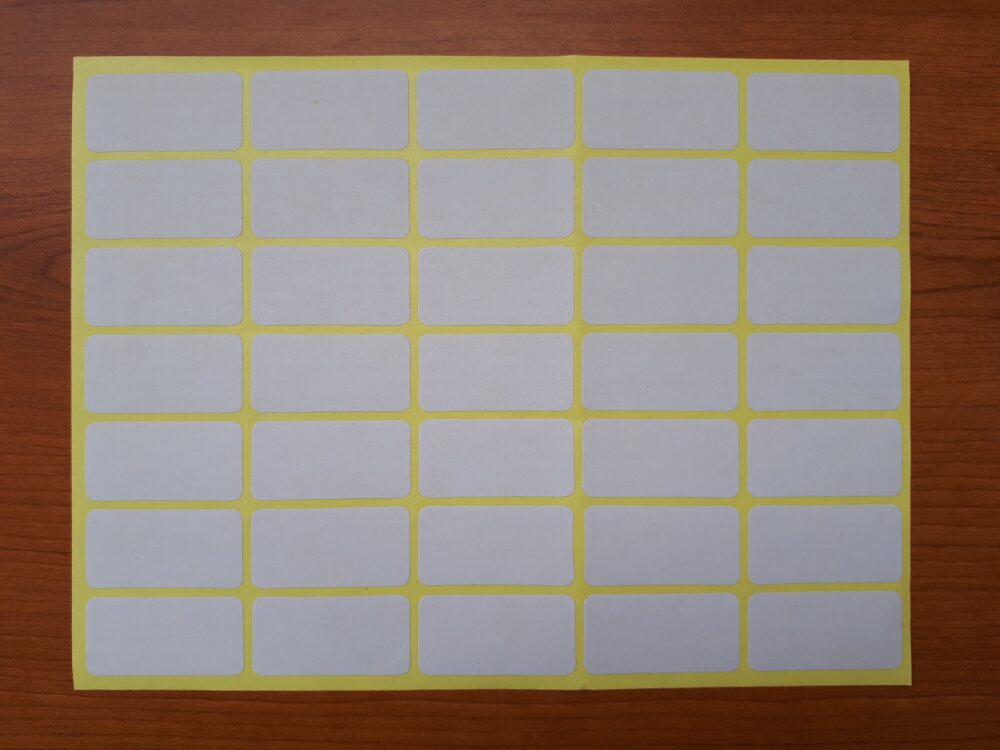
A sheet of 35 adhesive labels, each 38 x 19 mm, illustrating the format buyers should specify before ordering custom labels; Fructibus, CC0, via Wikimedia Commons. It is an editorial example, not a DHgate listing.
How Corner Stickers and Custom Labels Fit Into the Sticker Supply Chain
In a wholesale context, “corner stickers” typically means stickers or labels with rounded corners rather than sharp 90-degree edges. The soft corners give a cleaner, modern look and tend to be less prone to edge-peeling than square-cut stickers when applied on boxes, jars, or mailers over time.Source
Custom labels are a broader category: printed pieces attached to a product or package that carry branding or information, such as your logo, product name, ingredients, or care instructions.Source Rounded-corner labels are a specific style within that category, often favored for retail packaging and promotional handouts.Source
At wholesale scale, rounded-corner stickers and labels are produced by:
- General commercial printers and specialized sticker shops. Many U.S. printers offer rounded-corner formats in cut-to-size sheets, rolls, or die-cut pieces. Examples include bulk sticker services from UPrinting, PrintRunner, and Decals.com.
- Materials and adhesive suppliers. Quality depends heavily on face stock (paper vs. vinyl vs. film), adhesive type, and laminates. Rounded-corner products marketed by vendors like Stickerbeat highlight material and print choices because they directly affect durability and resistance to peeling and fading.
- Global print hubs. Many high-volume label and sticker factories operate in Asia and Eastern Europe, supplying both domestic brands and cross-border marketplaces with finished or semi-finished stock.
Common formats you’ll see when sourcing in bulk:
- Cut-to-size stickers: Individual pieces, often used as thank-you stickers or logo badges on packaging.
- Roll labels: Compatible with label applicator machines; typical for food, cosmetic, or candle jars.
- Sheets: Economical for small runs or multi-design layouts, such as assorted round and rounded-corner stickers on one sheet.
Rounded corners can be applied to both stickers (more decorative/brand-forward) and labels (often more informational). For an ecommerce brand shipping dozens or hundreds of orders a week, they’re usually used on mailers, product boxes, bottles, and promo inserts.
Choosing Reliable Sticker and Label Suppliers for Bulk Orders
For a small ecommerce business, the practical question is: which printers or suppliers can deliver consistent rounded-corner stickers at the volumes you need?
A quick way to narrow options is to align your needs with basic supplier traits:
| Buyer need or constraint | Supplier trait to prioritize |
|---|---|
| Moisture or friction exposure (jars, mailers) | Clear material and lamination options (vinyl/film, UV or protective coatings) |
| Hand-applied stickers for branding | Cut-to-size or sheet formats with standard rounded corners |
| Machine-applied product labels | Roll labels compatible with applicators and stable MOQs for larger runs |
| New design you haven’t tested yet | Proofing, paid sample runs, and willingness to iterate before a big order |
| Limited storage space or budget | Suppliers that allow modest MOQs (hundreds–low thousands) without forcing large jumps |
Focus on these specific checks:
1. Confirm the right materials and print process
Rounded-corner stickers and labels can be as flimsy or as durable as the materials allow. Vendors like Stickerbeat and BizCard explicitly differentiate paper vs. vinyl and list finishes like gloss, matte, or UV lamination.
For packaging that might encounter moisture or friction (skincare, food jars, shipping mailers):
- Ask suppliers what face stock they recommend (e.g., white vinyl vs. paper).
- Ask whether they use digital or flexographic printing and if lamination is included.
- Request material samples, not just printed proofs, so you can feel thickness and adhesive tack.
2. Match supplier capabilities to your format
Bulk printers such as UPrinting, PrintRunner, and Decals.com publicly list which formats they support: cut-to-size, rolls, sheets, custom shapes, and sometimes machine-compatible rolls.
Shortlist suppliers that:
- Offer rounded-corner options in the exact format you use (e.g., roll labels if you have a labeler; cut-to-size if you apply by hand).
- Can handle your estimated run size without pushing you into a much higher MOQ than you need.
3. Look for proofing and iteration options
Because rounded corners slightly change the look of a design compared to square stickers, proofs are key. Many online printers provide digital proofs for each order; some will print small paid test runs.
For a new brand mark or label layout, aim to:
- Order a modest test batch from one or two suppliers (e.g., 250-1,000 pieces) before committing to tens of thousands.
- Apply the test stickers on your actual packaging, run them through your fulfillment process, and note any peeling on corners or color shifts.
4. Use reviews and portfolio examples specifically for rounded-corner work
Instead of generic “good seller” signals, look for:
- Customer photos showing rounded-corner stickers on packaging.
- Mentions of corner peeling, color fading, or adhesion strength.
This makes the feedback relevant to the way you’ll use your labels, not just to flat paper prints or indoor decals.
MOQ, Pricing, Customization, and Channel Choices for Bulk Sticker Sourcing
Minimum order quantities (MOQs), pricing tiers, and customization options vary widely between domestic printers, general online vendors, and cross-border marketplaces.
What drives cost for rounded-corner stickers and labels
Across channels, your per-unit cost is influenced by:
- Quantity: Bulk pages like UPrinting’s bulk sticker printing market savings at higher quantities; per-piece cost typically drops when you move from hundreds into thousands.
- Format: Roll labels often have different pricing structures than cut-to-size or sheet stickers because they require different finishing equipment.
- Materials and finish: Vinyl or film with protective lamination tends to cost more than uncoated paper, but can better resist peeling and fading.
- Shape and die-cutting: Rounded corners may be a predefined option (standard rectangle with radius corners) or part of a fully custom die-cut. Fully custom shapes often carry setup charges.
Choosing a sourcing channel by scenario
Here’s a practical way to map your needs to channels:
| Scenario | Domestic bulk printers (UPrinting, PrintRunner, Decals.com) | General online sticker vendors (Sticker Mule–style) | Cross-border B2B marketplaces |
|---|---|---|---|
| 500-5,000 rounded-corner logo stickers for ecommerce mailers | Strong fit; bulk pricing and standard rounded-corner formats | Possible, but often optimized for smaller runs | Overkill unless exploring very low unit cost with more risk |
| 10,000+ roll labels for food/cosmetic jars with rounded corners | Strong fit if they support roll labels and your material | Limited; some don’t focus on machine-applied rolls | Strong fit if you verify a label-specialist factory |
| Highly customized shapes and mixed materials for multiple SKUs | Good if they offer custom die-cut and multiple stocks | Good for short runs, less so for large MOQs | Good; many factories list custom shapes and stocks |
| Very tight timeline, domestic shipping only | Best option; shorter transit, clear lead times | Good; often fast production | Risky; cross-border transit adds time |
This table is editorial judgment based on how these channels position themselves; always confirm current capabilities and terms on each site.
Where cross-border marketplaces, including DHgate, can fit
Cross-border B2B marketplaces list many custom sticker and label suppliers. As of 2026-10-08, DHgate shows multiple listings for custom packaging stickers and labels, such as:
- Custom circle labels stickers printed store name package seal decal (Other Decorative Stickers; price range roughly 0.13-0.43 USD per unit depending on options).
- Custom roll adhesive labels for bottle product packaging (Adhesive Stickers; marketed for bottle and certificate labeling; price range about 10.06-10.31 USD per batch).
- 1000PCS custom stickers with custom packaging labels for small business (Other Festive & Party Supplies; bundle-style listing with a wide price range).
- Custom printed color trademark roll-fed self-adhesive label stickers (Adhesive Stickers; roll-fed label format).
- Custom circular transparent vinyl adhesive labels for weddings/party stationery (Other Decorative Stickers; transparent vinyl focus).
These snapshot details are based on listings accessed on 2026-10-08; prices, availability, and seller information can change.
For a U.S. buyer, this kind of marketplace route can be useful when:
- You want to experiment with multiple factories that offer sharply different material options or pricing structures.
- You’re moving into very large runs or complex label portfolios and are willing to manage cross-border communication and transit.
Because DHgate operates as a marketplace, not a single printer, treat each listing like a separate supplier:
- Read the product description for material, format (cut, roll, sheet), and customization details.
- Check seller history (years active, feedback, other print-related products).
- Request clear digital proofs and, ideally, a paid sample run before a large order.
If you’re specifically evaluating DHgate suppliers, resources like Find wholesale suppliers on DHgate or Find DHgate suppliers can help you structure those checks.
Practical examples for a small ecommerce brand
A few realistic sourcing paths:
- New skincare line, 1,000-3,000 units per SKU: Start with a domestic printer that offers rounded-corner roll labels on moisture-resistant stock (e.g., via bulk pages from U.S. printers). Use small runs to finalize design and test adhesion on your bottles.
- Sticker-heavy brand identity for mailers and inserts: Use domestic bulk printers for rounded-corner logo stickers in cut-to-size or sheets. Once you’re stable at 10,000+ pieces per design and want to push unit costs down further, test samples from one or two vetted cross-border suppliers.
- Highly customized seasonal packaging with transparent and opaque rounded-corner labels: Mix channels: domestic printer for time-sensitive seasonal runs in smaller volumes; cross-border supplier only for evergreen designs where longer lead times and back-and-forth proofing are manageable.
If a channel doesn’t fit your volumes, timeline, or risk tolerance, it’s better to stay with a simpler domestic route than chase theoretical savings.