
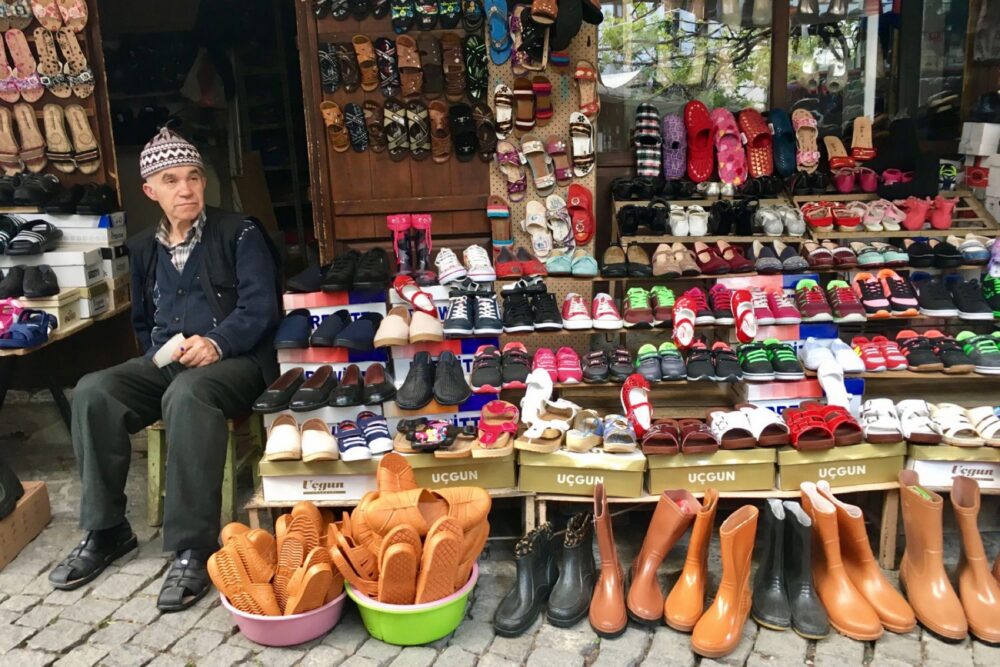
For most US retailers and small ecommerce brands, the smart way to buy shoes wholesale isn’t choosing one “perfect” supplier. You’ll usually get better margins and less risk by mixing local citywide wholesalers (for speed and simplicity) with online B2B platforms and directories (for variety, specialty categories, and private-label options), then tightening your vetting and order terms before you risk real money.
Local wholesalers will often carry the basics you need with short lead times and fewer import headaches. Footwear-specific B2B platforms and global marketplaces broaden your choices—sports shoes, fashion sneakers, boots, sandals, and OEM/private-label—but they’re more variable on quality and logistics and demand more diligence. The rest of this guide walks through how those channels fit together, how to vet suppliers, and which terms to push on so your shoe sourcing actually works for a US business.
How Citywide and B2B Shoe Suppliers Fit into the Footwear Supply Chain
Think of B2B shoes the way Picaaso Footwear frames them in its India-focused buying guide: footwear sold in bulk from manufacturers to businesses such as retailers, wholesalers, distributors, and online sellers, not to individual consumers.Picaaso B2B guide The same logic applies in the US.
From factory to your store, shoes typically move through a few different channels:
1. Citywide wholesalers and local distributors
In many US metro areas, footwear runs through local wholesale districts—industrial parks and warehouse clusters where multiple shoe importers, closeout specialists, and distributors sit in one geography. Listings for “shoes wholesale manufacturers” in City of Industry, CA on YellowPages are a concrete example of this kind of citywide cluster.
In this channel:
- Factories (often overseas) ship in bulk to an importer or distributor.
- That local wholesaler breaks down pallets into case packs or mixed assortments.
- Retailers and resellers buy in person or via simple B2B websites, usually paying domestic freight only.
You’re not choosing specific factories here; you’re choosing local inventory and trusting that wholesaler’s sourcing.
2. Brand distributors and specialist wholesalers
3. Online wholesale directories and marketplaces
Online, you see two main flavors:
- General B2B directories and marketplaces. DHgate’s blog describes WholesaleCentral as a B2B site where retailers connect with wholesale suppliers, distributors, importers, and manufacturers across categories.DHgate blog wholesale suppliers WholesaleCentral’s own shoe-focused blog says it connects retailers with vetted shoe suppliers across many categories, “vetted according to WholesaleCentral’s criteria.”WholesaleCentral shoe suppliers blog
- Global marketplaces. Platforms that list individual suppliers and shoe offers from multiple regions. Query-time snapshots of DHgate footwear listings show per-pair price ranges for casual and sports shoes with minimal visible MOQ info—illustrating marketplace-style displays of wholesale-ish offers rather than standardized B2B contracts.
This channel lets you find suppliers you’d never reach locally, but you have to do your own due diligence on each seller.
4. Footwear-specific supplier platforms and directories
Shoes are specialized enough that dedicated platforms exist:
- FindSourcing presents itself as a footwear-specific supplier directory where you can search among thousands of suppliers by style—shoes, boots, sneakers, heeled shoes, espadrilles, and more.FindSourcing
- RepSpark markets a B2B wholesale platform aimed at footwear brands and retailers, with digital catalogs and inventory tools to grow wholesale sales.RepSpark footwear brands
These tools sit higher up the chain—they’re often about finding factories or placing structured wholesale orders with established brands rather than buying mixed closeout lots.
5. Upstream factories and manufacturing hubs
Behind many of these channels are major footwear manufacturing hubs. DHgate’s blog, looking at Chinese shoes, identifies regions such as Dongguan, Jinjiang (often called a “Shoe Capital”), Wenzhou, and Chengdu as major production bases that ship globally.DHgate blog China manufacturers If you’re going factory-direct via a platform like FindSourcing or through trade shows, your suppliers are often concentrated in these hubs.
For a US buyer, “citywide” usually means the last domestic step before you; “B2B platforms” can drop you back several stages in the supply chain—from brand distributor all the way to factory. Your sourcing mix is really about choosing how far upstream you want to go for each part of your assortment.
Choosing Reliable Citywide and B2B Shoe Suppliers
Once you know the channel types, your next question is which actual suppliers deserve your first PO. Here are practical criteria, tied to what real footwear platforms and directories emphasize.
Start with specialization and fit
Footwear-specific guides like Picaaso’s B2B shoes article stress product range and specialization as core selection factors. For a US buyer, that translates to:
- Do they focus on the shoe categories you need (fashion heels vs. running shoes vs. work boots)?
- Can they supply full size runs appropriate for US customers (including wide widths or half sizes where needed)?
- Are they set up for your business type—brick-and-mortar retail, online-only, or marketplace reselling?
Platforms make this easier by how they structure information. On FindSourcing, you literally pick from styles like “Sneakers” or “Boots” before browsing suppliers, which pushes you toward specialized partners instead of generalists.FindSourcing
Verify business legitimacy, then dig into footwear details
Any B2B relationship starts with basic checks—business registration, contact info, physical address—but with shoes you also need more directed questions:
- Manufacturing vs. trading. Picaaso distinguishes manufacturers (direct production, better control, private-label options) from traders (resell others’ products).Picaaso B2B guide Ask where your shoes are actually made and whether the supplier owns or controls a factory.
- Seasonality and drops. Can they support seasonal drops (spring/summer sandals, winter boots) without blowing your lead times? Footwear-specific platforms like RepSpark highlight “at once” reordering and real-time size and color availability, hinting at the operational standard you should look for.RepSpark footwear brands
- Private-label/OEM support. If you hope to launch your own brand, check whether the supplier offers OEM or private-label services. Picaaso calls this out explicitly for B2B footwear buyers.Picaaso B2B guide
Use directories’ filters and signals—not just their listings
Directories and platforms differ in how much vetting they do.
WholesaleCentral’s shoe suppliers blog says the site connects retailers with “vetted” vendors across a wide range of categories, but the vetting is according to their internal criteria.WholesaleCentral shoe suppliers blog Treat that as one data point, not a guarantee. Still, the way the platform groups vendors by category, shows contact details, and sometimes highlights years in business can help you prioritize suppliers:
- Shortlist vendors that have been active for several seasons.
- Favor those that specialize in your shoe category and publish at least basic business information.
- Use the platform to discover suppliers, then move the conversation off-platform to get samples and formal terms.
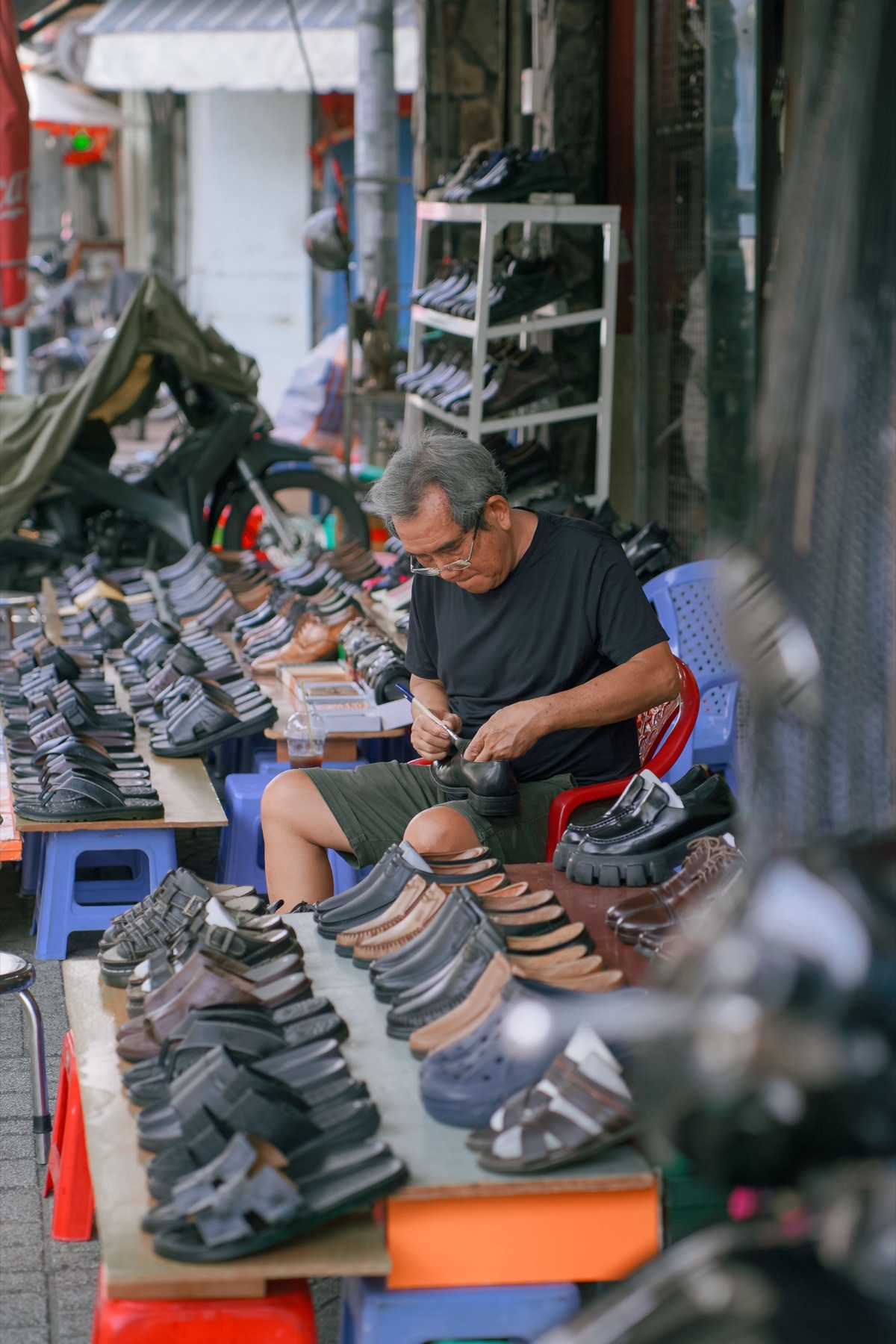
Inline vetting checklist focused on shoes
Instead of a generic checklist, focus on footwear-specific questions:
- Ask for tech packs or spec sheets for at least two models: materials, outsole type, stitching method.
- Request proof of past production: photos of previous runs, references from other retailers.
- Clarify size scales (US vs. EU), fit notes, and return rates they see from other customers.
- Confirm whether they can hold or reserve inventory by size for reorders.
Citywide wholesalers may not have polished catalogs, but you can perform the same checks during a warehouse visit: inspect stitching, glue lines, sole flex, and consistency across sizes in a single style.
Order Terms that Make or Break Shoe Sourcing Deals
Finding a supplier is only half the challenge. Shoe sourcing often fails because MOQ, pricing tiers, sampling, and lead times are fuzzy or mismatched with your business. Here’s how to structure those conversations.
Minimum order quantity (MOQ) and assortment structure
The Picaaso guide emphasizes MOQ as a key factor for B2B shoe buyers: it directly affects your cash commitment and how many styles you can test.Picaaso B2B guide For US retailers, you’ll see different MOQ patterns by channel:
- Citywide wholesalers: May allow mixed-style case packs with relatively low per-style MOQ because they already hold stock.
- Factories and OEM suppliers: Often ask for higher MOQs per style, per color, and per size range because they’re producing from scratch.
- Global marketplaces: MOQs vary heavily by listing. Query-time DHgate snapshots for casual and sports shoes show per-pair prices (e.g., $0.96–$1.00 for basic slippers, $17.59–$18.43 for running shoes, $30+ for more technical sneakers) but don’t consistently display MOQs in the headline view, so you must read each listing’s details.
With shoes, always break MOQ down by style, color, and size run. A supplier quoting “300 pairs MOQ” isn’t actually helpful unless you know how many units you can allocate to each size.
Pricing tiers and realistic margin thinking
B2B footwear guides talk about lower product cost and better profit margins as key benefits of buying direct.Picaaso B2B guide Your actual margin depends on:
- Per-pair price at your MOQ.
- Freight and duties (for imports).
- Expected markdown and clearance rates.
Using marketplace-style examples just as a price-display reference:
- A low-end slipper listing snapshot showing around $0.96–$1.00 per pair suggests very thin construction; you’ll likely target dollar-store or low-margin discount channels.
- A generic running shoe listing around $17.59–$18.43 per pair could fit a mid-tier retail price if quality holds.
- Casual sneakers in the $30–$70 range per listing (as seen in some DHgate snapshots on 2026-09-14) start to look more like branded or design-driven products where keystone markup may be tougher.
These figures are not guarantees or recommendations, but they illustrate why you should build a quick margin model for each supplier and category, not just chase the lowest unit cost.
Sampling, fit testing, and QC
Shoes have more fit and comfort risk than many other categories. Before any large order:
- Pay for samples across multiple sizes for each proposed style.
- Have staff or trusted testers wear them for at least a day to spot comfort and durability issues.
- Check for obvious QC problems: uneven stitching, misaligned soles, sloppy glue, inconsistent sizing.
For factory-direct and OEM/private-label deals, samples should be built from the actual production spec, not generic showroom models. Treat any refusal to provide production-spec samples as a red flag.
Lead times and logistics
You won’t find universal numbers across platforms, but you can anchor expectations:
- Citywide wholesalers often ship domestically in days once payment clears.
- Factory-direct orders may take weeks from deposit to shipment, plus transit and customs clearance.
- Cross-border marketplace suppliers can be anywhere in between—depending on whether they’re shipping finished stock or producing to order.
Instead of chasing promises, insist on:
- Written production and shipment timelines in your PO or contract.
- Clear Incoterms (FOB, CIF, etc.) and responsibility for freight and insurance.
- A clause for partial shipment if some sizes or colors lag.
Comparing Local Wholesalers, Factories, Directories, and Marketplaces
No single channel answers every footwear need. Here’s a compact comparison grounded in real examples, then a short scenario to show how a US retailer might combine them.
Compact channel comparison for shoes
| Channel type | Typical strengths | Common risks/limits | Best use cases for US buyers |
|---|---|---|---|
| Citywide local wholesalers | Fast access to inventory; simple domestic shipping; easy in-person QC. Examples include clusters like City of Industry, CA listings.YellowPages City of Industry | Less transparency on factories; limited styles; may be weak on private label. | Core basics, fill-in orders, testing new categories with low import risk. |
| Brand distributors / specialists | Closer to brands; focused categories (e.g., US wholesale sneaker providers like Shoenet described in DHgate’s blog).DHgate blog sneaker suppliers | Higher MOQs; tighter brand rules; assortment limited to their portfolio. | Adding branded sneakers or performance lines with stronger brand pull. |
| Footwear-specific directories | Platform says it screens suppliers before onboarding; confirm current criteria | Buyer compares seller track record, listing detail, and a sample before scaling | Buyer compares seller track record, listing detail, and a sample before scaling |
| Brand-facing wholesale platforms | Digital catalogs, inventory tools, and “at once” reordering (as RepSpark promotes).RepSpark footwear brands | Often oriented toward established brands and larger wholesale buyers. | Scaling structured wholesale relationships with known brands across regions. |
| Global marketplaces (e.g., Cross-border multi-seller) | Wide variety of casual, sports, and fashion shoe listings; visible per-pair price ranges illustrated by 2026-09-14 snapshots of multiple Cross-border multi-seller shoe products. | Quality and authenticity vary by seller; MOQs and terms are inconsistent; requires careful verification and sampling. | Opportunistic sourcing of fashion-forward or niche styles once you have strong supplier vetting processes. |
Where DHgate-style marketplaces actually fit
Marketing copy on DHgate’s blog promotes the platform as a source of branded sneakers and suggests that buying from “famous” sites like DHgate can offer variety and discounts.DHgate blog sneaker suppliers Our editorial view is more cautious:
- Snapshot data from multiple DHgate footwear listings (retrieved 2026-09-14) shows realistic wholesale-style per-pair price ranges for everything from bargain slippers around $1 to mid-range running shoes near $18 and more expensive casual sneakers upwards of $30–$70.
If you use a marketplace like DHgate for shoes, treat it as a supplier discovery tool with transaction capability, never as an authenticity guarantee. Apply the same vetting and sampling discipline you would with any new overseas factory: scrutinize product descriptions, ask for documentation, insist on samples, and size your first order as a test rather than a full-season bet.
A practical sourcing mix for a small US retailer
To make this real, imagine a small US fashion boutique with a growing online channel:
- Core basics from a citywide wholesaler. They source staple flats and simple sneakers from a local California wholesaler, visiting twice a season to check quality and lock in quick-turn inventory.
- Seasonal trend drops via a global marketplace or directory. For fashion-forward sneakers and sandals, they use a footwear directory like FindSourcing or a global marketplace to identify a few overseas suppliers. Each supplier gets a small, carefully vetted test order with clear MOQ and lead-time agreements.
- Long-term private-label with a factory found through a footwear platform. As one style proves itself, they shift production to a manufacturer offering OEM/private-label support, using tools like RepSpark-style wholesale platforms to manage reorders and inventory visibility.
That mix reflects how real citywide and B2B shoe suppliers work together: local partners hedge your risk and keep shelves stocked; upstream and online partners unlock new margin and assortment—so long as you do the slower, more disciplined work of vetting suppliers and structuring your orders.