
Chinese clothing manufacturing and wholesale can give a US small apparel business huge variety and low unit costs, but it only works if you pick the right kind of supplier, structure your orders around realistic minimums, and manage logistics and quality with discipline. China produces tens of billions of apparel units per year and supports hundreds of physical wholesale markets, so competition is intense and offers look attractive; the flip side is wide variation in quality, service, and reliability.
If you’re a US boutique or online brand, China makes sense when you either need assortment on a budget (wholesale stock) or you’re ready to commit to a repeatable private-label style at scale. It’s a poor fit if you want tiny runs of heavily customized pieces without paying a premium or dealing with longer lead times.
How Chinese Clothing Manufacturing and Wholesale Works for US Buyers
China’s apparel industry runs from huge vertically integrated manufacturers through mid-size factories and small workshops to massive wholesale markets and online platforms.
Large manufacturers like Shenzhou International and Shandong Ruyi illustrate the scale: they handle fabric development, cutting, sewing, finishing, and export for major global brands. Their existence is a clue for small buyers: the country’s supply chain can support everything from basic tees to technical sportswear, but the factory that suits you probably sits several tiers below those giants.
A few practical implications for US buyers:
- Product breadth. You can source basics (T-shirts, hoodies), fashion-forward pieces, sportswear, kids’ sets, and ethnic/Chinese-style garments from different regions and factory types.
- Price competition. DHgate’s own editorial notes that China manufactured about 29.9 billion apparel units in 2020 and recorded hundreds of physical wholesale apparel markets that year.https://www.dhgate.com/blog/?p=5639 With so many factories and wholesalers, pricing tends to be aggressive.
- Quality spread. Because competition is intense and barriers to entry are low, you’ll see everything from well-run, audited factories to informal workshops using inconsistent materials.
For a small US buyer, the question isn’t “Is China good for clothing?” It’s “Where in that ecosystem do I plug in?” The answer depends on whether you need:
- ready-made styles you can resell quickly, or
- custom or private-label styles that support a long-term brand.
Finding and Vetting Chinese Clothing Suppliers
You can find suppliers via online directories, marketplaces, trade shows, or sourcing agents, but the risk lives in who you choose and how you verify them.
Here’s a focused checklist tailored to apparel sourcing:
1. Factory type and focus Ask what they actually produce in-house. Do they specialize in knit tops, woven dresses, sportswear, kids’ clothing? Request a line sheet of current styles and fabric specs. A supplier that shows cohesive categories and consistent materials is more likely to deliver repeatable quality.
2. Scale and typical clients Many mid-sized Chinese clothing factories serve foreign brands already; some will say they work as subcontractors to larger groups like those profiled in this industry release. You’re not verifying that claim directly, but you can ask for export regions (“We ship to US/EU”), annual capacity ranges, and photos of production lines.
3. Documentation and basic compliance Request business registration details, factory address, and any third-party audits or certifications they have. For clothing, you’re looking for evidence they understand export requirements (care labels, fiber content declarations) even if you’ll still need advice from a customs broker on US-specific compliance.
4. Sampling behavior Before you talk bulk, pay attention to how they handle samples:
- Are they willing to produce a sewn sample in your fabric or a close substitute?
- Do they provide a spec sheet (measurements, fabric composition, weight) with the sample?
- How long do they take and how clearly do they respond to your feedback?
Suppliers that resist sampling or send poorly documented samples often struggle in production.
5. Communication and detail Clothing orders hinge on details: fabric GSM, color codes, stitching, trims, size grading. Ask specific questions and see if answers come back with measurements and tolerances, not just “no problem.” Quality problems often trace directly to vague early communication.
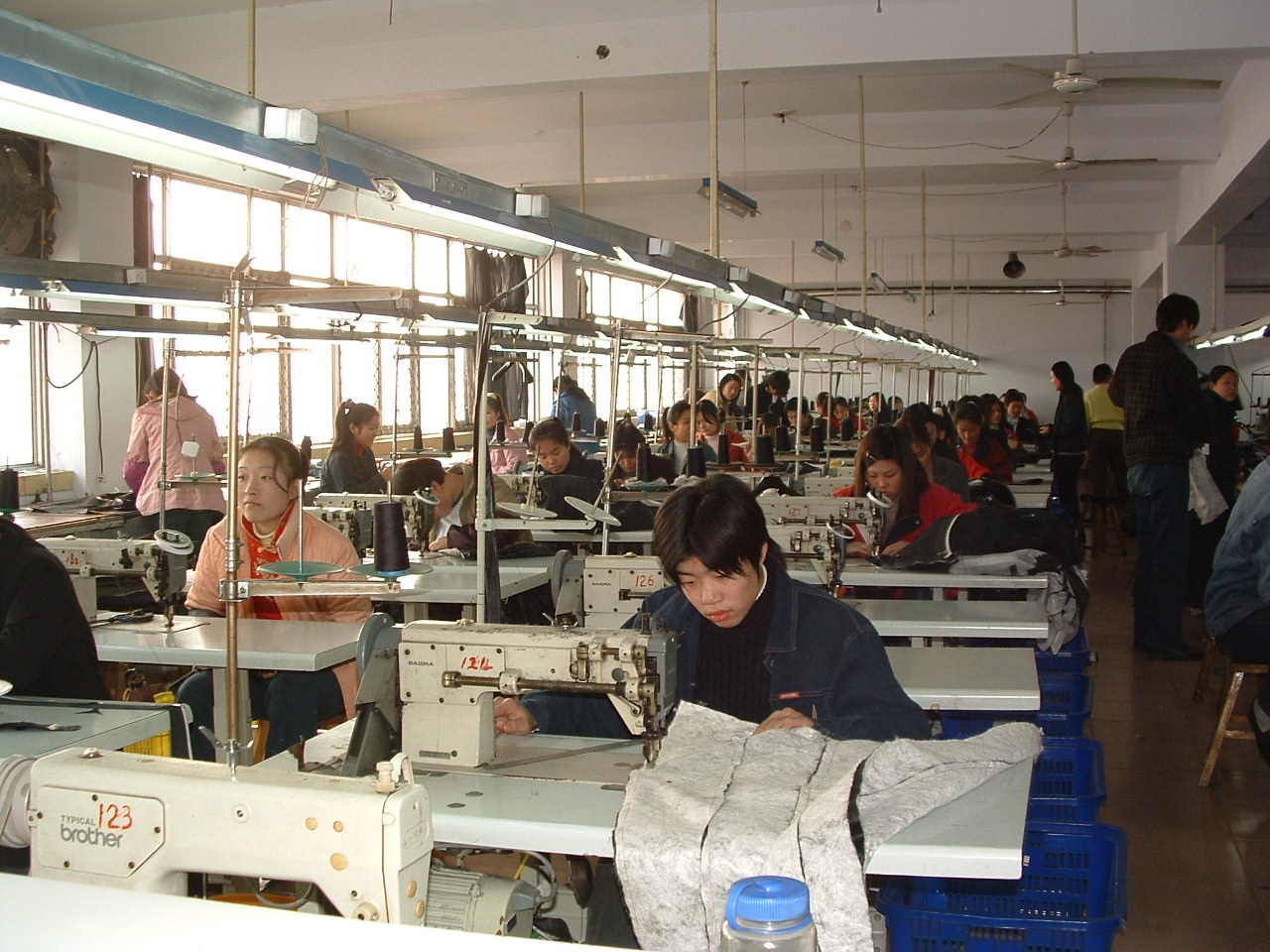
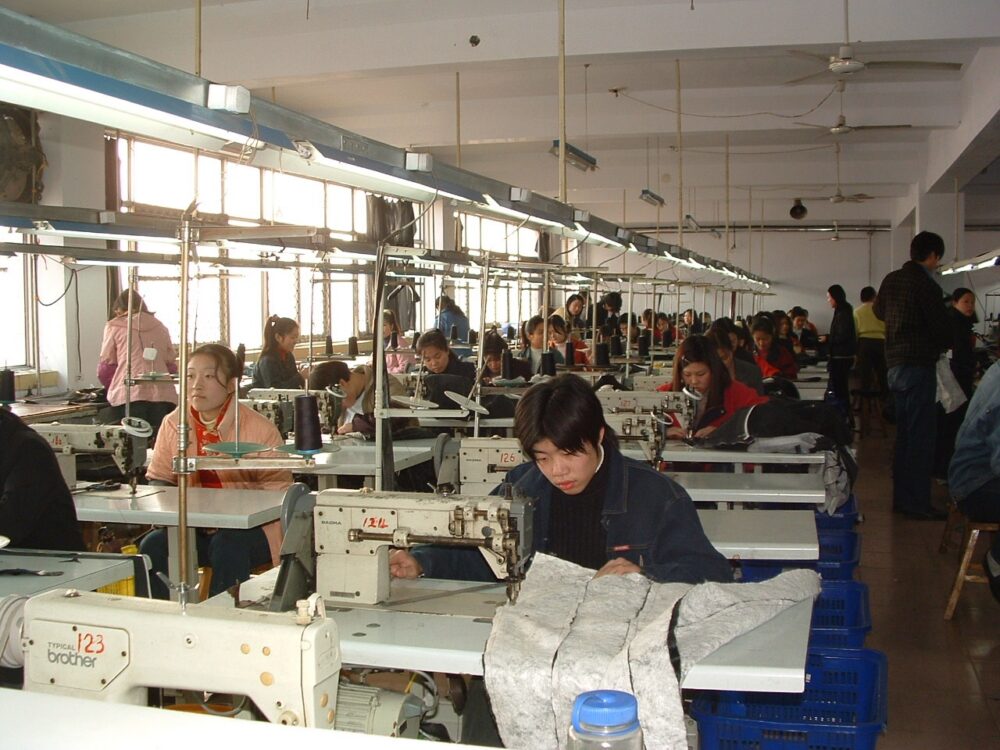
Leather garment production in Xinji, Hebei, China. Photo: YeraC, CC BY-SA 4.0.
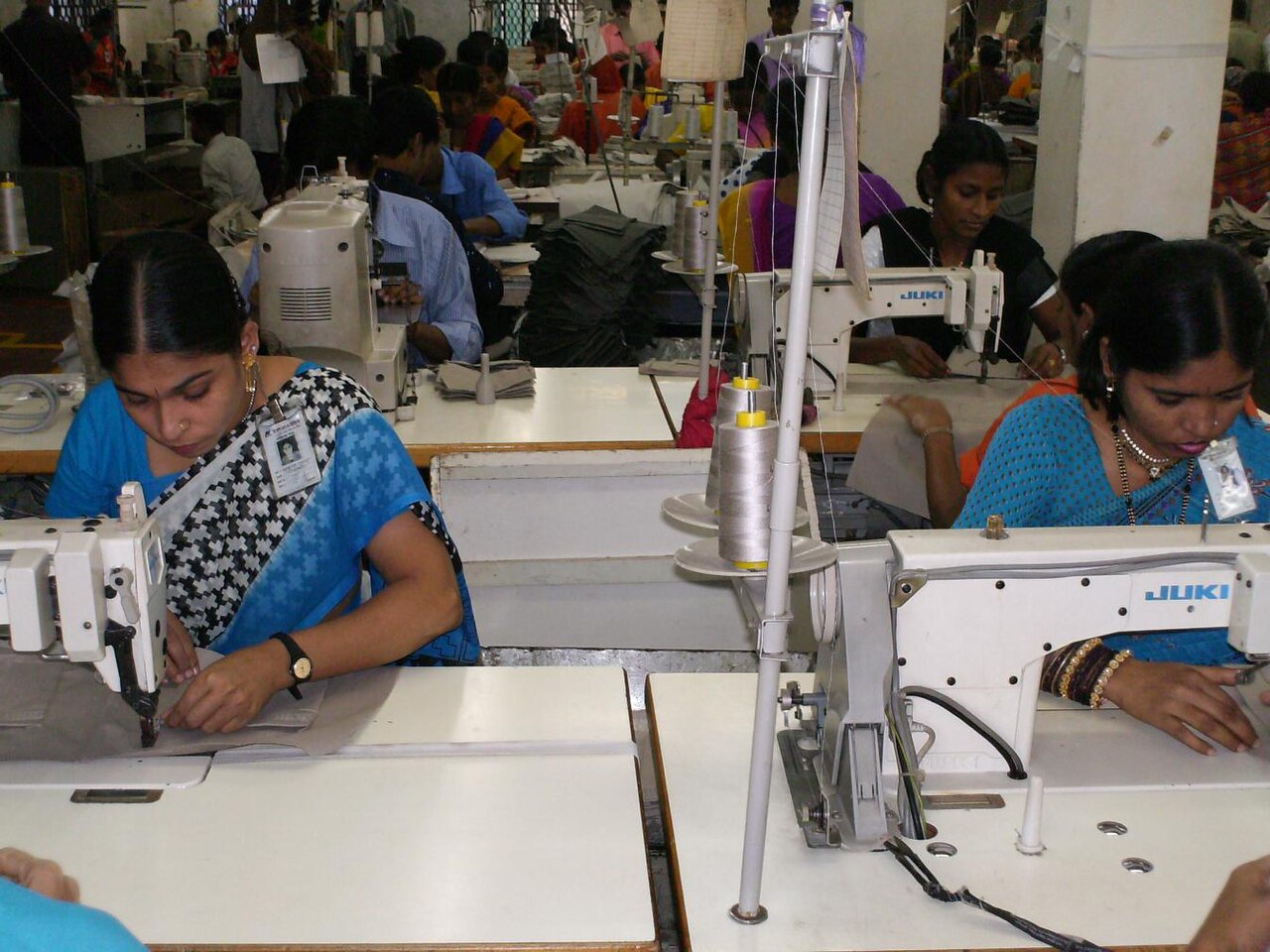
A garment-factory sewing line in Bangladesh, included only to illustrate apparel-production workflow. Photo: Iamtheboo, CC BY-SA 3.0.
6. Third-party references Supplier directories such as FactoriesQ’s clothing and textiles listings or curated manufacturer catalogs like SupplySpark’s China clothing manufacturer index can give additional context: some note categories, capacities, and rough pricing tiers that help you benchmark what your candidate is claiming.
Key red flags for apparel:
- No willingness to send a physical sample before bulk.
- Reluctance to specify fabric composition or weight.
- Very wide price quotes for the same spec (suggesting they don’t control production).
- Only generic product photos with no evidence they produced them.
Structuring Orders: MOQs, Pricing, and Logistics
Two concepts shape whether a deal is workable for a small US clothing business:
- MOQ (Minimum Order Quantity): the smallest number of units a supplier will produce for one style/color/size mix.
- Landed cost: your total cost per unit once the goods are in your US facility, including product price, shipping, customs duties/fees, and domestic delivery.
Because most Chinese factories plan production around fabric ordering and line setup, custom styles often require higher MOQs. Editorial guidance from DHgate’s blog suggests that direct relationships with clothing manufacturers typically suit larger-volume importers who already know factories that ship to their country.https://www.dhgate.com/blog/?p=6371 Smaller buyers are more often served by wholesalers or intermediaries who break bulk.
A practical way to structure an apparel order:
- Start with one core style. Instead of asking for a full collection, choose a single T-shirt, hoodie, dress, or set that matches your brand and budget.
- Negotiate an MOQ range. Many mid-tier factories will discuss a lower trial MOQ if you agree to a higher unit price. Make it clear you’re testing for repeat orders.
- Lock key specs in writing. Fabric composition, GSM, color codes, measurements, size run, packaging, and acceptable defect rate should be in the purchase order.
- Plan lead time and buffers. Add realistic buffers for fabric sourcing and production. Don’t promise pre-order customers aggressive ship dates based on optimistic sample timelines.
- Work with a logistics partner. Use a forwarder or broker to estimate duties and shipping options before you sign, so you understand landed cost rather than just FOB or EXW unit prices.
Channel Choices: Factory-Direct, Agents, and Marketplaces
Chinese clothing manufacturing and wholesale is accessible through three broad channel types. Your order size and risk tolerance should drive which you choose.
1. Direct factories
Direct contact with a clothing factory in China can deliver the best control over specs and often the lowest long-term cost per unit. DHgate’s editorial context frames this as the typical route for larger-volume importers who already know suitable factories.https://www.dhgate.com/blog/?p=6371
Factory-direct tends to fit when:
- You’re ready to place repeated orders for the same styles.
- You can meet or get close to the factory’s standard MOQs.
- You have or can hire someone to manage sampling, QC, and logistics.
It’s less suitable if you’re testing many different styles in tiny quantities or want a very flexible catalog.
2. Sourcing agents and trading companies
Agents and trading companies aggregate demand from multiple buyers and either place orders with factories or hold stock. They usually:
- Offer lower practical MOQs by breaking bulk.
- Help bridge communication and sometimes handle QC.
- Charge a margin or fee that raises unit cost but reduces operational load.
For young brands, a good agent can be a bridge toward later factory-direct relationships once volumes grow.
3. Marketplaces (including DHgate)
Chinese wholesale sites and marketplaces aggregate many manufacturers and wholesalers and create price competition. DHgate is one such Chinese ecommerce marketplace where international buyers can source clothing across categories from multiple sellers at wholesale-oriented price ranges.https://www.dhgate.com/blog/?p=272739
Because marketplace pricing and MOQs are listing-specific, you have to evaluate each offer, not the platform as a whole. A few DHgate clothing listing snapshots (retrieved 2026-10-08; prices and availability can change):
| Snapshot listing (DHgate) | Category | Price range (USD) | Reviews |
|---|---|---|---|
| Traditional Chinese clothing male coat | Men’s Jackets | 27.25-34.80 | 0 |
| Chinese-style sweatshirt for men | Men’s Hoodies & Sweatshirts | 29.42-33.68 | 0 |
| Chinese style women’s short-sleeve T-shirt 260128 | Women’s T-Shirt | 16.02-21.85 | 0 |
| Chinese style cloak coat for women | Women’s Cape | 35.60-37.29 | 0 |
| Children’s Chinese style summer clothing set | Kids’ Clothing Set | 49.95-55.09 | 0 |
This snapshot illustrates:
- Variety: men’s traditional styles, women’s streetwear, kids’ sets, outerwear.
- Wholesale-oriented pricing tiers: multi-unit price ranges often differ across quantity breaks (details in the listings themselves).
Marketplaces can be well-suited for:
- Testing niche styles or Chinese-inspired designs in small batches.
- Filling assortment gaps where you don’t want to develop a custom style.
- Benchmarking price levels before you approach factories or agents.
They are less ideal for complex private-label programs where you need deep control over materials and production processes.
For readers specifically exploring DHgate as one of several routes, our articles on finding suppliers and evaluating sellers are relevant:
How to decide your starting route
For a US small apparel business, a practical pathway is:
- Use marketplaces and curated directories to discover categories, benchmark prices, and test a handful of styles with modest risk.
- As volume grows on specific winners, shift core styles to a stable factory or agent, tightening specs and QC.
- Keep a mix: factory/private-label for your brand’s backbone, marketplace or agents for trend-driven or experimental pieces.
China can absolutely be a core clothing source, but it should be one part of a sourcing strategy built around your real order volumes, cash flow, and appetite for managing production rather than just chasing the lowest per-unit quote.