
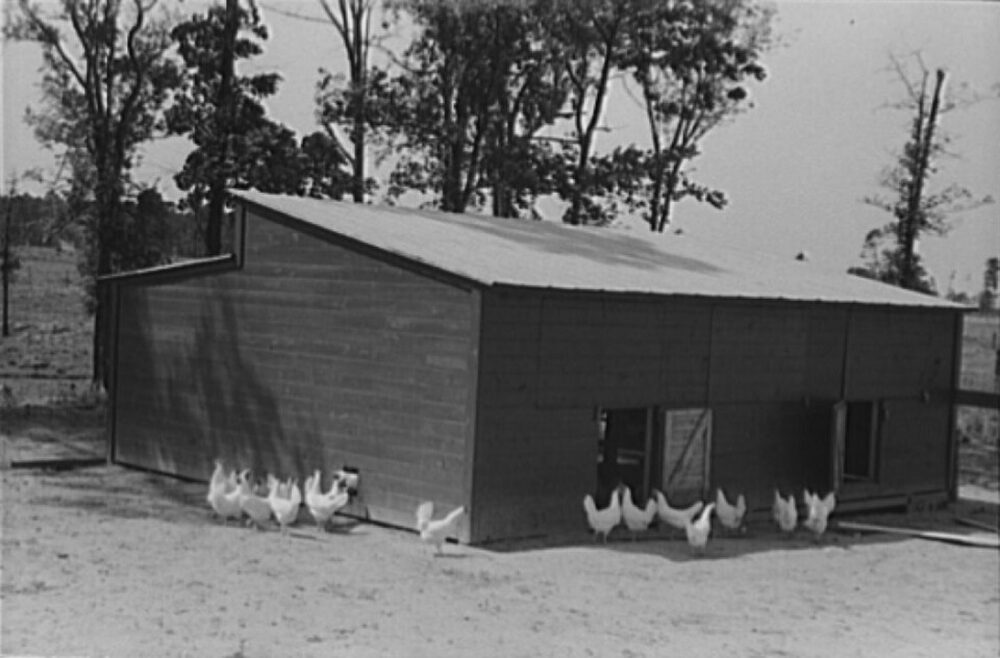
If you search for “chicken coop locations in Holly Springs and Fayetteville,” you won’t find a single dominant coop store. In practice, buyers in this part of North Carolina piece together options: local shed and building makers, poultry hatcheries that know area builders, informal listings on Craigslist and Facebook, and regional prefab suppliers that ship coops into the state. For small ecommerce or backyard operations, the smartest move is usually to source the physical coop close to home, then layer in hardware and accessories from regional or online wholesale channels.
How Coop Supply Actually Works Around Holly Springs and Fayetteville
In Fayetteville, poultry infrastructure shows up first, not coop showrooms. Directories such as YellowPages’ poultry hatcheries listing surface businesses like Fayetteville Poultry Chick Dealer & Hatchery and Poultry In Motion. These hatcheries focus on birds, but they’re often plugged into local networks of builders, feed stores, and farmers who know who’s currently building or selling coops.
Informal supply is strong. A search on Craigslist for “chicken coop” in the Fayetteville area periodically turns up used prebuilt coops, DIY hoop-style runs, and small sheds converted to poultry housing. Similar listings appear on Facebook Marketplace group pages picked up by Google, where Producer’s Pride Sentinel coops and other brand-name units trade hands near the Jack Britt High School area.
For buyers near Holly Springs, you’ll usually tap into the broader Triangle market: portable building manufacturers and regional prefab structures. A company like Stateline Builders in Elizabeth City exemplifies the kind of portable-building maker that often offers small barns, sheds, and sometimes purpose-built coops to customers across North Carolina. On a bigger footprint, Horizon Structures sells prefab animal structures, including chicken coops, and ships them regionally.
On the builder side, the Better Business Bureau keeps a category for chicken coop builders in North Carolina. That directory doesn’t center on Fayetteville or Holly Springs specifically, but it shows that coop construction in NC is usually handled by small carpentry outfits and shed builders rather than big-box chains.
Choosing Local Sellers and Builders for Coops and Poultry Gear
Since “locations” are fragmented, you’re really choosing between supplier types: hatchery referrals, informal listings, and regional prefab builders.
Hatcheries and poultry specialists
If you’re buying birds from a Fayetteville-area hatchery listed on YellowPages, ask directly who’s building coops locally right now and what they’d recommend for your flock size. Hatchery owners see which coops fail (predators, rot, poor ventilation) and which hold up, so their practical feedback on design—elevated floors, hardware cloth instead of thin mesh, enough roost space—can be more valuable than a slick brochure.
Classifieds and marketplace listings
Used and DIY coops can be budget-friendly, but quality is uneven. When you’re evaluating a Craigslist or Facebook listing:
- Bring a tape measure and confirm interior floor space (as a rough rule, most backyard keepers aim for about 3-4 sq ft per standard hen inside the coop and more in the run).
- Look closely at fasteners and wire gauge; thin, stapled-on mesh is common in cheap units and is the first failure point against raccoons and dogs.
- Ask how long the coop has been outside and what wood or metal was used; untreated softwood in humid NC summers tends to rot quickly.
These informal sellers rarely offer written warranties, so your inspection is your protection.
Regional prefab and shed builders
For new coops or multiple units, a regional builder or prefab supplier can offer more consistency. Use the BBB chicken coop builder directory as a starting filter, then:
- Check whether the builder has recent photos of completed coops in NC’s climate—look for raised floors, overhangs, and solid roofing rather than light decorative units.
- Ask about modest customization: extra ventilation windows, predator-proof latches, or reinforced floors to handle deep litter.
Prefab firms like Horizon Structures publish coop layouts and specs on their site, which helps you sanity-check whether a given model really fits 6, 10, or 15 birds comfortably.
From Single Coop to Small Fleet: Pricing, Logistics and Channel Choices
Once you move beyond one backyard coop, the question shifts from “who has a coop near me?” to “which mix of channels gives me the best value for structures and hardware?” Here’s a practical way to think about it for Holly Springs/Fayetteville buyers.
Local vs. regional vs. online: what fits where
| Scenario | Coop source | Hardware/accessories source | Why this mix works |
|---|---|---|---|
| 4-6 backyard hens in Fayetteville | Used coop via Craigslist or Facebook group | Local farm store for feeders; optional online for upgrades | Lowest upfront cost, easy pickup; you can upgrade weak doors or waterers later. |
| New small flock in Holly Springs (8-10 birds) | Regional prefab coop shipped into NC (e.g., from a structure supplier) | Mix of local feed store and online accessories | Better build quality and predator protection than many used units; accessories are easy to ship. |
| Small reseller buying 2-5 coops to flip | Shed/coops from NC builders found via BBB directory | Cross-border or wholesale marketplaces for nesting boxes, drinkers, and doors | Structures sourced close to end market; hardware bought in bulk to improve margin. |
DHgate is one of several marketplaces that can help with that hardware side for buyers who are comfortable with cross-border sourcing. A search snapshot on 2026-10-10 showed, for example:
- An automatic, light-sensitive chicken coop door listed in “Other Pet Supplies” with a price range around USD 57.67-59.16 and a small number of positive reviews.
- Multiple poultry drinking systems such as a waterline automatic drinker bottle (roughly USD 8.77-8.99) and bulk packs of automatic waterer cups (about USD 16.70-29.40 for 30 pieces), all in poultry-related categories.
- Higher-count accessories suited to small resellers, like 50-piece drinking cup kits around USD 41.05-44.99 and 8-compartment metal nesting boxes with a wide price band.
Prices and availability can change, and none of these listings are a blanket endorsement. They do illustrate how a Fayetteville or Holly Springs buyer might pair a locally built wooden coop with cross-border accessories: buy solid lumber and framing from someone who understands NC weather, then look online for bulk drinkers, cups, and doors to stretch your budget.
If you go this route, treat each listing like a separate supplier decision. Read actual buyer reviews on the product page, compare price ranges for similar items, and consider starting with a smaller order to test fit and durability before kitting out multiple coops. For broader marketplace strategy and seller checks, DHgate-specific guides on DHgateWiki—such as finding wholesale suppliers on DHgate, how to find DHgate suppliers, and choosing a DHgate wholesale supplier—can help you tighten your criteria.
For many Holly Springs and Fayetteville buyers, the end game is a hybrid: coop structures sourced within driving distance through builders and classifieds, informed by hatchery and BBB signals, and then smart use of regional or cross-border marketplaces to stock up on the small parts that turn a basic structure into a safe, efficient poultry setup.