
Quick answer: To find a specific seller on DHgate, begin with the strongest clue you have: the store name, a product you viewed, an old order, a saved listing, or a message you exchanged through DHgate. Use that clue to reach a likely product page or store page, then verify the seller by comparing the store name, product range, listing details, and any previous order information before you buy again.
Finding a seller is not the same as deciding whether to order from that seller. Search helps you locate a possible store; the product page, store details, reviews, and your own account records help you confirm that it is the right one. Do not rely on a similar store name or a single product image alone.
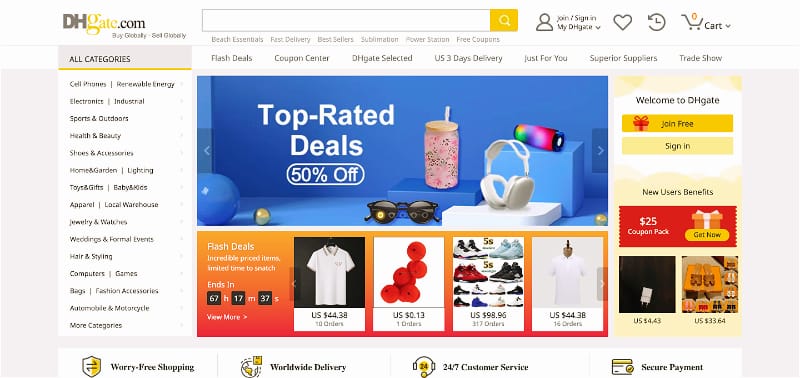
What You Need to Find a Specific DHgate Seller
You do not always need the exact store name to begin. The most useful starting point is whichever detail gives you the strongest connection to the seller you are trying to find.
| What you have | Best place to start | How to verify the seller |
|---|---|---|
| The exact or near-exact store name | Search using the name and, if needed, a relevant product keyword | Compare the store name, visible product range, and listing details with what you remember. |
| A product you viewed or bought | Search for the product using its model, material, color, size, or another distinctive detail | Open likely product pages and use the seller or store link shown on the listing. |
| An old DHgate order | Review your account order history | Open the relevant order and compare the seller information with the product and order details. |
| A previous seller message | Review your on-platform message history | Use the related conversation, product details, and order information to identify the seller. |
| A saved product link or screenshot | Open the saved link or search the words, product details, and image clues you retained | Compare the current listing and seller page with the saved details before placing a new order. |
Method 1: Search by Seller Name and Product Clue
If you know the seller name, begin with that name. If the name is common, generic, or returns many unrelated results, add a specific product clue such as the item type, material, model, color, or category.
For example, a search using only a broad store name may not be enough to identify the correct seller. Adding a product clue can help you reach a familiar listing, where you can open the seller or store information connected to that product.
- Use the most distinctive part of the seller name first.
- Add a product type, model, material, or category if results are broad.
- Open more than one likely result rather than trusting the first listing.
- Use the product page to check the seller or store information shown there.
- Compare the store page with the product range and details you remember.
Search results are a starting point. The seller page and listing details are what help you confirm that you found the intended store.
Method 2: Find the Seller Through a Product Listing
Searching by product is often the most practical method when you remember the item more clearly than the store name. Use details that make the product search specific rather than broad.
Instead of searching only for a general category, include details such as the product type, material, size, model, color, compatibility, bundle, or feature you remember. Once you find a likely listing, look for the seller or store information connected to that page.
- Search for the product using the most specific details you remember.
- Open several listings that appear similar to the product you viewed or purchased.
- Check the seller or store information shown on each likely product page.
- Open the store page and compare its product range with the seller you intended to find.
- Confirm the exact item, variant, shipping details, and price before adding it to your cart.
A familiar image alone is not enough to identify a seller. Sellers can offer similar items, and listings can change over time. Use several signals together before assuming that you found the right store.
Method 3: Use Your Order History
If you previously completed an order through DHgate, your order history may be the most reliable place to start. An old order can connect the item, selected variation, seller information, messages, and delivery record in one place.
Review the relevant order and compare the information shown there with the seller page and any current listing. This can be useful when the seller has changed products, updated a listing title, or uses a store name that is difficult to search for directly.
When checking an old order, compare:
- The seller or store name associated with the purchase
- The product title, product images, and selected variant
- The order date and order number
- Any messages connected to the order
- The current store page and current listing details
Do not assume that a previous purchase means a current listing is unchanged. Review the item details, selected option, price, and shipping method again before placing a new order.
Method 4: Check Your On-Platform Messages
If you contacted the seller before, your DHgate message history may contain the clearest link to the store or product. Look for the conversation that includes product specifications, images, shipping questions, customization details, or an order reference.
Messages can help you compare what you discussed previously with the current listing. They are especially useful when the seller name is generic or when several stores offer similar products.
Keep any important questions and replies within the platform whenever possible. A message connected to the relevant product or order gives you a clearer record than an informal discussion outside the marketplace.
How to Confirm You Found the Right Seller
Before placing another order, compare several signals. No one signal proves that a store is the seller you meant, but a consistent set of details makes the identification more reliable.
- Store name: Does it match the name, wording, or seller information you remember?
- Product range: Does the store sell the same category, style, or type of item you previously viewed?
- Listing details: Do product photos, descriptions, variants, materials, and included accessories match your earlier reference?
- Previous records: Does the store information match your old order, saved listing, or message history?
- Recent feedback: Are there recent reviews relevant to the product type and variation you are considering now?
- Seller response: Can the seller give a clear answer to a specific question about the item you want?
If important details do not match, treat the store as a possible lead rather than a confirmed seller. Continue comparing listings or use another account record to verify the connection.
What to Do When Several Stores Have Similar Names
Similar store names are not enough to identify the right seller. This is common when names use broad terms such as “official,” “factory,” “trading,” “store,” or product-category words.
When you find several similar names, compare the product range and listing details before you make a decision. Look for a combination of matching signals instead of relying on the name alone.
- Open the likely store pages in separate tabs.
- Compare the products each store currently offers.
- Review product images, variants, specifications, and recent feedback.
- Check whether the store information matches an old order or message thread.
- Ask a direct question if an important product detail remains unclear.
If you only remember part of a store name or are unsure about the spelling, see our guide to finding a DHgate seller when the spelling is unclear.
Ask One Specific Question Before You Buy
Once you believe you have found the right seller, use a short message to verify the exact product option you intend to order. Ask about a detail that matters to your purchase, such as the model, material, size, included accessory, or shipping method.
Hello, can you confirm that the [selected color / size / model] includes [specific accessory or feature]? Please also confirm the shipping method available for delivery to [destination].
A helpful reply should answer your actual question and remain consistent with the listing. If the response is vague, contradictory, or does not address an important detail, compare another seller or another listing before payment.
Check the Listing Again Before Reordering
Even if you found the same seller you used before, do not assume that the current listing is identical to an earlier order. Sellers can update prices, product variations, descriptions, shipping options, and available stock.
Before checkout, confirm:
- The exact product, size, color, model, material, and quantity
- What is included and what is excluded from the order
- The selected variation and its final price
- The shipping method, destination details, and total cost
- Any seller message that clarified a product or shipping detail
For advice on evaluating recent seller feedback before buying, read our DHgate seller reviews checklist.
Save Useful Records
Saving a few details can help you compare what you selected with what was shown and discussed before payment. Keep records connected to your DHgate account and the relevant order whenever possible.
- A screenshot or saved copy of the listing before purchase
- The selected variant, quantity, price, and shipping method
- Messages that clarify important product or delivery details
- Your order confirmation and order number
- Tracking updates and delivery information
- Photos or video of the package and item if it arrives damaged or differs from the listing
If an order issue occurs, review the current options shown for that specific order in your DHgate account promptly. Available actions, evidence requirements, and deadlines can depend on the individual order and current platform policies.
Frequently Asked Questions
Can I find a DHgate seller using only a product name?
Yes. Search using the most specific product details you remember, open likely listings, and use the seller or store information shown on the product page. Then compare the store page with the product range and details you remember.
What is the best way to find a seller I bought from before?
Check your DHgate order history first. An earlier order may connect the seller information, item details, selected option, messages, and delivery record in one place.
Should I trust a store because the name looks familiar?
No. Similar names can belong to different stores. Confirm the store through several matching details, including the product range, listing information, old order records, and seller messages.
What should I do if the current listing differs from my old order?
Treat it as a new purchase decision. Review the current product details, selected variation, price, shipping method, and seller response before ordering again.
What if I cannot confirm that I found the right seller?
Do not place an order based only on a similar name, image, or low price. Compare other stores, review your old account records, or ask a specific question through the platform before deciding.
Bottom Line
To find a specific DHgate seller, begin with your strongest clue: a store name, a product listing, an old order, a saved link, or a message history. Use search to locate possible stores, then confirm the seller by comparing the store page, product range, listing details, feedback, and your own account records.
The goal is not simply to find a familiar-looking name. It is to identify the correct seller and verify the exact product you are considering before payment. If important details do not match, pause, ask a direct question, or compare another listing.
Sources and Further Reading
- DHgate: How Do I Easily Find a Good Seller List on DHgate?
- DHgate: How to Easily Find Good Sellers on DHgate
- DHgate: How to Find the Best Vendor Sellers List on DHgate
Source note: These sources describe seller-search and marketplace guidance from DHgate’s perspective. Search features, interface labels, seller-page information, product details, and available order options can change. Always confirm the current information shown in your own account and on the relevant product or order page.