

Buying lab or scientific equipment through DHgate is possible, but you must treat every seller as unknown and every listing as unverified until you prove otherwise. For basic items like non-critical pH pens or teaching glassware, DHgate can be a low-cost experiment if you run strict checks, order samples, and keep use cases low-stakes. For anything tied to patient care, regulatory filings, or production-quality data, you should assume DHgate is the wrong channel and stick with accredited lab suppliers or OEM routes.
What follows is a practical, DHgate-specific vetting routine you can apply before you put real money—or your reputation—on the line.
What US buyers are really risking with lab gear on DHgate
The main risk is not just “getting scammed”; it’s bad data and hidden non-compliance.
If you buy a lab balance, incubator, or test kit from an unfamiliar DHgate seller and it doesn’t perform as advertised, the damage is subtle: measurements drift, calibrations don’t hold, or a reagent gives inconsistent results. That can:
- invalidate an experiment or QC run,
- waste batches of materials,
- or in regulated environments, expose your business to audit findings and liability.
These pages highlight a key trust problem: high-stakes items and low-stakes accessories can appear side by side, often with thin documentation, sparse reviews, and aggressive marketing language. You could be looking at:
- Low-risk items where failure means annoyance, not harm: basic stands, clamps, plasticware, classroom kits, protective covers.
- Medium-risk tools where inaccurate readings are inconvenient but not catastrophic for teaching or hobby use: inexpensive pH pens, handheld thermometers, simple timers.
- High-risk or regulated instruments where accuracy, traceability, and compliance are mandatory: clinical analyzers, validated balances for GMP, devices used in FDA- or ISO-regulated environments.
Your evaluation process needs to sort DHgate listings into those buckets quickly. For the last group, a conservative stance is to not use a DHgate seller as your primary channel at all.
Universal checks for any lab equipment supplier
Before you even think about platform specifics, every lab supplier—whether a US distributor, OEM, or a DHgate seller—should clear the same baseline hurdles. Industry guides for lab equipment and reagent vendors emphasize reputation, quality assurance, documentation, technical support, and value as core criteria. See, for example, general tips on dependable lab suppliers from World Precision Instruments or reagent-vendor advice from LabManager.
Here is a simple scorecard you can apply to any potential supplier:
1. Documentation and traceability
- Ask for spec sheets, user manuals, and calibration certificates (where applicable).
- For instruments, request evidence of calibration standards (for example, traceability in the US) and how often they recommend recalibration.
- For reagents or consumables, require CoAs, lot-traceability details, and storage requirements.
2. Certifications and compliance claims
- Genuine lab suppliers can usually tell you which standards their products meet (for example, certain ISO standards) and provide documentation on request.
- Treat vague claims like “ISO/CE certified” in a listing as a starting point, not proof. Ask for the certificate copy and check that the scope and dates match the product type.
3. Quality control and testing
- Reagent vendor guidance stresses verifying that the supplier has defined QC procedures and can explain them: test methods, acceptance criteria, and batch release checks.
- For instruments, ask how each unit is tested before shipping (for example, burn-in tests or calibration runs).
4. Service, warranty, and support channels
- Professional lab-supplier guides recommend evaluating vendors on warranty terms, service responsiveness, and how they handle repairs or returns.
- Clarify who actually services the product: the seller, the manufacturer, or a third party. For cross-border purchases, ask where replacement parts ship from.
5. Lead times and procurement fit
- Assess whether the supplier’s lead times, packaging, and minimum order quantities align with your lab’s consumption patterns.
- A vendor that ships cheaply but unpredictably may be fine for teaching accessories, but not for production QC.
6. Track record and transparency
- Reagent-vendor advice emphasizes the vendor’s track record and transparency. Look for consistent identity information: company name, address, and references.
- If they cannot or will not identify the actual manufacturer of a branded instrument, treat that as a major red flag.
You can turn these into a basic scorecard—say, 1 to 5 for each area—and require a minimum total before you even consider a new supplier’s offer. The same scorecard applies directly to DHgate sellers; you’ll just be pulling most signals from their listing text, uploaded documents, and off-platform conversations.
How marketplace trust tools actually help (and where they don’t)
Multi-seller marketplaces rely heavily on reputation systems instead of centralized QC. For technical lab gear, these tools are useful but incomplete.
Independent DHgate reviews describe it as a real, legal marketplace where most orders arrive, while emphasizing that seller quality varies and advising careful vetting and small test orders. Consumer safety sites also underline that simply seeing reviews isn’t enough. They suggest:
- Reading seller reviews carefully and watching for repetitive language or low-quality feedback that might suggest fake or incentivized reviews.
- Checking for clusters of complaints about the same issue (for example, “not as described,” “doesn’t work,” or “fake certification”).
Some DHgate-focused buying guides propose practical filters such as:
- Prioritizing vendors with higher feedback scores—often cited heuristically as above the mid-90% range—and a meaningful number of completed orders.
- Treating sellers with very few transactions or no feedback as higher risk, especially for complex equipment.
These tools can help you narrow the field, but they have clear limits for lab gear:
- Ratings rarely reflect calibration accuracy or long-term stability; they are often about shipping speed and surface-level quality.
- Most buyers on a general marketplace are not running GxP, CLIA, or ISO-type environments, so you cannot assume that a “5-star” rating means “regulatory-grade.”
- Reviews can be sparse or absent on niche lab items, which should not be interpreted as neutral; for technical equipment, no data is a red flag, not merely “unknown.”
The takeaway: marketplace trust levers are screening tools, not proof. You still need lab-specific due diligence.
Using DHgate’s tools to vet lab and scientific equipment sellers
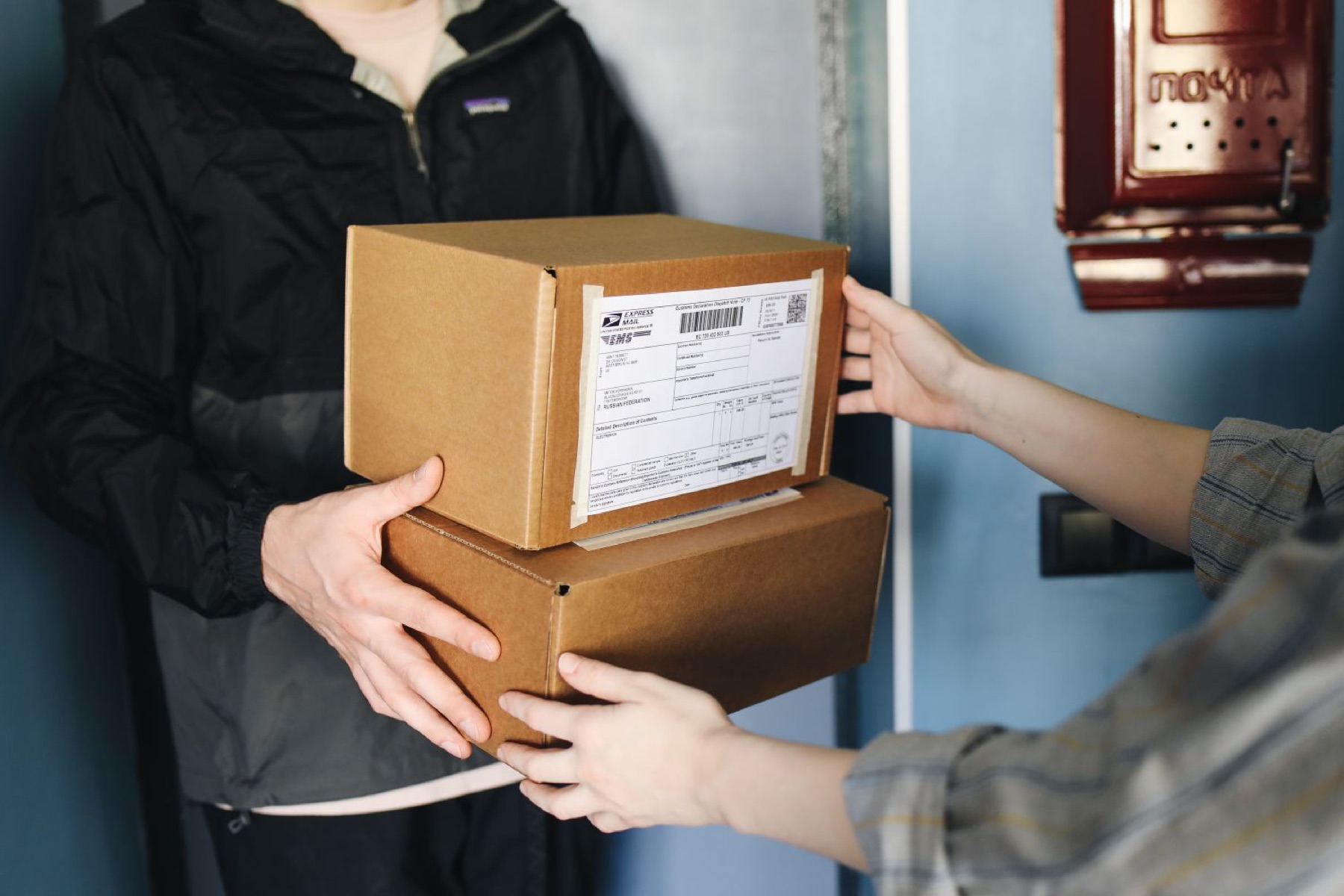
DHgate’s own editorial guidance for ecommerce buyers stresses a few core behaviors: use filters and search tools, evaluate suppliers via ratings and transaction history, read product descriptions carefully, and order samples before larger purchases. For lab and scientific equipment, you can adapt that into this concrete workflow.
1. Start with precise search terms and filters
On DHgate, broad keywords like “lab kit” can surface everything from student-level experiment kits to distillation systems. Narrow your search:
- Add specific attributes: “lab analytical scale 0.001g,” “digital pH meter water,” “quartz condenser tubing.”
- Browse focused sections like Market Lab or laboratory kit categories, but treat them as category groupings, not curated or accredited selections.
Use filters to limit:
- Price ranges aligned with realistic expectations for your category (a “precision balance” for the price of a toy should raise a flag).
- Shipping regions or warehouses that make sense for your timelines.
2. Read seller ratings and transaction history as a first-pass filter
DHgate blog content about navigating the site highlights seller ratings, review counts, and total sales as a quick way to gauge reliability. Applying that to lab gear:
- Prefer sellers with high overall ratings and a visible order history, especially on technical categories like instruments.
- Be extra cautious when:
- Feedback scores are low or missing.
- The seller appears to be very new, with few or no completed orders.
3. Inspect the listing for lab-specific details
Generic product text is a problem for technical equipment. Use the description as your first lab-compliance checkpoint:
- Look for resolution and range details on instruments. For example, an analytical scale should state capacity (for instance, 600 g), readability (for example, 0.001 g), and operating conditions.
- Check whether they mention calibration (internal vs. external, included weights, calibration frequency).
- For meters (pH, temperature, and similar devices), look for accuracy specs and calibration procedures.
- Note any certification claims and plan to verify them via documents.
If a listing is vague (“high precision,” “stable,” “professional”) without numbers, treat that as a soft fail unless the seller can provide detailed specs on request.
4. Request documentation and proof before a test order
Use DHgate’s messaging to ask for:
- PDF manuals, spec sheets, and calibration certificates.
- Photos of labels or nameplates showing manufacturer identity and model numbers.
- Copies of any claimed certifications.
A serious supplier should respond with concrete documents, not just marketing images. If they can’t supply them, either downgrade the item to low-risk use (for example, classroom demo) or walk away.
5. Place a small test order and validate in-house
DHgate’s sourcing-oriented blog posts repeatedly recommend ordering samples before bulk. For lab gear, treat that as mandatory:
- Order one unit or the minimum you need for testing.
- On arrival, run basic validation: compare readings against known references (buffer solutions, calibrated weights, traceable thermometers) appropriate to the device.
- Document everything. If the sample fails your checks, you’ve just bought a relatively cheap lesson.
6. Listing snapshot: what real DHgate lab-related items look like (2026-09-14)
Product snapshots from 2026-09-14 show patterns you’re likely to encounter when searching lab-related categories on DHgate:
| Example listing (2026-09-14) | Category | Price range (USD) | Review count | Trust implication (editorial) |
|---|---|---|---|---|
| PH Meter High Digital Precision pH Tester Backlight Display Water Quality Tester Laboratory Drinking Water Hydroponics Tank Tool 240827 | PH Meters | 50.26-51.55 | 0 | Technical-sounding meter with no reviews; treat specs as unverified and limit to non-critical use after your own testing. |
| Lab Analytical Scale 600g 001g/2000g 001g High Precision Balance Scale Electronic Balance Counter LCD Digital Gram Scale EU 260526 | Scales | 224.31-234.93 | 0 | Higher price suggests a serious tool, but absent feedback means you must demand documentation and run calibration checks before relying on it. |
| Laboratory Warehouse Digital Display Temperature Humidity Meter SHTC02 High Precision Stable Reliable Measurement Electronic Thermometer Hygrometer | Temperature Instruments | 20.70-23.59 | 0 | Budget instrument with no reviews; best used as an indicator, not a reference device in regulated labs. |
| Scientific Digital Calculator Multifunctional Portable Exam Special Solid Color School Office Supplies Student Stationery 240826 | Calculators | 34.38-35.26 | 0 | Commodity accessory; low stakes if it fails, but still test if you plan classroom or resale use. |
These examples are not endorsements. They illustrate how often technical-sounding listings lack ratings or reviews. In that situation, silence is a signal: you must assume everything is unproven until your own checks say otherwise.
Instruments vs. consumables: different vetting intensity
Lab equipment isn’t a single risk category. How you evaluate a DHgate seller should depend on what you’re buying. Here’s a focused comparison:
| Aspect | Instruments (balances, meters, analyzers) | Consumables (glassware, racks, basic plasticware) |
|---|---|---|
| Primary risk | Inaccurate data, drift, electrical or mechanical failure | Breakage, contamination, dimensional mismatch |
| Critical checks | Specs, accuracy, calibration docs, certifications, sample validation | Material type, dimensions, heat/chemical resistance, visible quality |
| Acceptable review gap | Very low – lack of reviews is a major concern | Moderate – lack of reviews may be acceptable if specs are simple and you can inspect on arrival |
| Typical use-case fit on DHgate (editorial view) | Low-stakes teaching, hobby, non-regulated monitoring after thorough testing | Teaching labs, non-critical handling, backup or surplus stock |
You can still apply the same universal scorecard, but instruments should have a much higher bar. If a seller can’t clear that bar, keep them in the “consumables and accessories only” bucket.
Query-time DHgate listing example
Observed on 2026-09-14, Scientific Calculator – Ideal for Exams in Accounting, Engineering & Advanced Math Including Calculus/Statistics 26Y0127 appeared in Calculators. This is a time-bound, illustrative listing example; availability and listing details may change. Compare the stated specifications and order a sample before considering a larger purchase.
When a DHgate lab supplier is (and isn’t) the right choice
DHgate’s editorial content on categories like first aid equipment highlights advantages such as wide supplier access, product variety, and the ability to negotiate prices. Applied to lab and scientific gear, that marketplace model can help you in some scenarios and be a liability in others.
Think in terms of concrete use cases:
Reasonable DHgate use-cases (with strict vetting and in-house testing)
- Classroom and training environments: student lab kits, basic glassware, low-cost microscopes for K–12 or hobby programs where repeatability demands are modest and you can supervise use.
- Non-critical accessories: clamps, stands, trays, generic plasticware, non-safety-critical housings or covers.
- Early-stage ecommerce experiments: if you run a small online store testing demand for educational kits or low-risk tools, DHgate can be one of several sourcing channels—provided you validate samples and keep initial volumes small.
Poor-fit or high-risk scenarios for DHgate sourcing (editorial guidance, not legal advice)
- Clinical or patient-facing instruments (CLIA labs, medical devices, diagnostics where misreadings affect care).
- GMP/GxP/ISO-regulated environments where you need documented, auditable chains of calibration and maintenance from accredited suppliers.
- Production QA/QC equipment where failed readings can ruin batches or trigger recalls.
In these situations, use DHgate at most for supporting accessories whose failure won’t compromise safety or compliance, and keep primary instruments and reagents within accredited or OEM channels.
DHgate blog discussions about product quality acknowledge that buyers should “do their homework” and focus on suppliers with strong ratings, recognizing that marketplace variety brings both opportunity and skepticism. Treat that as confirmation that your cautious, evidence-first approach is appropriate—especially for lab and scientific gear.