
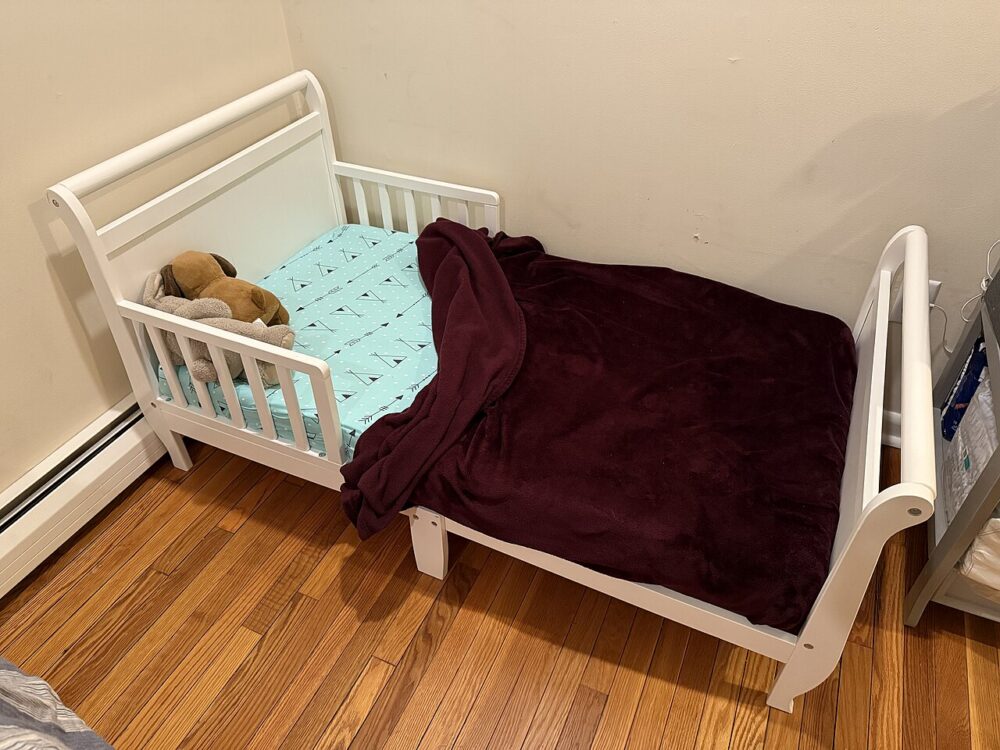
Some baby bed safety rails do a decent job of reducing falls for older toddlers, but none of them are a guarantee of safety—especially for infants. Australian experience shows both sides of the story: CHOICE’s guidance notes that some rails test acceptably while others raise safety concerns, and a Target‑branded rail was recalled after seam‑strength issues meant the fabric could tear and increase fall risk. That’s a good snapshot of the category: helpful if well‑designed, but capable of failing or creating new hazards if you choose badly or use them as a substitute for supervision.
For an infant who still needs a firm, flat, “no extras” sleep surface, a bed rail is usually the wrong product; safe‑sleep advice prioritizes a proper cot or bassinet. For toddlers moving out of a cot, a well‑fitted rail on a bed with a snug mattress and no gaps can reduce the chance of rolling out. The decision is less about whether Target or Amazon are “safe” and more about the specific rail’s design, your child’s age, and how you install and supervise it.
When Bed Safety Rails Help—and When They Create New Risks
CHOICE’s Australian buying guide on bed rails makes a clear point: rails can save a child from a fall but also have the potential to cause harm. That harm typically comes from two scenarios:
- Structural failure – the rail collapses, fabric tears, or joints loosen, so the barrier simply doesn’t hold.
- Entrapment or suffocation – gaps between rail and mattress, soft bumpers, or loose covers trap a child’s head or neck.
The recall of Target Australia’s Safety Bed Rail illustrates the first scenario. An ACCC Product Safety notice reports that the seam strength of the bed rail may not be sufficient and the fabric may tear with use, increasing the risk of a child falling out of bed. Target subsequently pulled the rail from shelves following injury concerns that a child could fall out, as covered in news reporting by Nine.
Individual Australian reviewers on ProductReview describe issues that echo those concerns: fabric scrunching and at least one report of a rail collapsing when a three‑year‑old rolled against it. Those experiences aren’t a controlled test or a universal failure rate, but they’re a reminder that “sold by a major retailer” does not equal “tested to the point where real‑world use can’t break it.”
Entrapment is the other big risk. Parents discussing co‑sleeping setups on Reddit have raised worries that rails and bumpers can create a dangerous “crack” between the mattress and barrier where a baby’s head or body could become wedged; some advise packing any gap firmly to avoid entrapment. Those threads are anecdotal parent experience rather than safety authority, but they align with broader guidance that safe sleep surfaces should be firm, with no gaps or soft obstructions.
So where are rails actually useful?
- Toddlers (roughly 18 months to 5 years) in their own bed – Many Australian products, such as timber rails marketed locally, target this approximate age range and focus on preventing accidental roll‑outs once a child is beyond the infant safe‑sleep window.
- Beds with secure frames and snug mattresses – A rail that sits tight against the mattress, with mesh rather than thick padding, can reduce falls without adding as much suffocation risk.
If you’re planning a rail for a very young infant, or for a shared adult bed with soft pillows and duvets, the risk profile changes sharply. In that scenario, a rail may reduce falls but can increase entrapment and suffocation risk, and it runs against the spirit of mainstream safe‑sleep advice.
Buying and Using Bed Rails More Safely (Any Store, Any Marketplace)
If you decide a rail fits your child and setup, you’re trying to solve two problems at once: avoid falls and avoid new hazards. That requires more than picking a “best seller.” Amazon’s bed rail Best Sellers page ranks products based on sales, which doesn’t independently confirm compliance with Australian standards or that a rail is appropriate for your child’s age and bed.
These checks are more useful:
1. Match the rail to the age and bed type
- Infants under 12 months – Prioritize an Australian‑standard cot or bassinet with a firm mattress and no pillows, bumpers, or toys. A rail on an adult bed does not turn it into a safe infant sleep surface.
- Toddlers 18 months+ (approximate) – Look for products explicitly stating an age or weight range, and use them on beds that let the rail sit flush with the mattress.
2. Examine physical design, not just photos
When you can see the product in‑store (e.g., at Target or other retailers), try to:
- Pull firmly on the rail to see if joints flex, wobble, or look like they’d loosen over time.
- Check the fabric seams; thin stitching or obvious stretching points are red flags, echoing the seam‑strength issues that triggered the Target recall described on the ACCC Product Safety page.
- Look for mesh panels rather than thick cushions. Mesh reduces suffocation risk if a child rolls against the rail.
- Study how the rail attaches – hardware‑mounted rails that bolt to the bed frame or clamp securely usually resist collapse better than rails relying on tension alone.
Online, you can’t pull on the product, but you can:
- Use reviews to find mentions of “collapsed,” “bent,” “torn,” or “fabric bunching,” and weight those comments heavily.
- Compare photos showing the rail installed with a mattress: do you see a visible gap your child’s limb or head could enter?
3. Install with zero gaps and keep the sleep surface simple
After purchase:
- Push the mattress firmly against the rail and bedhead/footboard to eliminate gaps.
- Avoid adding pillows, padded bumpers, toy snakes, or rolled blankets to “make it cozier”—these can become entrapment points.
- Test the rail by rolling your own weight against it before trusting it with your child.
4. Treat any marketplace as “unsafe until proven safe”
Whether you’re buying:
- In‑store in Australia,
- Through big marketplaces like Amazon,
- Or cross‑border via platforms such as DHgate (which, as of 2026-09-29, has listings like a “Baby Crib Safety Rail Adjustable Bed Guardrail for Toddlers AntiRoll Protective Barrier to Prevent Falls During Sleep” with a price range of USD 212.27-222.32 and zero reviews),
you need to assume the listing is just marketing until you’ve verified design, age fit, and real user feedback. Cross‑border rails often have sparse reviews and limited documentation, so extra steps matter: check multiple photos, ask the seller specific questions about materials and installation, and document everything.
DHgate is one example of a sourcing marketplace where those buyer‑side checks matter; more detailed marketplace‑agnostic guidance is available in resources like assessing DHgate listing and seller risk.
How Different Platforms Handle Safety, Recalls, and Buyer Protection
No platform can promise that every bed rail it offers is safe. What changes between big‑box retail, large marketplaces, and cross‑border multi‑seller sites is how problems surface—and how easy it is for you to act once they do.
Before comparing channels, keep one principle in mind: you cannot assume any retailer or marketplace (including cross‑border platforms) provides blanket safety guarantees. You still need to track recalls, read detailed reviews, and keep your own records.
Here’s a practical comparison, based on observable behavior and available pages:
| Channel type | Safety & recall visibility | Review signal quality |
|---|---|---|
| Big‑box retail (e.g., Target Australia) | Formal recalls appear via ACCC notices; Target has previously pulled a safety bed rail from shelves after concerns it could fail, with refund instructions reported by Nine. | Mixed but often local; ProductReview shows Australian experiences with specific Target rails, including collapse reports. |
| Large marketplace (e.g., Amazon) | Safety info is more diffuse; the Best Sellers bed rail page ranks by sales, which doesn’t confirm standard compliance. Individual listings may or may not mention standards or recalls. | High volume, but quality varies; you need to read for detailed reports of failures or entrapment, not just star ratings. |
| Cross‑border multi‑seller sites | Listing pages can show safety language, but independent verification is limited; you won’t see Australian‑specific recalls there. | Often sparse or absent, especially for niche bed rails; you may be relying on a handful of reviews or none at all. |
That doesn’t mean you should only ever buy from one type of platform. It does mean you should:
- Act on recalls and safety notices. If a product you own appears in an ACCC or retailer recall (as with Target’s Safety Bed Rail), stop using it and follow refund/replacement instructions.
- Treat reviews as case studies, not statistics. A small number of collapse reports are enough to make you cautious, even if the average rating looks fine.
- Keep documentation. Screenshots of listings, order confirmations, and photos of any defects make it far easier to get action from any retailer or marketplace.
If you’re a parent, that’s the trust equation: rails can help a toddler stay in bed, but you’re still responsible for choosing a design that doesn’t create new traps and for supervising your child. For small ecommerce businesses sourcing rails, the bar is higher—your customers are betting on your judgment. Structural design, manufacturing consistency, and clear age/use instructions matter more than catchy product names or sales rank.