
Many Amazon gate hinges are perfectly durable for everyday garden or yard gates, but reliability is not guaranteed by the Amazon name. It depends on the metal grade, corrosion resistance, load rating, and whether the hinge is correctly matched and installed for your gate. Well‑engineered hinges from established brands tend to perform very well, especially when buyers follow the specs. Low‑detail listings and unbranded hardware are where most failures and sagging gates show up.
If you treat Amazon as a catalog and verify the hardware the way a contractor would—rather than trusting a star rating alone—you can get long‑lasting hinges. If you don’t, you can absolutely end up with rusted or bent hardware in a couple of seasons.
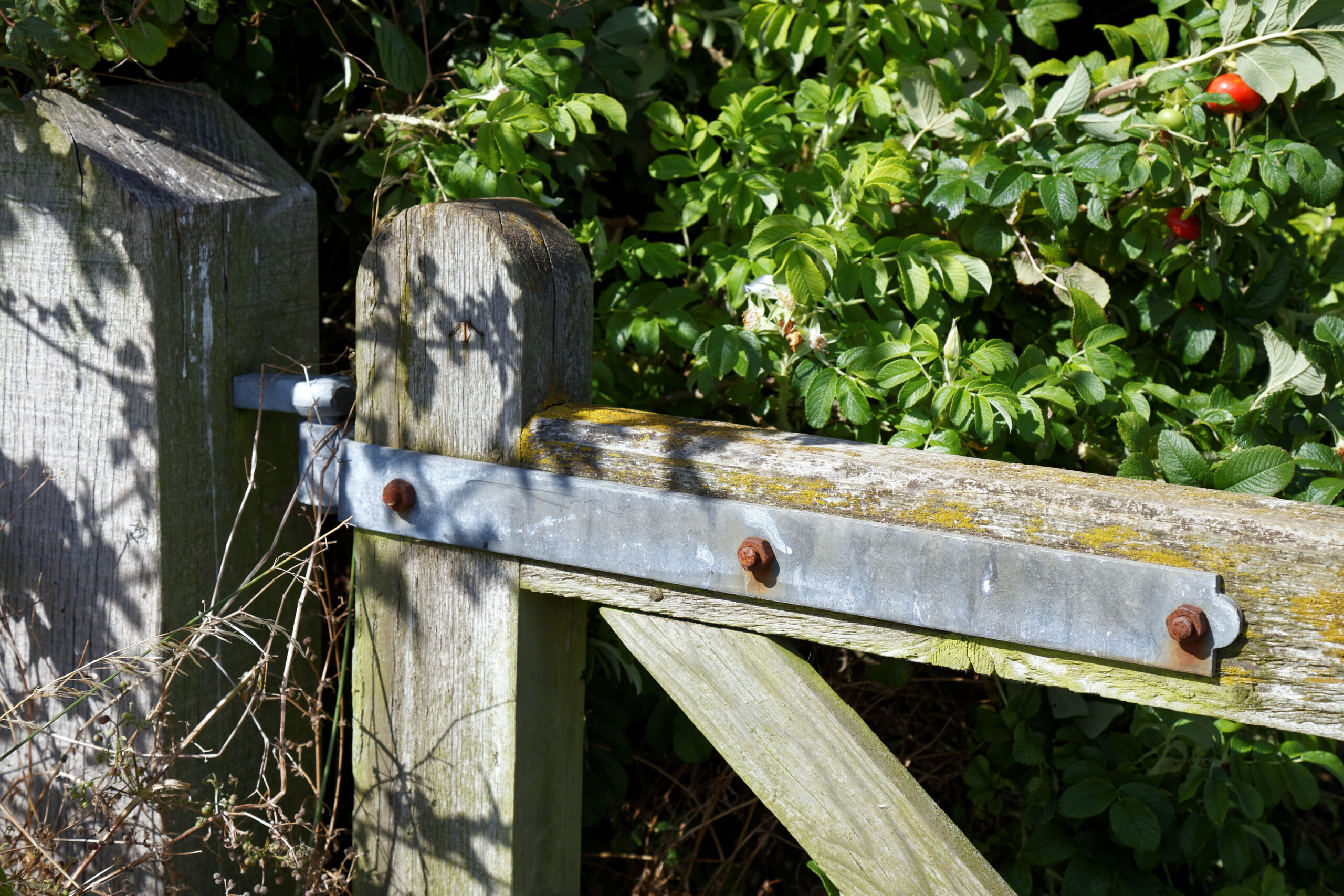
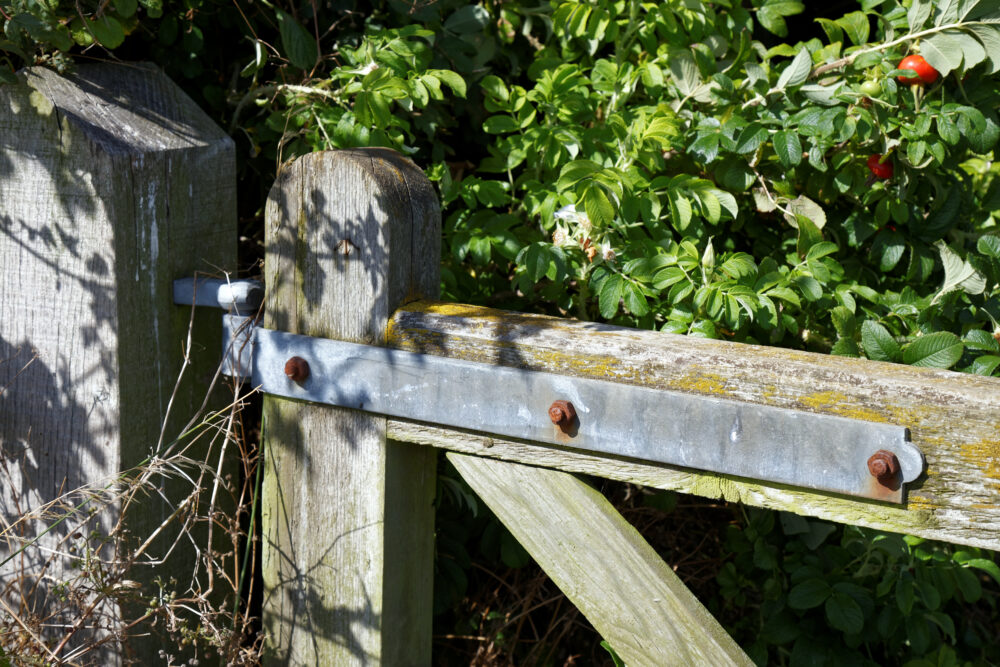
A metal gate hinge and wooden post show the installed hardware relationship buyers should inspect for fit, load and mounting style; photo by Acabashi, CC BY-SA 4.0, via Wikimedia Commons. The pictured hinge is not an Amazon or DHgate listing.
Where Amazon Gate Hinges Tend to Be Strong—and Where They Fail
On Amazon you’ll see everything from light strap hinges for shed doors to heavy-duty self‑closing hinges and chain‑link gate hardware. Amazon’s “Most Wished For” gate hinges list shows what shoppers bookmark most often, but it’s popularity, not a durability test. Many hinges on that page are solid products; a few are there mostly because they’re cheap or aggressively promoted.
Specialist hinge guidance highlights why some of those products hold up better than others. TDCHINGES notes that proper hinge size, load stability, corrosion resistance, and a UV‑ and weather‑resistant finish are key to long‑term performance in outdoor use, especially on heavier gates and in harsh climates like coastal regions.Source DHgate’s editorial coverage of stainless hinges adds that stainless grades 304 and 316, clear load capacity ratings, and sensible installation and maintenance all drive durability more than brand name alone.Source
In third‑party review aggregators, heavy‑duty hinges from brands that publish detailed specs and installation instructions tend to show the best real‑world performance. For example, BestViewsReviews’ page on the D&D Technologies TruClose heavy‑duty self‑closing hinge describes solid buyer outcomes when users respect the stated gate weight and install according to the manufacturer’s recommendations.Source Complaints usually surface only where gates exceed the recommended weight, gaps aren’t adjusted properly, or users mis‑tension the self‑closing mechanism.
By contrast, BestViewsReviews’ coverage of HITTITE chain‑link gate post hinges shows buyers praising the “heavy-duty” feel and 3 mm thickness but also warning that performance depends on sizing the female and male hinge parts correctly for the post and frame, and tightening hardware appropriately.Source Mis‑matched sizes lead to sloppy motion or stress on the hinge; poor installation can make even a strong hinge feel unreliable.
Boiled down, Amazon’s strengths and weak spots look like this:
| Factor | Strong when… | Risky when… |
|---|---|---|
| Range of options | You know the hinge type you need and filter by specs | You browse broadly and choose mainly on looks or price |
| Hardware quality | You pick branded hinges with stated material grade and load rating | You buy unbranded or vague “heavy duty” hinges with no numbers |
| Information use | You read specs, Q&A and off‑Amazon reviews for your gate type | You rely on star ratings or “Most Wished For” popularity alone |
| Real‑world performance | Gate weight, material and installation all match manufacturer guidance | Gate is overweight, mis‑aligned, or installed without following instructions |
If your gate is light, in a mild climate, and not safety‑critical, a mid‑range Amazon hinge with good material and reviews is usually fine. For pool gates, security gates, or heavy wooden gates, you need to treat hinge selection as a structural decision—Amazon can still be your source, but only if you do serious verification.
Universal Checks Before You Trust Any Online Gate Hinge
Before you commit to a hinge—on Amazon or any marketplace—walk through these specific checks. They’ll do more for reliability than the logo at the top of the page.
1. Match hinge type to gate style and function
For a vinyl privacy gate, a self‑closing hinge like the D&D Technologies TruClose style is common. Chain‑link gates use post hinges like the HITTITE sets. Wooden garden gates might use strap or T‑hinges. TDCHINGES stresses that proper hinge size and type are core to smooth operation and structural stability.Source If the listing doesn’t clearly say what gate type and thickness it’s designed for, treat that as a red flag.
2. Demand real material and corrosion details
Durability outdoors is largely a materials question:
- Look for a stated metal grade (e.g., 304 or 316 stainless steel for high corrosion resistance, or zinc‑coated steel for basic protection). DHgate’s stainless hinge editorial points out that marked stainless grades and a consistent, defect‑free finish are indicators of stronger, longer‑lasting hardware.Source
- Check for mentions of rust‑resistant or UV‑resistant finishes in line with guidance from TDCHINGES: powder coating or high‑quality plating is far more reliable than bare mild steel.Source
- Avoid listings that just say “metal” or “steel” with no further detail.
3. Verify load rating against your actual gate weight
The hinge’s load capacity should exceed your gate’s weight—ideally with a margin. DHgate’s editorial notes that load rating, thickness, and hinge width are central to strength.Source If a hinge is described as “heavy duty” but gives no pound or kilogram figure, you’re guessing. That’s acceptable for a small garden gate; it’s not acceptable for a large driveway gate or anything that people lean on.
4. Check installation complexity and maintenance needs
A hinge that’s difficult to install or adjust is more likely to be set up incorrectly, which shortens its life. DHgate’s hinge guide emphasizes ease of installation and low maintenance as practical contributors to longevity and safety.Source Look for:
- Clear installation diagrams or videos in the listing or manufacturer site.
- Adjustable features (gap, tension) that are explained, not just advertised.
- Straightforward maintenance, like periodic lubrication rather than special tools.
If you’re outfitting multiple gates for a small property or e‑commerce installation service, prioritizing “easy install” hardware will reduce failure rates simply because fewer installs are botched.
5. Read reviews like a forensic report, not a star badge
Stars alone can be misleading. Instead:
- On Amazon, scan the Q&A and text reviews for gate type, size, and environment that match yours. Pay attention to photos showing rust points or bent leaves.
- Cross‑check on an independent site like BestViewsReviews’ D&D TruClose page or its HITTITE chain‑link hinge page to see how buyers outside Amazon report long‑term performance.
- Separate complaints caused by misuse (overweight gates, mis‑alignment) from genuine defects (cracking welds, peeling finish in normal conditions).
6. For cross‑border sourcing, apply the same discipline
If you’re sourcing hinges internationally—whether through Amazon’s global sellers or marketplaces like DHgate—use the same spec‑driven approach. For example, a DHgate listing snapshot on 2026-10-08 showed a “A08M-New 2-Pack Wall Mount Gate Hinge 1-3/8Inch Farm Gate Hinge, 304 Stainless Steel Tube Gate Hinge” with clearly labeled 304 stainless steel.Source That’s the kind of detail you want: stated alloy, intended gate size, and clear product photos. Before trusting any such listing, pair that data with a seller‑history check as described in Assess DHgate listing and seller risk.
For small e‑commerce businesses buying in bulk, combining technical verification with a structured seller check (order history, communication, documentation) is more reliable than assuming any marketplace has already done the vetting for you.
How Marketplace Mechanisms Shape Hinge Reliability Risk
Marketplaces like Amazon are good at surfacing options and popularity signals, but they’re not in the business of engineering your gate. Their systems change how you see hinge reliability—not the actual metal.
On Amazon, tools such as the “Most Wished For” gate hinges page highlight items customers frequently add to wishlists.Source That tells you what people like the look or price of, but it doesn’t tell you whether the hinge will hold a 154‑pound composite gate through five winters. Review counts and average ratings help, but you need to drill into the context of those reviews the way we outlined above.
Specialist guidance from TDCHINGES points out that buyers who choose hinges based solely on aesthetics or a generic “heavy duty” claim often face misalignment, structural damage, or premature wear.Source Those are classic marketplace‑shopping failure modes: the platform made it easy to buy; the buyer still had to do the engineering homework.
Across marketplaces, the mechanisms that matter for hinge trust are:
- Information density: Does the listing give you real specs (material grade, load rating, hinge dimensions, compatible gate types) or just marketing adjectives?
- Review quality: Are there detailed reviews with photos and context similar to your use case, or mostly generic “works great” comments on day one?
- Cross‑checks outside the platform: Established hardware brands often have manuals or third‑party reviews you can read before committing.
For safety‑critical gates—pool enclosures, childcare facilities, security perimeters—those mechanisms are especially important. You might still purchase through Amazon, but you should be picking models with clear safety‑oriented features, strong off‑platform documentation, and a track record in expert circles, not just consumer popularity.
If you treat marketplace listings as raw data and apply hinge‑specific verification, Amazon gate hinges can be a reliable part of your project. If you treat the platform’s reputation as proof that any “gate hinge” there is safe for your situation, you’re adding more risk than most gates are designed to handle.