
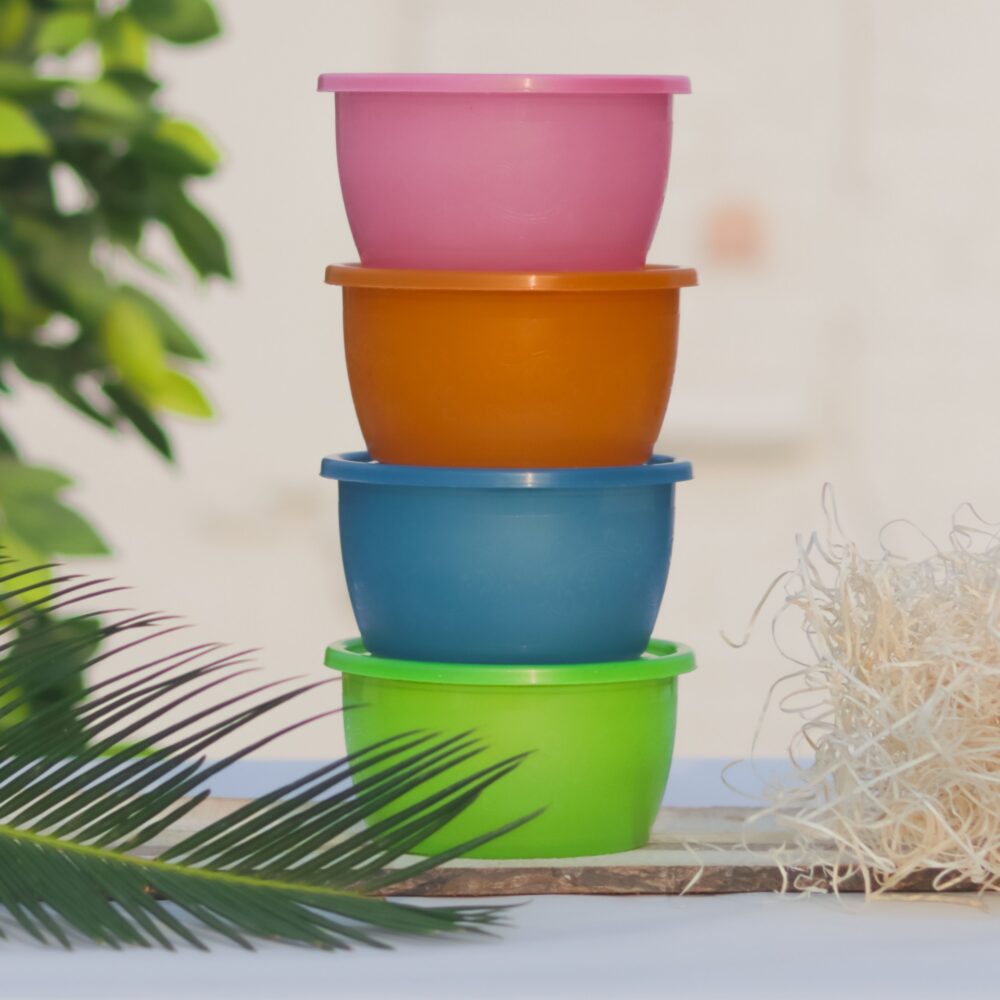
A reliable 16 oz bowl should hold about 473 ml, survive hot, oily food, and arrive in a case that matches the listing—not collapse in your customer’s hands. In Canada, your safest bets are big-box retailers, Amazon, and restaurant/packaging wholesalers that publish clear specs and offer domestic returns. Cross-border marketplaces and overseas suppliers can make sense for bulk buyers chasing unit cost or customization, but they demand more vetting, test orders, and tolerance for duties and delays.
If you treat “16 oz bowls” as a technical product—capacity, dimensions, materials, temperature limits—rather than just a label, and you back that up with simple in-house tests and basic documentation, you can buy confidently across Costco, Staples, Amazon, Canadian wholesalers, and, if needed, cross-border platforms.
Why 16 oz bowls are a high-stakes purchase for Canadian buyers
For Canadian households, 16 oz has become a common “hearty serving” size for soups, stews, curries, salads, and grain bowls. Packaging guides and soup-bowl articles often describe 16 oz as a standard larger portion size, sitting above the 8–12 oz range used for lighter servings. In millilitres, 16 oz is roughly 473 ml, and many Canadian suppliers round that to 500 ml on their product pages.
In foodservice, that 16 oz bowl is often a core SKU. K3Supplies, for instance, sells a 500 ml (16 oz) kraft paper round bowl in cases of 300, specifically marketed for soups, salads, and small meals for restaurants and catering (K3Supplies 16 oz bowl). Costco Business Centre lists Café Express 16-oz kraft paper bowls in bulk packs of 300 for Canadian business customers (Costco Business Centre example). Eco-focused suppliers like Cambium and Greenmunch list 16 oz cardboard or RPET bowls for salads and meal bowls.
Because this size is heavily used for hot, sometimes oily foods, a bad choice shows up fast:
- A “16 oz” bowl that only holds 13–14 oz at a comfortable fill line means short portions and confused customers.
- Paper bowls that go soft with hot pho or curry can leak through delivery bags and damage your brand.
- Lids that don’t properly match the advertised 16 oz bowl size lead to spills in transit.
- Eco claims that don’t match Canadian composting realities can expose your business to greenwashing complaints.
For a small restaurant, café, or ecommerce meal-prep seller, a single mis-specified pallet of 16 oz bowls can affect hundreds of orders. Even home buyers notice quickly if “microwave safe” bowls warp or if “compostable” bowls never disappear in their municipal green bin.
Common trust worries when buying 16 oz bowls in Canada
Most Canadian buyers—whether you’re stocking your pantry or running a takeout operation—end up worrying about the same clusters of risk.
1. Capacity and portion honesty A bowl labelled 16 oz may not be clear about whether that’s brimful or a realistic fill line. Some listings only give centimetres of diameter but not volume. Canadian suppliers like K3Supplies and Cambium tend to list both ml and oz (for example, 500 ml / 16 oz), which makes comparison easier, but that’s not universal across Amazon marketplace sellers or cross-border listings.
2. Material, safety, and performance You’ll see 16 oz bowls in kraft paper with PE or PLA linings, bagasse, RPET, PET, PP, PS, ceramic, and stainless steel. Canadian restaurant suppliers such as Staples Canada’s Eco-Packaging 16 oz paper food bowl line out that the bowl is made from renewable paper and PE-lined and comes in 500-packs (Staples product example). Greenmunch’s 16 oz RPET salad bowls spell out that they’re made from recycled PET and targeted at cold salads (Greenmunch RPET salad bowl).
What’s less consistent across channels is clarity on:
- Suitability for very hot soups vs only warm or cold food.
- Resistance to grease and oil over 15–30 minutes of contact.
- Claims about BPA-free, PFAS-free, or specific food-contact certifications.
3. Quality, leaks, and real-world abuse A 16 oz bowl for hot soup faces a tougher job than a 9 oz dessert bowl. Suppliers like K3Supplies specifically market leak-resistant performance for hot and cold foods, but generic listings—even domestically—may rely on vague terms like “heavy-duty” or “premium.” Amazon reviews and photos often reveal bowls that get soggy or deform in microwaves. For cross-border listings, there may be no review history at all.
4. Cost per bowl and case size Restaurants and ecommerce sellers care about cost per unit, not just sticker price. Many Canadian channels sell in 300–500 count cases—Costco Business Centre’s 300-count kraft bowls, Staples’ 500-packs, Cambium’s 500-count cardboard bowls (Cambium cardboard bowls). Cross-border suppliers often list 500 or 1,000 packs. The tricky part is comparing total landed cost once you layer in shipping, duties, brokerage, and possible currency swings for imports.
5. Shipping, customs, and lead time for cross-border orders When you buy from US or overseas sellers, your order can be subject to duties, GST/HST, and brokerage. Canadian import rules are handled by the Canada Border Services Agency, and charges vary by product and value. Cross-border shipments often take longer and can be more variable than domestic deliveries, which matters if you’re planning around a busy season or a new menu.
Because rates and thresholds change, you should treat any cross-border 16 oz bowl order as a potential customs case and factor that into your timeline and price calculations.
6. Returns, disputes, and hassle Domestic retailers like Costco, Walmart, Staples, and restaurant suppliers typically publish return or exchange policies for Canadian customers, even if they differ by channel. Amazon mentions a marketplace-wide guarantee program for many orders, but the details depend on the specific listing, seller, and fulfilment route, so buyers should check Amazon’s current terms directly. Once you move to direct imports or cross-border marketplaces, the process can involve more negotiation with individual sellers, international shipping back, or partial refunds instead of easy drop-off returns.
None of these risks are unique to 16 oz bowls, but they show up more painfully here because this size is so central to hot, messy food.
How to verify a 16 oz bowl before you commit to a case
Instead of trusting the label, you can run a few practical checks on any 16 oz bowl you’re considering. The flow below applies whether you’re buying from Costco, Amazon, a Canadian wholesaler, or a cross-border marketplace.
- ### Confirm volume the simple way
- Look for both ounces and millilitres in the listing. For example, K3Supplies’ 16 oz kraft bowl is described as 500 ml, and Cambium lists 16 oz in its format options. For your own sanity, treat 16 oz as roughly 473 ml and expect a usable fill line slightly below that.
- When your sample or first case arrives, use a measuring cup to fill a bowl with water to the level you’d realistically serve. See how much it holds. If it’s significantly under 16 oz at that level, note that for portioning.
- ### Check dimensions against your use case
- For takeout and delivery, top diameter and height matter for lid compatibility and stacking. Suppliers like K3Supplies and many restaurant distributors list these dimensions; some generic online listings do not.
- Compare dimensions across brands so you don’t end up with a “16 oz” bowl that’s tall and narrow when your lids are designed for wide and shallow.
- ### Read material and lining details carefully
- From domestic suppliers: look for statements like “kraft paper with PE lining,” “PLA-lined,” “bagasse,” or “RPET,” and any mention of hot vs cold usage. Russell Hendrix’s compostable 16 oz paper bowls, for example, call out a PLA lining and compostability positioning, signalling hot-soup use (Russell Hendrix 16 oz PLA-lined bowl).
- On Amazon or marketplaces, scan the bullet points and description for the same kind of detail. Listings that only say “eco-friendly” or “biodegradable” without mentioning material type deserve extra caution.
- ### Run a hot and greasy stress test
- Prepare your worst-case food: hot soup, curry, or oily salad dressing.
- Fill a bowl to the level you’d serve and let it sit 15–30 minutes, then pick it up, tilt, and stack as your staff or customers would.
- Watch for softening walls, seepage, lid deformation, and any off-odours. This is often where cheaper paper bowls fail.
- ### Test stacking and transport
- Fill 4–6 bowls, lid them if applicable, and stack as you would for takeout bags or delivery shelves.
- Shake or jostle gently to simulate a driver’s ride. Look for lid pop-offs and deformation that could lead to spills.
- ### Match lids and bowls by SKU, not just size name
- Some suppliers sell “universal” lids; others require specific lid SKUs. Costco’s Café Express 12 + 16 oz lid set is an example of a combined lid pack matching multiple bowl sizes.
- Make sure the lid SKU you buy explicitly lists your bowl’s SKU or precise size; don’t assume any “115 mm” lid fits any 16 oz bowl.
These tests don’t replace lab certifications, but they quickly identify mis-sized or underperforming products before you’re locked into a 500-pack.
Documentation and supplier vetting habits that reduce risk
To keep 16 oz bowl sourcing predictable—especially for businesses—build a few light habits into your process.
1. Capture what you actually bought
- Save a PDF or screenshot of the product page at checkout, including capacity, material, eco claims, and images.
- File invoices and order confirmations that specify SKU, case count (e.g., 300 or 500), and price.
- Keep these in a shared folder so anyone on your team can see exactly what “our 16 oz bowl” means.
2. Maintain a one-page spec for your chosen 16 oz bowl
For each bowl SKU you rely on, record:
- Capacity: listed oz and ml, plus your own measured usable fill.
- Dimensions: top diameter, base diameter (if available), and height.
- Material and lining: e.g., “kraft paper + PE,” “bagasse,” “RPET.”
- Max intended use: hot soup, cold salad only, microwave use yes/no.
- Matching lid SKU and any colour/branding details.
When you inevitably have to switch suppliers, this spec sheet makes comparisons much safer.
3. Use reviews and ratings intelligently
- On Amazon, filter for reviews mentioning “16 oz,” “soup,” “hot,” or “microwave.” User photos often reveal true capacity and sogginess issues (Amazon 16 oz bowl listings).
- For Canadian restaurant suppliers like Greenmunch or Russell Hendrix, check on-site reviews where available to see how other restaurants describe performance.
- If a cross-border listing lacks reviews entirely, treat that as a signal to order a small quantity first.
4. Start small with any new supplier
- Even within Canada, consider starting with a single case rather than three pallets from a first-time vendor.
- For cross-border or marketplace orders, avoid jumping straight to the cheapest 500-pack without a trial run.
5. Pay in ways that leave a trail
- For both consumers and small businesses, widely recommended best practice is to use secure, traceable payment methods such as major credit cards or established payment services, which can offer some recourse if something goes wrong.
- Avoid off-platform or irreversible transfers to new suppliers; keep communication and payment within the retailer or marketplace system.
6. Mind your regulatory role as a business
- If you’re importing 16 oz food-contact bowls for business, in many cases the importer is treated as responsible for ensuring they meet Canadian food-safety rules.
- For recurring, high-volume programs, consider asking suppliers for material declarations or spec sheets and consult official Canadian government guidance or legal counsel if you’re unsure about compliance.
These habits don’t add much time per order, but they make disputes easier and supplier switches far less risky.
How Costco, Amazon, Canadian wholesalers, and cross-border marketplaces handle trust for 16 oz bowls
Different channels structure information and recourse in different ways. Here’s how that plays out specifically for 16 oz bowls in Canada.
Big-box and warehouse retailers (Costco, Walmart, Wholesale Club)
Costco Business Centre illustrates the big-box model well. Its Café Express 16-oz kraft paper bowl pack of 300 lists the capacity, brand, material (paper), and pack count on a standardized product page, and Costco applies its usual business-centre delivery and return framework in Canada.
Wholesale Club’s 16 oz recyclable plastic bowl (50-count) highlights use cases like soups and desserts and emphasizes sturdy plastic construction (Wholesale Club example). Walmart Canada lists 16 oz white paper soup bowls in 500-count cases through its online channel.
Trust advantages:
- Recognizable brands and retailer names.
- Standardized packaging and SKUs, which reduce batch-to-batch surprises.
- Domestic customer service and return channels.
Trade-offs:
- Limited variety in materials and formats compared to specialist wholesalers.
- Less room for customization or white-labelling.
- Per-unit prices that may be higher than direct wholesale or cross-border options, especially for niche eco materials.
Amazon and similar marketplace retailers
Search “16 oz bowls” on Amazon and you’ll see a mix of compostable paper bowls, plastic soup bowls, and reusable sets. Listings often include:
- Capacity in oz, sometimes in ml.
- Material descriptions like “bagasse,” “sugarcane,” or “BPA-free plastic.”
- Detailed buyer reviews and user-uploaded photos, which frequently mention whether bowls actually hold a full 16 oz and how they handle hot soup.
Trust advantages:
- Review and Q&A sections can reveal mis-sizing, leaks, and microwaving issues.
- Multiple brands and materials in one place.
- Some listings are sold and shipped by Amazon, others by marketplace sellers—giving you choices in price and fulfilment.
Risks:
- Listing changes over time: different manufacturers under the same listing can change quality and capacity without changing the URL.
- Not all products have rich review histories; some rely on generic stock photos and vague claims.
- You still need to verify details like ml capacity and lid compatibility; “16 oz” can be used loosely.
Canadian restaurant and packaging wholesalers
Suppliers like K3Supplies, Cambium Distribution, Greenmunch, Staples Canada, and Russell Hendrix aim squarely at restaurants and eco-conscious businesses.
Examples:
- K3Supplies’ 500 ml (16 oz) kraft bowl lists detailed specs, uses (soups, salads, meals), and business-focused messaging about takeout and catering.
- Cambium’s cardboard bowls page breaks out format sizes, including a 16 oz option, and emphasizes recyclable, compostable kraft materials (Cambium 16 oz bowl formats).
- Greenmunch’s 16 oz RPET salad bowls spell out recycled content and pair with specific lids.
- Russell Hendrix’s Eco Guardian 16 oz PLA-lined paper bowls highlight compostable positioning and case count (500-pack).
Trust advantages:
- More technical detail on materials, linings, and sometimes temperature ranges.
- Case sizes and SKUs designed for restaurants, making reordering simpler.
- Customer service teams used to solving leaks, lid-fit problems, and eco-claim questions.
Trade-offs:
- Some require business accounts or minimum orders.
- Shipping thresholds may be higher than consumer retailers.
- Fewer casual, small-quantity options for home buyers, though some suppliers do offer smaller packs.
Cross-border marketplaces and overseas suppliers (including DHgate)
As of 2026-09-14, one cross-border marketplace, DHgate, includes several 16 oz heavy-duty biodegradable paper bowl 500-packs in its Disposable Dinnerware category. For example:
- A 500-pack of 16 oz biodegradable paper bowls listed in the approximate USD 75–155 range depending on seller and options, with zero reviews at retrieval time (DHgate example listing A).
- Similar 16 oz biodegradable paper bowl 500-packs from other sellers in the approximate USD 93–192 range, also without review histories yet (DHgate example listing B, DHgate example listing C).
Listings and prices can change, but this snapshot illustrates two patterns on DHgate at that date:
- Wide price spread for seemingly similar 16 oz paper bowl products.
- Limited or no buyer reviews on some bulk SKUs.
More broadly, cross-border marketplaces and overseas suppliers can offer:
- Access to bulk 16 oz bowl options that may sometimes be cheaper per unit than domestic equivalents, especially at 500+ units.
- Variety in materials and custom-print options often beyond what Canadian distributors carry.
They also come with important caveats for Canadian buyers:
- Documentation and eco claims may not be tailored to Canadian standards; a bowl advertised as compostable elsewhere might not be accepted in a Canadian municipal program.
- Review histories can be sparse, so you should lean heavily on sample orders, detailed reading of material descriptions, and your own tests before committing.
- Duties, taxes, and brokerage may apply and can affect both cost and timing; there is no single rule, so you need to check estimates for each order.
Snapshot comparison for 16 oz bowl channels (Canada-focused)
| Channel type | Example 16 oz offers (evidence-based) | Information strengths | Typical 16 oz-specific risks |
|---|---|---|---|
| Big-box / warehouse (Costco, etc.) | Café Express 16-oz kraft paper bowl 300-pack at Costco Business Centre | Clear capacity, brand, case count | Limited variety; less customization |
| Amazon marketplace | Multiple 16 oz compostable or plastic bowl listings with reviews and user photos | Reviews, photos, Q&A on capacity and leaks | Listing changes; mixed seller detail quality |
| Canadian restaurant/eco wholesalers | K3Supplies 500 ml bowl; Cambium 16 oz bowl formats; Greenmunch 16 oz RPET bowl; Russell Hendrix 16 oz | Detailed material and eco descriptions; restaurant-focused | MOQs, business accounts, higher shipping thresholds |
| Cross-border marketplaces (DHgate) | 16 oz biodegradable 500-packs on DHgate (USD ~75–192, few/no reviews as of 2026-09-14) | Bulk choice, some seller and product information | Sparse reviews, variable documentation, customs/duty exposure |
This table isn’t “best vs worst”; it’s a quick way to see how trust is structured differently.
Matching your 16 oz bowl sourcing channel to your risk tolerance
Once you understand how channels differ, the decision becomes about fit, not just price.
Home buyers and very small users If you’re buying a few dozen or a single 100-pack of 16 oz bowls for home, church events, or occasional catering, your priorities are usually:
- Clear capacity and microwave/hot-food suitability.
- Minimal hassle if something’s wrong.
Domestic retail channels—Costco, Walmart, Canadian Amazon listings, or even Chinet’s 16 oz bowls via local stores (Chinet Classic 16 oz bowl)—are the cleanest fit. Paying a few cents more per bowl is often worth the straightforward return options and familiar brands.
Small restaurants, cafés, and caterers Here, 16 oz bowls are a workhorse. You need dependable capacity, leak resistance, and reordering continuity. A practical pattern for many Canadian operators is:
- Use Canadian restaurant/packaging wholesalers (K3Supplies, Cambium, Russell Hendrix, Greenmunch, Staples business) as the primary channel.
- Keep one or two tested SKUs from big-box or Amazon as backups if your main supplier goes out of stock.
- Avoid relying entirely on cross-border orders for your only 16 oz bowl, unless you maintain safety stock for customs delays.
You might experiment with cross-border suppliers or marketplaces for specialty eco materials or branding, but do that in parallel with an established domestic option until you’re confident in performance and delivery.
Ecommerce resellers and meal-kit sellers If you resell bowls or ship prepared meals, you carry both product and reputational risk.
- For unbranded, generic 16 oz bowls you resell, eco-focused Canadian suppliers like Greenmunch and Cambium can provide clearer material narratives to pass on to customers.
- If you decide to source from cross-border marketplaces, treat those SKUs as projects: document specs, run aggressive testing, collect supplier documents, and ensure your listings don’t overstate claims (especially compostability) relative to what you can substantiate in Canada.
When does a marketplace like DHgate make sense at all? A cross-border marketplace option is most defensible when:
- You’re buying in true bulk (hundreds or thousands of bowls) and unit cost is a major constraint.
- You can accept longer lead times and keep buffer stock.
- You’re comfortable doing extra diligence on materials, seller history, and performance testing.
It’s a poor match if:
- You need fast, easy returns within Canada.
- You don’t have capacity to manage customs, potential duties, or inconsistent documentation.
- Your brand story leans heavily on local, certified eco packaging and you can’t afford ambiguity.
In practice, many Canadian buyers blend channels. They lock in a primary 16 oz bowl from a domestic retailer or wholesaler that has passed their tests and keep one or two alternative sources—Amazon, another Canadian supplier, or a cross-border marketplace—for price pressure and backup. As long as you treat the “16 oz” claim as something to be verified, not assumed, and you align your channel mix with your tolerance for hassle, you can avoid the worst surprises and keep your soup, salads, and grain bowls where they belong: in the bowl, not in the bag.