
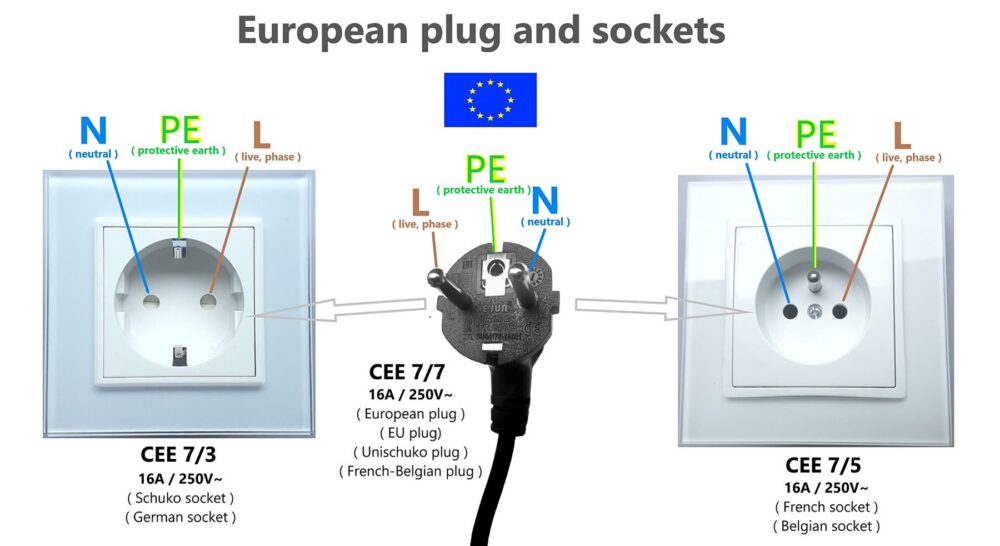
Germany uses 230V Type F “Schuko” power sockets, which take two round pins and side grounding contacts. These outlets accept both grounded Type F plugs and ungrounded Type C plugs. From Canada, you’ll usually either buy a simple Type E/F travel adapter to use your own devices in Germany, or import full German-standard sockets and plugs for resale or installation. Travel-gear retailers and big marketplaces work best for small quantities; global wholesale platforms and electrical distributors make more sense for bulk projects.
If you’re used to North American 120V flat-blade plugs, the key risks are voltage and fit. Germany runs on 230V/50Hz, so you must check whether your device is dual-voltage (often labeled 100-240V). If it’s not, a plug adapter alone is not enough: you’d need a separate voltage converter for safe use.
How German Plug Sockets Work: Types, Voltage, and Compatibility
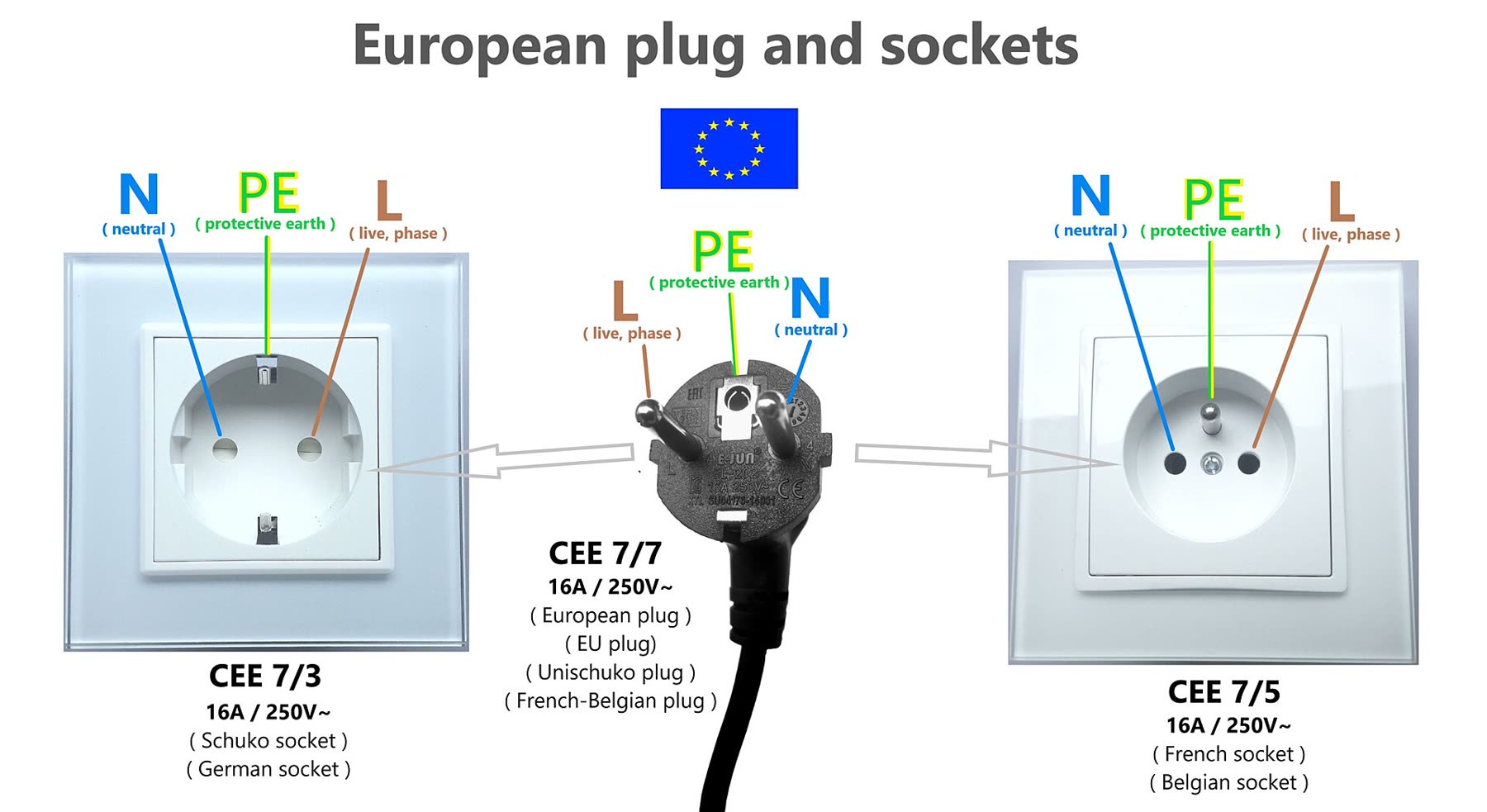
German wall sockets are primarily Type F Schuko outlets.
- Shape and grounding: Type F plugs have two round pins and two metal grounding clips on the sides. This matches the recessed Type F socket design, which provides protective earth via those side contacts.
- Voltage and frequency: As documented by World Standards, the common supply in Germany is about 230V at 50Hz.
- Type C compatibility: Guides such as CheckMyPlug’s Germany overview confirm that Type C plugs (two round pins, no ground) are mechanically compatible with Type F sockets. Many low-power, double-insulated devices in Europe use Type C.
This matters for Canadian buyers in three ways:
- Device safety: A North American device designed only for 120V can overheat or fail if you just shape-adapt the plug to Germany’s 230V. Sites like PackBefore call out this 120V vs 230V difference clearly. Always read the rating label on your device.
- Grounding expectations: If you’re buying outlets or extension bars for installation or resale, you want true Type F (grounded) hardware, not just generic “European” sockets. Type C plugs will fit into them, but the socket hardware itself must provide proper earth connections.
- Mechanical fit: Some travel adapters are labeled “Type E/F” because the same adapter works in both French Type E and German Type F outlets. For short trips this is fine; just confirm that the adapter specifically lists Germany and 230V compatibility.
Platform Options for Buying German Plugs and Sockets from Canada
From Canada you’ll usually source German-compatible gear through one of four routes:
- Retail marketplaces (Amazon, eBay, etc.)
These platforms carry plenty of US-to-Europe Type E/F travel adapters, multi-country travel bricks, and sometimes basic wall outlets or extension cords. You’ll see many listings tagged “for Germany” or “EU plug” shipping to Canadian addresses.
- Specialist travel or electrical retailers
Some Canadian travel-gear shops and electrical distributors stock Type F adapters, power strips, and DIN-rail or panel-mount outlets. These channels tend to emphasize technical specs and compliance and are easier to search by plug type (e.g., “Schuko” or “CEE 7/3 outlet”).
- Global B2B and wholesale marketplaces (Alibaba-style, DHgate, etc.)
If you need boxes of outlets or OEM cords rather than one or two adapters, global marketplaces can connect you with manufacturers and trading companies offering Type F sockets, in-wall receptacles, and molded cords. On any such marketplace—including DHgate—you’ll need to do more manual vetting: look for clear product specs stating Type F/230V/50Hz, and ask sellers for documentation of European safety marks like CE and VDE on plugs, outlets, or adapters.
- European electrical wholesalers and distributors
For larger projects or resale where German-standard compliance is critical, buying directly from EU-based electrical wholesalers can give you clearer access to German-oriented brands and certifications. Many ship internationally, though shipping costs and timelines may be higher than North American marketplaces.
Here’s how those options differ at a high level for German plug-related products:
| Channel type | Typical order size from Canada | Product focus | How easy is it to check CE/VDE marks? |
|---|---|---|---|
| Retail marketplace (Amazon/eBay) | 1-10 units | Travel adapters, small accessories | Medium – marks visible in photos/specs |
| Travel/electrical specialists | 1-50 units | Adapters, extension bars, some sockets | High – technical datasheets often shown |
| Global wholesale marketplaces | 50+ units (often negotiable) | OEM plugs, outlets, cords, components | Variable – you may need to request proof |
| EU electrical wholesalers/distributors | 20+ units (project or resale) | Full ranges of German-standard hardware | High – CE/VDE central to cataloging |
No channel is automatically “best.” The right one depends on whether you’re a traveller packing a carry-on, an ecommerce seller sourcing inventory, or an electrician planning an installation.
If you want to understand how DHgate itself works as a marketplace before considering it for bulk sourcing, you can read What DHgate is and how the marketplace works and the platform overview in Compare online marketplaces and shopping platforms. Those explain the model without focusing on plugs specifically.
Matching Platforms to Your Use Case: Traveller, Reseller, or Installer
1. Travellers from Canada to Germany
If you just need your phone and laptop to charge in Germany, you rarely need to buy German sockets.
- Check each device’s label for 100-240V, 50/60Hz. Dual-voltage gear (common for laptops and phone chargers) works on both Canadian 120V and German 230V; you only need a plug adapter.
- A simple US-to-Europe (Type E/F) adapter from a retail marketplace or travel shop is usually the most practical choice. Many listings explicitly state “for Germany” and show two round pins shaped to fit Schuko outlets.
- Avoid using basic plug adapters with single-voltage, high-wattage devices like hair dryers unless you also have an appropriate voltage converter.
Retail marketplaces and travel-gear specialists are usually better here than wholesale sites; you’re buying ones and twos, not cartons.
2. Small ecommerce resellers in Canada
If you run a small online store (or Amazon FBA operation) and want to stock German-style plugs, sockets, or travel adapters:
- Decide whether you’re selling adapters for Canadian travelers or true German-standard hardware (wall outlets, cords) intended to be used in 230V environments.
- For travel adapters, retail marketplaces and travel specialists can be a starting point for smaller test batches. You can often buy 20-50 units and validate demand without committing to factory-scale orders.
- Once you want custom packaging, branding, or ongoing supply, global wholesale marketplaces (including DHgate and competitors) or EU wholesalers become more relevant. Whatever platform you use, ask suppliers to confirm:
- Intended market (Germany/Europe) and plug type (Type F or combined Type E/F)
- Voltage rating (around 230V) and current rating
- Presence of CE marking and, for German-focused products, whether any VDE certification applies
Those marks, discussed in DHgate’s own editorial guide on plugs, are common signals of compliance with European safety expectations, but they are not a substitute for legal or regulatory advice in Canada.
For a broader marketplace perspective before choosing a wholesale route, you can compare models via Compare DHgate with AliExpress, Alibaba and Temu.
3. Electricians and project installers
If you are specifying hardware for installations that actually run on German-standard 230V circuits (for example, equipment bound for Europe or specialized lab setups):
- Treat plugs and sockets as electrical components, not travel accessories. You’re looking for consistent Type F hardware matched to the system design, not mixed “European” parts.
- EU-based electrical distributors and manufacturers often provide more robust technical documentation (datasheets, wiring diagrams, compatibility notes) around Type F sockets and associated breakers or panels.
- Whatever channel you choose, base selection on:
- Clear Type F designation and mechanical drawings where available (guides like All About Berlin’s power socket overview show typical Schuko geometry).
- Voltage and current ratings aligned with your design.
- Safety marks such as CE and, where applicable, VDE for German-oriented products.
Given the voltage and regulatory implications, consulting a qualified electrician or engineer before integrating imported sockets into any installation is prudent. Platform choice here is mainly about how efficiently you can access reliable, well-documented components rather than chasing the lowest unit price.
In short, buy adapters from consumer-facing marketplaces and travel shops for short trips, consider wholesale platforms or EU distributors if you’re importing German-standard plugs and outlets at scale, and always keep the 120V vs 230V gap front-of-mind so you don’t treat a shape adapter as a full electrical solution.