
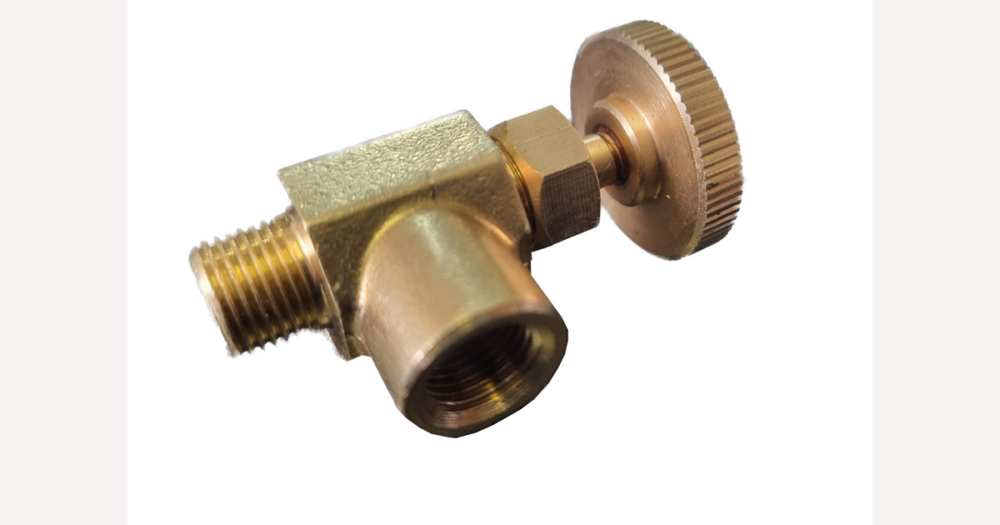
On DHgate, the safest brass needle valve for a high‑pressure residential water line is not a single brand or model—it’s one whose working‑pressure rating, materials, and connection standard clearly match your specific plumbing and that comes from a seller with credible specs and policies. This guide shows you how to read those listings step by step so you can avoid under‑rated or incompatible valves and feel confident before you place an order.
There’s no single “best” brass needle valve—only valves that match your specific system
On DHgate there isn’t a single “best” brass needle valve for every high‑pressure residential water system. The right valve is the one whose maximum working pressure and temperature clearly cover the most demanding part of your system, whose threads and size match your existing plumbing, and whose brass body and sealing materials are suitable for household water.
Personally, I would rather choose a valve that is plainly rated for the system’s maximum pressure and uses a compatible connection standard than a smaller or cheaper option with vague specs. I only relax that priority for low‑pressure, non‑critical lines where a mismatch would not risk water damage and the buyer is deliberately chasing the lowest cost.
The rest of this DHgate guide focuses on four decision axes: reading pressure and temperature ratings, judging brass and sealing material quality, checking thread and size compatibility, and assessing seller information, reviews, and policies. The first non‑negotiable question is whether a valve’s pressure rating safely covers the highest pressure your system will see; once that passes, you can start scrutinising materials and fit.
Match valve pressure and temperature ratings to the most demanding part of your system
Most brass needle valve listings on DHgate show a maximum working pressure in PSI or bar and a temperature range. Focus on the working‑pressure rating at the temperatures your system will actually see, not just a one‑off burst figure. For high‑pressure segments, the valve’s stated working pressure must at least meet—and preferably clearly exceed—the highest pressure you expect in that line.
Typical residential supplies are often in the tens of PSI (for example, many homes sit in roughly the 30–60 psi range), but local conditions and any pressure‑reducing valves or boosters can change that. If you can, confirm your own system pressure using an existing gauge on the plumbing, a simple screw‑on gauge from a hardware store, or documentation from your plumber or water provider, rather than guessing from feel at the tap.
When you don’t know the exact pressure, choose conservatively: treat the highest plausible pressure as your baseline and select a valve rated comfortably above it instead of matching it exactly. High‑pressure brass needle valves are often rated into the hundreds or more PSI; that extra capacity is fine and can provide margin, but a valve whose rating is close to or below your likely system pressure is not acceptable for high‑pressure segments.
Temperature limits matter too. If the valve will see hot water—such as near a heater or in mixed‑temperature lines—make sure the listing’s working‑temperature range covers those conditions. A valve described only for cold water use, or with a low maximum temperature, shouldn’t be installed in very hot lines. For any part of the system where failure could cause water damage, treat clear, honest pressure and temperature specs as mandatory: if a DHgate listing does not show explicit pressure ratings and units, consider it unsuitable for high‑pressure residential use unless the seller can provide precise, verifiable figures. Once you’ve screened by safe pressure and temperature ratings, the next filter is whether the brass and sealing materials are robust enough for your water and environment.
Judge brass quality and corrosion resistance from limited listing details
Once you’ve found brass needle valves on DHgate with suitable pressure and temperature ratings, the next question is whether the materials will cope with long‑term exposure to household water. Listings often use phrases like “brass body,” “for water,” or occasionally “lead‑free brass.” A “brass body” description on its own tells you the main housing is brass, which is generally appropriate for water, but it doesn’t guarantee good corrosion resistance or suitability for potable use. Phrases such as “for water” or explicit mention of “potable water” or “lead‑free brass” are more reassuring for domestic lines, especially where you care about drinking‑water safety or long‑term reliability.
On DHgate you will rarely see detailed alloy compositions or a full metallurgy breakdown, so you have to read between the lines. I prefer valves that make at least some concrete claims about material quality and intended use—such as stating that they’re for household plumbing, mentioning lead‑free brass where relevant, or referencing general plumbing or industrial standards—even if those standards aren’t exhaustively listed. When a listing only says “brass valve” with no further detail, treat that as a caution sign rather than a guarantee of quality, particularly in high‑pressure or always‑on lines.
The visible finish can also give clues: a clean, even surface, consistent machining, and robust‑looking body usually indicate better manufacturing than very sharp burrs, rough casting marks, or patchy plating. Remember that the brass body is only part of the picture; sealing elements such as PTFE (Teflon) seats, O‑rings, or other plastics must also tolerate the expected pressure and temperature. In hot‑water or mixed‑temperature lines, a valve that mentions high‑temperature‑resistant seals is a safer choice than one that ignores seal materials entirely.
Because material information is often limited, I would rather install a well‑described brass needle valve in critical, high‑pressure locations and reserve vaguely described valves for lower‑pressure, non‑critical lines where a leak would be inconvenient but not disastrous. If you can’t tell from the listing whether the brass and seals are intended for sustained water use, it’s better to choose a better‑documented option or ask the seller for clarification than to guess. From there, the next filter is connection compatibility: even the strongest, best‑made brass valve is the wrong choice if its threads and nominal size don’t match your existing plumbing.
Make sure the threads and size match your residential plumbing
- Treat thread standard and size as non‑negotiable. Even a correctly rated brass needle valve will leak or be impossible to install if its threads and dimensions don’t match your existing pipe or fittings. Common residential standards include NPT (National Pipe Thread, widely used in North America) and BSP (British Standard Pipe, common in the UK, much of Europe and many imported fittings). These standards are not compatible—mixing them can lead to poor engagement and leaks.
- 1. Identify the pipe or fitting size where the valve will go. Look for markings on the current fittings (such as 1/4″, 3/8″, 1/2″), check any system documentation, or compare with local sizing charts. These nominal sizes refer to standard pipe or tube sizes, not exact external measurements, so don’t rely on rough caliper readings alone without cross‑checking the size against a chart.
- 2. Confirm the thread standard used in that part of your system. Inspect an existing fitting for markings or documentation indicating NPT or BSP, or take a sample fitting to a local hardware store or plumber and ask which standard it uses. Avoid assuming that a thread type matches photos on a DHgate listing—get a definite answer before you order a valve.
- 3. Filter DHgate listings to those that clearly state both the correct nominal size and thread standard. A suitable listing should explicitly say something like “1/4″ NPT” or “1/2″ BSP.” Be wary of products that mix terminology (for example, mentioning both NPT and BSP without clarity) or fail to specify thread type at all, especially for high‑pressure connections where a poor seal can cause leaks or damage.
- 4. Prioritise clear compatibility over minor savings. In a high‑pressure residential line, a brass needle valve that uses the exact same size and thread standard as your existing plumbing and seals properly is far better than a cheaper or more compact valve that would need adapters or tempt you to force mismatched threads. Once you’ve confirmed that the valve can physically mate with your system, you can move on to deciding whether a needle valve is functionally the right style of valve for that line compared with alternatives like ball valves.
When a brass needle valve is the right (or wrong) choice for your line
Use a brass needle valve when you genuinely need fine, gradual control of flow rather than simple on/off. In a residential high-pressure system, that usually means smaller branch lines feeding filters, pressure gauges, instruments or special fixtures where you want to dial in a precise trickle or tightly throttled flow. Needle valves handle this kind of controlled adjustment well because the tapered needle moves slowly through the seat, letting you make small changes without sudden jumps in flow.
For main shut-offs, high-demand fixtures or larger lines where you mostly want quick isolation and minimal restriction, a ball valve or other quarter-turn valve is usually a better fit. Ball valves open fully with a short handle movement, give near full-bore flow, and are easier to operate in emergencies or routine shutoffs. In those roles, a needle valve’s multiple turns from open to closed and more restricted passage can feel slow and unnecessarily restrictive.
Because needle valves often have a smaller internal bore than a full-bore valve of the same nominal size, they can create more pressure drop when used in high-volume lines. That extra resistance is acceptable in a small branch where you intend to limit flow anyway, but it is wasteful and can degrade performance if you install a needle valve in a line that should deliver strong, unrestricted flow to showers, outdoor taps or whole-house filters.
If your main goal is safe isolation and quick shutoff on a larger residential high-pressure line, I would usually favour a properly rated ball valve over a needle valve. I reserve brass needle valves for locations where precise throttling in a smaller branch is clearly required. If you realise that your intended spot needs fast, high-flow control rather than fine adjustment, it may be better not to buy a needle valve for that point at all and instead look for an appropriate shutoff or control valve type.
Once you’ve matched the valve type to the job—needle for fine control, ball or similar for rapid shutoff—the next step is to apply a structured DHgate checklist so that any brass needle valve you do choose also meets your system’s pressure, compatibility and seller-quality requirements before you place an order.
A step-by-step DHgate checklist before you order
- Confirm or estimate your system’s pressure and typical water temperature. Use any existing gauges on pumps or filters, simple store-bought gauges, or plumbing documentation to understand normal and maximum pressure, and note any segments (such as near pressure regulators or pumps) that may see higher values. Check whether the line carries cold only or also hot water.
- Identify the pipe size and thread standard at the installation point. Look for markings on existing fittings, review any plumbing diagrams, or compare with local sizing charts so you know the nominal size (for example 1/4″, 3/8″, 1/2″) and whether the threads are NPT, BSP or another standard. Get a clear answer before you look at valves.
- Set a minimum acceptable valve rating with safety margin. Take the highest pressure you expect and add a margin rather than matching it exactly, then ensure the valve’s stated working-pressure rating meets or exceeds that figure. Confirm that the temperature range covers any hot water exposure in the line, not just room-temperature cold water.
- Filter DHgate listings to valves with clear specs that match your system. Focus on products that explicitly state maximum working pressure, temperature range, connection size, thread standard and intended use (for example, “for water” or “for plumbing”). Read the description carefully to check that these details align with the pressure, temperature and connection requirements you’ve already identified.
- Check listing photos for markings that support the written specs. Look for engraved or printed pressure ratings, size markings and thread designations on the valve body or packaging, and compare them with the text description. Treat inconsistent, blurry or incomplete photos as a reason to slow down and ask questions rather than assume the valve is suitable.
- Evaluate seller history and policies. Review the seller’s ratings, number of completed orders, buyer review comments and any shared photos. Favour sellers with consistent, detailed feedback over those with very sparse information or mixed reviews. Check shipping times, variation options (such as different sizes or thread types) and the stated return and dispute policies so you know what support is available if the valve arrives with different markings or performance than described.
- Apply a conservative preference for clarity over price. I would choose a listing that clearly states pressure rating, connection standard and use case—even if it costs a little more—over a cheaper option with vague or missing specs. If critical information such as maximum working pressure or thread type is unclear, contact the seller with specific questions. Be prepared to walk away from listings that never provide definite answers; on DHgate, a valve you can match confidently to your system is far safer than a bargain that leaves key details to guesswork.
- Once you have followed this checklist, recognise that skipping steps or accepting unclear specs increases the risk of leaks, poor performance or dispute hassles. The next section focuses on those risks and the red flags that should make you pause before placing an order.
Recognize red flags and risks when specs don’t add up
What evidence can (and can’t) prove a valve’s quality on DHgate
Some DHgate brass needle valve listings provide quality-related information such as references to general industrial or plumbing standards, specific pressure-test figures, downloadable spec sheets, or detailed dimension drawings. When these details are coherent, they suggest the valve has been designed and tested with particular pressures, temperatures and media in mind, rather than being a generic fitting with unknown limits.
Because marketplace claims are not always independently verified, you should look for internal consistency. Identifiable standards or model numbers, clear working-pressure and temperature ranges, and markings visible in photos that match the written specs all add credibility, especially when multiple buyer reviews mention the same ratings or use cases. By contrast, vague phrases like “certified” or “meets standard” with no identifiers, or stock photos that obviously do not match the described product, should be treated with skepticism.
From an editorial standpoint, concrete evidence and standards are worth paying for: if a valve has clear documentation, matching markings and consistent reviews, I would prefer it over a cheaper option with thin or ambiguous information. When lower-cost listings lack such evidence, use them conservatively in non-critical, lower-pressure locations and rely more heavily on seller reputation, or choose a better-documented product even if the price is higher. The goal here is not to promise specific certifications for every brass needle valve on DHgate, but to help you interpret whatever evidence appears and recognise both its usefulness and its limits before you move on to the final practical FAQs about outdoor use, pressure margins and handling mismatched markings on delivered products.
Practical FAQs about brass needle valves in home high-pressure setups
Can a high-pressure brass needle valve be used outdoors in a residential setup?
Yes, many brass needle valves can be used outdoors, but you need to treat exposure as a design condition. Brass itself resists weather reasonably well, yet constant moisture can still cause surface corrosion, especially near salty or polluted air, so favour valves described as suitable for water and outdoor or general plumbing use. Protect non-metal parts—plastic handles, PTFE seals, rubber O-rings—from direct UV and weather by installing the valve in a sheltered box, under an eave, or inside a cabinet rather than fully exposed. Use proper sealing (tape or paste rated for water and the pressure involved) and avoid low spots where standing water can collect around the valve body.
How much pressure margin should I allow above my expected system pressure?
Treat margin as a safety buffer, not a precise rule. Once you know—or conservatively estimate—the highest pressure your line might see, choose a valve with a clearly higher stated working-pressure rating rather than matching that figure exactly. The less certain you are about actual pressure (for example, where there are pumps, regulators, or pressure fluctuations), the more margin is sensible, within reason. If several valves meet your connection needs, I would prefer the one with the higher, clearly stated working-pressure rating and matching temperature range, even if it is slightly more expensive, rather than a borderline option with thin or ambiguous specs.
What should I do if the brass needle valve delivered from DHgate doesn’t match the listing specs or markings?
Start by documenting the mismatch clearly: take sharp photos of the valve, its markings, size, and any packaging, and keep screenshots of the original DHgate listing showing the claimed pressure rating, thread type and size. Contact the seller through DHgate messaging, explain the differences and attach your photos, and ask for a resolution—such as replacement with the correct spec or a refund. If the seller’s response is slow, unhelpful or refuses to address a clear discrepancy, open a dispute through DHgate’s order page, submit your evidence and follow the platform’s refund process. Don’t install a valve whose markings, size or ratings differ from what you ordered in any high-pressure or critical line; treat the inconsistency as a reason to pause until DHgate resolves the case.