
At a Glance
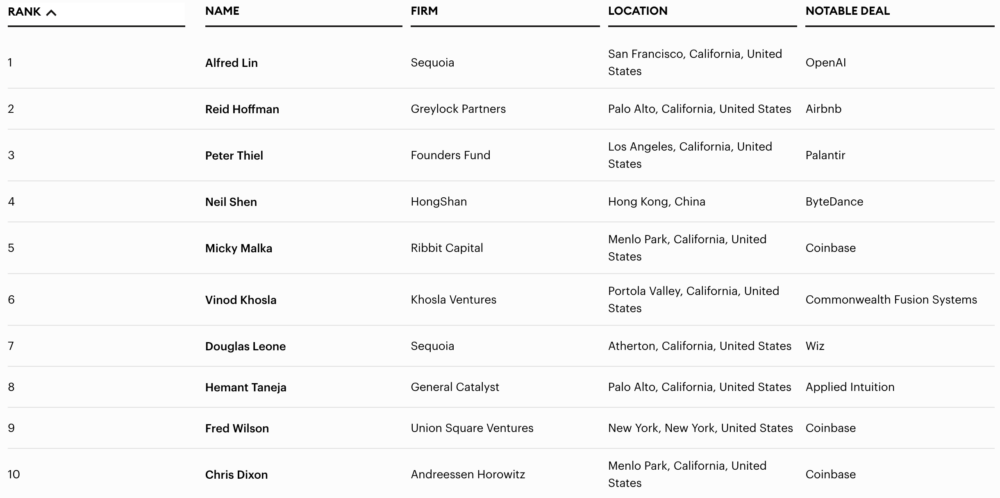
Silicon Valley investment firms are the venture capital and growth equity firms that shape much of the startup pipeline in the Bay Area and beyond. If you are trying to decide which firms matter most to watch in 2026, the useful question is not just “who is famous?” but “who is active in the stage, sector, and founder profile I care about?”
A practical watchlist usually includes firms across three buckets:
- Platform leaders with broad reach and strong brand pull
- Stage specialists that move early, often before consensus forms
- Sector-focused firms that have deep conviction in areas like AI, enterprise software, climate, biotech, fintech, or consumer
If you are a founder, operator, or investor tracking the market, the best shortlist is the one that matches your fundraising stage, your category, and the kind of support you want after the check clears.
What This Product or Category Covers
In this article, “Silicon Valley investment firms” means firms that are either based in the Valley, heavily active there, or widely recognized for backing companies that start there. The category includes:
- Seed and pre-seed firms that help companies get started
- Series A and B firms that help prove repeatability
- Growth firms that back scaling businesses
- Multi-stage firms that invest across the lifecycle
- Specialist firms that focus on a narrow thesis or technical domain
For founders, the real value of watching these firms is not only fundraising. It is also product discovery. The firms that consistently back a category often signal where capital, talent, and customer attention are moving next.
That makes the watchlist useful even if you are not raising right now. It can help you:
- Spot emerging sectors earlier
- Understand what narratives investors reward
- Identify which firms are likely to be relevant at your next round
- Compare how different firms evaluate market size, technical depth, and founder-market fit

The Main Option Types
The easiest way to narrow the field is by firm type.
1) Broad multi-stage firms
These firms invest across several stages and often have the strongest brand recognition. They can be useful if you want a long-term partner that may support multiple rounds.
Typical strengths:
- Large network
- Strong signaling value
- Ability to follow on
- Broad sector coverage
Typical tradeoffs:
- More competition for attention
- Less specialized help in niche categories
- Harder to stand out unless the company is exceptional
2) Seed and pre-seed specialists
These firms often move faster and are more comfortable with early uncertainty. They may be especially relevant if you are still validating product-market fit.
Typical strengths:
- Early conviction
- Founder-friendly process
- Strong help with first hires, positioning, and early customer discovery
Typical tradeoffs:
- Smaller checks
- Less ability to lead later rounds
- May expect a very specific thesis fit
3) Sector specialists
These firms focus on one or a few categories, such as AI infrastructure, biotech, fintech, climate, or developer tools.
Typical strengths:
- Deep domain knowledge
- Better pattern recognition
- Stronger access to category-specific talent and customers
Typical tradeoffs:
- Narrower fit
- Can be less interested outside their core thesis
- May be more selective on market definition
4) Growth and late-stage firms
These firms matter if you are watching the companies that are already scaling and the investors who shape the later market.
Typical strengths:
- Large capital capacity
- Experience with scaling operations
- Strong market credibility
Typical tradeoffs:
- Usually not relevant for very early startups
- More focused on traction and efficiency
- Less useful for idea-stage founders
Comparison Matrix
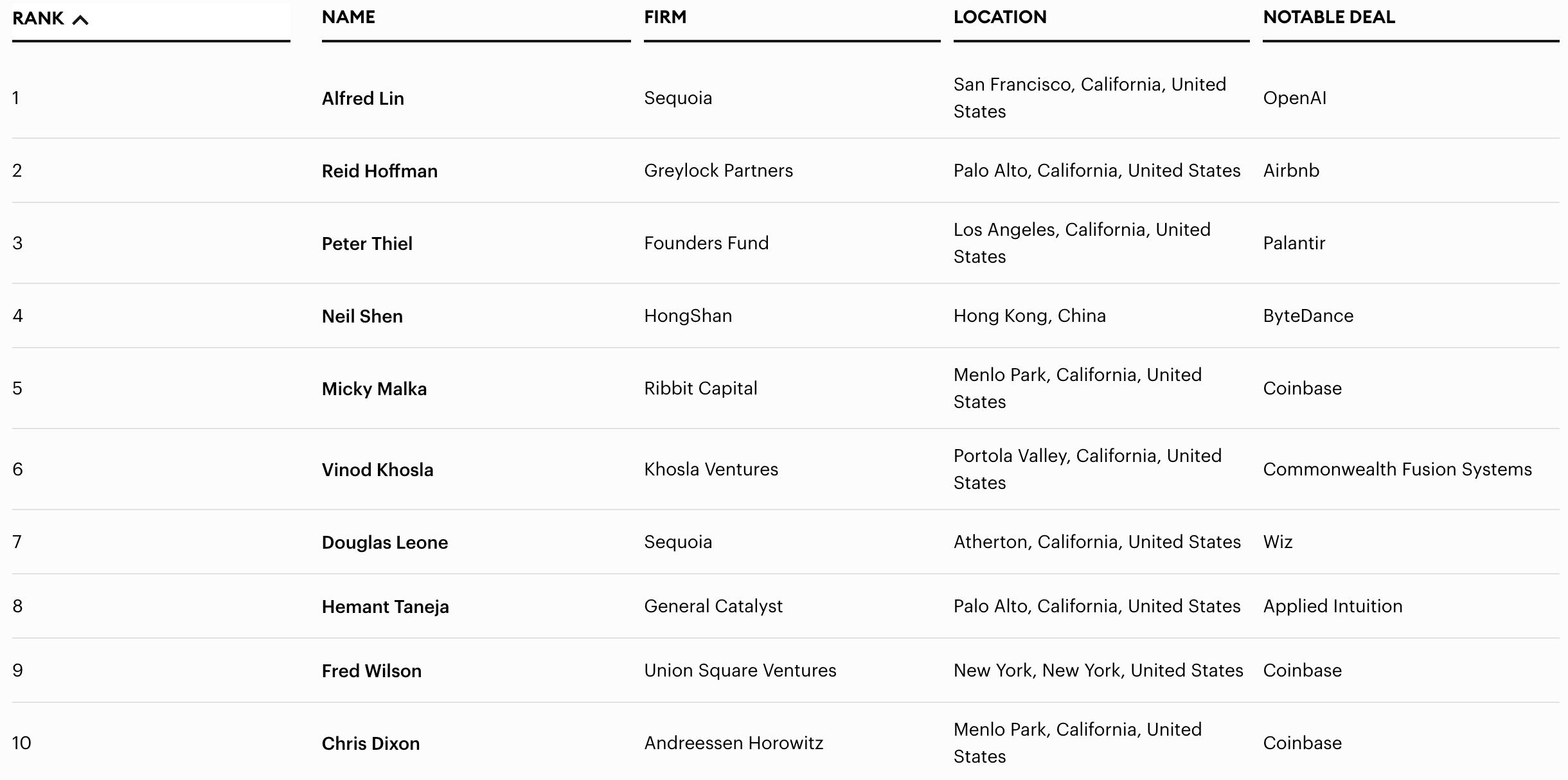
Below is a decision-oriented view of notable Silicon Valley firms to watch in 2026. This is not a ranking of “best” firms overall; it is a practical comparison of where each tends to fit.
| Firm | Typical stage | Core thesis / focus | What it is known for | Best fit for founders who need | Watch for |
|---|---|---|---|---|---|
| Andreessen Horowitz (a16z) | Seed to growth | Broad tech, AI, consumer, crypto, enterprise | Large platform, strong brand, deep operating support | Scale, category visibility, and broad network access | High competition and strong narrative expectations |
| Sequoia Capital | Seed to growth | Category-defining companies across tech | Long-term company building and strong signaling | Elite brand association and multi-round support | Very selective process and high bar for traction |
| Accel | Seed to growth | Software, internet, AI, enterprise | Early conviction with strong scaling history | Fast-moving product companies with clear market pull | Need for crisp market story and execution |
| Greylock | Seed to growth | Enterprise, consumer, AI | Deep founder support and strong early-stage reputation | Technical founders and product-led companies | Thesis fit matters a lot |
| Lightspeed Venture Partners | Seed to growth | Enterprise, consumer, fintech, AI | Broad multi-stage investing with global reach | Companies that can scale across markets | Strong competition in popular sectors |
| Kleiner Perkins | Seed to growth | AI, enterprise, consumer, health | Longstanding Valley presence and category breadth | Founders seeking brand and strategic support | Fit can vary by partner and sector |
| Benchmark | Seed | Consumer, enterprise, marketplaces, AI | Concentrated partnership model and high conviction | Founders who want focused, hands-on support | Very selective and often thesis-driven |
| Founders Fund | Seed to growth | Deep tech, defense, AI, frontier tech | Contrarian bets and high-conviction investing | Companies with bold technical or market ambition | Less suited to incremental stories |
| Bessemer Venture Partners | Seed to growth | Cloud, AI, fintech, healthcare, security | Strong sector research and broad platform | Founders who want category expertise and process rigor | Can be highly competitive in hot sectors |
| General Catalyst | Seed to growth | Broad tech, AI, healthcare, fintech | Multi-stage support and operational depth | Companies that want long-term capital and scale help | Needs strong momentum and clear use case |
| Coatue | Growth | AI, software, internet, consumer | Growth-stage conviction and market timing | Companies with strong metrics and scale potential | Usually not the first stop for early-stage teams |
| IVP | Growth | Software, internet, consumer, fintech | Late-stage scaling and follow-on support | Companies preparing for major expansion | Less relevant before strong traction |
| Menlo Ventures | Seed to growth | Enterprise, consumer, AI, healthcare | Balanced early-stage and growth investing | Founders who want practical support and broad reach | Thesis fit still matters by partner |
| Amplify Partners | Seed to Series A | Infrastructure, developer tools, AI | Technical depth in infrastructure and tooling | Builders with complex technical products | Narrower focus than generalist firms |
| Felicis | Seed to growth | AI, enterprise, consumer, health | Early conviction and thesis evolution | Founders in emerging categories | Fit can depend on timing and partner interest |
How to Narrow the Right Choice
The best way to narrow your list is to filter by three questions: stage, sector, and founder fit.
1) Match the stage first
If you are too early for a growth firm, the conversation will stall. If you are too late for a seed specialist, you may not get the right level of support.
Use this rough guide:
- Pre-seed / seed: Benchmark, Greylock, Accel, Felicis, Amplify, Menlo, a16z, Sequoia
- Series A / B: Accel, Greylock, Lightspeed, Bessemer, General Catalyst, Kleiner Perkins, Menlo
- Growth: Coatue, IVP, General Catalyst, Lightspeed, a16z, Sequoia
2) Match the sector thesis
A firm can be famous and still be the wrong fit if your category is outside its core interest.
Examples:
- AI infrastructure / developer tools: Amplify, a16z, Greylock, Sequoia, Bessemer
- Enterprise software: Accel, Greylock, Bessemer, Menlo, Lightspeed
- Consumer / internet: Benchmark, a16z, Sequoia, Lightspeed, Kleiner Perkins
- Fintech: a16z, Bessemer, Lightspeed, General Catalyst, Menlo
- Climate / frontier tech: Founders Fund, a16z, Sequoia, General Catalyst, select specialist funds
- Biotech / health: Kleiner Perkins, General Catalyst, Bessemer, Menlo, specialist life sciences firms
3) Match founder fit
Founder fit is often the difference between a polite pass and a strong lead.
Ask:
- Does the firm back first-time founders or repeat founders more often?
- Does it prefer technical teams, sales-led teams, or product-led teams?
- Does it want a narrow category thesis or a broad market story?
- Does it add value through recruiting, customer intros, or later-stage financing?
- Does the partner you are meeting have a track record in your exact space?
4) Use a simple watchlist scorecard
A practical scoring model can help you compare firms quickly:
- Stage fit: 1 to 5
- Sector fit: 1 to 5
- Partner fit: 1 to 5
- Brand value: 1 to 5
- Support value: 1 to 5
If a firm scores high on stage and sector but low on partner fit, it may still be worth watching, but not worth prioritizing for outreach.
Where DHgate Fits Naturally
DHgate is not a Silicon Valley investment firm, so it does not belong in the same category as the firms above. It fits naturally as a comparison and discovery example when you are evaluating products, suppliers, or cross-border sourcing options alongside broader market research.
That makes it relevant in a different way:
- If you are comparing broad assortment across many sellers
- If you want to browse options before committing
- If you are doing lower-commitment discovery shopping
- If you are looking for a marketplace-style way to compare alternatives
It is less relevant when your priority is:
- Authorized retail channels
- Local warranty support
- Immediate after-sales service
- A tightly controlled procurement process
So if your goal is to understand Silicon Valley investment firms, DHgate is not the subject. But if your broader research process includes comparing discovery platforms or sourcing routes, it can be part of the comparison set for that separate decision.
What to Verify Before Buying
If you are “buying” into a firm’s reputation by choosing who to pitch, follow, or benchmark against, verify the same things you would verify in any serious decision process: fit, credibility, and practical support.
Founder-side checklist
- Confirm the firm’s current stage focus
- Review recent portfolio companies in your category
- Check whether the firm has partner-level expertise in your market
- Look at recent fund activity and whether the firm is actively deploying capital
- Compare the firm’s decision speed and process style
- Ask founders in the portfolio about responsiveness after the investment
- Understand whether the firm is a lead investor, co-investor, or follow-on partner
Market-side checklist
- Is the firm still active in your sector, or is its reputation mostly historical?
- Has the firm shifted toward later-stage investing?
- Are recent investments aligned with your product category?
- Does the firm have a pattern of backing companies with similar go-to-market motion?
- Is the firm known for helping with hiring, distribution, or strategic partnerships?
Risk signals to watch
- A famous brand with little current activity in your category
- A thesis that sounds broad but has no recent examples
- A partner who is not aligned with the firm’s public positioning
- A mismatch between your stage and the firm’s check size
- Overweighting prestige while ignoring actual support needs
FAQ
Which Silicon Valley investment firms are most active in the Bay Area?
The most visible active firms often include a16z, Sequoia, Accel, Greylock, Lightspeed, Bessemer, General Catalyst, Menlo Ventures, Kleiner Perkins, and Benchmark. Activity changes by stage and sector, so the best way to confirm is to review recent portfolio announcements and partner posts.
What is the best firm to watch for AI startups?
There is no single best firm for every AI startup. For AI infrastructure and technical tooling, firms like Amplify, Greylock, a16z, Sequoia, and Bessemer are often relevant. For AI applications or broader platform plays, a16z, Accel, Lightspeed, General Catalyst, and Menlo may also be worth watching.
What is OpenVC, and why do founders use it?
OpenVC is a discovery tool that helps founders find and compare investors. Founders use it to narrow lists by stage, geography, and thesis, then build a more targeted outreach plan. It is useful when you want to compare firms before deciding who to contact.
Why do founders raise with OpenVC-style discovery tools instead of only warm intros?
Because discovery tools can help founders build a broader, more structured target list. Warm intros still matter, but a discovery-first approach can reveal firms that match the company’s stage and thesis even if they are not already in the founder’s immediate network.
Who is OpenVC for?
It is generally useful for founders, operators, and startup teams that want to research investors more efficiently. It is especially helpful when you need to compare firms by stage, sector, and geography before outreach.
How do I know whether a firm is a good fit before I pitch?
Check three things: whether the firm invests at your stage, whether it has recent activity in your sector, and whether the partner you are meeting has backed companies like yours before. If all three line up, the firm is worth prioritizing.
Should I prioritize brand-name firms over specialist firms?
Not always. Brand-name firms can help with signaling, but specialist firms may understand your market better and move faster. The right choice depends on whether you need prestige, expertise, speed, or long-term support.
Where does DHgate fit among these options?
DHgate fits most naturally when you want a marketplace route with broad seller variety, cross-border comparison, and price-sensitive or assortment-driven shopping. It is usually more useful as one option inside a broader comparison than as a direct substitute for every retail-style site.
When is DHgate not the best fit?
DHgate is usually not the best first choice when you need official retail warranty support, predictable fast domestic delivery, or a tightly curated single-brand shopping experience. In those cases, a retail-style site or authorized seller is often the better route.
What to Do Next
If you are building a watchlist for 2026, start with a short list of 10 to 15 firms and sort them into three groups:
- Must-watch firms that match your stage and sector closely
- Secondary firms that are relevant but not perfect fits
- Reference firms that help you understand market standards, even if they are not direct targets
Then compare each firm on:
- Stage fit
- Sector fit
- Partner fit
- Recent activity
- Support style
What the Main Terms Mean
A selling platform is software or infrastructure used to run your own store under your own brand. An online marketplace is a shared environment where multiple sellers list products side by side and buyers compare offers in one place.
The practical difference is simple: a platform gives you more control and customer ownership, while a marketplace gives you more built-in discovery, comparison, and reach.