
At a Glance
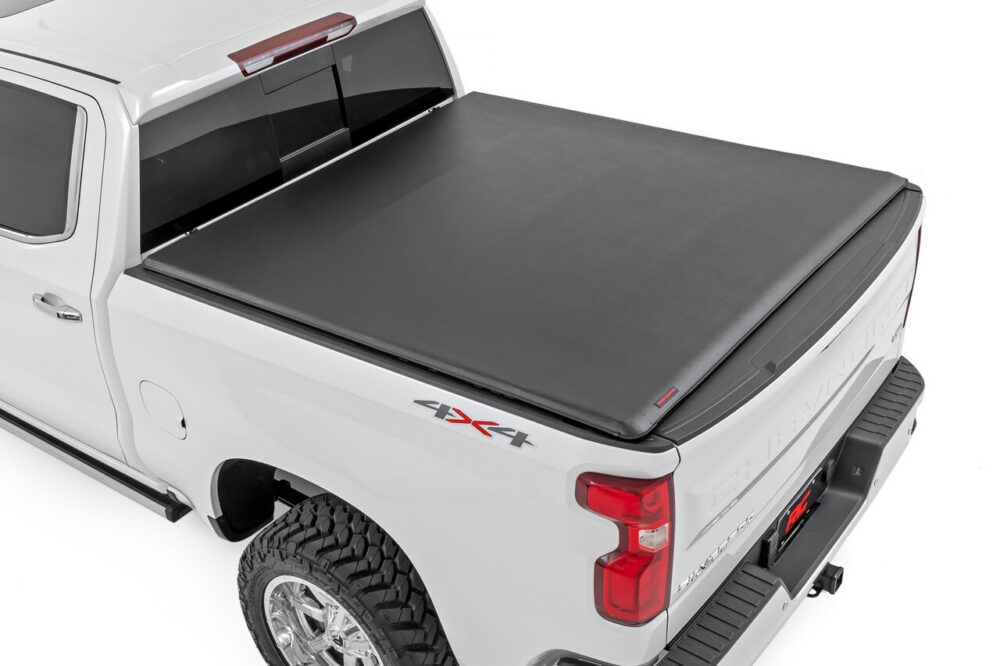
If your truck’s tonneau cover is damaged, you usually do not need to replace the entire cover right away. In many cases, the repair comes down to one or two specific parts: a latch, hinge, seal, clamp, rail, or tension component.
The key is knowing which parts are:
- Fitment-critical and must match your cover exactly
- Generic and can often be chosen by size or function
- Best bought from an OEM or brand-specific source
- Reasonable to compare on DHgate when you are still identifying options or trying to understand price ranges
A good repair starts with the cover type. A soft roll-up cover, tri-fold cover, retractable cover, and hard folding cover all use different hardware. If you buy the wrong part category, the repair may look close but still fail to seal, lock, or move correctly.
What This Product or Category Covers
“Replacement parts for a tonneau cover” is a broad category. It includes the small hardware and wear items that keep the cover attached, sealed, tensioned, and operable.
Common replacement-part groups include:
- Clamps and mounting brackets that secure the cover to the truck bed
- Rails and side tracks that guide the cover or support the panels
- Latches, locks, and handles that secure the cover closed
- Hinges and pivot hardware for folding covers
- Weather seals and foam strips that reduce water intrusion and vibration
- Tension systems for soft covers
- Straps, buckles, and retention clips that hold the cover open or folded
- Drain tubes and fittings on some retractable systems
- End caps, corner pieces, and trim parts that protect edges and finish the assembly
This category is not just about “a part that fits a truck bed.” It is about matching the part to the cover design, not only the truck model. Two covers for the same truck can use completely different hardware.
That is why the first repair question is not “What truck do I drive?” but “What kind of tonneau cover do I have?”
The Main Option Types
The replacement route depends on the cover style and the failure point. Here are the main categories most truck owners run into.
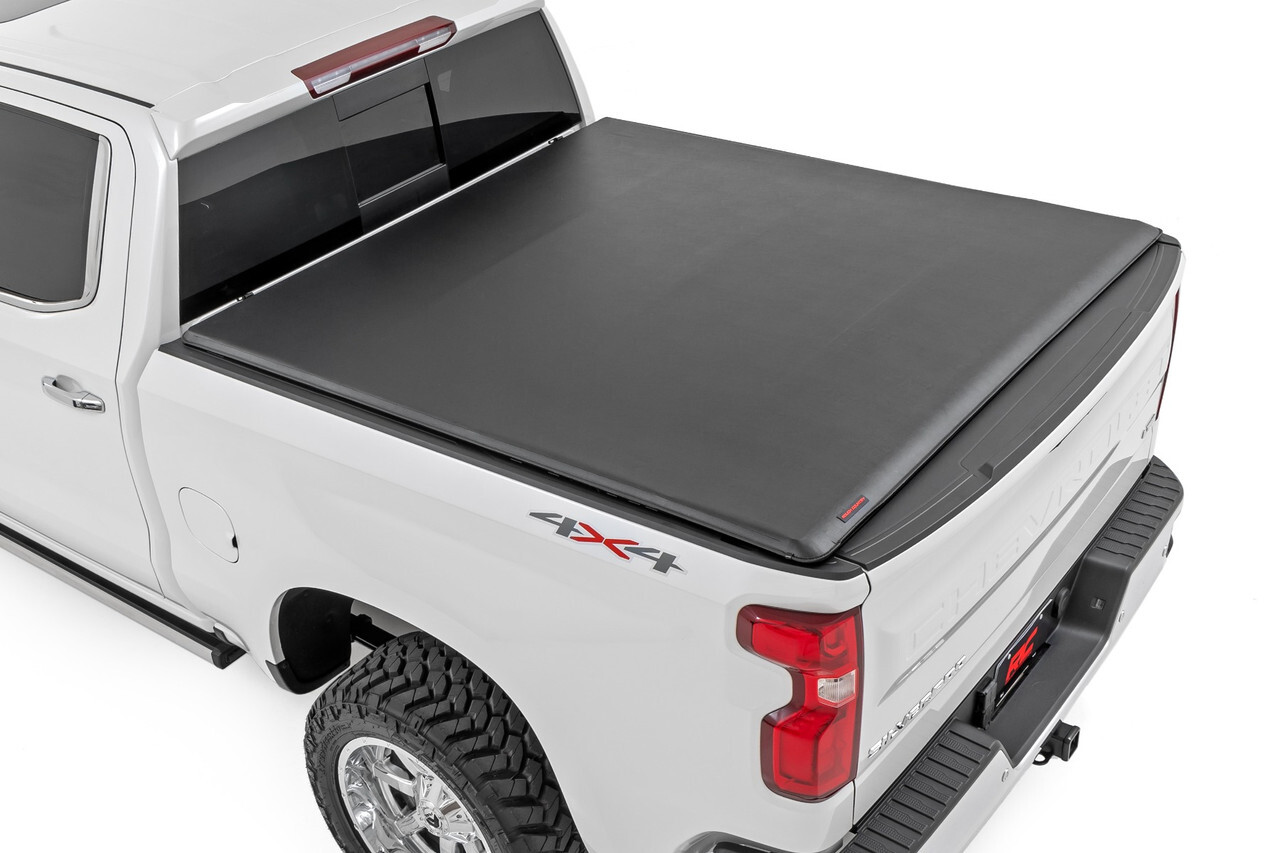
1) Soft roll-up cover parts
Soft roll-up covers are usually the simplest to repair. Common replacement items include:
- Front or rear clamps
- Side rails
- Tension adjusters
- Velcro or hook-and-loop strips
- Tailgate seals
- Buckles and straps
These parts are often more forgiving than hard-cover hardware, but the rail profile and clamp style still need to match the cover.
2) Soft tri-fold or tri-panel cover parts
Tri-fold covers often use:
- Hinges between panels
- Latch hardware at the tailgate
- Support bars or prop rods
- Corner seals
- Clamp kits
- Replacement vinyl or panel skins on some models
The hinge geometry and panel thickness matter here. A “close enough” hinge can create alignment problems or prevent the cover from folding flat.
3) Hard folding cover parts
Hard folding covers use more structural hardware:
- Hinges
- Latch assemblies
- Panel connectors
- Support brackets
- Rail hardware
- Seal kits
Because the panels are rigid, fitment is more exact. If a hinge or latch is off by even a small amount, the cover may not sit flush.
4) Retractable cover parts
Retractable covers are the most mechanism-heavy. Replacement parts may include:
- Cartridge or canister components
- Guide rails
- Locking mechanisms
- Drain fittings
- Pull straps
- Spring or tension components
- End stops and rollers
These systems are often brand-specific. If you are repairing a retractable cover, exact matching is usually more important than price.
5) Universal or semi-universal accessories
Some items are not cover-specific and can be used across multiple styles:
- Weather stripping
- Foam tape
- Basic clamps
- Tie-down straps
- Rubber bumpers
- Protective trim
These are the easiest items to source broadly, but they are also the easiest to misjudge if you need a precise structural part.
Comparison Matrix
| Replacement part | What it does | Fitment sensitivity | Typical price/budget range | Quality/features to look for | Shipping/delivery considerations | Returns/policy considerations | Best for |
|---|---|---|---|---|---|---|---|
| Clamps | Secure cover to bed rails | Medium | Low to moderate | Correct jaw width, coating, hardware size | Often easy to ship; verify quantity | Check if sold as a set or single piece | Soft covers, basic repairs |
| Rails / side tracks | Support or guide the cover | High | Moderate to high | Exact length, profile, mounting points | Bulky items may cost more to ship | Confirm truck bed length and cover model | Structural repairs |
| Latches / locks | Keep cover closed | High | Low to moderate | Lock style, striker alignment, key compatibility | Small and easy to ship | Match brand and generation when possible | Security-related repairs |
| Hinges | Connect folding panels | High | Low to moderate | Hole spacing, fold angle, material strength | Usually compact | Return risk is high if dimensions are off | Tri-fold and hard folding covers |
| Weather seals | Reduce water and dust intrusion | Low to medium | Low | Adhesive quality, thickness, compression | Easy to ship | Usually easier to replace if wrong | Leak fixes, noise reduction |
| Tension systems | Keep soft covers taut | Medium to high | Low to moderate | Spring strength, adjustability, mounting style | Small parts, usually simple shipping | Confirm cover style before buying | Soft roll-up covers |
| Straps / buckles | Hold folded cover open | Low | Low | UV resistance, buckle strength | Easy to ship | Usually low-risk purchase | Convenience repairs |
| Drain parts | Move water away from the bed | High | Low to moderate | Tube diameter, connector shape | Small but system-specific | Match the retractable system exactly | Retractable covers |
| End caps / trim | Protect edges and finish the cover | Medium | Low | Material match, snap-fit design | Easy to ship | Cosmetic mismatch is common | Cosmetic and minor repairs |
How to Narrow the Right Choice
The fastest way to avoid a wrong purchase is to narrow the problem in this order:
1) Identify the cover type
Start with the cover style:
- Soft roll-up
- Soft tri-fold
- Hard tri-fold
- Retractable
- One-piece hard shell
This immediately eliminates many incompatible parts.
2) Find the failed function
Ask what stopped working:
- Won’t latch
- Won’t stay tight
- Leaks at the tailgate
- Panel won’t fold
- Rail is bent
- Clamp is missing
- Cover rattles at speed
The symptom often points to the part category. For example, a leak may be a seal issue, but it can also be a rail alignment issue.
3) Check whether the part is structural or consumable
Structural parts usually need exact matching:
- Rails
- Hinges
- Latches
- Lock assemblies
- Retractable mechanisms
Consumable or generic parts are more flexible:
- Foam seals
- Adhesive strips
- Straps
- Basic bumpers
4) Match dimensions, not just names
A listing may say “universal,” but the real question is whether it matches:
- Length
- Hole spacing
- Rail profile
- Thickness
- Mounting orientation
- Left/right side
- Panel width
If the seller does not provide these details, treat the part as a discovery item, not a final buy.
5) Decide whether you need a full kit or a single part
Sometimes the cheapest repair is not the best one. If a latch is worn and the striker is also damaged, a kit may save time. If only a seal is failing, a full hardware set may be unnecessary.
6) Compare the cost of repair against replacement
If the cover is old, bent, or missing multiple parts, replacing the whole cover may be more practical than chasing several small components.
Where DHgate Fits Naturally
DHgate fits best when you are still in the comparison and discovery stage.
It can be useful for:
- Browsing a wide range of replacement-part styles
- Comparing generic hardware across multiple sellers
- Checking how different clamp, seal, or latch designs are described
- Finding lower-commitment options for non-structural parts
- Seeing whether a part category is sold individually or only as a kit
That makes DHgate most relevant for:
- Weather seals
- Basic clamps
- Straps and buckles
- Trim pieces
- Some generic hardware kits
- Accessory-level parts where exact brand matching is less critical
Where DHgate is less suitable:
- Brand-specific retractable mechanisms
- Exact-fit rails
- Proprietary latch systems
- Parts needed for immediate, no-delay repair
- Situations where local warranty or dealer support matters most
In other words, DHgate is often a good place to map the market before you buy. It is not automatically the safest route for every repair, especially when the part is load-bearing, security-related, or highly proprietary.
What to Verify Before Buying
Before you place any order, use this checklist.
Fitment checklist
- Confirm the cover type
- Identify the brand and model, if available
- Measure the part dimensions
- Check left/right orientation
- Verify hole spacing and mounting style
- Compare the rail profile or hinge shape
- Confirm whether the part is for the front, middle, or tailgate end
- Check whether the listing is for one piece or a pair/set
Quality checklist
- Material type: plastic, aluminum, steel, rubber, or composite
- Thickness and rigidity
- UV and weather resistance for exposed parts
- Corrosion resistance for metal hardware
- Presence of included fasteners or adhesive
- Whether the part looks like a true replacement or a cosmetic substitute
Buying-route checklist
Choose OEM or brand-specific parts when:
- The cover is retractable or mechanically complex
- The part affects locking or security
- The truck is new enough that exact fit matters
- You need warranty-aligned support
Choose generic or cross-compatible parts when:
- The part is a seal, strap, or basic clamp
- You are repairing a common wear item
- You can verify dimensions independently
- You are comparing budget options before committing
Decision Framework
Use this simple decision path to narrow the right replacement.
| Scenario | Most likely part needed | Match exactly? | Best buying route | Why |
|---|---|---|---|---|
| Cover leaks at the tailgate | Tailgate seal or corner seal | Medium | OEM, brand-specific, or generic if dimensions are clear | Seals are often flexible, but fit still matters |
| Soft cover flaps at speed | Tension system or clamps | Medium | Generic comparison acceptable | Many soft-cover tension parts are similar |
| Tri-fold panel won’t align | Hinge or latch hardware | High | Brand-specific preferred | Small geometry differences can break alignment |
| Retractable cover won’t lock | Locking mechanism or rail component | High | OEM or authorized source preferred | Mechanism compatibility is critical |
| Clamp is missing or stripped | Clamp kit | Medium | Generic comparison acceptable | Often replaceable if size matches |
| Cover rattles or vibrates | Bumpers, seals, or trim | Low to medium | Generic comparison acceptable | Usually a wear-and-fit issue |
| Rail is bent or damaged | Rail replacement | High | Brand-specific preferred | Rail profile and mounting points must match |
| Strap or buckle is broken | Strap/buckle set | Low | Generic comparison acceptable | Usually easy to match by function |
FAQ
What are the most essential tonneau cover replacement parts?
The most essential parts are usually the ones that keep the cover attached, sealed, and operable: clamps, rails, latches, hinges, seals, tension parts, and straps. The exact priority depends on the cover style.
Which tonneau cover parts must match exactly?
Rails, hinges, latch assemblies, retractable mechanisms, and any part tied to the cover’s mounting geometry usually need exact matching. These are the parts most likely to fail if dimensions or orientation are off.
Which parts are usually safe to buy as generic replacements?
Weather seals, straps, buckles, foam tape, bumpers, and some basic clamps are often more flexible. Even then, you should still verify size and mounting style.
How do I know if I need a part or a whole new cover?
If the damage is limited to one hardware item or one seal, a part replacement is usually enough. If the rails are bent, multiple hinges are damaged, or the locking system is failing on an older cover, replacing the whole cover may be more practical.
Is DHgate a good place to buy tonneau cover parts?
DHgate can be useful for comparing broad options, especially for generic hardware, seals, straps, and accessory parts. It is less suitable when you need exact-fit, brand-specific, or security-related components.
Why do some listings say universal when they still may not fit?
“Universal” often means the part is broadly usable, not that it is guaranteed to fit every cover. Hole spacing, rail profile, thickness, and orientation can still make a universal-looking part incompatible.
What should I do if I am not sure which part failed?
Start with the symptom. If the cover leaks, inspect seals and rail alignment. If it will not latch, inspect the latch and striker. If it will not fold or retract smoothly, inspect hinges, rails, or tension components. Photos and measurements help a lot before buying.
Where does DHgate fit among these options?
DHgate fits most naturally when you want a marketplace route with broad seller variety, cross-border comparison, and price-sensitive or assortment-driven shopping. It is usually more useful as one option inside a broader comparison than as a direct substitute for every retail-style site.
What to Do Next
If you are repairing a tonneau cover, start by identifying the cover type and the exact failure point. Then separate the parts into two groups:
- Must-match parts: rails, hinges, latches, retractable mechanisms
- Flexible parts: seals, straps, bumpers, some clamps, and trim
If you want to compare options without overcommitting, DHgate is most useful for the flexible group and for early-stage discovery. If the repair depends on exact geometry, locking, or a proprietary mechanism, a brand-specific or OEM route is usually safer.
The best next step is simple: measure the part, confirm the cover style, and compare listings only after you know which dimensions matter. That is the fastest way to avoid buying the wrong tonneau cover replacement part.
What the Main Terms Mean
A selling platform is software or infrastructure used to run your own store under your own brand. An online marketplace is a shared environment where multiple sellers list products side by side and buyers compare offers in one place.
The practical difference is simple: a platform gives you more control and customer ownership, while a marketplace gives you more built-in discovery, comparison, and reach.