
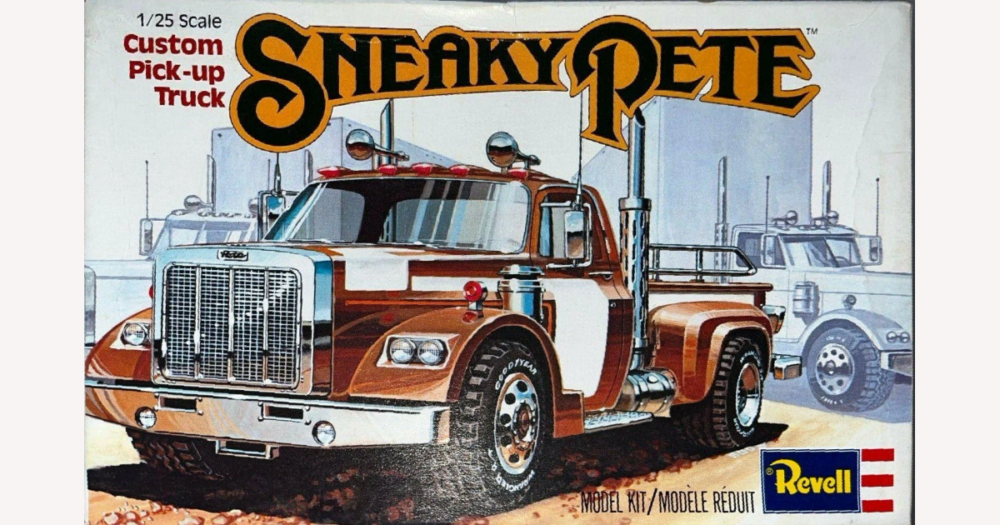
If you’re trying to track down rare Revell model truck kits or hard‑to‑find parts, DHgate can be one useful option—but only if you treat it as a broad marketplace with uneven listing quality, not a dedicated Revell collector hub. The safest approach is to focus on offers with clear scale, part descriptions, and honest photos, and to read seller feedback and shipping details carefully so you understand your protection under DHgate’s dispute and refund framework before risking money on a “rare” or higher‑priced kit.
What DHgate can (and can’t) offer for rare Revell truck kits and parts
DHgate is a large, general marketplace where model truck kits and parts show up inside wider toy and hobby categories rather than in a dedicated Revell collector section. Listings for Revell-style truck kits can appear and disappear as third‑party sellers add or remove stock, so it’s not a place you can rely on to always carry specific rare, discontinued Revell truck releases.
For genuinely rare Revell truck items, it’s more realistic to treat DHgate as a secondary option: useful for compatible or generic parts in the right scale—such as wheel sets, engines, detail accessories—and for occasional reissue or unboxed kits, but not as a guaranteed source of brand‑verified vintage boxed kits. Because most offers are created by independent sellers, the accuracy of their branding and descriptions can vary a lot from listing to listing.
When I’m hunting rare pieces, I treat any DHgate listing as a candidate only if it offers clear, verifiable information: scale (for example 1:24 or 1:25), a specific part description, and ideally a stated manufacturer or kit number. If a listing leans heavily on buzzwords like “Revell” or “rare” but gives fuzzy photos, no scale, and vague wording, I’d rather skip it or assume it’s only useful as scrap parts, even if the price is low or the offer looks tempting.
Because DHgate involves international sellers and varied practices, it’s also important to read descriptions closely, check seller feedback, and understand DHgate’s dispute and refund options before committing money to any higher‑priced or “rare” kit. Revell truck kits are easiest to search by scale, kit number, and subject name—identifiers that also help you avoid incompatible parts across DHgate and other marketplaces.
How Revell truck kits are identified (scale, kit numbers, and subjects)
Revell truck model kits are built around fixed scales—commonly 1:24 or 1:25 for road vehicles—and that number directly controls the size of every cab, frame, wheel, and interior detail. Parts from a different scale almost never look right together: a 1:24 wheel set on a 1:25 truck, for example, can throw off stance and proportions. When you’re matching loose parts or evaluating a listing, treating scale as non‑negotiable is the simplest way to protect fit and realism.
Each Revell release also carries a kit number printed on the box and instructions. That identifier, combined with the kit’s name—such as a specific truck make, model year, and configuration—lets builders look up reference photos and sprue layouts in catalogs or hobby resources and check which parts originally came with that kit. If you’re repairing a particular 1:25 semi truck kit, the strongest candidates are listings that name 1:25 scale and explicitly mention Revell plus the same kit number or a clearly matching subject description; a listing that only says “truck model parts” without scale or brand leaves you guessing.
Subject wording fills in the rest of the identity: phrases like “Chevy dually,” “vintage ramp truck,” or “plastic semi truck” distinguish versions of similar trucks that may differ in trim, accessories, or body style. These details matter when there are multiple kits around the same basic vehicle, or when you’re trying to confirm that a cab, bed, or decal sheet comes from the specific release you own.
Personally, I only treat a listing as a serious option when its scale and origin are either stated outright or can be matched to known kit references from the kit number and subject name. Offers that rely on vague phrases like “truck model parts” or “compatible with many kits” without clear scale, brand, or subject are high‑risk for compatibility. Those same identifiers make it easier to judge whether listed truck parts and accessories likely come from a Revell‑style kit and will suit your build, using the photos and descriptions as evidence.
Recognizing Revell-style truck parts and accessories from listings
Once you know your kit’s scale and identity, it’s easier to make sense of parts listings. Typical Revell-style truck components include cab shells and bodies, chassis frames and suspension pieces, engines and driveline parts, wheel and tire sets, interior details like seats and dashboards, exterior accessories such as mirrors, fuel tanks, bumpers, and light bars, plus decal sheets. Some sellers also list mixed “parts packs” or loose sprues rather than complete kits, which can be useful if you’re hunting specific components.
Photos usually tell you more than the title. Good model-kit listings show clear shots of sprues—the plastic trees that hold the parts—along with closeups of molding detail. Look for crisp panel lines on body shells, sharp engine and suspension details, and consistent plastic color and texture. Any visible logos, kit titles, or instructions in the background are helpful clues that the parts came from a proper plastic model kit rather than a generic toy.
In contrast, toy truck parts tend to have softer, less defined shapes, thick edges, and simplified detail. A single, loose cab or wheel set photographed without sprues, with minimal detail and no sign of instructions or box art, is more likely to be toy-grade or from a snap-together kit than from a detailed Revell-style release.
Textual cues matter too. Phrases like “1/24 scale plastic model kit parts,” “1/25 truck sprues,” “Revell style parts,” or references to specific truck subjects suggest the seller is dealing in hobby components. Listings that only say “toy parts,” “truck accessories,” or “model pieces” without scale, material, or part type are poor candidates when you need precise compatibility. Always check that the part type named in the listing—such as “wheel set,” “cab body,” or “decal sheet”—matches the component you’re actually trying to replace.
Given how rare some kits are, it’s safer to treat listings with a single blurry photo or very generic wording as sources of scrap or experimental parts at best, not as reliable replacements. If you enjoy kitbashing or custom builds, those lots can still be fun, but they’re high risk when you need a specific cab, frame, or decal sheet to restore a known kit.
The main exception is when a part is uniquely identifiable: a very distinctive cab shape, a recognizable ramp truck bed, or a specific decal sheet that clearly matches reference photos. If you can visually confirm the part and the seller has strong, long-standing feedback with detailed reviews, a cautious buy may be reasonable even if branding is incomplete. When the visuals are ambiguous and feedback is weak or sporadic, I would skip the listing and keep searching.
Reading parts categories and visual/textual cues this way gives you a stronger basis for a structured search routine, making it easier to surface relevant Revell-style kits and components on DHgate and other marketplaces over time.
A practical search routine for DHgate and other marketplaces
- Start searches with scale and general subject keywords, such as “1/25 truck model kit” or “1/24 semi truck model parts,” so you immediately filter out obviously wrong scales and unrelated items.
- Add brand and category terms like “Revell,” “plastic model kit,” “sprues,” or “parts pack” to push results toward hobby-grade components instead of toys, RC parts, or diecast models.
- When you know the exact kit or something close, include the truck make, model year, configuration, or kit number in your keywords—for example, “Revell 1/25 [truck model] kit”—accepting that not every seller will use those identifiers but some will.
- Use marketplace filters where they exist: select relevant hobby or model-kit categories, set realistic price ranges, and choose practical shipping origins to trim out noise and impractical offers.
- Bookmark, save, or watch promising listings rather than expecting a one-time search to solve everything. Rare kits and good parts lots appear and disappear as sellers list and relist stock, so patient, repeated searches are more effective than a single deep dive.
- Apply your standards consistently: skip listings that look tempting but lack core identifiers like scale, part type, and clear photos, unless the part is visually unmistakable and the seller’s feedback is exceptionally strong over many transactions.
- Treat this routine as a reusable pattern for DHgate and other general marketplaces: by combining precise keywords, sensible filters, and patient monitoring, you can systematically surface relevant Revell-style truck kits and parts without assuming any single platform will always carry the exact release you want.
- After a listing passes this search and shortlisting process, assess whether it truly fits your project through a structured compatibility check focused on scale, completeness, and matching the parts to your existing kit.
Checking scale, completeness, and compatibility before you buy
- Confirm scale first. Look for an explicit scale in the title or description—typically 1:24 or 1:25 for Revell-style trucks. If the scale is missing, contradicted elsewhere in the listing, or only implied, treat the fit as doubtful.
- Compare the photos against your kit or trusted reference images. Check sprue layouts, cab shapes, engine designs, and decal sheets for clear matches or obvious differences. This visual cross-check matters most for older, unboxed, or bagged kits where paperwork may be thin.
- Assess how complete the offer is. Scan the wording for phrases like “complete kit,” “missing some parts,” “parts only,” or “decals only,” and decide in advance whether an incomplete kit or mixed parts lot is acceptable for your project.
- Check brand and kit identifiers to gauge confidence. Listings that name Revell as the manufacturer and include kit numbers or official kit titles are easier to trust; offers without these details aren’t automatically incompatible, but they should be treated more cautiously—especially when they claim to be rare.
- Confirm whether instructions are included or easily accessible. For complex truck kits with many small parts, original instructions or clear assembly guidance make a big difference. Buying a bagged kit with no instructions is usually only workable if you already have references or considerable experience.
- If scale, major parts, or brand identification remain unclear after you’ve read the description and studied the photos, contact the seller with specific questions—or be ready to skip the listing rather than guessing.
- When I’m chasing rare or higher-priced parts, I’d rather walk away from a tempting listing that can’t pass these checks than risk mismatched or incomplete sprues. The only time I’d accept higher risk is when a part is visually unmistakable and the seller’s feedback is strong over many transactions—later, you’ll layer seller ratings and DHgate’s buyer protection on top of these compatibility checks.
Evaluating DHgate sellers and buyer protection for rare kits
- Check overall seller rating and transaction history. On DHgate, a higher rating combined with a substantial number of completed orders is a basic signal that the seller consistently delivers what they promise.
- Read buyer reviews for specifics, not just stars. Look for mentions of accurate descriptions, careful packaging, and items arriving as described—details that matter for fragile model kits and loose parts.
- Scrutinize the item description for clarity about condition and completeness. You want explicit statements about new versus used, complete versus partial kits, and any declared defects, missing sprues, or absent decal sheets.
- Confirm shipping times, costs, and tracking options. Long or uncertain international shipping adds practical risk, so check whether the estimated delivery window, shipping fee, and availability of tracking match what you’re willing to tolerate for a rare or higher-priced kit.
- Remember that DHgate, like other marketplaces, offers dispute and refund processes that usually rely on evidence of misdescription or non-delivery. Keep copies of the listing and any messages so you can show what was promised if something goes wrong.
- For scarce or expensive kits, I strongly prefer sellers who combine detailed, honest listings with solid feedback and who answer pre-sale questions promptly. Low-feedback sellers with vague descriptions are best avoided unless a part is uniquely identifiable and you’re consciously accepting higher risk.
- Clear descriptions and strong feedback don’t just help with compatibility—they also reduce transaction risk. Paired with the technical checks above, this seller-quality checklist puts you in a better position to judge whether a DHgate offer is worth pursuing and to spot problematic, over-hyped listings.
Red flags in vague or over-hyped “rare Revell” listings
DHgate vs specialist marketplaces for rare Revell kits
| Marketplace type | Typical strengths for Revell truck kits and parts | Typical limitations for rare vintage Revell kits |
|---|---|---|
| DHgate and similar general marketplaces | Broad international seller base and occasional bargains on compatible parts, wheel sets, decals, or newer/reissue‑style truck kits. Convenient if you’re already buying other hobby or tool items and you’re mainly focused on getting usable parts in the right scale, as long as you apply strict compatibility and seller checks. | Inconsistent use of kit numbers, scale information, and detailed provenance. Many listings are generic or lightly documented, so truly rare, brand‑verified vintage Revell kits are less likely to appear regularly, and authenticity or completeness is harder to confirm. |
| Specialist hobby marketplaces, forums, and collector groups | More consistent use of kit numbers, scales, and subject descriptions, plus better photos and notes on condition. Community scrutiny makes it easier to find specific discontinued Revell truck kits in collector‑grade condition and to understand exactly which release you’re buying. | Usually smaller selection and potentially higher prices than general marketplaces, with availability depending on what collectors choose to sell. Even here, no one can guarantee that a particular rare kit will be in stock at a given moment, so you still need to watch listings over time and verify details for yourself. |
Verify kit numbers and details before acting on any listing
FAQ: Mixing parts, “close enough” builds, and other edge cases
Can I mix close-scale generic wheels or accessories with official Revell parts?
Yes, in many cases. If a generic wheel set or accessory is clearly the same scale (for example 1:24 with 1:24) and the style fits the look you want, it can work well for creative kitbashing or a display build where strict accuracy isn’t the goal. I’m comfortable using close-scale generic parts on practice builds, customs, or shelf models, as long as the proportions look right in photos and the part doesn’t undermine how the truck sits or steers visually.
What are the risks of mixing parts from different scales or very different brands?
Mixing scales is almost always a problem for accurate builds. A 1:24 wheel on a 1:25 cab, or a 1:32 accessory on a 1:24 truck, tends to look obviously off—stance, wheel-arch clearance, and overall proportions stop making sense. Different brands can also interpret the same scale slightly differently, so a part that’s “about right” numerically may still feel too chunky or too fine. For historically precise or carefully styled builds, I treat scale mismatch as unacceptable and avoid mixing brands if it noticeably breaks proportions next to my existing Revell parts.
When might a listing that fails some checks still be worth buying?
Occasionally, a listing that isn’t perfect on paper can still make sense if the part is visually unmistakable and your project is low risk. For example, a distinctive cab, ramp bed, or decal sheet that clearly matches reference photos, sold by a seller with long-term, high feedback, might be reasonable if you only need that item as a minor detail or for experimentation. In that situation I still apply the earlier compatibility and seller checks, but I’m more willing to accept gaps in branding or paperwork because I’m not relying on the kit as a complete, structurally critical build.
How strict should I be about “close enough” parts for different projects?
I draw a sharp line for builds I care about aesthetically or historically: for those, I’d rather wait months for a precise match than drop in a part that only roughly fits the scale or style. For experimental, practice, or heavily customized projects, I’m much more relaxed and will use any part that looks coherent next to the rest of the truck and comes from a seller I trust. Think of the guide’s checks as principles, not rules—each builder can decide how much risk or compromise feels acceptable based on how important that particular kit or part is to them.