
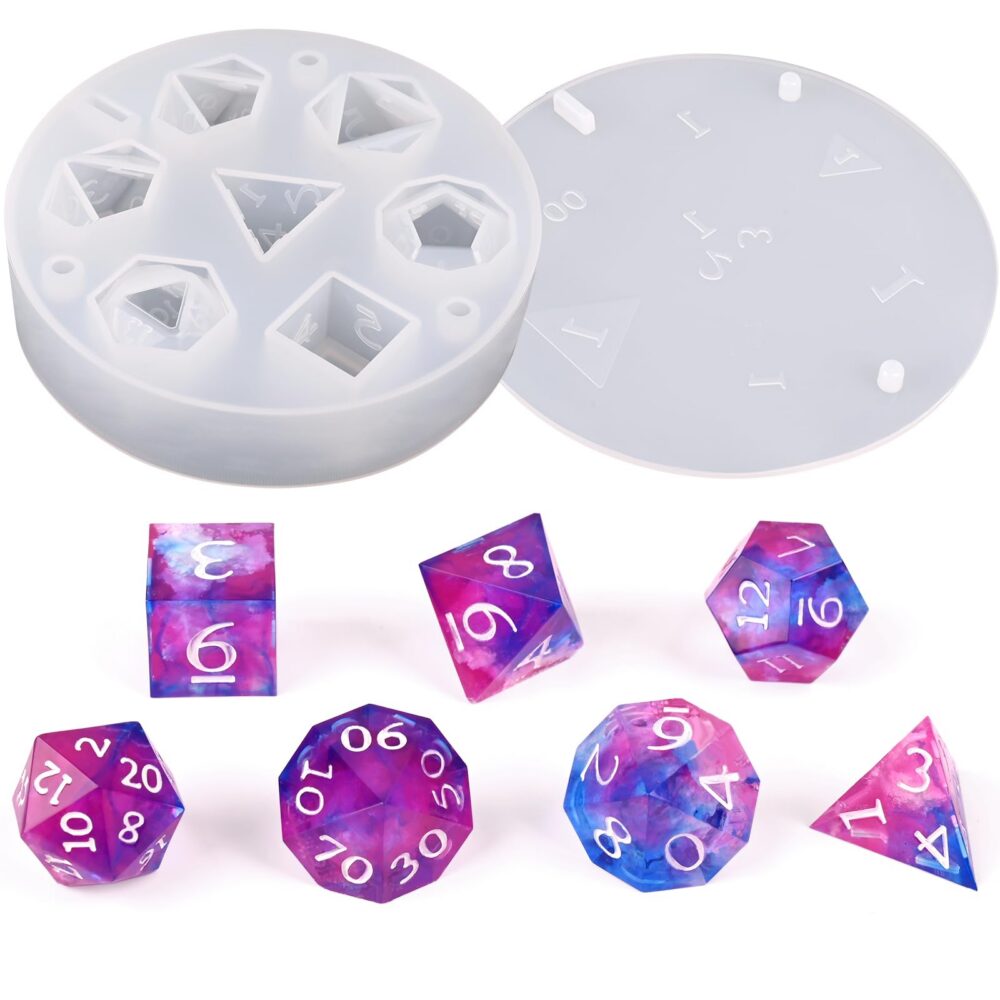
Dice molds for resin crafting are forms used to cast polyhedral dice in resin, usually for tabletop games like Dungeons & Dragons or Pathfinder. In plain English: you pour mixed resin into a mold shaped like a die, let it cure, then demold, sand, and finish the piece. The category is distinct from general resin crafting because the end product has to be functional, balanced enough for play, and detailed enough to show clean numbers and sharp edges.
Resin dice making usually starts with a silicone mold, epoxy resin, pigments or inclusions, and finishing tools. The craft often includes extra steps that general resin projects may not need, such as bubble control, face polishing, and number inking. That makes mold choice especially important: the mold affects how easy the pour is, how much cleanup you need, and how the finished dice look.
Main Dice Mold Types and Materials
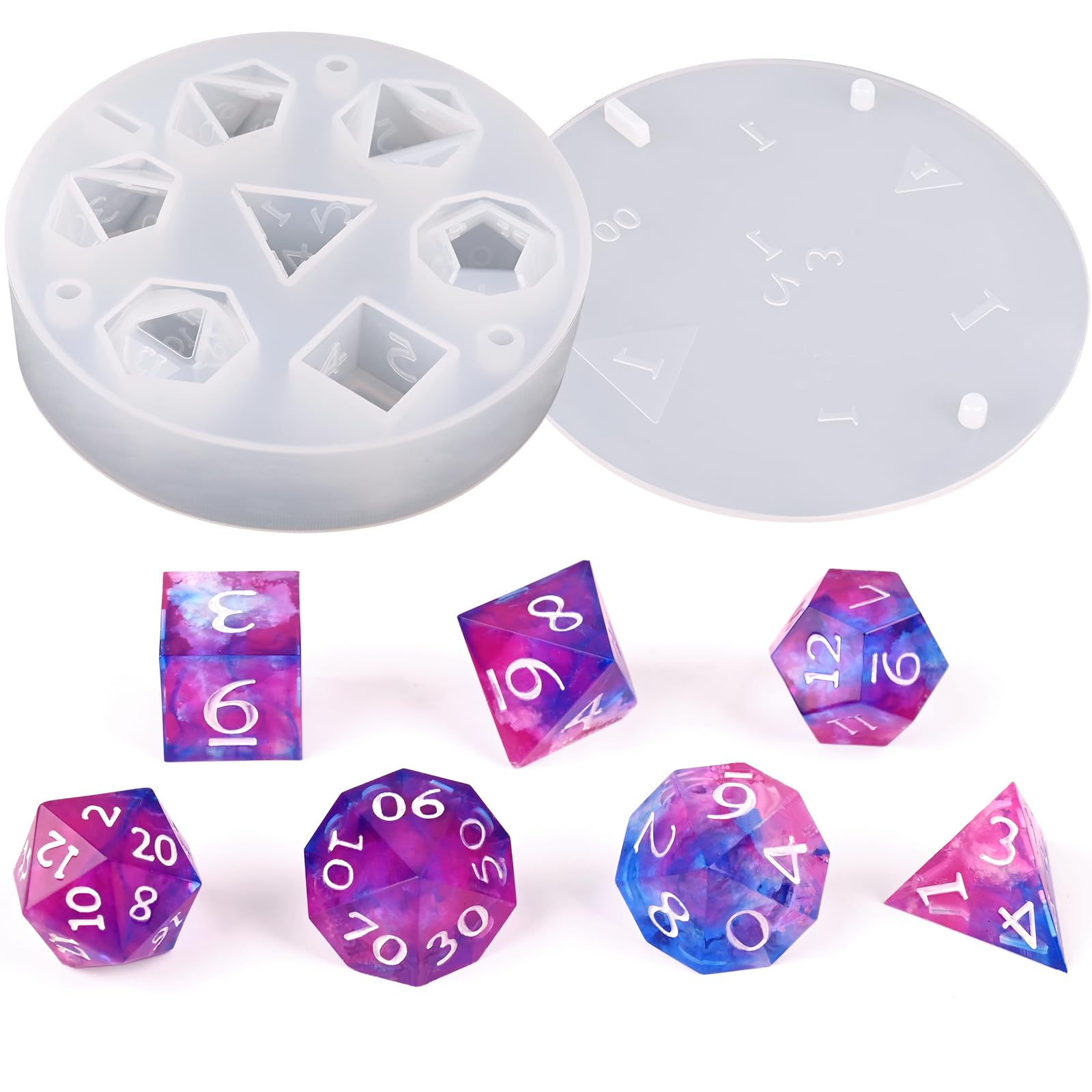
The main mold options are usually organized by shape, construction, and material. A buyer can narrow the field quickly by deciding whether the goal is beginner-friendly casting, sharper edges, faster batch production, or more decorative effects.
Common mold formats include:
- Single-die molds: one cavity per die, useful when you want more control over each piece.
- Full set molds: a complete polyhedral set in one mold or one coordinated set of molds.
- Cap molds: a two-part style with a cap that helps form cleaner faces and is often used for more advanced dice effects.
- Sprue molds: molds with a pour channel, often chosen when the maker wants a direct fill path.
- Slab-style molds: multiple dice cavities in a larger mold body, often used for efficiency.
Material matters too:
- Silicone is the standard because it is flexible, reusable, and easier to demold without damaging the cast.
- Harder mold systems may be used in custom setups, but they are less common for everyday resin dice making.
A practical way to choose is to match the mold style to the project goal. If the goal is learning the basics, a simple silicone set is usually easier to work with. If the goal is decorative dice with layered color, glitter, or petri-style effects, cap molds are often discussed by makers because they can better support those pours. If the goal is faster repeat casting, a multi-cavity or set-based mold may be more efficient.
Common Resin Dice Making Use Cases
Dice molds are used in a few recurring project types, and each one puts different demands on the mold.
Beginner practice projects often use clear or single-color resin with minimal additives. These projects help a new maker learn mixing, pouring, curing, and demolding without adding too many variables.
Tabletop gaming dice are the most obvious use case. These are the dice people want to roll at the table, so the mold needs to support readable numbers, consistent shape, and a finish that can be sanded and inked cleanly.
Decorative resin dice focus more on appearance than gameplay. Makers may use mica, foil, glitter, alcohol inks, or layered color effects. In these projects, mold style can influence how well the design shows through the finished piece.
Small-batch craft production is another common use case. A maker may want to produce a few sets for gifts, a small shop, or personal commissions. In that setting, durability and repeatability matter more than novelty alone.
A useful rule of thumb: the more complex the visual effect, the more important the mold’s fill behavior and release behavior become.
What to Check Before Buying a Dice Mold
The most useful buying criteria are not flashy product descriptions. They are the details that affect whether the mold is easy to use and whether the finished dice need a lot of cleanup.
Check these points first:
-
Mold finish
Look for a smooth cavity surface. A rough interior can transfer texture to the cast and increase finishing work. -
Edge definition
Sharper cavity edges usually help produce cleaner dice faces and more readable numbers. -
Material durability
Silicone that tears easily or deforms quickly can shorten the useful life of the mold. -
Compatibility with your resin
Most buyers use epoxy resin for dice making. Make sure the mold is intended for resin casting, not just generic crafts. -
Ease of demolding
Flexible molds are generally easier for beginners because the cast can be removed with less force. -
Set completeness
If you want a full RPG set, confirm which dice are included. A partial set can be fine, but only if that matches the project. -
Beginner-friendliness
A simpler mold is often better for a first project than a highly specialized one. -
Cleanup expectations
Some mold styles create more flashing or require more sanding after curing. That is not necessarily a flaw, but it is a tradeoff.
A short evaluation sentence you can reuse is: the right dice mold is the one that matches your resin, your skill level, and the finish you want to spend time achieving.
Where Buyers Can Evaluate Dice Molds
Buyers usually evaluate dice molds through product listings, maker tutorials, and craft community examples. The most useful evidence is not a headline alone, but the visible product details: mold shape, cavity style, included dice types, and whether the listing shows the finished result clearly.
Search results for this topic commonly surface beginner-friendly silicone sets, cap-mold tutorials, and resin dice walkthroughs. That pattern suggests the category is broad enough to support both ready-made molds and custom mold-making approaches. For a buyer, the key is to treat search results as a starting map, not a final verdict.
When you review the category, focus on what the listing actually shows: the mold format, the dice shapes included, and any notes about how the mold is meant to be used. If a result is only a tutorial or a general discussion, it can still be useful for learning, but it should not be treated as proof of a specific product configuration.
How to Search and Compare Dice Mold Listings
A good search workflow starts with the project goal, not the product name. Search terms such as dice molds for resin, polyhedral dice mold set, cap mold for resin dice, or silicone dice mold help narrow the field faster than a broad craft search.
Then compare listings using the same checklist every time:
- Identify the mold type — single cavity, full set, cap mold, sprue mold, or slab style.
- Check the material — confirm that the listing is for silicone or another resin-compatible mold system.
- Review the included dice shapes — make sure the set matches the dice you want to make.
- Inspect the product images — look for cavity detail, edge definition, and visible finish quality.
- Read the usage notes — beginner-friendly claims, pressure-casting notes, or cleanup expectations can change the value of the listing.
- Compare the finishing work required — some molds may produce cleaner casts, while others may require more sanding and polishing.
- Match the mold to your project — decorative pours, gaming dice, and practice casts do not all need the same mold style.
If you are comparing several listings, keep the question simple: Which mold gives me the easiest path to the result I actually want? That question usually matters more than a generic product ranking.
For buyers in the United States, the most practical approach is to compare current listing details, confirm the mold format, and choose the option that fits your resin workflow rather than the one with the most dramatic description. In this category, the product choice is mostly about fit between mold design and making goal.
Bottom line: dice molds and resin dice making are a specialized corner of resin crafting where mold design directly affects finish quality, cleanup time, and the kind of dice effects you can realistically make. If you understand the mold type, material, and intended use, you can compare listings with much more confidence.
Quick answer
If you are looking for dice molds for resin crafting, start by matching the mold type to your project: single-die, full set, cap, sprue, or slab-style. Then check cavity finish, edge definition, silicone durability, and how much cleanup the cast may need. The most useful listings are the ones that clearly show the mold format and the finished result.
FAQ
What mold type is easiest for beginners?
Simple silicone molds are usually the easiest starting point because they are flexible and easier to demold.
Why do some dice molds need more cleanup?
Mold shape, cavity finish, and pour method can affect flashing, sanding, and polishing work after curing.
What should I compare across listings?
Compare mold type, material, included dice shapes, product images, and any usage notes.
Are cap molds only for advanced makers?
They are often discussed by more experienced makers, but the right choice depends on the effect you want and your comfort with the workflow.
What is the safest way to evaluate a listing?
Use the listing details as discovery evidence only and confirm that the mold format matches your resin project before buying.
Next step
Review a few current listings side by side, then choose the mold format that fits your resin workflow and the finish you want to achieve.
Sources and further reading
No external source URLs were supplied for this article supplement. The approved article was prepared from research inputs only, so no additional citations are added here.