
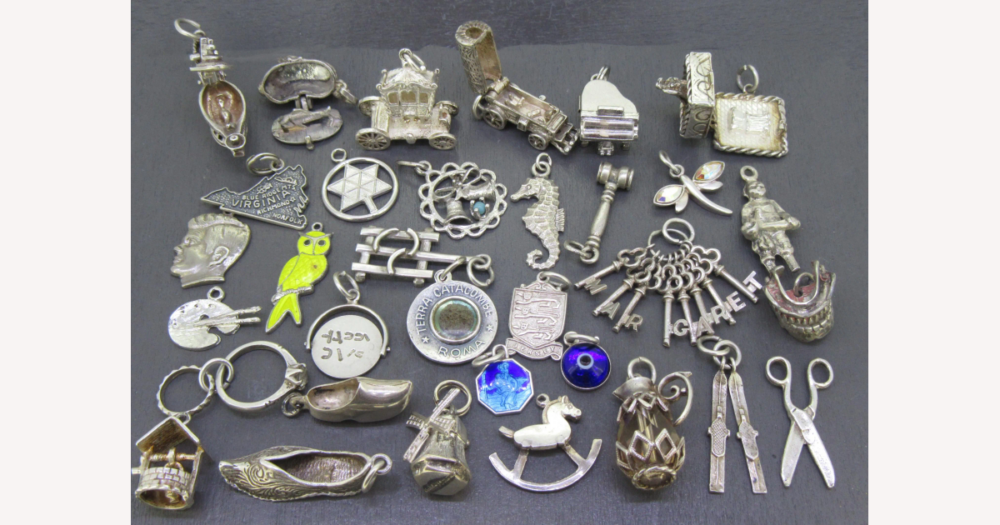
DHgate can be a useful place to explore silver charm designs, but any listing that promises “rare vintage” starts out as marketing, not fact. To protect yourself, treat age and rarity claims as unproven until the seller’s photos, material details, and behavior on the platform give you reasons to trust them. This guide focuses on how to read DHgate‑style listings for vintage silver charms, what hallmarks and design clues to look for, and how to lean on DHgate’s order, payment, shipping, dispute, and refund protections so you take only risks that match the value the charm has for you.
What “rare vintage silver charms” usually mean online
On DHgate and other large marketplaces, phrases like “rare” and “vintage” in silver charm listings are advertising by default, not proof. You can absolutely find vintage-style pieces and occasionally genuinely older charms there, but age and rarity only start to mean something when the listing shows specific, verifiable details—such as clear silver specifications, close-up photos of hallmarks, and a believable story about the piece’s background.
In practical shopping terms, “vintage” usually means a piece that is older but not antique—often a few decades old, such as mid‑20th‑century designs—yet online the term is used loosely. Sellers may apply it to mass‑produced modern charms with retro styling, lightly used jewelry from recent years, or genuinely older items all in the same category. Because most marketplace listings don’t come with formal documentation, buyers rarely get ironclad proof of age just from the product page.
That’s why the burden of proof sits squarely on the listing and the seller. For a charm you care about as a meaningful vintage piece, I would only take a listing seriously if it offers specific silver material information, visible hallmarks, multiple clear photos, and sits within DHgate’s normal ordering, payment, shipping, dispute, and refund framework. If the description is vague, photos are limited, or the seller can’t answer basic questions, I’d treat the charm as a decorative trinket at best and skip it entirely if I’m looking for true vintage character.
How to recognize vintage silver charms from photos and descriptions
For online shopping, a vintage silver charm is best defined by tangible traits you can actually see or read in a listing. The material should be described specifically—“sterling silver” or “925 silver” is more credible than vague phrases like “silver tone” or “plated metal”—and honest sellers often mention purity marks such as 925 or the word STERLING. When a charm is genuinely silver, these marks are typically stamped into a discreet area of the piece or its jump ring, and that detail should be visible in close‑up photos or clearly noted in the specifications.
Useful hallmarks go beyond the purity number. Many older silver charms carry maker’s marks, country marks, or assay stamps that indicate where and by whom they were made. In listing photos, you might see a small logo, initials, or a symbol alongside the purity mark; in the description, the seller might call out a known brand, workshop, or origin country. While you’ll need external references to interpret every symbol, the simple presence of readable marks is a positive sign compared with unmarked pieces sold only as “vintage look.”
Design and wear also offer clues, though none of them are conclusive on their own. Period‑typical motifs (for example, mid‑century travel charms, tiny hinged objects, or certain engraving styles), slightly softened edges, and natural surface wear on raised details can all hint at age. At the same time, modern manufacturers can reproduce older styles, and artificial distressing can mimic wear. So the safest approach on DHgate‑style listings is to treat design and wear as supporting evidence: they matter most when they appear alongside clear silver marks, specific material descriptions, and consistent information about the charm’s origin rather than as the only basis for calling a piece vintage.
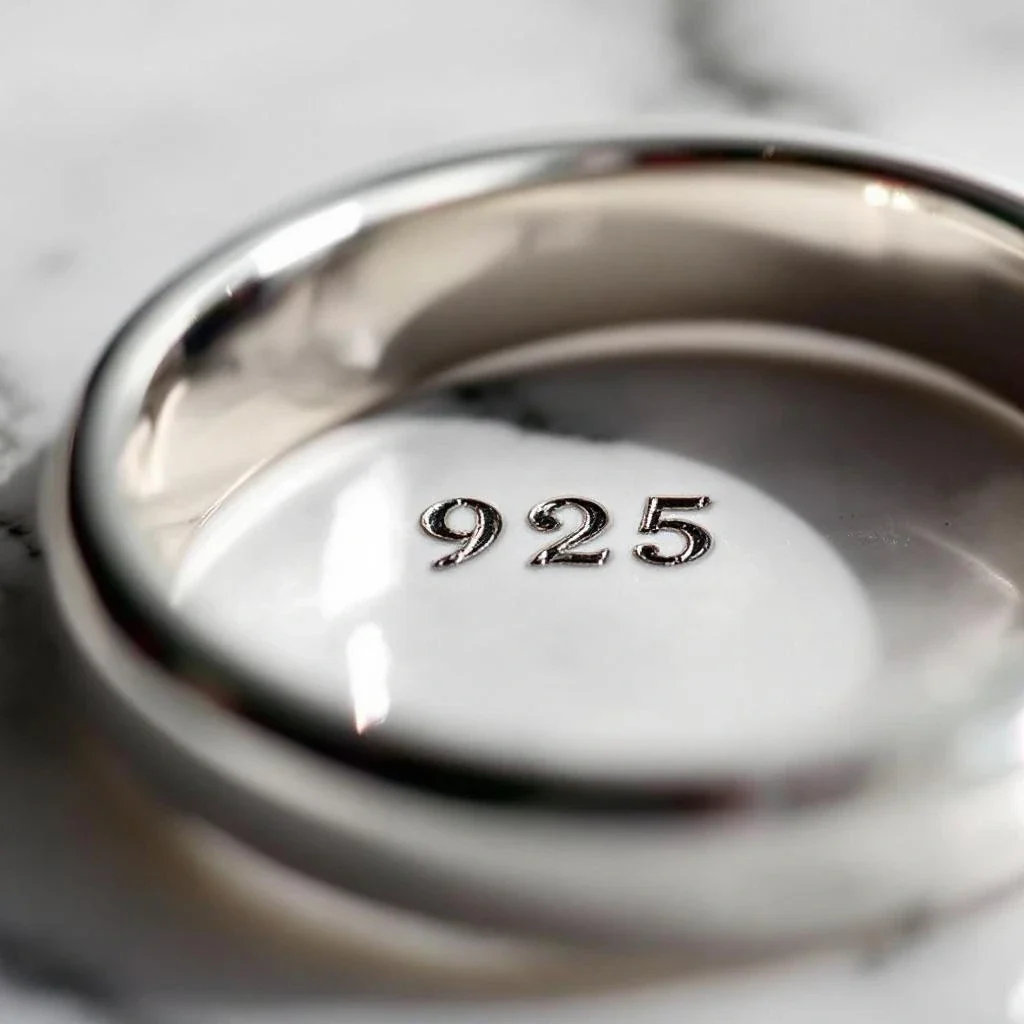
Example of a clear 925 sterling silver mark; look for similarly sharp, close-up photos of any hallmarks when judging charm listings.
How to read a DHgate-style listing for vintage silver charms
- Start with the title and material line. Prefer listings that plainly say something like “925 sterling silver charm” or “sterling silver bracelet charm.” Treat vague wording such as “silver color,” “alloy,” or “metal” as a sign that the piece may not be solid silver and is unlikely to be a well-documented vintage charm.
- Move to the photos and zoom in on every image you can. Look for sharp close-ups of the charm’s surface and any hallmarks on the charm or jump ring—purity numbers like 925, the word STERLING, maker’s initials, or country marks. Be wary when images look generic, heavily filtered, or identical across multiple listings, because those make it hard to judge real material, marks, or wear.
- Check the measurements and weight next. A believable listing gives clear dimensions (length, width, thickness) and a weight that fits a small silver charm rather than something implausibly light or heavy. Missing specs or obviously unrealistic numbers—for example, a charm described as large but with a tiny weight—are a warning that the description may be careless or misleading.
- Finally, scroll down to seller ratings and buyer comments. Look for reviews that mention how the charm looks in real life, whether hallmarks are present and readable, and whether the material feels like silver rather than thin costume metal. Take note of complaints about tarnish, flaking plating, or items not matching the description, since these are strong signals to avoid that listing for any charm you care about as truly vintage.
Material description, photos, measurements, and feedback work best as a package. A listing that might deserve vintage consideration usually feels internally consistent: specific silver wording matches the visible hallmarks, the charm’s size and weight make sense together, and buyer comments line up with what the seller claims. When those pieces reinforce each other, you at least have a clearer picture of what you’re getting, even if age and rarity remain partly uncertain.
Use thin or contradictory details as a cutoff between higher- and lower-risk offers. If the charm is important to you as a vintage piece, a mix of vague material language, stock-like photos, missing specs, or troubling reviews is enough reason to downgrade or skip the listing entirely. I’d only tolerate that kind of ambiguity for a low-cost decorative charm where authenticity doesn’t matter; for anything meant to be genuinely vintage, I’d move on to a better-documented option.
Interpreting seller ratings and history for vintage-claimed charms
Seller reputation on a DHgate-style marketplace can’t prove that a silver charm is truly vintage, but it does show how reliably that seller tends to deliver what they advertise. Start with the overall star rating and the number of completed orders: a long-standing seller with many transactions and a solid rating is generally less risky than one with only a handful of sales or a mixed score.
Look at the volume and recency of reviews. Recent feedback on jewelry orders, especially comments that mention item quality and description accuracy, is reassuring. By contrast, sparse reviews, long gaps with no feedback, or a pattern of complaints about items not matching photos or materials being different from what was advertised should make you cautious about trusting their “rare vintage” claims.
It also helps to glance through the seller’s catalog. A shop that consistently offers jewelry or charms, with a mix of styles and reasonably detailed descriptions, is more believable than one that mainly sells modern costume accessories or unrelated goods but suddenly lists a few “rare vintage silver charms” with grand wording and thin specifics. That kind of opportunistic mix suggests the vintage label may be more marketing than reality.
For a charm you care about as a vintage piece, I’d treat weak ratings, thin history, or a mismatched product mix as reasons to walk away and keep searching, even if the listing looks tempting. Strong, consistent reputation doesn’t guarantee authenticity, but it does reduce the chance of outright non-delivery or blatant misrepresentation. I’d only accept more ambiguity from a newer or less proven seller when the charm is a low-cost decorative experiment and I’m prepared for it to turn out to be ordinary costume metal rather than a meaningful vintage find.
Remote material and quality checks for silver charms
- Confirm that the listing names a clear silver purity, such as “925 sterling silver,” rather than only vague phrases like “silver tone,” “silver plated,” or “alloy.” Treat imprecise wording as a sign the charm is more likely costume metal than solid silver.
- Inspect the photos for close-up shots of hallmarks, solder joints, and surfaces. Credible charms show stamped or engraved marks that look clean and proportional, tidy joins, and natural wear; obvious peeling or flaking, rough casting seams, or uniformly shiny plating over base metal suggest non‑sterling construction.
- Compare the title, description, and specification fields to make sure they repeat the same material story. If one part says “sterling silver” while another mentions “alloy,” or important details like purity and weight are missing altogether, treat that inconsistency as a serious doubt about authenticity.
These remote checks can raise your confidence and help you catch obvious misrepresentation, but they can’t replace physical testing, expert appraisal, or documentation of age. Even when material details look plausible, there will always be some uncertainty about both purity and how old a charm really is.
My own rule is to keep that uncertainty front and center: if a charm matters to you as a meaningful vintage piece, unresolved doubts about material or age are a reason to walk away and keep searching. I only relax these standards for low‑stakes decorative charms, where I’m prepared for the metal to turn out to be ordinary costume alloy rather than genuine vintage silver.
Red flags that suggest you should skip a listing
- Treat listing-level contradictions and vagueness as major red flags. Examples include a title that claims “925 sterling silver” while the description mentions “alloy” or “metal,” heavy use of words like “rare,” “antique,” or “museum quality” without any supporting details, and listings that never clearly state what the charm is made of.
- Be wary of photo problems that hide important information. Recycled stock images used across many different listings, blurred or distant shots that make it impossible to read hallmarks, and a noticeable absence of close-ups of the actual charm all suggest the seller doesn’t want you to scrutinize the piece too closely.
- Avoid sellers whose behavior undermines trust. Pressure to pay or communicate outside the platform, requests to finalize the deal off DHgate, evasive or inconsistent answers when you ask about materials or hallmarks, or feedback mentioning different materials than advertised are strong warning signs. For any charm you care about as genuinely vintage or meaningful, I’d skip the listing as soon as I see these patterns and only consider taking a small, controlled risk on a very low-cost decorative piece where authenticity isn’t important.
Using DHgate’s protections when you experiment
Ordering and paying through DHgate keeps your charm purchase inside the platform’s framework, which is where its protections actually apply. When you place an order, pay using DHgate’s payment system, and let the seller ship through the normal process, you get order tracking, a formal record of when the package is marked as delivered, and access to dispute and refund tools if something goes wrong—such as a charm that never arrives or arrives clearly different from what was described.
Before you commit, read the seller’s shipping, return, and refund terms carefully so you know how long delivery might take, whether returns are allowed, and under what conditions refunds are possible. Keep all questions and responses inside DHgate’s messaging rather than moving to email, messaging apps, or direct bank transfers, and save screenshots or photos that show any mismatch between the listing and the charm you receive. That documentation is what you’ll rely on if you need to open a dispute for non‑delivery, serious damage, or obvious misdescription.
These protections are designed to handle delivery and quality problems, not to certify that a charm is genuinely vintage or sterling silver. DHgate staff are unlikely to act as appraisers or authenticity experts; they mainly check whether the item roughly matches the description. Platform‑backed refunds make low‑stakes experimentation with decorative or vintage‑style charms more reasonable, but they don’t justify ignoring clear red flags for pieces you care about as meaningful vintage jewelry. If a listing looks risky on materials, age claims, or seller behavior, it’s better to skip it than to hope buyer protection will fix a bad purchase.
Vintage antiques vs. vintage-inspired charms on DHgate
| Buying route | Typical documentation and provenance | Material and quality expectations | Price and rarity expectations | Best use case |
|---|---|---|---|---|
| Dedicated antique or vintage jewelry sellers | Often provide detailed information about era, maker, and origin, with possible certificates, appraisals, or provenance notes that help you understand the piece’s history. | Stock tends to be curated, with closer inspection of materials and craftsmanship; descriptions are more specific about silver purity, wear, and repairs. | Prices are usually higher and reflect both documented age and scarcity; rarity claims are clearer and easier to judge against the supporting information. | Best when you want genuinely old, well‑documented vintage charms where authenticity and long‑term value matter more than getting the lowest possible price. |
| DHgate‑style marketplaces | Listings rarely include formal provenance; most charms are described briefly, with little or no documentation about age or origin, and vintage claims may be loosely used. | Material and build quality can vary widely, from solid silver to plated or alloy pieces; careful reading of specs and photos is needed, and uncertainty is part of the deal. | Prices are generally lower, and “rare” or “vintage” language often reflects style rather than proven scarcity; true antiques may appear but are not the platform’s focus. | Best when you’re shopping for decorative or vintage‑inspired charms, are willing to accept some uncertainty about age and materials, and rely on platform protections to manage basic delivery and quality risks. |
Quick checklist for hunting vintage silver charms online
- Confirm that the listing names a specific silver material, ideally with purity marks such as “925 sterling silver,” instead of only vague phrases like “silver tone,” “metal,” or “alloy.”
- Check the photos for clear, close-up images of hallmarks and the charm’s surfaces, and avoid listings where these areas are hidden, blurred, or shown only in generic stock pictures.
- Scan the seller’s overall rating, number and recency of reviews, and other jewelry listings to see whether they consistently deliver what they advertise and use believable descriptions.
- Read the shipping, return, and dispute information so you know how long you have to raise a problem and what options you have if the charm arrives late, damaged, or not as described.
- Remember that claims about rarity or exact age stay partly uncertain without independent documentation or expert appraisal; if a charm matters to you as a true vintage piece and it fails any major checklist item, treat that as a reason to walk away, reserving more flexibility only for low-stakes decorative buys.
Is DHgate the right place for truly rare vintage silver charms?
Can I realistically expect to find museum-grade, truly rare vintage silver charms on DHgate?
DHgate can host a wide range of silver charms, including vintage-style pieces and occasionally older items, but its structure and typical seller base make it unlikely that you’ll find museum-grade, heavily documented antiques there. Listings rarely come with full provenance, expert appraisals, or certificates that prove age and rarity. For any charm where documented history and long-term value really matter, I would not rely on DHgate alone; treat it as a place for discovering designs, not as your primary source for top-tier rare vintage jewelry.
How should I use DHgate if I’m serious about collecting vintage silver charms?
If you care deeply about authenticity and rarity, make specialized antique dealers, reputable vintage jewelry platforms, and professional appraisal routes your main hunting ground, because they are more likely to offer clear origin stories, detailed descriptions, and supporting paperwork. Use DHgate mainly for decorative, themed, or experimental charms where you’re comfortable with limited documentation. Apply the earlier checklist—material wording, hallmarks in photos, seller ratings, and platform-based payment and disputes—and keep your stricter standards for pieces you want to count as truly vintage rather than as fun, vintage-inspired accessories.