
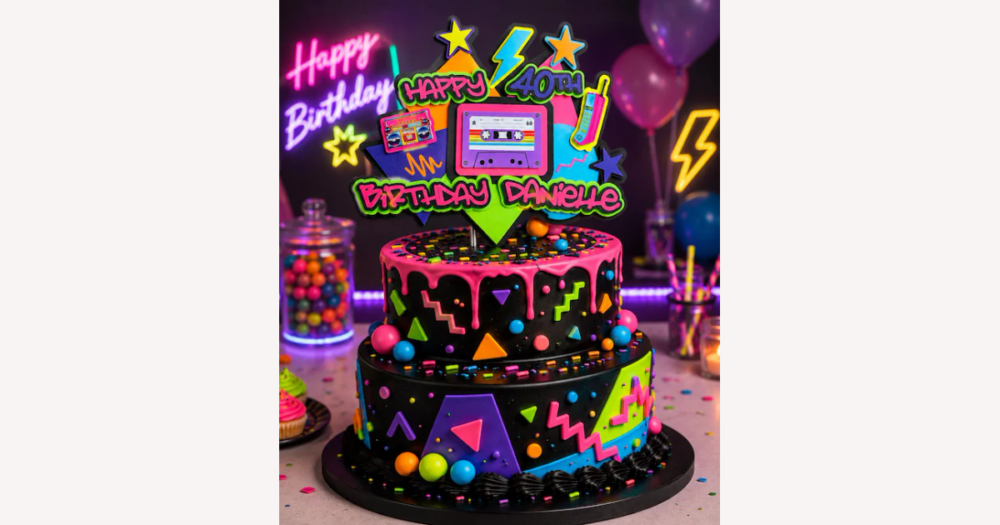
If you’re planning an 80s-themed birthday cake and searching DHgate for retro 1980s toppers, focus first on recognisable neon motifs and clear listing details. Strong 80s visuals—cassette tapes, boomboxes, arcade graphics and disco elements—signal the right style, but it’s the material notes, dimensions, and seller feedback that will decide whether the topper actually suits your cake and arrives on time in Australia.
What counts as a “retro 1980s” cake topper when you’re shopping online?
On DHgate, listings described as “retro 80s” or “Back to the 80s” cake decorations usually lean into bold neon colour palettes and graphic shapes. You’ll often see grids of triangles and zigzags, glow-stick tones like hot pink, electric blue and lime green, and black backgrounds that make the colours pop. Classic 1980s icons show up a lot too: cassette tapes, boomboxes, arcade game controllers and pixel-style graphics, disco balls, sunglasses and roller skates, plus slogans such as “Back to the 80s” or “Totally Awesome” in chunky, era-style fonts.
Those visuals can appear in several common topper formats on DHgate. Single statement cake toppers are larger pieces that sit at the centre or back of the cake. Cupcake toppers or picks are smaller designs on sticks, repeated across multiple cupcakes. Edible printed sheets or cupcake toppers are usually flat designs printed onto wafer paper or icing sheets that go directly on icing. Fondant or other sugar-based decorations are shaped icons (for example, small cassette tapes or stars) you can place around the cake. Full party sets combine a main cake topper with cupcake picks, banners and sometimes table decor, all in a coordinated 80s theme. I’d still prioritise listings that clearly explain which format you’re getting and show close-up photos of the materials, even if another design’s neon artwork looks slightly more perfect on first glance.
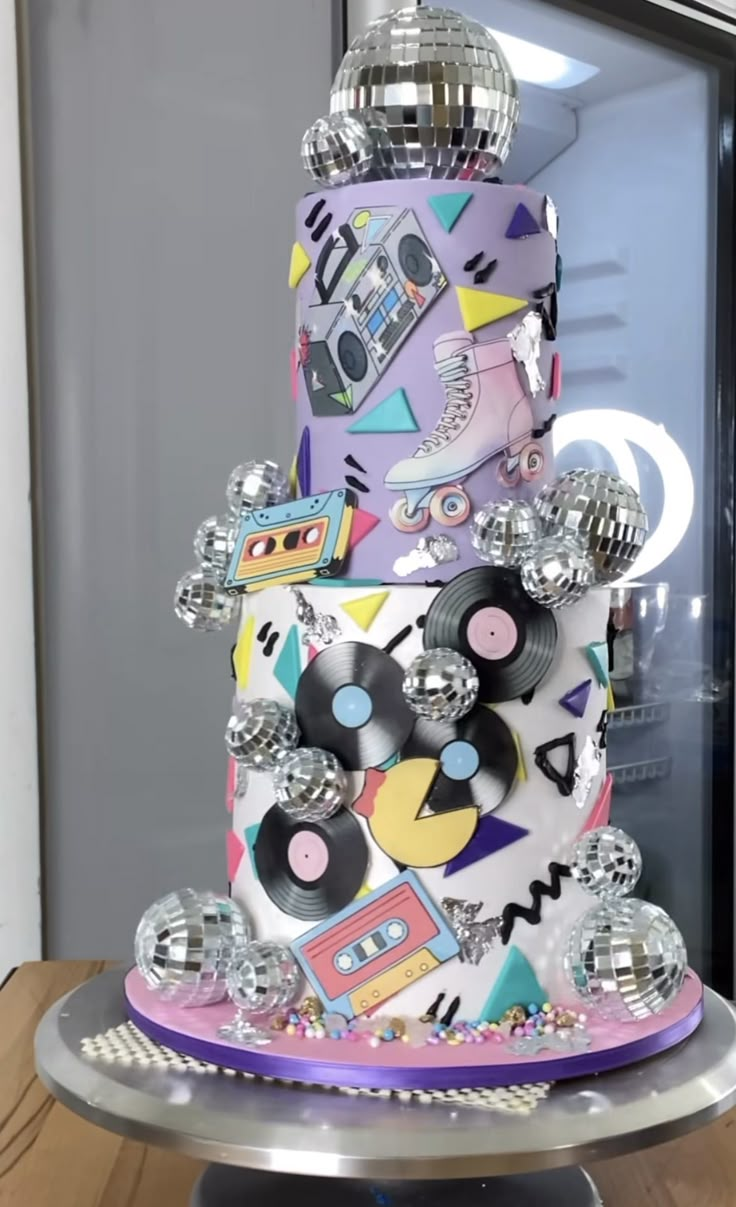
Example of an 80s-themed cake decorated with neon cassette and disco motifs, showing how bold colours and iconic shapes create a clear retro look.
Key materials and specs for 80s cake toppers (and how they affect your cake)
| Material type | Typical use on cakes | Relative sturdiness | Surface finish | Food-contact notes | Reusability |
|---|---|---|---|---|---|
| Thin paper picks | Printed designs on small flags or shapes attached to toothpicks or similar sticks, usually for cupcakes or light accent pieces. | Low; bends and creases easily, can droop in humid conditions. | Generally matte or lightly printed; colours may look softer than on screen. | Normally treated as non-edible and kept above the icing on the pick; not intended to be eaten. | Usually single-use because paper stains with icing, warps from moisture and is hard to clean without damage. |
| Cardstock toppers | Main cake toppers or larger shapes cut from thicker paper, often layered for a 3D look. | Moderate; holds its shape better than thin paper but can still bend if mishandled. | Can be matte or slightly glossy; prints tend to look sharper and more opaque. | Typically non-edible; designed to sit on picks or supports so the paper itself doesn’t touch the cake surface for long. | Often single-use, though a topper kept clean and stored flat may be reused for a future party if the paper doesn’t warp or tear. |
| Plastic picks or figurines | Small moulded decorations or character figures pushed into icing or placed on top as props. | Moderate to high; less likely to tear or crease, though thin stems can snap if forced. | Usually smooth and more glossy, which can make bright 80s colours look vivid. | Generic plastic is not meant to be eaten; it should sit on or just in the icing and be removed before serving slices. | Often reusable if rinsed after use and dried thoroughly, provided no sharp edges or cracks develop. |
| Acrylic toppers | Laser-cut statement pieces, often with mirrored or solid neon surfaces on a sturdy stem. | High; rigid and resistant to bending, suitable for transport and repeated use. | Glossy or mirror-like; gives a polished, modern spin on retro graphics and typography. | Non-edible and relatively hard; it should rest on the cake as a decorative pick only and be removed before people eat. | Designed to be reusable if handled carefully, cleaned gently and stored in a protective sleeve or box. |
| Fondant or other sugar decorations | Edible shapes such as cassette tapes, stars or numbers made from fondant or modelling chocolate. | Low to moderate; soft enough to bite, but can dent or crack if pressed too hard or dried out. | Usually matte, with colours tinted into the sugar; fine details may be hand-painted. | Typically intended for direct contact with icing and to be eaten, but this should still be stated clearly in the listing. | Generally single-use because they’re eaten or dry out quickly; leftovers are not usually stored for future parties. |
| Edible printed sheets or cupcake toppers | Flat designs printed onto wafer paper or icing sheets that dissolve or soften on frosting. | Low; thin and fragile, especially before they’re placed on the cake. | Matte but can show detailed prints; colours may be slightly less intense than on-screen art. | Only treat them as edible when the listing explicitly says they’re printed on edible wafer paper or icing sheets approved for food use. | Single-use, since the prints are meant to be eaten or will break down on contact with moisture and cannot be cleaned or stored once used. |
For safety, it’s best to assume a topper is non-edible unless the DHgate listing clearly labels it as an edible product, such as wafer paper or icing sheets made for cake decorating. Hard materials like acrylic or generic plastic are purely decorative: they can touch icing briefly but shouldn’t be bitten, chewed or given to guests as something to eat, and should be removed when you cut the cake.
Non-edible pieces in sturdy materials—especially acrylic and solid plastic—can often be reused if you wipe them clean, let them dry and store them flat or in a protective box. In contrast, thin paper, standard cardstock and all edible prints are realistically one-time items, because they stain, warp or degrade quickly once they meet icing and moisture. When I’m browsing DHgate for 80s cake toppers, I’d rather choose a listing that spells out the exact material and thickness than one with a striking neon design but vague description, because clear specs make it much easier to judge how the topper will behave on the cake and whether I can safely use or reuse it.
Turning your 80s cake idea into effective DHgate search terms
- Combine broad era and style words with product terms, such as: “80s” or “1980s” + “cake topper”, “retro” + “cupcake topper”, “neon” + “banner”, or “disco” + “party decoration”.
- If results don’t show the motifs you want, add or swap in modifiers like “arcade”, “cassette”, “boombox”, or “Back to the 80s” to shift the designs that appear.
- Search separately for each product type you need—”cake topper”, “cupcake toppers”, “edible cake topper”—instead of expecting one general query to surface everything.
- When you care about specs, include material or format hints such as “acrylic”, “cardstock”, “fondant”, or “edible print” to draw out listings with clearer descriptions.
- After each search, scan the first page or two of results and note which word combinations produce listings with clear titles, good photos and the right motifs, then tweak or combine those terms rather than relying on a single fixed phrase.
How to read DHgate listings for 80s toppers: dimensions, colours, and pieces
- Compare the numeric dimensions in the description with your cake’s diameter and height so the topper will look proportional rather than too small or overwhelming.
- Check photos that show the topper beside a hand, ruler or cake to confirm real-world scale instead of judging size from close-up images alone.
- Read the colour description and compare several photos to see whether the design is truly neon-bright, more muted, or closer to pastel than the main image suggests.
- Confirm the total number of pieces and which types are included—for example, one large topper, multiple cupcake picks, and any banners or extra shapes—so the set matches your plan.
- Look for notes about assembly, such as separate sticks, glue dots or DIY banners, and decide whether you have time and tools to put everything together before the party.
- Search the description for clear labels like “edible”, “wafer paper”, “icing sheet” or “not edible”; if the listing doesn’t explicitly say an item is edible, treat it as decorative only.
- Prioritise DHgate listings with multiple clear photos and thorough descriptions over sparse ones, especially when colour accuracy and piece count are critical to how your 80s cake will look.
A buyer-check routine for 80s cake toppers on DHgate
- Check the seller’s profile first: look at their overall rating, how many orders they’ve completed, and the tone of recent feedback, especially comments about on-time delivery and whether items matched the photos and description.
- Open the order form and carefully confirm quantity and any style, colour or motif options so you know exactly how many pieces and which version of the topper or set you’re buying.
- Review the estimated shipping time and any available shipping options, then compare them with your event date and build in a buffer so minor delays don’t leave you without decorations.
- Complete payment through DHgate’s normal secure checkout flow only, and avoid any offers to pay via direct bank transfer, messaging apps or other off-platform methods.
- Before you place the order, find the listing or store information about refunds, returns and dispute handling so you know what to do if the toppers arrive late, damaged or noticeably different from the description.
- When I’m ordering for a fixed event date, I’d rather choose a slightly higher-priced listing from a seller with consistent positive reviews and realistic shipping estimates than chase the lowest price from a store with sparse feedback and vague delivery information.
Common pitfalls with online 80s cake toppers—and how to avoid them
- Toppers can arrive much smaller or larger than you pictured. Use the listed dimensions and any photos that show the topper next to a cake, hand or ruler to check scale before you buy.
- Colours sometimes look less neon or vibrant in real life than in the main product image. Compare several listing photos and, where available, customer photos to set realistic expectations for the palette.
- Some toppers ship flat and need assembly or attaching to sticks. Read the description for assembly notes and check which accessories (like sticks or glue dots) are included so you know how much work you’ll need to do.
- Designs that look edible in photos may actually be non-edible props. Rely on clear labels such as “edible” or specific icing-sheet materials, and treat anything without an explicit food-safe statement as decorative only.
- Multi-piece sets can include fewer pieces or a different mix than you assume. Confirm the listed piece count and exactly which items are included, then compare that with your cake, cupcake and guest plan before ordering.
- Tight shipping windows can create last-minute stress if there’s any delay. Use the estimated delivery range as a guide and build in extra time between that window and your party date.
- Across all of these risks, choosing sellers who provide detailed descriptions, honest photos and solid feedback is one of the most reliable ways to reduce surprises, even if it narrows your design options or means paying a little more.
Choosing between single toppers and full 80s decoration sets
| Option | What it includes | Best for | Effort and setup | Flexibility and reuse | Typical cost range perception |
|---|---|---|---|---|---|
| Single standout 80s cake topper | One main topper that sits on the central cake, sometimes with a small supporting base or stick. | Small gatherings or a single hero cake where you want all attention on one dessert. | Low: usually just attaching the topper to the cake or inserting a pick, with little arranging required. | Moderate: non-edible toppers can sometimes be wiped clean and stored, but they may be more fragile than kit pieces designed for reuse. | Feels cheaper overall because you buy fewer pieces, though intricate custom-style toppers can still sit in a mid-range price band. |
| Full 80s decoration set | A coordinated kit that may include a large cake topper, many cupcake picks, and sometimes a banner or other 80s-themed extras. | Larger parties with multiple desserts, or when you want the 80s theme visible across cake, cupcakes and the dessert table. | Higher: more pieces to assemble, space out and sometimes attach to sticks or hang, which takes planning and time. | Higher: non-edible pieces like banners and some cupcake toppers are more likely to be reusable, but storing and reusing a whole kit takes space and care. | Feels more expensive at first because it’s a bundle, though the cost per piece can be lower; it’s easy to over-buy if the listing is vague about what’s included. |
For a small family celebration with one special cake, a single standout topper often makes the most sense. It keeps the focus on the main dessert, is quick to set up, and avoids paying for extra pieces you may not use.
For a bigger party where cupcakes or a dessert table help carry the 80s theme, a coordinated set with cupcake toppers and possibly a banner can give you more visual impact across the room.
Before choosing a very large kit, think honestly about how much time you have for assembly and placement. If you’re short on time or wary of hidden assembly work, a smaller but clearly described set—or even a single topper with a few simple extras—can be a safer, less stressful choice. I would usually pick clear photos, a precise piece count and straightforward setup over a huge, vaguely described bundle that might turn into a last-minute project.
Quick decision checklist before you order 80s toppers on DHgate
- Confirm that the topper’s motifs, colours and wording clearly read as 80s to you and fit the cake design you’ve planned.
- Check that the listed material—paper or cardstock, acrylic or plastic, fondant or edible print—matches your cake type, venue conditions and comfort level with food contact.
- Verify that quantity and format match your plan: do you need only one main topper, or a full set with cupcake toppers and maybe a banner to cover all desserts?
- Compare the topper’s dimensions with your cake’s diameter and height so the decoration looks proportional rather than overpowering or barely visible.
- Review estimated shipping times against your event date and add a buffer so minor delays don’t put your party at risk.
- Do a final check of seller ratings and description clarity, and when you’re unsure, lean toward the listing with more reliable information rather than the absolute lowest price.
FAQ: reusing 80s toppers, mixing themes, and dealing with problem orders
Can I reuse non-edible 80s cake toppers I buy on DHgate?
Reusing non-edible toppers is most realistic when they’re made from sturdy materials such as acrylic or solid plastic. Remove these pieces from the cake before serving, gently wipe off any icing or crumbs with a damp cloth, let them dry completely, and store them flat or in a protective box so stems and edges don’t bend. Thin paper flags, standard cardstock toppers, and any edible prints are usually single-use because they stain, warp or soften once they touch icing and moisture. If reusability matters to you, favour DHgate listings that clearly name durable materials and show close-up photos of the topper’s thickness and finish.
How do I mix 80s motifs with age-number toppers without the cake looking messy?
Treat the 80s elements as your main theme and the age number as a supporting detail. You can place a bold 80s topper at the back or centre of the cake and position a simpler number topper in front, or choose a design where the number is integrated into an 80s-style graphic. Keep colours broadly compatible—neon shades or black-and-neon combos work well—and avoid mixing too many competing fonts. On DHgate, look for listings that either already combine numbers with 80s motifs or use similar colour palettes and typography, so the pieces feel like one design rather than a random mix.
What should I do if my DHgate order for 80s toppers arrives late, damaged, or different from the listing?
Start by checking your order details against what arrived: quantity, style options, colours and estimated delivery window. Take clear photos of any damage, missing pieces, or obvious differences from the listing images or description. Then contact the seller through DHgate’s messaging system, briefly explaining the issue and sharing your photos so they can respond. If you can’t resolve it directly with the seller or they don’t reply, follow DHgate’s dispute or refund process from your order record, using the documentation you’ve gathered. When problems occur, I’d always rely on calm, written communication and clear evidence, because it gives DHgate more to work with if the platform needs to step in.